

Mastering AI and Human Agent Collaboration Strategic Insights for Business Excellence
To download this as a free PDF eBook and explore many others, please visit the AugVation webstore:
Introduction
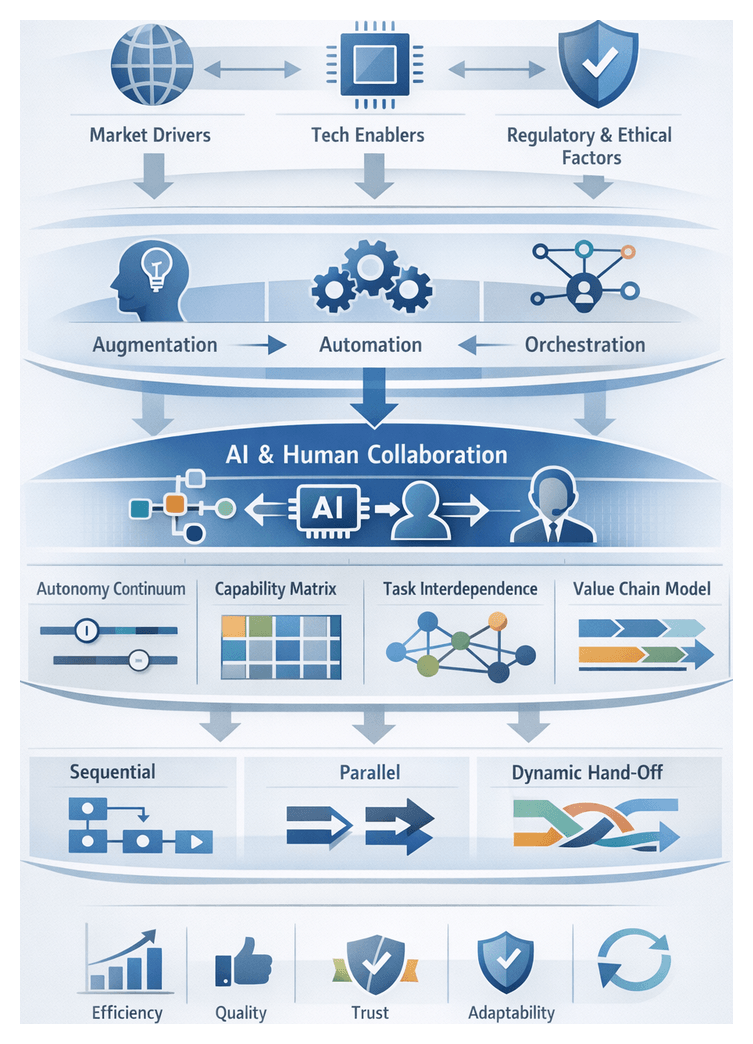
Market Drivers and Strategic Imperatives
Enterprises today are compelled by intensified competition, shifting customer expectations, and cost pressures to integrate artificial intelligence agents with human professionals. Globalization and digital transformation have lowered barriers to entry, raising the bar for service quality and speed. AI platforms such as Salesforce Einstein and IBM Watson Assistant leverage machine learning, natural language processing, and predictive analytics to handle routine inquiries 24/7, analyze vast data sets, and deliver consistent responses. These capabilities reduce response latency, improve first-contact resolution rates, and allow human agents to focus on complex, emotionally sensitive, or strategic engagements.
Customer expectations now emphasize omnichannel continuity, instant resolution, and personalized experiences. AI agents efficiently manage order status checks, account lookups, and basic troubleshooting across chat, voice, social, and messaging channels, ensuring uniformity and scalability. However, when interactions require empathy, nuanced judgment, or negotiation, human professionals remain essential. Hybrid models route inquiries based on defined criteria—complexity, sentiment, customer value—balancing the efficiency of automation with the authenticity of human engagement to sustain satisfaction and loyalty.
Operationally, organizations confront rising labor costs, workforce shortages, and unpredictable demand cycles. Intelligent automation absorbs volume spikes without costly temporary staffing, drives down cost per contact, and generates analytics that highlight process bottlenecks. Human agents, relieved of repetitive tasks, are redeployed to high-value roles such as relationship management, upselling, and complex problem resolution—enhancing job satisfaction, reducing turnover, and unlocking revenue opportunities. Consulting firms report up to 30 percent productivity gains from effective hybrid deployment.
Regulatory and ethical imperatives also shape integration strategies. Data privacy laws such as GDPR and CCPA mandate strict controls over customer information. Bias mitigation, transparency, and accountability are integral to governance frameworks. Human oversight is embedded in hybrid architectures to audit AI recommendations, manage escalations, and ensure compliance with internal policies and external regulations. This collaborative governance model safeguards against unintended consequences and reinforces customer trust.
Sector-specific considerations illustrate diverse interpretations of hybrid models. In financial services, AI drives fraud detection and compliance monitoring while advisors handle complex wealth planning. Healthcare organizations combine diagnostic agents with clinician judgment under patient-safety constraints. Retailers deploy conversational bots for routine queries and escalate VIP or context-rich cases to brand-trained human staff. Business process outsourcers use AI for high-volume transactional tasks, reserving human expertise for exceptions and escalations. Each industry tailors hybrid ecosystems to its risk profile, regulatory demands, and customer dynamics.
Conceptual Framework and Interpretive Models
Effective orchestration of AI and human agents relies on a shared conceptual landscape that distinguishes interaction archetypes:
- Augmentation: AI enhances human capabilities by providing real-time insights and recommendations.
- Automation: AI autonomously executes low-complexity, high-volume tasks.
- Orchestration: Human agents oversee AI activities, handling exceptions and escalation decisions.
Analytical frameworks guide design, evaluation, and governance:
- Continuum of Autonomy and Control maps tasks along a spectrum from full human leadership to complete automation, clarifying hand-off points.
- Capability Synergy Matrix aligns AI strengths—scale, speed, precision—with human strengths—empathy, adaptability, relationship building—to optimize task assignments.
- Task Interdependence Model categorizes tasks as pooled, sequential, reciprocal, or team-based, revealing where AI reduces hand-off friction and where human coordination is vital.
- Value Chain Integration Model assesses collaboration across primary and support activities, highlighting opportunities to reshape procurement, operations, and after-sales service.
From an architectural perspective, three high-level collaboration patterns emerge:
- Sequential Model: AI agents handle initial, routine stages and transfer complex cases to human agents at predefined decision nodes.
- Parallel Model: AI gathers data, suggests options, and human agents simultaneously craft personalized responses, reducing cycle time.
- Dynamic Hand-Off Model: Orchestration engines monitor context, performance metrics, and compliance triggers to route tasks in real time between AI and human agents.
Evaluative criteria ensure collaboration effectiveness. Quantitative metrics include response time improvements, error-rate reductions, and scalable volume handling. Qualitative measures cover customer sentiment, perceived service quality, and agent satisfaction. Composite indexes integrate data from Salesforce Einstein dashboards, interaction logs from IBM Watson Assistant, performance reviews, and scenario-based stress tests simulating peak demand and regulatory scrutiny. This rigorous assessment supports continuous improvement and aligns collaboration initiatives with strategic goals such as loyalty, cost containment, and innovation velocity.
Trust and governance frameworks underpin sustainable hybrid models. The Trust Calibration Model examines how transparency, explainability, and performance consistency influence human acceptance of AI. Ethics review boards comprising domain experts, ethicists, and technologists oversee algorithmic decision-making and embed escalation pathways. Emerging lenses such as Human-Centered AI prioritize experience design, Ethical Synergy frameworks integrate fairness auditing and bias detection, and Adaptive Collaboration approaches foster continuous learning loops where AI evolves from human feedback and agents upskill via AI-driven training recommendations.
Timeliness of Hybrid Models
The convergence of technological maturity, market expectations, and strategic imperatives makes this a critical moment for adopting hybrid AI-human ecosystems. Key technological enablers include:
- Large Language Model advances exemplified by OpenAI GPT-4 and PaLM 2, which deliver nuanced intent understanding and near-human fluency.
- Multimodal intelligence platforms like Google Bard and Vision AI offerings that integrate text, image, and audio processing for enriched interactions.
- Real-time learning capabilities within Microsoft Azure Cognitive Services and reinforcement learning frameworks that refine agent performance based on live feedback.
- Enterprise-grade integration via MLOps practices and standardized APIs in solutions such as IBM Watson, facilitating seamless connectivity with CRM, knowledge bases, and workforce management systems.
Customer expectations for 24/7 availability, hyper-personalization, and ethical transparency heighten the urgency. Hybrid models deliver always-on support through AI, reserving human involvement for sensitive or complex matters. They synchronize context across channels, ensuring seamless omnichannel experiences.
Under economic and operational pressures—rising labor costs, talent scarcity, and volatility—organizations require scalable service models. AI agents address high-volume, low-complexity requests cost-effectively, while humans focus on consultative and high-risk interactions. Hybrid frameworks enable rapid prototyping of conversational capabilities, real-time analytics for iterative improvement, and operational resilience during disruptions such as supply chain setbacks or health crises.
Analytical models help assess urgency:
- Technology Adoption Lifecycle signals that the early majority must move beyond pilots to mainstream hybrid operations.
- Customer Experience Maturity Model benchmarks progress from reactive support to proactive, anticipatory service.
- Capability Gap Analysis maps required competencies against current human and AI strengths, identifying immediate integration priorities.
Risks of delayed adoption include competitive disadvantage, cost escalation from aging legacy systems, talent attrition due to repetitive work, and regulatory exposure from unsupervised AI implementations. Industry analysts project that by 2025, 75 percent of service organizations will embed AI agents in at least one channel (Gartner), while Forrester reports 20–40 percent reductions in handling times for hybrid deployments. IDC highlights that tech-driven challengers use hybrid models as a key differentiator, raising the stakes for incumbents.
Guide Objectives and Analytical Tools
This guide provides senior leaders and domain specialists with a structured roadmap and analytical toolkit for designing, implementing, and governing hybrid AI-human ecosystems. Readers will benefit from:
- A synthesized analysis of market drivers—competitive, technological, customer, operational, and regulatory—that shape the hybrid imperative.
- An interpretive framework for classifying tasks by cognitive load, emotional risk, and strategic value, mapping them to augmentation, automation, or orchestration archetypes.
- Sector-based use cases in finance, healthcare, retail, and business process outsourcing, illustrating contextual adaptations and measurable outcomes.
- High-level architectural patterns—sequential, parallel, and dynamic hand-off—and design principles for seamless workflows and conversational continuity.
- A balanced impact measurement approach combining quantitative metrics (handle time, error rates, scalability) with qualitative indicators (customer sentiment, agent satisfaction).
- A critical examination of ethical, legal, and compliance considerations, including data privacy safeguards, bias mitigation strategies, and governance protocols.
- A forward-looking outlook on emerging agent capabilities—multitask learning, affective computing, decentralized AI—and a strategic roadmap for sustainable integration.
Core analytical tools featured throughout include:
- Performance Dimension Matrix: Evaluating accuracy, scalability, empathy, and adaptability across agent configurations.
- Task Complexity Stratification: Mapping tasks by volatility, ambiguity, and emotional risk to appropriate agent archetypes.
- Integration Maturity Curve: Assessing organizational readiness across technology, culture, and governance dimensions.
- Impact Measurement Spectrum: Balancing velocity-driven metrics such as handle time with relational outcomes like loyalty and advocacy.
- Ethical Risk Profile: Layering transparency, fairness, and accountability considerations onto deployment scenarios.
Considerations and Pathways to Operationalization
To translate strategic insights into operational results, organizations should pursue a phased mobilization strategy:
- Diagnostic Assessment: Audit existing workflows, data infrastructures, governance frameworks, and skill inventories.
- Strategic Prioritization: Identify high-impact, low-risk use cases aligned with organizational objectives.
- Pilot and Validate: Conduct controlled experiments to test hybrid models, collect performance data, and refine protocols.
- Scale and Integrate: Leverage modular architectures, open APIs, and reusable components to expand successful pilots across channels and regions.
- Govern and Adapt: Establish oversight committees for continuous performance measurement, ethical compliance, and iterative improvement loops.
Key considerations include:
- Data Quality and Governance: Ensure robust pipelines, clear ownership, and consistent standards.
- Talent and Skill Development: Evolve human roles toward analytical oversight, exception handling, and empathetic engagement.
- Technology Interoperability: Integrate legacy systems and disparate platforms via open APIs or middleware.
- Risk Management and Compliance: Embed regulatory and ethical protocols directly into AI workflows.
- Change Management and Cultural Alignment: Secure stakeholder buy-in through transparent communication, iterative training, and pilot successes.
- Cost-Benefit Balance: Employ phased deployments for pilot validation, incremental scaling, and recalibration of ROI expectations.
- Vendor and Ecosystem Selection: Evaluate partners for technical excellence, ethical commitments, and roadmap alignment.
While this guide offers a comprehensive strategic foundation, practitioners must remain vigilant to rapid technological change, context-specific variability, integration complexity, and evolving ethical and legal frameworks. By fostering a learning mindset, adaptive governance, and cross-industry collaboration, organizations can anticipate future evolutions—from affective computing to decentralized AI—and maintain a competitive edge through effective AI-human collaboration.
Chapter 1: The Emergence of AI Agents in Modern Enterprises
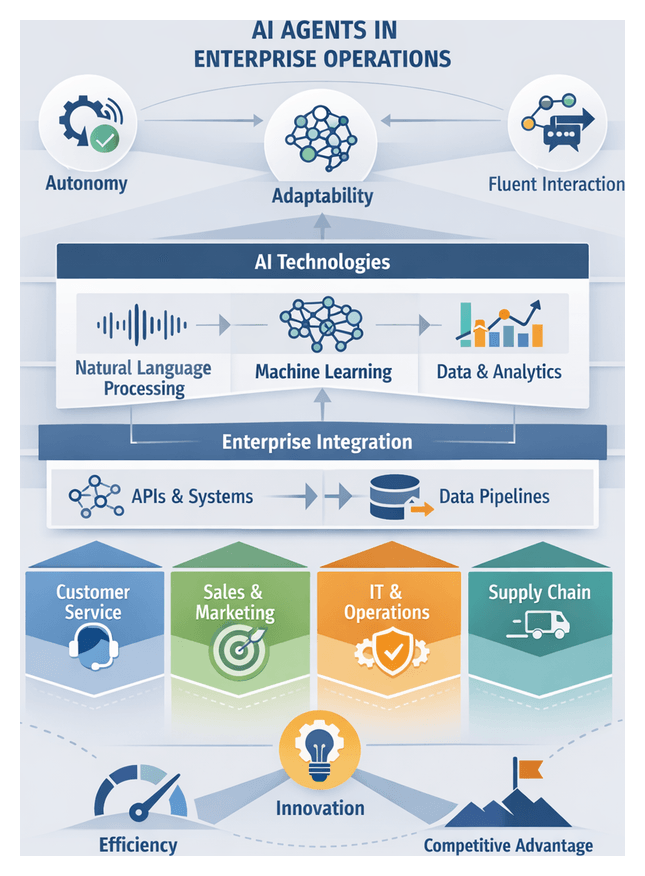
Defining AI Agents in Enterprise Operations
AI agents are autonomous, software-based collaborators that perform tasks, make decisions, and engage with users in ways that closely mimic human interaction. Unlike traditional automation tools that follow predefined workflows, these agents leverage natural language processing, machine learning, and advanced analytics to interpret unstructured inputs, adapt to evolving circumstances, and continuously refine their performance. They act as intelligent intermediaries between systems, processes, and people, operating around the clock, scaling to meet fluctuating demand, and delivering personalized experiences. This capability enables organizations to drive efficiency, foster innovation, and achieve competitive differentiation across diverse functions.
The adoption of AI agents aligns with broader digital transformation initiatives, as enterprises face ever-growing data volumes, heightened customer expectations, and intensifying competitive pressures. By orchestrating disparate data sources, automating routine inquiries, and surfacing actionable insights, AI agents reduce response times, minimize errors, and free human talent to focus on high-value activities. Embedding intelligence at the operational edge—whether in customer support, supply chain optimization, or internal help desks—creates a foundation for continuous process innovation and strategic agility.
AI agents distinguish themselves through five defining features:
- Autonomy: Initiating actions based on real-time data analysis, triaging tasks by priority, and escalating issues when human intervention is required.
- Adaptability: Refining models over time via machine learning, improving intent recognition and outcome prediction.
- Fluent Communication: Managing multi-turn conversations and maintaining contextual awareness through advanced natural language understanding and generation.
- Integration Capability: Connecting seamlessly with enterprise systems via APIs to orchestrate workflows and exchange data.
- Scalability: Operating in cloud or distributed architectures to handle high volumes of concurrent interactions without performance degradation.
In contrast to basic chatbots driven by decision trees or robotic process automation (RPA) that excel at rule-based tasks, AI agents combine adaptive learning with probabilistic reasoning and conversational design. This versatility allows them to guide customers through personalized product recommendations, troubleshoot technical issues in real time, and support decision-making processes.
Core technologies underlie AI agent capabilities:
- Natural Language Processing modules that parse text or speech, extracting intent, entities, and sentiment.
- Machine Learning architectures—including supervised, unsupervised, reinforcement, and hybrid models—that learn from historical data to optimize decisions.
- Knowledge Graphs and semantic ontologies that provide contextual reasoning by linking concepts and relationships.
- Real-time Analytics and event-driven frameworks that detect patterns and trigger automated actions.
- Data Management Pipelines that ensure high-quality inputs, supported by monitoring and feedback loops for continuous improvement.
AI agents find application across enterprise domains: customer service for routine inquiries and transactions; sales and marketing for lead qualification and campaign personalization; IT support for fault diagnosis and automated remediation; human resources for onboarding and policy guidance; and supply chain for demand forecasting and logistics coordination. Leading platforms include IBM Watson Assistant, Google Dialogflow, Microsoft Azure Bot Service, and open source solutions like Rasa. Selecting the right platform requires balancing deployment flexibility, language coverage, analytics depth, and ecosystem compatibility.
Core Technologies: Natural Language Processing, Machine Learning, and Data Management
Natural Language Processing has evolved from rigid, rule-based engines to flexible, data-driven models emulating human communication. Enterprises evaluate NLP solutions on several dimensions:
- Semantic Accuracy: Capturing intent and nuance, especially in specialized domains such as finance, healthcare, or legal services.
- Throughput at Scale: Maintaining low-latency performance under peak loads, often targeting sub-100 millisecond response times.
- Language Coverage: Supporting multiple languages and dialects for consistent global customer experiences.
- Integration Flexibility: Connecting with CRM, ERP, and back-office systems to orchestrate cross-channel workflows.
Transformer-based architectures such as BERT variants and GPT iterations deliver superior context retention and parallel processing. Benchmarking studies compare models across metrics like perplexity, F1 score, and human evaluation ratings. Open-source communities supplement vendor offerings by sharing pre-trained checkpoints and fine-tuning recipes.
Machine Learning architectures power AI agents’ decision-making capabilities:
- Supervised Learning: Leveraging labeled datasets for intent classification and entity recognition within conversational agents.
- Unsupervised and Self-Supervised Learning: Extracting latent representations via autoencoders or contrastive learning and predicting masked tokens or next sentences for broad corpus coverage.
- Reinforcement Learning: Optimizing dialogue policies and decision strategies through reward-driven simulations before live deployment.
- Hybrid Architectures: Blending supervised fine-tuning with reinforcement policy updates to balance precision on known intents with adaptability for novel scenarios.
Technical maturity models classify agent architectures on a continuum from static batch models to fully autonomous systems capable of real-time calibration, guiding enterprises in investing in MLOps tooling, retraining pipelines, and governance mechanisms.
Data Management is the foundation for scalable intelligence. Key domains include:
- Data Quality and Lineage: Ensuring traceability for bias audits, privacy compliance, and drift diagnostics.
- Scalable Storage and Access: Employing distributed file systems, data lakes, or columnar warehouses for rapid retrieval of large corpora.
- Metadata and Feature Management: Maintaining centralized registries that capture transformation logic, feature importance, and lineage graphs to reduce redundancy and accelerate new use-case onboarding.
Cross-functional councils of data engineers, compliance officers, and business analysts oversee data governance policies, service-level objectives for freshness and reliability, and investments in cataloging and validation platforms.
Assessing Readiness: Maturity Frameworks and Interpretive Models
Comprehensive maturity assessments help organizations evaluate preparedness for advanced AI agents across strategic, operational, and technical dimensions. Prominent frameworks cover:
- Strategy Alignment: Executive sponsorship, budget allocation, and defined use-case roadmaps.
- Process Integration: Change management practices, cross-team collaboration, and governance structures.
- Technology Infrastructure: Evaluation of compute resources, model orchestration platforms such as TensorFlow and PyTorch, and deployment pipelines.
- Data Ecosystem: Coverage of data sources, quality assurance processes, and regulatory compliance.
- Performance Monitoring: Continuous evaluation of agent accuracy, user satisfaction, and cost efficiency via dashboards and automated alerts.
Expert analyses guide platform selection and investment prioritization through several lenses:
- Vendor Ecosystem Analysis: Comparing integrated suites such as OpenAI GPT against modular, best-of-breed components.
- Total Cost of Ownership: Accounting for licensing, training overhead, data management, and governance expenses in lifecycle models.
- Risk and Compliance: Addressing data privacy regulations, model interpretability, and bias mitigation requirements.
- Scalability Roadmaps: Planning for horizontal scaling of inference clusters, model versioning, and disaster recovery.
- Talent and Skills Alignment: Assessing in-house expertise in ML engineering, data science, and DevOps alongside upskilling programs.
AI-Human Synergy: Strategic Imperatives and Market Context
Recent technological breakthroughs, including foundation models like GPT-4 and enhancements in computer vision, speech recognition, and multimodal fusion, have elevated AI from experimental to mission-critical. Cloud-based GPU and TPU clusters from Google Cloud AI and Microsoft Azure AI democratize access to high-performance computing, while edge inference accelerators and model distillation techniques support real-time responsiveness.
Customer expectations for immediate, personalized interactions and 24/7 availability make hybrid AI-human models essential. AI agents resolve routine inquiries rapidly, allowing human professionals to address high-value scenarios that require empathy, negotiation, or complex judgment. In sectors such as retail and finance, brands deploying AI-assisted recommendations and proactive alerts achieve higher loyalty, while failure to meet digital standards drives customer churn.
Market leaders employ hybrid triage systems to optimize resource allocation. AI agents pre-screen support tickets, classify complexity, and autonomously resolve standard issues or route prioritized cases to specialized teams. In financial services, AI-driven compliance monitoring frees analysts for strategic risk assessments. In healthcare, virtual assistants handle patient triage, enabling clinicians to focus on diagnosis and treatment. Retailers leverage AI for dynamic pricing and inventory alerts, enhancing human-led consultations and premium support lines.
Regulatory and ethical frameworks underscore the importance of human-in-the-loop controls. AI agents generate traceable decision logs, flag ambiguous scenarios for review, and operate within defined guardrails to ensure fairness, transparency, and accountability.
Strategic Considerations: Implementation, Governance, and Risks
Successful AI agent deployment extends beyond technology installation. Leaders must address organizational, technical, and ethical dimensions:
- Data Strategy and Management: Invest in unified architectures, metadata management, and real-time ingestion to ensure representative, high-quality data.
- Integration with Legacy Systems: Employ API-led architectures and standardized protocols to connect AI platforms with CRM, ERP, and knowledge bases.
- Change Management and Cultural Alignment: Communicate objectives and limitations transparently, build AI literacy, and foster collaborative mindsets among human agents.
- Governance, Compliance, and Ethics: Establish frameworks addressing privacy, algorithmic fairness, and auditability, supported by ethical oversight councils.
- Performance Measurement and Continuous Feedback: Define KPIs such as resolution times, escalation rates, and satisfaction scores, and embed feedback loops for model adaptation.
- Talent and Skill Investments: Develop upskilling programs in data interpretation, prompt engineering, and ethical AI, while equipping human supervisors in exception handling and trust calibration.
Organizations must also heed limitations and risks:
- Algorithmic Bias and Fairness Concerns: Conduct regular bias audits, employ diverse training corpora, and integrate fairness-aware algorithms.
- Over-Reliance and Automation Bias: Maintain clear decision rights and ensure human review of high-impact or ambiguous cases.
- Transparency and Explainability Challenges: Incorporate explainability features to diagnose errors and satisfy regulatory inquiries.
- Data Privacy and Security Risks: Implement robust access controls, encryption, and anonymization to comply with regulations like GDPR or CCPA.
- Technical Debt and Maintainability: Enforce version control, lifecycle management, and scheduled retraining to prevent performance degradation.
- Regulatory and Legal Uncertainties: Monitor evolving laws on automated decision-making, data sovereignty, and digital consumer rights with early legal engagement.
Balancing ambition with prudence involves articulating clear objectives, adopting iterative pilots, ensuring sustained human oversight, evolving governance structures, and fostering a culture of continuous learning. By anchoring AI agent initiatives in data integrity, transparent governance, and adaptive feedback mechanisms, organizations can harness the transformative potential of AI-human ecosystems to achieve sustainable competitive advantage.
Chapter 2: The Enduring Value of Human Agents
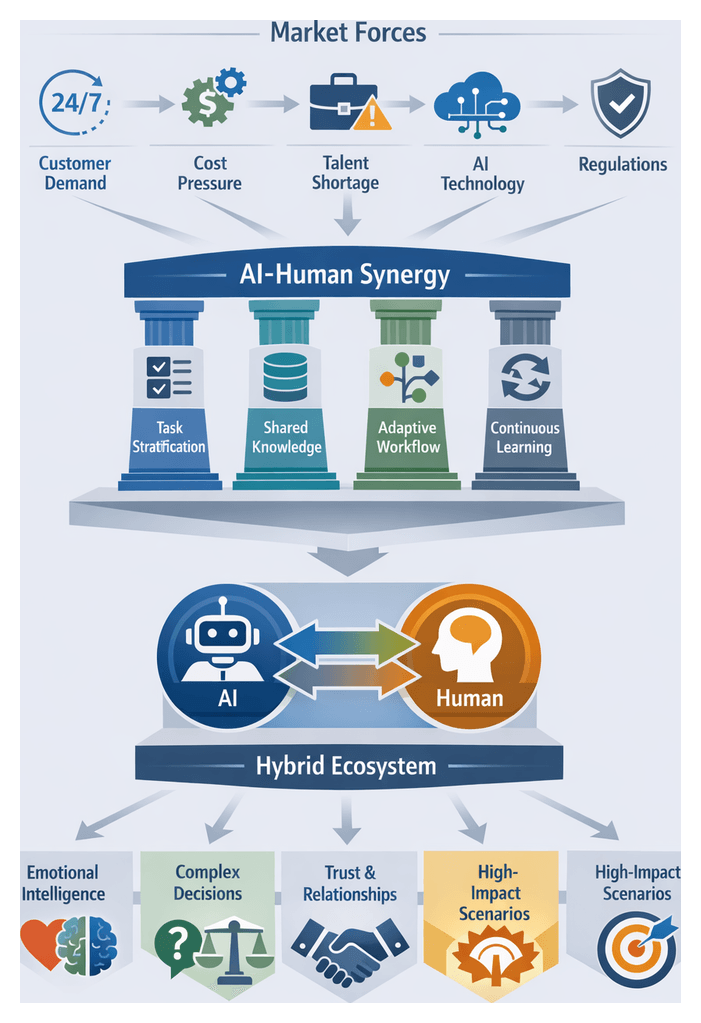
Market Forces Driving AI-Human Collaboration
Organizations today must deliver seamless, efficient, and personalized customer experiences under constant cost and talent pressures. Customer expectations for real-time, context-aware support across voice, chat, email and emerging channels have transformed competition from price wars to experience wars. Meanwhile, labor shortages and regulatory requirements raise the stakes for effective governance of both automated and human workflows. Advances in cloud computing, data analytics and machine learning have lowered the barriers to deploying intelligent automation at scale, yet no fully human or fully automated model can satisfy the complexity of modern customer journeys. A strategic fusion of AI capabilities with human expertise is essential for operational agility, service consistency and sustainable differentiation.
Key market forces include:
- Escalating customer demand for 24/7, omnichannel interactions.
- Cost pressures that drive automation while preserving high-value human touchpoints.
- Talent shortages and burnout in customer-facing roles.
- Technological advances enabling scalable intelligent automation.
- Regulatory and privacy mandates requiring controlled human-AI governance.
Framework for AI-Human Synergy
Orchestrating AI and human agents as complementary co-pilots hinges on four principles that assign tasks by complexity, share a unified knowledge layer, adaptively route interactions and sustain continuous learning loops.
- Task Stratification: AI addresses high-volume, deterministic queries; humans handle ambiguous, emotionally charged or high-risk scenarios.
- Shared Knowledge Ecosystem: A unified data layer delivers real-time context, customer history and sentiment analysis to both AI and humans.
- Adaptive Collaboration: Dynamic workflows enable AI to escalate or defer to human agents based on confidence thresholds, sentiment cues and compliance triggers.
- Continuous Learning Loops: Human feedback refines AI models, while AI-driven insights inform coaching, decision support and performance metrics.
This structured approach unlocks operational efficiency, consistency of service and enhanced customer satisfaction by leveraging each agent’s intrinsic strengths.
Timing and Technological Enablers
Recent developments amplify the viability of hybrid models:
- Advances in Natural Language Understanding: Transformer-based architectures interpret context, intent and sentiment with unprecedented accuracy.
- Proliferation of Generative AI: Large language models generate coherent, human-like text and voice across channels.
- Real-Time Analytics and Orchestration: Millisecond-scale monitoring of interaction streams enables rapid AI or human intervention.
- Evolution of Customer Expectations: Consumers accept AI when it delivers speed, relevance and personalization.
- Strategic Imperatives for Agility: Economic volatility demands resilient, scalable engagement platforms.
These trends lower cost and complexity barriers, positioning hybrid AI-human ecosystems as strategic differentiators rather than experimental pilots.
Evaluating Human Capabilities in Hybrid Ecosystems
Emotional Intelligence
Emotional intelligence (EI) in professional contexts encompasses self-awareness, self-regulation, social awareness and relationship management. Organizations deploy psychometric instruments such as EQ-i 2.0 and ESCI to benchmark agent capabilities, framing scores as developmental indicators. Real-time platforms augment these assessments with behavioral analytics: Qualtrics integrates sentiment analysis of customer feedback into performance dashboards, while Salesforce Einstein applies machine learning to chat and voice transcripts to identify empathetic language and deliver coaching prompts.
Judgment Under Complexity
Judgment—the ability to make sound decisions amid uncertainty—relies on pattern recognition and mental simulation. Scenario-based assessments and simulations score agents on decision quality, resolution speed and adherence to ethical guidelines. Organizations align evaluation criteria with strategic objectives, whether minimizing compliance risk in financial services or maximizing first-call resolution in support centers.
- Accuracy of emotional perception and matching customer affective states.
- Consistency of self-regulation under stress.
- Adaptability of judgment across evolving products, regulations or demographics.
- Effectiveness of social awareness in identifying unspoken needs.
- Quality of decision-making in novel scenarios balancing risk and advocacy.
- Integration of feedback into continuous improvement cycles.
Leading practices include multi-source assessments, evaluator calibration sessions and transparency of scoring methodologies to mitigate biases and uphold trust.
Contexts Where Human Expertise Prevails
High-Stakes and Risk-Sensitive Environments
- Financial markets and wealth management where advisors interpret volatility and complex trade-offs.
- Healthcare and medical triage requiring diagnostic judgment and ethical sensitivity.
- Crisis management and incident response demanding rapid coordination and accountability.
Emotionally Charged and Conflict-Intensive Interactions
- Dispute resolution and complaints handling, where empathy drives loyalty more than speed.
- Support for vulnerable or at-risk populations relying on nonverbal cue detection.
- Ethical and moral deliberations involving sensitive personal data or end-of-life decisions.
Culturally Sensitive and Multilingual Engagements
- Cross-border customer service requiring cultural fluency and regulatory awareness.
- Market expansion and localization guided by qualitative research and community engagement.
- High-touch hospitality and luxury brands delivering personalized, etiquette-driven experiences.
Complex Decision-Making Under Ambiguity
- Strategic consulting and advisory services that synthesize cross-disciplinary insights.
- Product innovation and co-creation workshops led by human facilitators.
- Regulatory interpretation and policy guidance in evolving compliance landscapes.
Trust Building and Long-Term Relationship Management
- B2B sales and enterprise account management leveraging industry networks and negotiation acumen.
- Subscription and membership services focusing on adoption coaching and renewal negotiations.
- Brand ambassadorship and thought leadership signaling authenticity and trust.
Human Agents as Strategic Differentiators
Human agents bring adaptive reasoning, cultural fluency and relational intelligence that algorithms cannot replicate. Core competencies—empathy, contextual judgment and emotional regulation—transform routine exchanges into value-co-creation moments. Analytical lenses such as Service-Dominant Logic, the socio-technical systems framework, the resource-based view, the job characteristics model and the emotional labor framework help organizations assess and cultivate these strategic assets.
Operationalizing Hybrid Collaboration
Human networks entail higher per-interaction costs, scalability constraints and performance variability. Training investments must cover technical, regulatory and soft-skill domains, while support programs address emotional labor and mitigate biases. Privacy, compliance and governance frameworks are essential to maintain consistency, protect data and uphold ethical standards.
Key Considerations for Integration
- Process mapping and segmentation to allocate human oversight where stakes and complexity are highest.
- Skills development and role definitions aligned with active listening, ethical reasoning and cultural competence.
- Governance structures specifying escalation pathways, decision rights and compliance controls.
- Technology orchestration that routes interactions based on AI-detected triggers such as sentiment or regulatory flags.
- Performance metrics combining quantitative indicators with qualitative sentiment and brand perception assessments.
- Cross-functional collaboration among data scientists, service designers, compliance and HR specialists.
Future Outlook for Human Agents
As generative AI and predictive analytics mature, human professionals will increasingly assume oversight, mentorship and innovation facilitation roles. Continuous learning architectures—blending microlearning, real-time coaching and communities of practice—will sustain adaptive expertise in advanced critical thinking, ethical judgment and creative problem-solving. By positioning humans as stewards of brand integrity and customer relationships, organizations can orchestrate seamless hybrid ecosystems that deliver enriched experiences, resilient performance and enduring competitive advantage.
Chapter 3: Comparative Strengths and Limitations
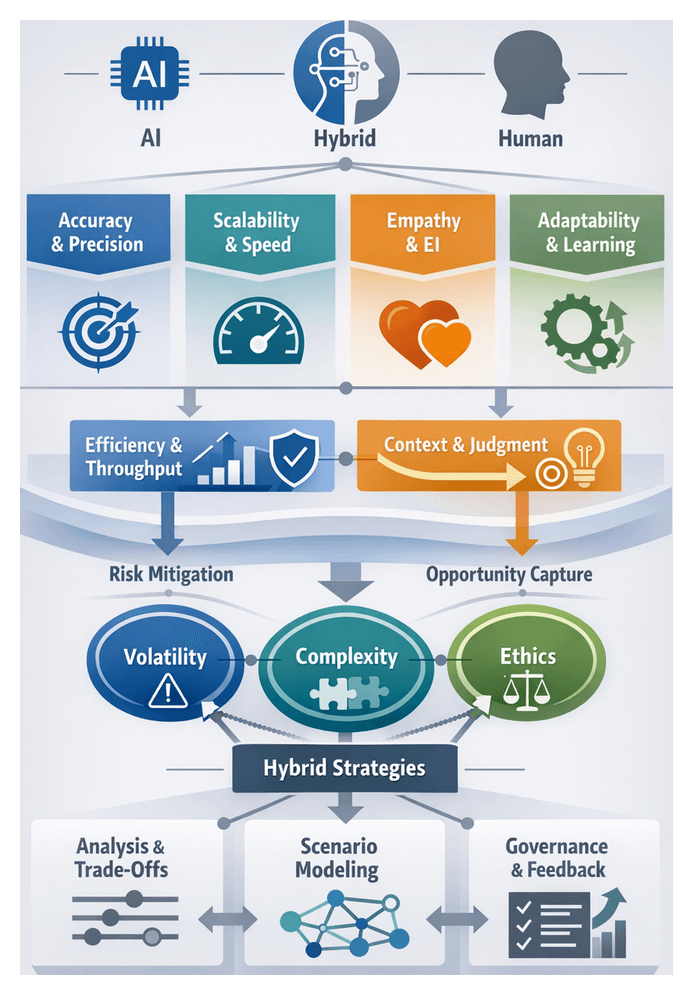
Contrasting Performance Dimensions
Evaluating artificial intelligence agents, human professionals, and hybrid models requires a structured framework across four core dimensions: accuracy and precision; scalability and speed; empathy and emotional intelligence; and adaptability and learning. By mapping capabilities to these axes, organizations can align resource allocation with strategic objectives, balancing efficiency, quality, and customer experience.
Accuracy and Precision
Accuracy reflects an agent’s ability to deliver correct outcomes, while precision measures consistency across repeated tasks. AI systems excel in structured data environments, achieving error rates below one percent in document processing and compliance screening. Machine learning classifiers and anomaly detection algorithms sustain high throughput with minimal variance. Human agents, on the other hand, handle ambiguous or context-dependent tasks more effectively, interpreting nuanced requests and applying judgment. Manual processes typically exhibit error rates of three to five percent, influenced by fatigue and cognitive bias. Best practice combines AI for bulk processing and exception flagging, routing edge cases to human experts to maximize overall accuracy while controlling risk.
Scalability and Speed
Scalability denotes the capacity to absorb increased workloads without proportional cost rises, while speed measures response times. AI agents offer near-instantaneous processing and parallel handling of thousands of requests per minute, constrained only by infrastructure. Cloud platforms enable dynamic scaling to meet peak-demand SLAs. Human agents require recruitment, training, and supervision, leading to plateaued performance as volume grows. Yet in complex, unpredictable scenarios, skilled professionals may resolve issues faster by drawing on cross-functional knowledge and improvisation. Hybrid operations deploy AI for standard inquiries and preserve human bandwidth for critical or high-priority interactions, ensuring rapid resolution across the spectrum of demand.
Empathy and Emotional Intelligence
Empathy and emotional intelligence are essential in customer interactions that involve distress, frustration, or high stakes. Human agents recognize tone, cultural nuances, and unspoken cues, tailoring communication to defuse tension and build rapport. AI-driven sentiment analysis and emotion recognition tools can detect negative language or stress indicators, enabling systems to suggest empathetic dialogue paths. However, algorithmic empathy is limited by training data and response templates. Effective support operations use AI to surface high-risk interactions at scale, flagging them for human intervention where genuine emotional connection is required.
Adaptability and Learning
Adaptability measures responsiveness to novel situations, while learning captures ongoing improvement. AI models can be retrained via online learning and automated pipelines, ingesting new interaction data to refine decision boundaries. Robust governance is essential to prevent drift or bias. Human agents exhibit instant adaptability, interpreting emerging policies and integrating cross-domain insights. Hybrid models close the feedback loop: AI detects shifting conversation patterns and recommends updates to scripts or knowledge bases, which humans validate and implement, ensuring both agent types evolve together in alignment with business needs.
Analytical Trade-offs for Hybrid Decision Making
Strategic integration of AI and human agents involves balancing technological capabilities against organizational priorities, risk tolerance, and stakeholder expectations. A rigorous trade-off analysis spans environmental volatility, task complexity, and ethical accountability, guiding resource allocation and governance structures.
Volatility and Resilience
In volatile markets, organizations must weigh scalable throughput against situational adaptability:
- Throughput Strengths: AI delivers predictable response times, parallel processing, and 24/7 availability.
- Adaptability Strengths: Humans apply real-time judgment, creative problem solving, and emotional resilience.
Further trade-offs arise between risk containment and opportunity capture:
- Containment-Focused Automation: standardizes workflows to minimize operational risk but may overlook novel revenue streams.
- Opportunity-Driven Human Intervention: empowers personalized cross-sell and loyalty moments at the expense of consistency.
Scenario planning and volatility modeling help establish thresholds for AI autonomy and human oversight, balancing resilience with agility.
Complexity and Flexibility
Complex tasks require reconciling analytical precision with contextual reasoning:
- Pattern Recognition: AI achieves high recall and reproducible analytics in well-defined domains like fraud detection and predictive maintenance.
- Contextual Reasoning: Humans interpret soft cues, reconcile conflicting objectives, and navigate ambiguous regulations.
Standardization versus customization also shapes deployment models:
- Standardized Automation: leverages reusable templates and micro-interactions for efficiency, trading off personalization.
- Custom Human Engagement: delivers bespoke solutions and relationship building, requiring ongoing training and quality assurance.
Modular service architectures combine automated frameworks for routine flows with configurable human touchpoints for differentiated engagements.
Ethical Accountability
Balancing transparency, fairness, and performance is critical as AI assumes greater autonomy:
- Transparency versus Optimization: AI models may optimize metrics without explainable logic, while human agents articulate reasoning but risk concealing biases.
- Bias Mitigation versus Efficiency: algorithmic fairness initiatives demand data governance and audits; diversity and inclusion programs require cultural change.
Dual-track approaches embed bias detection in AI pipelines and human oversight committees for edge-case review. Compliance with regulations such as GDPR mandates explainable interactions and audit trails.
Key analytical viewpoints include:
- Trade-Space Mapping: visualizing performance envelopes for AI and human agents across metrics
- Scenario Simulation: stress-testing hybrid models under extreme volatility and complexity
- Governance Layering: defining decision rights, escalation protocols, and continuous audits
- Continuous Feedback Loops: integrating customer sentiment and operational telemetry to recalibrate trade-offs
Operational Suitability Scenarios
Mapping interaction characteristics—volume, complexity, emotional intensity—to agent capabilities reveals six archetypal scenarios. Leading organizations design ecosystems where AI, humans, or hybrids operate where they deliver optimal value.
Routine, High-Volume Interactions
Tasks such as billing inquiries, password resets, and order tracking demand speed, accuracy, and cost efficiency. Conversational AI chatbots and virtual assistants automate repetitive flows, with continuous learning loops that refine models based on fallback rates. Human supervisors monitor quality and handle exceptions, creating an AI-first triage with human fallback to maintain customer satisfaction while reducing costs.
Complex, Knowledge-Intensive Engagements
In technical troubleshooting and multi-step problem solving, AI-augmented desktops assist human agents by retrieving knowledge-base articles, surfacing historical cases, and suggesting diagnostic pathways. This “human-in-the-loop” model reduces cognitive load and accelerates resolution while preserving expert oversight for nuanced judgments.
Emotionally Charged Interactions
Customer complaints and crisis communications require genuine empathy and active listening. AI sentiment analysis serves as an early detector, routing high-risk cases to specialized human agents. This hybrid approach optimizes resources: bots handle routine feedback, humans manage emotional labor to restore trust and loyalty.
Rapid-Response, Real-Time Channels
Live chat, social media, and messaging apps demand instantaneous responses. AI provides immediate acknowledgments and basic information, while human agents intervene for nuanced issues or sentiment shifts detected by real-time analytics. Tiered workflows leverage AI scalability during peak events and human judgment for critical escalations.
Personalized, Consultative Sales Engagements
Cross-sell and up-sell scenarios benefit from AI-driven recommendation engines that analyze behavioral data and generate next-best offers. Human representatives then craft tailored proposals, negotiating contract terms and fostering long-term relationships. Analytics dashboards presenting customer lifetime value and propensity scores guide human prioritization.
Regulated or High-Stakes Compliance Scenarios
In financial advice, insurance underwriting, and healthcare consultations, AI enforces rule-based validations, flags exceptions, and logs audit trails. Human experts retain accountability for discretionary approvals and interpret grey-area regulations. “Compliance guardrails” ensure routine checks are automated, with predefined escalation paths for complex judgments.
Adaptive Collaboration in Hybrid Dynamics
Certain interactions blend volume, complexity, and emotional weight, such as real-time fraud alerts coupled with anxious customers. Predictive routing engines evaluate sentiment, customer value, and complexity indicators to assign tasks dynamically. Intelligent workflows orchestrate AI for continuous monitoring and humans for trust-critical segments, forming an adaptive collaboration model that responds to evolving signals.
Synthesis: Strategic Priorities and Governance
Optimal agent strategies are contingent on the relative importance of accuracy, scalability, empathy, and adaptability within specific business objectives. A disciplined prioritization framework aligns capabilities with mission-critical outcomes:
- Rank interaction types by impact on customer loyalty and revenue
- Map performance dimensions against risk thresholds (compliance, privacy)
- Calculate marginal benefits of automation versus human oversight
- Balance long-term scalability needs with upfront investment constraints
Strategic imperatives include:
- Phased Integration Roadmap: pilot hybrid models in defined use cases to validate hypotheses, refine hand-over logic, and measure impact before scaling
- Shared Knowledge Ecosystems: develop unified repositories feeding AI training pipelines and human knowledge bases for consistency and rapid learning
- Balanced Scorecard Monitoring: combine quantitative metrics (resolution time, error rates, cost per interaction) with qualitative indicators (customer sentiment, brand perception, agent satisfaction)
- Governance and Ethics Frameworks: establish steering committees, define ethical principles (transparency, fairness, accountability), map regulatory obligations, embed bias-detection pipelines, and enforce privacy impact assessments
- Culture of Collaboration: foster cross-functional teams where data scientists, operations leaders, and frontline agents co-author process improvements
Key limitations and risk considerations include data quality dependencies, adaptation latency, governance constraints, customer trust variations, cost structures, and ethical bias exposure. Addressing these requires ongoing capability development, continuous feedback, and iterative review.
Future readiness demands modular architectures that accommodate emerging AI capabilities such as contextual understanding and zero-shot learning, periodic trade-off reassessment, continuous upskilling for human agents, and scenario planning to stress-test hybrid models. By institutionalizing rigorous governance, strategic alignment, and adaptive performance calibration, organizations can harness the synergistic potential of AI and human professionals for sustained competitive advantage.
Chapter 4: Industry Use Cases and Business Applications
Market Dynamics and Strategic Imperatives
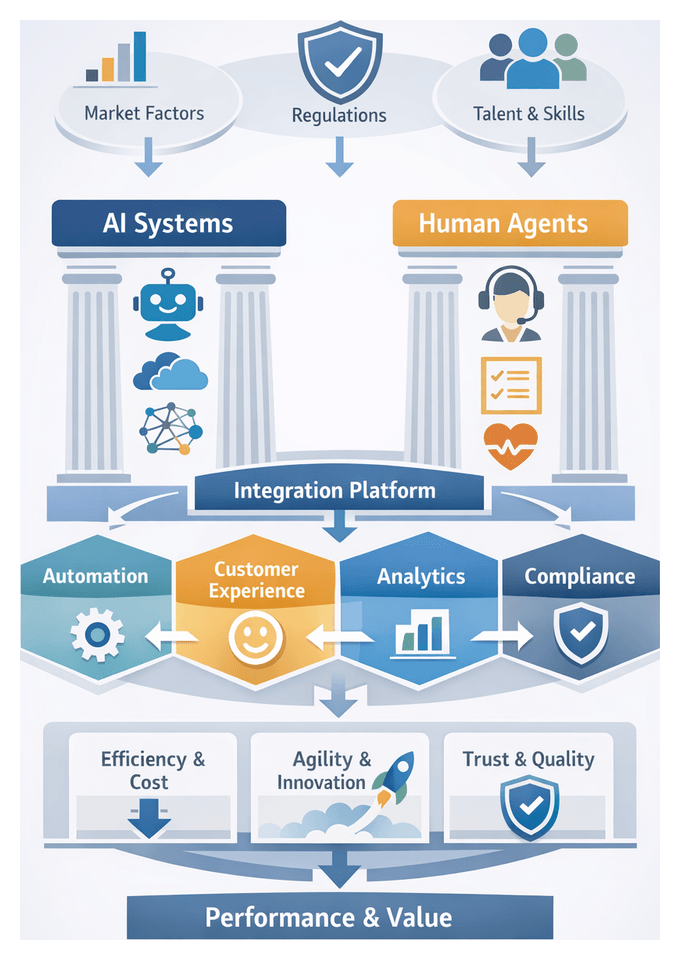
Organizations face converging pressures from digital disruption, customer expectations, technological advances, competitive intensity, economic constraints, talent realities and regulatory imperatives. Ubiquitous connectivity and on-demand services raise the bar for instantaneous, personalized experiences across channels. Automated agents powered by ChatGPT or Dialogflow can field routine inquiries at scale, while human professionals address complex or emotionally sensitive interactions. Fragmented architectures undermine continuity as customers shift between messaging, voice assistants and social media. Integrating AI and human workflows on unified platforms preserves context and enables seamless handovers, reducing friction and reinforcing brand loyalty.
Breakthroughs in large language models, reinforcement learning, cloud-based inference and specialized accelerators are expanding the scope of tasks suited to AI. Solutions like Microsoft Copilot embed assistants into productivity suites and Amazon Lex powers scalable conversational interfaces. Low-code/no-code tools democratize process automation, enabling business users to configure hybrid workflows without deep technical expertise. To sustain agility, organizations adopt modular, API-driven architectures that support iterative upgrades of individual components without disrupting end-to-end processes.
Competitive pressure accelerates innovation cycles. Startups harness AI to rapidly prototype novel services, while incumbents deploy hybrid agent models to maintain speed-to-market. Embedding AI-driven sentiment analysis to flag high-value interactions for human escalation ensures that strategic issues receive tailored attention. This balance accelerates deployment while preserving quality and trust.
Economic efficiency remains central. AI agents provide elastic capacity, scaling with demand to contain labor costs, improve first-contact resolution and optimize resource allocation through real-time analytics. Delegating repetitive processes to AI reduces cost-per-interaction by up to 40 percent, freeing budget for strategic initiatives.
Talent constraints in advanced analytics, AI governance and conversational design demand new roles—AI trainers, prompt engineers and hybrid supervisors—alongside upskilling for frontline agents. Comprehensive training in data literacy, ethical AI and change management ensures that human professionals can interpret AI insights and intervene judiciously.
Regulatory frameworks—GDPR, CCPA and industry-specific mandates—require transparent AI decision-making, auditability and respect for data subject rights. Ethical considerations around bias, fairness and accountability necessitate governance policies, model validation protocols and human review of high-stakes decisions. Proactive compliance builds trust and mitigates legal risks.
Evaluating Hybrid Performance and Value
Assessing the impact of pure AI, human-only and hybrid models requires standardized metrics across operational efficiency, customer experience and risk management. Operational benchmarks include average handle time, with AI-chatbots often halving resolution durations, first-contact resolution rates above 80 percent and cost-per-contact reductions of 20–40 percent under hybrid strategies. Customer experience relies on satisfaction scores above 90, net promoter lifts of around 10 points and sentiment analysis to monitor emotional tone. Risk management metrics measure compliance accuracy near 100 percent, error rates below 1 percent in critical processes and escalation frequencies reflecting optimal AI autonomy without quality degradation.
Industry-specific outcomes vary. In retail and e-commerce, Dialogflow-powered order tracking and product recommendations cut handle times by 50 percent, while human agents manage complex returns and loyalty issues. Financial services embedding IBM Watson for automated KYC achieve over 99 percent compliance accuracy and 60 percent reduction in manual reviews, with advisors handling exceptions. Healthcare providers using Microsoft Azure Bot Service improve first-contact resolution by 30 percent for scheduling and prescription refills; clinicians oversee diagnosis support. High-volume support centers leveraging AgentLink AI report 25 percent cost savings and maintain satisfaction above 88 percent through iterative feedback between AI and human teams.
Interpretive frameworks guide strategic evaluation. The balanced scorecard aligns financial goals with efficiency metrics, customer objectives with satisfaction and loyalty, internal processes with compliance accuracy and learning with employee engagement. The technology adoption lifecycle contrasts performance across innovators to laggards, revealing accelerated maturity and larger efficiency gains in hybrid deployments. The value realization model tracks benefits over time against investment baselines, balancing cost savings, revenue uplifts and risk mitigation to calculate net return.
Experts caution that no single metric suffices. Gartner recommends limiting AI autonomy triggers to maintain escalation rates near 15 percent before diminishing returns in customer satisfaction. McKinsey finds that combining AI automation with targeted human intervention can boost productivity by up to 30 percent while preserving net promoter increases of 8–12 points. Forrester urges continuous sentiment monitoring, integrating real-time dashboards for timely human support when emotion signals spike.
Emerging patterns show that hybrid maturity correlates with stable outcomes: systematic refinement of hand-off protocols and feedback loops secures consistent resolution and satisfaction rates. Domain-specific AI models outperform general-purpose bots by 20–30 percent in intent recognition. Empowered human agents who interpret AI recommendations drive higher resolution rates and lower error frequencies. Robust governance frameworks underpin compliance and customer trust, ensuring sustainable performance.
Contextualizing Hybrid Agent Strategies
Effective hybrid models consider external market conditions, customer profiles, technological readiness, cultural factors, competitive dynamics and vendor ecosystems. Multidimensional context analysis informs which collaboration models deliver optimal value, the timing of initiatives and governance structures needed for resilience and ethical integrity.
Regulatory and Compliance
In finance, healthcare and telecommunications, data residency rules and cross-border transfer restrictions dictate on-premises versus cloud processing. Auditability standards require comprehensive logging, while professional codes of conduct shape agent training. Risk-based frameworks—such as the European Banking Authority’s stress tests or the U.S. Food and Drug Administration’s software as a medical device guidelines—guide layered governance, with periodic AI validation and human final approval in critical scenarios.
Customer Segmentation and Behavior
Demographic and behavioral profiling reveals which cohorts embrace AI and which demand human interaction. Journey maps and personas combine quantitative indicators—channel switching, resolution times—with qualitative feedback to pinpoint friction points. Channel affinity analysis informs the mix of text bots, voice assistants and human operators. Behavioral triggers—abandoned carts, negative sentiment—activate dynamic routing rules, ensuring empathetic human engagement where self-service falls short.
Technology Maturity
Organizations with unified data platforms, modular APIs and real-time analytics enable seamless AI-human handoffs. Assessments using the capability maturity model integration reveal levels of standardization, automation and continuous improvement. High maturity correlates with formal governance, embedded change management and integrated performance dashboards, facilitating rapid prototyping and iterative refinement.
Culture and Capabilities
A culture valuing experimentation and data-driven decision-making accelerates hybrid adoption. Change models—Kotter’s eight steps, Schein’s cultural dimensions—help leaders articulate vision, mobilize champions and reinforce new behaviors. Cross-functional governance forums and performance systems aligned with collaborative KPIs—such as joint resolution rates—foster shared accountability. Training in critical thinking, emotional intelligence and ethical reasoning equips teams to co-manage AI-human interactions.
Competitive Dynamics
Porter’s Five Forces and the Blue Ocean Strategy canvas reveal how customer bargaining power, threat of substitution and market fragmentation influence the urgency of hybrid investments. Brands facing low switching costs must deliver seamless experiences through intelligent coordination, while cost leaders may emphasize AI for high-volume tasks and reserve human expertise for premium segments. Time-to-market for new offerings often begins with AI prototypes, with human oversight ensuring compliance and quality.
Vendor Ecosystems
Vendor selection shapes integration complexity and total cost of ownership. Frameworks like the Gartner Magic Quadrant and Forrester Wave help map provider capabilities, distinguishing platform leaders and niche specialists. Turnkey implementations and co-development alliances influence customization speed and knowledge transfer. Licensing and usage-based pricing require alignment with projected volumes and seasonal peaks. Reference architectures accelerate prototyping but must align with data governance. Partnerships with system integrators and managed service providers support end-to-end lifecycle management.
Scenario-based planning exercises layer these factors onto potential use cases, using heat maps, decision matrices and impact-effort charts to translate context into clear strategic pathways. Continuous reassessment and feedback loops ensure that hybrid agent strategies evolve alongside market conditions and technological progress.
Lessons from Hybrid Deployments and Future Directions
Key Success Factors
- Strategic alignment between business objectives and hybrid processes
- Robust data governance and unified integration
- Human-centric workflow design with clear escalation protocols
- Continuous monitoring and feedback loops between AI and human agents
High-performing implementations define clear outcomes—such as improved resolution rates or increased upsell—leveraging AI for scale and human judgment for nuance. Data streams must be unified and high quality to maintain contextual relevance. Feedback loops, where human experts review AI suggestions to refine models, drive adaptive resilience and support iterative improvements.
Common Pitfalls
- Overestimating AI capabilities without sufficient change management
- Fragmented escalation processes for edge-case handling
- Ethical and regulatory oversights leading to bias or compliance gaps
- Operational complexity when human-AI coordination lacks modular architecture
Premature scaling of underprepared systems can frustrate users and expose risks. Clear change-management programs, structured training and stakeholder buy-in are essential to avoid underperformance. Governance checkpoints and audit trails prevent unintended bias and maintain compliance. Modular architectures and defined accountability mitigate scalability challenges.
Strategic Considerations
- Modular, API-driven architectures for incremental capability upgrades
- Balanced investment in human expertise and AI innovation
- Transparent governance with documented decision criteria and bias mitigation
- Communities of practice for cross-functional knowledge sharing
Incremental pilots of advanced AI modules in controlled environments allow organizations to validate performance before enterprise-wide rollout. Cross-functional committees ensure alignment on ethics, compliance and strategic priorities. Communities of practice foster shared learning among AI engineers, domain experts and customer-facing teams, accelerating continuous improvement.
Limitations and Future Research
Quantifying long-term returns remains challenging, especially for intangible benefits like brand loyalty and employee engagement. Multilingual and cross-cultural deployments expose variations in expectations and legal requirements that general models may not address. As AI roles deepen, algorithmic bias and transparency concerns intensify, demanding rigorous validation and interpretability frameworks. Hybrid ecosystems are dynamic; periodic reassessment against evolving standards, channels and behaviors is critical. Collaboration among academia, industry consortia and regulators can close empirical gaps in ethical certification, real-time bias detection and adaptive governance.
Hybrid AI-human collaboration is a strategic imperative, not a transitional phase. By aligning technological innovation with organizational readiness, embedding robust governance and fostering continuous learning, enterprises can unlock new horizons of customer value and operational excellence.
Chapter 5: Architecting Hybrid Collaboration Models
Market Forces Driving AI-Human Collaboration
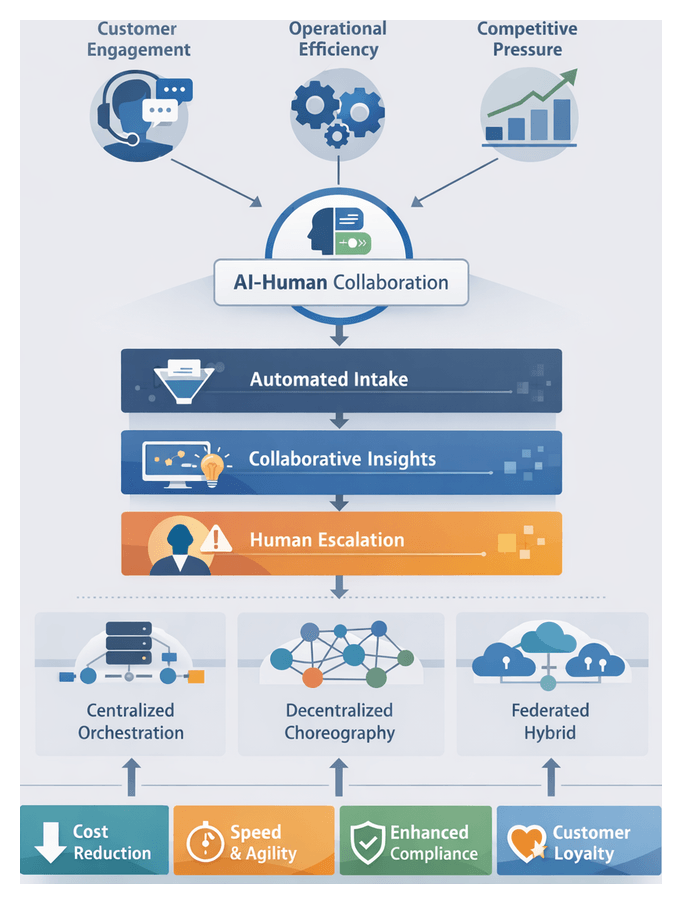
In today’s competitive landscape, organizations face mounting pressure to deliver personalized, responsive experiences while containing costs and maintaining agility. Rising labor expenses, evolving customer expectations, and digital-first disruptors have accelerated the shift toward integrated AI-human models. Three key drivers underscore this transition:
- Complex Customer Engagement: Clients demand real-time, omnichannel support that blends empathy with efficiency.
- Operational Efficiency: Automating routine tasks frees human agents to focus on exceptions and strategic interventions.
- Competitive Urgency: Digitally native challengers force legacy enterprises to adopt AI augmentation or risk falling behind.
By aligning automated intelligence with human judgment, hybrid collaboration becomes a strategic imperative. Firms that invest in complementary AI-human capabilities can reduce costs, accelerate response times, and enhance customer loyalty without increasing headcount.
Strategic Timing and Technological Readiness
Recent advances in deep learning, natural language processing, and real-time analytics have matured AI platforms to enterprise-grade reliability. Solutions like IBM Watson now deliver contextual understanding once limited to human experts. Simultaneously, remote work trends and talent shortages have heightened the value of augmenting human agents with AI to handle routine volumes and maintain service levels during peak demand.
Regulatory developments—such as GDPR and CCPA—and scrutiny around algorithmic fairness further drive hybrid adoption. Automated controls complemented by human oversight offer a robust framework for compliance, bias mitigation, and data privacy. Organizations that act now can capture first-mover advantages, embed scalable models, and build capabilities to accommodate future innovations.
Conceptual Framework for AI-Human Synergy
Effective hybrid models harness the unique strengths of AI and humans through layered interactions. A three-stage architecture illustrates this synergy:
- Automated Intake: AI platforms such as OpenAI GPT-4 parse inquiries, classify intent, and resolve routine issues.
- Collaborative Processing: AI surfaces insights—sentiment cues, risk flags, personalized recommendations—and delivers them via unified dashboards to human agents.
- Strategic Escalation: Human experts handle complex or emotionally sensitive cases, applying contextual judgment and empathy.
Key principles include seamless transition between AI and human agents, transparent data exchange that enables models to learn from human interventions, and governance protocols to ensure quality and trust. By framing AI and people as collaborators, organizations unlock collective intelligence to tackle intricate challenges swiftly and accurately.
Integration Architectures for Scalability and Governance
Selecting the right architecture is critical to sustaining high-volume hybrid interactions. Three dominant models prevail:
Centralized Orchestration
A core engine coordinates data flows among AI components, human interfaces, and backend systems. Platforms like Google Contact Center AI and IBM Watson Assistant provide unified consoles for intent recognition, agent hand-offs, and policy enforcement. Centralization simplifies monitoring, compliance, and auditability but can become a bottleneck under peak loads unless designed for horizontal scalability and fault tolerance.
Decentralized Choreography
Decision logic is distributed across microservices that communicate via event streams or message buses. Azure AI Services exemplify this approach with event grid and service bus constructs. Choreography offers superior scalability and fault isolation but requires robust service meshes to enforce governance, security, and traceability across components.
Federated Hybrid Architectures
Combining orchestration and choreography, federated designs use a lightweight central layer for session management while enabling local autonomy for processing. This model supports regional data residency, centralized monitoring of model drift, and balanced governance. Financial institutions, for example, route classification tasks through a managed API and handle credit adjudications within local data centers.
Architects evaluate solutions against key dimensions:
- Resilience and Fault Tolerance: failover strategies, recovery objectives, and chaos-engineering practices.
- Operational Visibility: quality of telemetry, alert thresholds, and dashboard completeness.
- Scalability and Performance: capacity under realistic and burst traffic scenarios.
- Governance and Compliance: enforcement of data policies, access controls, and audit logging.
- Flexibility and Extensibility: ease of onboarding new AI services, workflows, or third-party integrations.
Vendors like Salesforce Einstein and Twilio Flex offer preconfigured connectors and programmable frameworks to accelerate deployments. Strategic criteria—alignment to business objectives, technical debt, vendor lock-in, data governance maturity, and innovation velocity—guide phased architectures that evolve from turnkey pilots to modular, open ecosystems.
Seamless Hand-over Mechanisms
The transition between AI and human agents critically impacts service quality and efficiency. High-performing organizations embed seamless hand-overs that preserve context, maintain conversational continuity, and dynamically prioritize escalations.
Enhancing Customer Experience Consistency
Cohesive transitions require unified session histories, real-time sentiment alerts, and escalation rules tied to customer value. When chatbots smoothly pass cases to humans, brands minimize customer effort and protect Net Promoter Scores.
Strengthening Operational Resilience
Seamless hand-overs enable elastic workforce utilization and operational redundancy. During peak events or staffing gaps, AI absorbs routine volumes while human specialists focus on exceptions. This load smoothing reduces average handling times and supports adherence to service-level agreements.
Aligning Training and Workforce Development
As AI handles more routine tasks, agents must be upskilled for nuanced, high-value interactions. Role redefinition, contextual training with AI-generated dialogue logs, and continuous feedback loops ensure agents stay engaged and effective.
Governance and Compliance
Robust controls for data minimization, role-based access, audit trails, and consent management safeguard privacy and regulatory adherence during hand-overs.
Monitoring and Continuous Improvement
Hand-over data enables analysis of success rates, time-to-resolution deltas, sentiment shifts, and qualitative feedback. Treating this data as a strategic asset drives iterative refinements and aligns technology with human workflows.
Contextual Applications
- Retail and E-commerce: AI manages product inquiries, passing complex returns to human agents during peak sales.
- Financial Services: Virtual assistants handle basic account questions, escalating suspicious transactions to advisors.
- Healthcare and Insurance: AI triages symptom checks and policy inquiries, with licensed professionals addressing clinical or claim complexities.
- Telecommunications and Utilities: Chatbots resolve billing questions, handing off technical troubleshooting to senior support staff.
Leadership Imperatives
Executives must invest in scalable hand-over infrastructures, align cross-functional teams, embed policies within ethical AI frameworks, and redefine talent strategies to reflect hybrid roles. Mastery of seamless transitions distinguishes industry leaders in AI-driven customer engagement.
Design Principles for Operational Harmony
Aligned Orchestration of Agent Roles
Define clear boundaries and hand-off points that assign automated tasks—like data queries and forecasting—to AI, and complex advisory interactions to human professionals. Role taxonomies guide decision engines and training programs to ensure strategic alignment.
Transparency and Shared Context
Capture and display metadata—sentiment scores, AI confidence levels, previous outcomes—in unified dashboards. Transparency fosters trust, enables coherent experiences, and supports accountability.
Modular Architecture for Scalability and Flexibility
Decouple AI services from core engagement systems using microservices and standardized APIs. Conversational modules built on Google Dialogflow or OpenAI GPT-4 can evolve independently, reducing vendor lock-in and simplifying compliance.
Continuous Feedback Loops and Performance Calibration
Implement closed-loop learning where agents annotate AI outputs, flag anomalies, and feed qualitative insights back into model retraining. Metrics such as correction frequency and post-escalation satisfaction measure calibration effectiveness.
Governance, Accountability, and Ethical Guardrails
Establish oversight boards to review fairness metrics, privacy impact assessments, and stress-test scenarios. Embed bias audits and incident response plans into design workflows to uphold ethical standards.
Human-Centric Augmentation and Empowerment
Present AI recommendations—confidence intervals, alternative options, risk alerts—in ergonomically designed interfaces. Scenario-based simulations prepare agents to interpret outputs and refine prompts, reinforcing human agency.
Alignment with Business Strategy and Key Metrics
Map hybrid workflows to KPIs—average handle time, first-contact resolution, upsell conversion—and apply A/B tests to validate value drivers. Dashboards integrating AI logs with business analytics enable real-time performance tracking.
Adaptability and Resilience in Evolving Environments
Embed scenario planning and capability roadmaps to evaluate performance under spikes or regulatory changes. Cross-functional councils and centers of excellence oversee technology refresh cycles, ensuring graceful pivots.
- Data Quality Constraints: High-integrity pipelines are essential to prevent biased or incomplete inputs.
- Change Management Complexity: Address cultural resistance and skills gaps through stakeholder alignment and phased rollouts.
- Regulatory Uncertainty: Maintain agile policies to adapt to evolving transparency and privacy mandates.
- Interoperability Challenges: Leverage middleware or service meshes to bridge legacy systems and vendor platforms.
- Resource and Cost Trade-offs: Balance investments in governance, feedback mechanisms, and maintenance against efficiency gains.
- Ethical and Reputation Risks: Conduct continuous audits to detect bias and protect customer trust.
Adhering to these design principles—aligned orchestration, transparency, modularity, iterative feedback, robust governance, human-centric augmentation, strategic alignment, and adaptability—enables organizations to build sustainable, scalable AI-human collaboration models that deliver differentiated customer experiences and long-term competitive advantage.
Chapter 6: Organizational Readiness and Cultural Alignment
Assessing Change Readiness and Capabilities
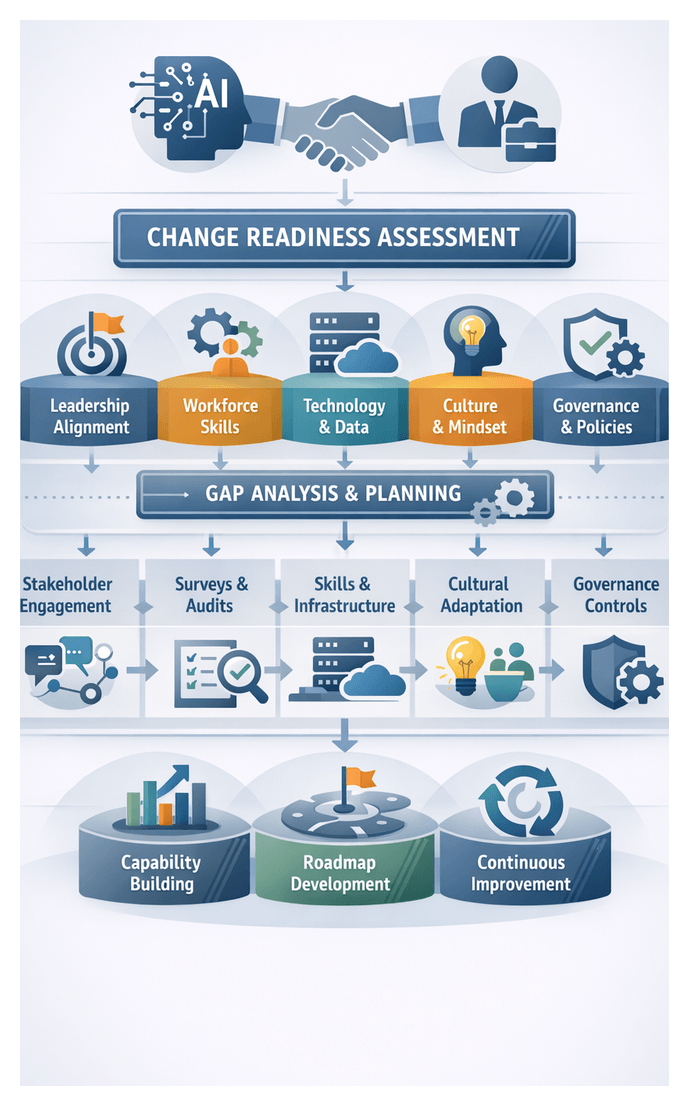
Organizations preparing to integrate AI agents alongside human professionals must first evaluate their capacity for change. A readiness assessment aligns leadership vision, workforce skills, technology infrastructure, cultural mindsets, and governance processes to ensure strategic investments in hybrid collaboration deliver maximum value. Readiness is a continuum reflecting an enterprise’s ability to adapt and learn, not a binary state.
This assessment clarifies AI objectives, highlights gaps, and engages stakeholders across executive sponsors, IT, operations, HR, and frontline teams. It examines both tangible assets—data architecture, integration platforms, automation frameworks—and intangible attributes such as leadership commitment and cultural openness.
Key Dimensions of Readiness
- Leadership Alignment and Vision
- Workforce Skills and Competencies
- Technology and Data Infrastructure
- Cultural Mindsets and Behavioral Change
- Governance, Policies, and Processes
Leadership Alignment and Vision
Leaders articulate a clear vision for AI-human collaboration and link it to measurable outcomes. Indicators include executive sponsorship, strategy integration, and transparent communication of goals and milestones. High alignment accelerates decision paths and cross-functional cooperation.
Workforce Skills and Competencies
Hybrid teams require both technical proficiency—data literacy and AI concepts—and adaptive skills such as problem solving and critical thinking. Assessments map existing skills to required capabilities, review training programs, and evaluate talent mobility. Continuous development and cross-training foster collaboration between AI specialists and business users.
Technology and Data Infrastructure
Robust ecosystems support seamless AI workflows from data ingestion to real-time inference and human handover. Evaluate data quality frameworks, API-driven integration architectures, cloud scalability, and security controls. Audits reveal infrastructure gaps that may hinder pilot programs or full deployments.
Cultural Mindsets and Behavioral Change
Cultivating openness to experimentation, trust in AI outputs, and collaboration norms is essential. Recognize and reward cross-disciplinary problem solving, and support teams as they absorb new workflows. Visible role modeling and storytelling reinforce desired behaviors.
Governance, Policies, and Processes
Clear decision rights, escalation protocols, ethical controls, and continuous improvement mechanisms ensure safe and efficient collaboration. Strong governance reduces risk and ambiguity, while weak processes invite delays and inconsistent outcomes.
Conducting the Assessment
- Stakeholder Interviews to capture qualitative insights.
- Surveys and Diagnostic Tools to quantify readiness and benchmark performance.
- Document and System Review of strategies, process documentation, and technology inventories.
- Gap Analysis Workshop with cross-functional teams to validate priorities.
- Roadmap Development assigning owners, timelines, and success criteria.
Building Foundational Capabilities
- Targeted Skill Development through training, certifications, and mentorship.
- Technology Upgrades including modern data platforms and scalable compute resources.
- Governance Framework Establishment defining policies and oversight committees.
- Cultural Activation via innovation labs and co-creation workshops.
- Process Reengineering to integrate AI-driven decision support and human checkpoints.
Monitoring Progress and Adapting
- Periodic Re-assessment of readiness dimensions.
- Performance Metrics such as deployment velocity, user satisfaction, and model accuracy.
- Governance Reviews evaluating ethical compliance and risk exposure.
- Continuous Learning through communities of practice and post-implementation reviews.
An ongoing readiness capability ensures that organizations evolve with technological advances and market shifts, enabling sustained AI-human collaboration.
Leadership and Stakeholder Roles
Effective AI-human integration depends on clearly defined roles and governance structures. Responsibilities span executive sponsors, middle managers, frontline champions, cross-functional bodies, and external partners. Analytical frameworks such as RACI matrices, stakeholder salience models, and maturity assessments provide structure and objectivity.
Executive Sponsors and Coalition
A coalition of executives—including the CEO, CFO, and COO—provides legitimacy, budget, and strategic coherence. Steering committees and performance dashboards track adoption milestones, reinforce urgency, and model AI-driven decision making in leadership forums.
Middle Management as Translators
Middle managers bridge strategy and operations, embedding AI objectives into team goals and KPIs. They coordinate pilots, facilitate training, and sustain momentum through feedback loops. Clear role charters and accountability mechanisms ensure alignment with workflows.
Frontline Champions
Operational champions validate AI use cases in live environments, advocate for tools among peers, and convene communities of practice. Incentives such as recognition programs empower grassroots innovation and inform governance decisions.
Cross-Functional Governance
A two-tiered structure—an oversight board and an implementation council—balances strategic policy with technical execution. Legal, compliance, HR, IT, and business units define risk thresholds, ethical guardrails, and operational standards, preventing siloed decision-making.
External Stakeholders
Vendor partnerships, consulting alliances, regulatory bodies, and industry consortia extend governance beyond the enterprise. Joint steering committees, co-development roadmaps, and policy forum participation ensure compliance and drive innovation.
Role Clarity and Accountability
Tools such as the RACI matrix and stakeholder heat maps define decision rights and engagement levels. Living role charters, updated through governance reviews, reduce ambiguity and accelerate issue resolution.
Leadership Mindsets and Influence
Transformational leaders frame AI as augmenting human roles and emphasize learning from setbacks. Narrative techniques that combine logic, values, and practical implications build shared purpose and overcome cognitive biases.
Evaluating Readiness and Influence
Readiness models combine surveys, interviews, and focus groups to gauge competencies, trust, and perceptions. Influence analysis directs tailored engagement: high-power, low-interest stakeholders receive informational updates, while frontline users benefit from participatory workshops.
Governance Maturity and Ethical Oversight
Maturity models chart progression from ad-hoc experimentation to optimized ecosystems. Ethical accountability involves bias mitigation protocols, transparency standards, and regular audits aligned with frameworks like ISO 31000. Robust risk oversight and moral stewardship reinforce stakeholder trust.
Continuous Feedback Integration
Digital suggestion platforms, satisfaction surveys, and post-implementation reviews feed into governance dashboards. Transparent reporting on how feedback drives decisions fosters co-ownership and adaptive stakeholder roles.
Cultural Dynamics and Adoption Enablers
Culture shapes trust, psychological safety, collaboration norms, and ethical behavior in hybrid AI-human ecosystems. Analytical models such as Schein’s cultural layers and Rogers’ diffusion of innovations guide targeted interventions.
Trust and Transparency
Epistemic trust in AI outputs and interpersonal trust among human stakeholders are built through transparent communication of system capabilities, limitations, and performance reviews. Open forums for anomaly discussions reinforce positive narratives.
Psychological Safety and Learning Orientation
Encouraging employees to question AI recommendations and report outcomes without fear supports single-loop and double-loop learning. Mistakes become opportunities for improvement rather than grounds for blame.
Narrative Framing
Leaders craft stories that connect past experiences to future aspirations, emphasizing empowerment, customer centricity, and human-machine complementarity. Effective narratives address head (logic), heart (values), and hand (practical implications).
Cross-Functional Collaboration
Communities of practice and boundary-spanning guilds bring together technologists and domain experts, fostering shared goals, knowledge, and mutual respect. Relational coordination accelerates organic evolution of hybrid workflows.
Reward Systems and Recognition
Incentives aligned with data-driven decision making and experimentation encourage mastery of AI tools. Recognition programs celebrate cross-disciplinary contributions and reinforce a culture of continuous innovation.
Feedback Loops and Resilience
Timely feedback at operational and strategic levels surfaces misalignments and triggers corrective action. Antifragile organizations grow stronger under stress by embedding agile reflection mechanisms into daily processes.
Subcultures and Contextual Variation
Enterprise subcultures vary by function and region. Mapping units against the Competing Values Model enables tailored interventions that respect local norms while advancing shared principles.
Ethical Culture
Responsible innovation is grounded in moral imagination and cross-functional dialogues on fairness, privacy, and societal impact. An ethical culture reduces reputational risk and aligns AI applications with social good.
Guidelines for Sustaining Organizational Alignment
Alignment in hybrid AI-human environments is a dynamic equilibrium maintained through governance, culture, and communication. The following guidelines ensure coherence as technologies and human factors evolve.
Executive Sponsorship and Vision
Visible leadership commitment—via communications, milestone reviews, and resource allocation—anchors AI-human synergy as a strategic priority rather than a peripheral initiative.
Cross-Functional Governance
Ongoing oversight bodies convene IT, operations, HR, compliance, and business units to calibrate risk, arbitrate trade-offs, and adjust policies in response to emerging issues.
Continuous Learning and Capability Development
Adaptive upskilling programs integrate AI platform training with change management and digital fluency. Learning analytics track progress and inform curriculum updates.
Iterative Feedback Loops
Performance reviews, user surveys, and model evaluation dashboards detect misalignments and promote transparency. Closing feedback loops with visible corrective actions reinforces trust.
Data Transparency and Shared Metrics
Accessible dashboards displaying customer satisfaction, handling times, model accuracy, and compliance incidents align decision making with organizational objectives.
Cultural Stewardship and Psychological Safety
Leaders and managers model openness, reward collaborative problem solving, and recognize contributions that enhance the AI-human partnership.
Empathetic Change Management
Listening sessions, coaching circles, and peer mentoring address concerns about role changes and skill development, framing AI augmentation as an opportunity to elevate human judgment.
Lifecycle Governance and Model Stewardship
Version control, performance monitoring, retraining protocols, and synchronized updates to workflows and training materials ensure models and human processes evolve in tandem.
Scalability and Resource Flexibility
Blended teams of staff, contractors, and on-demand AI capacity allow rapid scaling. Modular processes and interoperable interfaces preserve alignment during growth or market shifts.
Key Considerations and Limitations
- Change Fatigue: Pace initiatives to prevent burnout and celebrate quick wins.
- Siloed Incentives: Harmonize metrics across departments to avoid competing objectives.
- Technology Drift: Implement proactive model stewardship and process audits.
- Leadership Turnover: Codify governance charters and plan for sponsor succession.
- Regulatory Evolution: Monitor legal landscapes to adapt policies and practices.
- Resource Constraints: Prioritize high-impact areas and leverage external partnerships.
- Cultural Resistance: Sustain change leadership and peer advocacy to overcome entrenched mindsets.
By integrating these guidelines with adaptive governance, cultural stewardship, and transparent communication, organizations can maintain a cohesive AI-human collaboration ecosystem that drives lasting competitive advantage.
Chapter 7: Measuring Impact and Return on Investment
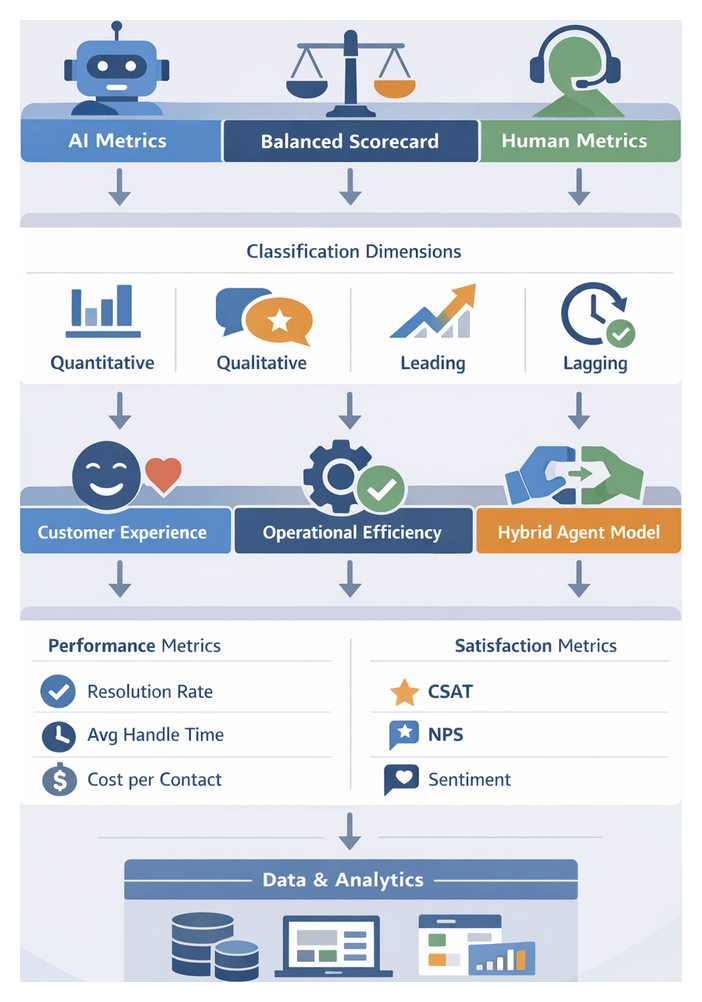
Core Metrics for Agent Performance
Measuring the performance of AI-driven and human agents is essential for optimizing customer interactions, controlling costs, and driving revenue growth. A coherent framework of core metrics provides quantitative and qualitative indicators that align with strategic priorities and reveal how automated and human components of service delivery collaborate effectively.
Metrics can be classified along multiple dimensions to ensure a balanced scorecard approach:
- Quantitative versus Qualitative: Numerical data points such as resolution rates contrasted with perception-based measures like customer satisfaction scores.
- Leading versus Lagging Indicators: Predictive signals, for example abandonment rate trends, versus retrospective metrics such as monthly cost per contact.
- Customer-Centric versus Operational: Experience-focused measures like Net Promoter Score versus internal process efficiency metrics such as average handle time.
- Agent-Specific versus Interaction-Specific: Individual agent contributions, for example wrap-up time, versus properties of the interaction itself, like first contact resolution.
Key Quantitative Indicators
- First Contact Resolution: Percentage of issues resolved in the first interaction, reducing repeat contacts and operational costs.
- Average Handle Time: Mean duration of interactions, including after-call work, balanced against quality of resolution.
- Service Level Compliance: Proportion of contacts answered within a target threshold, for example 80 percent within 20 seconds.
- Cost Per Contact: Average expense per interaction, encompassing labor, technology, and overhead.
- Agent Utilization Rate: Share of available work time spent on customer-facing tasks or related activities.
- Escalation Rate: Frequency of hand-offs from AI to human specialists, illuminating triage effectiveness.
- Automation Coverage: Share of interactions fully handled by AI without human intervention.
Real-time dashboards powered by platforms such as Salesforce Einstein and Amazon Connect enable continuous monitoring and automated alerts when thresholds are breached.
Key Qualitative Indicators
- Customer Satisfaction Score (CSAT): Post-interaction ratings on a numeric scale.
- Net Promoter Score (NPS): Customer willingness to recommend, reflecting loyalty.
- Sentiment Analysis: Automated evaluation of tone and emotion using tools like Zendesk Answer Bot and Genesys Cloud.
- Quality Assurance Scores: Evaluations of transcripts against compliance and brand voice standards.
- Customer Effort Score (CES): Assessment of ease of issue resolution.
Hybrid Agent Model Metrics
- Handover Effectiveness: Percentage of AI-escalated cases resolved by human teams without further transfers.
- Time to Resolution Post-Escalation: Interval from AI hand-off to final resolution.
- Re-contact Rate After Automation: Frequency of repeat contacts following AI-only resolutions.
- Human Intervention Threshold: AI-triggered escalations based on sentiment flags or confidence scores.
Data Sources and Governance
- Interaction Logs: Call recordings, chat transcripts, email threads, and social media exchanges.
- CRM Systems: Records in platforms like Microsoft Dynamics 365 AI or custom solutions.
- Survey Tools: Feedback from embedded forms or third-party services.
- Analytics Dashboards: Aggregated data via business intelligence tools.
Consistent definitions, automated data extraction, and regular audits ensure reliability. A balanced measurement strategy prevents overemphasis on any single metric and aligns incentives across AI and human teams.
Analytical Frameworks for Return on Investment Evaluation
Evaluating ROI for hybrid agent ecosystems requires multidimensional frameworks that capture both financial returns and qualitative value drivers. Leading approaches integrate cost-benefit analysis, economic impact assessments, scenario planning, and balanced scorecards to inform strategic decision-making.
Cost-Benefit Analysis
Cost-benefit analysis enumerates implementation and operational costs against benefits such as reduced handle times and increased retention. A comprehensive cost register includes:
- AI platform licenses, customization, and integration expenses
- Infrastructure, maintenance, and data governance overheads
- Human resource costs for training and process redesign
- Opportunity costs from project prioritization
Benefits are quantified through productivity gains, error avoidance, and revenue uplift. Matched-pair analyses or A/B tests help isolate AI-driven impacts, while sensitivity analysis validates results under varying assumptions.
Total Economic Impact (TEI) Methodology
Forrester’s Total Economic Impact™ framework assesses net present value, ROI, payback period, and risk-adjusted value through stakeholder interviews and scenario modeling. Key components include:
- One-time, ongoing, and incremental cost categorization
- Benefit quantification in efficiency, revenue enablement, and risk mitigation
- Flexibility valuation for phased rollouts or modular expansions
- Risk adjustments for implementation uncertainties
Net Present Value and Internal Rate of Return
NPV aggregates discounted cash flows over a three- to five-year horizon, reflecting learning-curve effects. IRR identifies the discount rate that equates costs and benefits, guiding comparisons with corporate weighted average cost of capital plus risk premiums. Intangible benefits such as brand equity may be included via proxy valuations or in separate balanced scorecard measures.
Payback Period and Break-Even Analysis
- Simple payback: Total cost divided by annual net benefits
- Discounted payback: Incorporates present-value factors
- Break-even volume: Transaction level required to neutralize expenses
While payback metrics provide quick validation, they may underrate compounding benefits from machine learning improvements.
Scenario and Sensitivity Analysis
Stress-testing ROI models against variations in labor costs, AI accuracy, adoption rates, and compliance expenses reveals upside and downside risks. Best-case, base-case, and worst-case scenarios help identify key drivers and inform investment decisions.
Balanced Scorecard
Balanced scorecards incorporate financial, customer, internal process, and learning perspectives. Typical measures include:
- Customer satisfaction and Net Promoter Scores post-deployment
- Process cycle time and first-contact resolution improvements
- Employee engagement and upskilling among human agents
- Innovation readiness via new AI-enabled service launches
Integrated Assessment Models
Hybrid frameworks layer cost-benefit analysis, TEI, financial metrics, and balanced scorecards into a unified Investment Attractiveness Index. Weighted scoring across dimensions enables portfolio optimization and transparent governance through dashboards and decision-support tools.
Interpreting Performance Signals
Understanding both quantitative and qualitative signals is critical in hybrid ecosystems. Numerical indicators like resolution rates and average handle times must be viewed alongside sentiment scores, narrative feedback, and thematic insights to avoid misleading conclusions.
Data visualization tools such as Power BI and Tableau help surface trends, while customer success teams validate findings through surveys and focus groups. Natural language processing platforms like IBM Watson Tone Analyzer and Google Cloud Natural Language automate sentiment scoring but require human review for context.
Real-time sentiment dashboards embedded in solutions such as Salesforce Einstein Analytics trigger alerts when mood shifts, but lasting improvement depends on root-cause analysis. Voice of the Customer programs integrate surveys, focus groups, and social listening to map qualitative themes to quantitative scores, guiding prioritization of AI retraining, knowledge base enhancements, and agent coaching.
Channel-specific interpretive guidelines ensure consistency: chat sessions require transcript analysis, voice channels depend on speech analytics, and email interactions leverage text mining. Cross-functional review forums—uniting customer experience leads, data scientists, and finance—foster shared understanding of signal implications and drive data-informed adjustments.
Analytical maturity models track progression from basic reporting to predictive analytics with closed-loop feedback that dynamically adjusts AI-human workflows. Combining short-term pulse surveys with longitudinal trend analysis differentiates tactical fluctuations from structural performance shifts.
Strategic Management Considerations
- Alignment with Business Objectives: Map metrics and ROI frameworks to priorities such as retention, revenue growth, or cost containment.
- Balanced Scorecard Approach: Combine operational efficiency, customer-centric, and financial indicators for holistic decision-making.
- Attribution Model Selection: Use first-touch, last-touch, or multi-touch models to credit AI and human contributions appropriately.
- Time Horizon and Phased Evaluation: Differentiate immediate cost benefits from long-term strategic value over quarters or years.
- Scenario Planning and Sensitivity Analysis: Stress-test assumptions against market shifts, regulatory changes, and competitive actions.
- Benchmarking and Industry Context: Compare performance with peer norms from consortium data and research studies.
- Tool Selection and Integration: Aggregate data from AI engines, CRM systems, and surveys using platforms like Tableau, Power BI, and Qualtrics.
- Governance and Data Quality: Establish ownership, stewardship, and privacy compliance to maintain consistent definitions and stakeholder trust.
- Cultural Readiness: Embed measurement rituals—data reviews, cross-functional workshops, and scorecard updates—to align teams around evidence-based decisions.
- Incremental Adoption of Advanced Analytics: Master foundational approaches before layering predictive models and machine learning-driven attribution.
Analytical Limitations and Cautions
- Data completeness gaps can bias metrics toward well-instrumented channels.
- Attribution ambiguity persists in multi-touch customer journeys.
- Survivorship bias may overstate typical outcomes based on published success cases.
- Overemphasis on quantitative metrics can obscure brand affinity and employee morale.
- External factors—seasonality, economic cycles, evolving expectations—must be controlled for.
- Privacy regulations such as GDPR and CCPA may limit granular analysis.
- Algorithmic bias requires periodic calibration against human judgments.
- High-end analytics investments should be weighed against expected incremental insights.
- Metric overload can lead to decision paralysis; a concise set of leading and lagging indicators is preferable.
- Rapid evolution of AI capabilities demands regular updates to measurement frameworks.
Practitioner Recommendations for Ongoing Assessment
Embedding Continuous Feedback Loops
Implement real-time dashboards and regular review cadences. Automated alerts for shifts in sentiment or resolution rates enable rapid root-cause analysis, corrective actions, and validation in subsequent measurement cycles.
Balancing Quantitative and Qualitative Data
Leverage voice-of-customer surveys via SurveyMonkey and in-depth interviews to validate numeric trends. Calibrate text analytics and sentiment scoring against human-coded samples to ensure fidelity.
Ensuring Stakeholder Alignment
Define KPI ownership and secure executive sponsorship. Use data glossaries and collaborative workshops to unify terminology, interpret dashboards, and formulate action plans.
Investing in Data Literacy and Infrastructure
Train teams in A/B testing, regression analysis, and cohort studies. Build centralized data lakes, secure pipelines, and governance frameworks for scalable, auditable, and compliant measurement.
Adopting an Experimentation Mindset
Use randomized trials to isolate the impact of AI enhancements. An experimentation platform becomes a strategic asset for continuous workflow optimization based on causal evidence.
Periodic Reassessment of Metrics
Audit and recalibrate metrics as priorities evolve. Maintain a living framework that documents the rationale for each KPI and conditions for its revision or retirement.
Transparency and Communication of Findings
Provide clear visualizations, executive summaries, and narrative context. Highlight successes and improvement areas to foster informed risk-taking and continuous learning.
Integration of Ethical and Compliance Checks
Embed monitoring for bias, privacy breaches, and compliance infractions into routine assessments. Track demographic parity in sentiment scoring and audit logs to reinforce trust with customers and regulators.
Forward-Looking Perspectives
A mature measurement ecosystem blends rigorous quantitative analysis with contextual qualitative insights, anchored by strategic alignment and robust governance. By embedding continuous feedback, fostering data literacy, and maintaining agility in metric frameworks, organizations transform performance measurement into a proactive engine for optimization. This dynamic approach ensures that hybrid AI-human collaboration evolves responsively to customer expectations, technological advances, and market dynamics, sustaining competitive advantage and guiding future investments.
Chapter 8: Ethical, Legal, and Regulatory Considerations
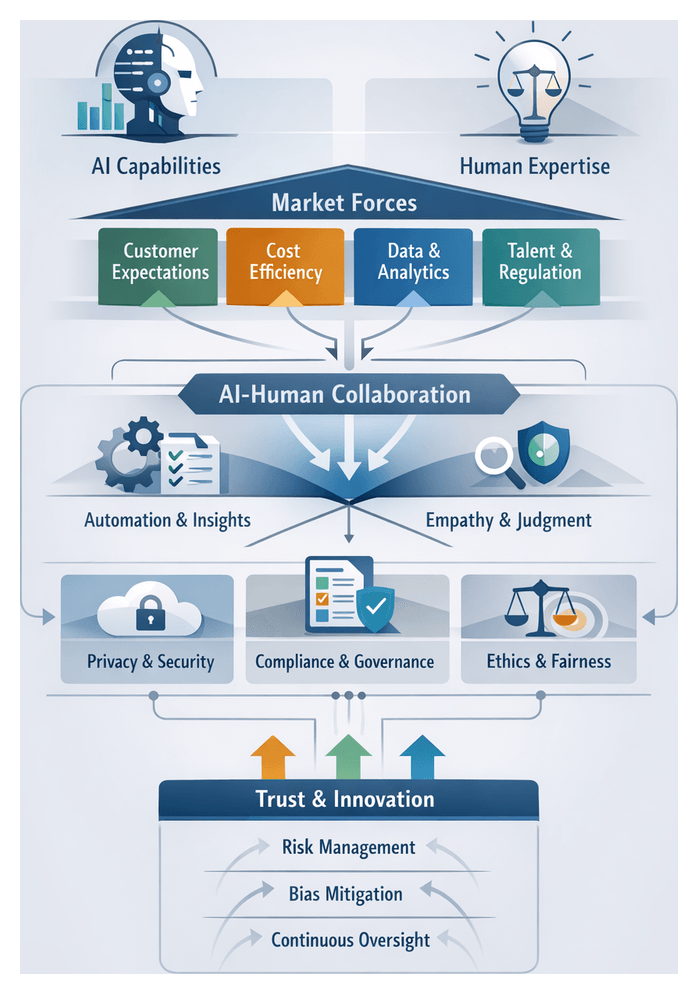
Market Forces Shaping AI-Human Collaboration
Organizations today must deliver exceptional customer experiences while optimizing costs and operational efficiency. Advances in artificial intelligence have enabled automation of routine tasks, analysis of vast data sets, and personalized interactions at scale. Yet human judgment, empathy, and creativity remain critical for complex scenarios and sustaining brand trust. The convergence of these strengths drives a fundamental shift in customer engagement and internal workflows.
Several market forces compel enterprises to integrate AI agents and human teams. Competitive pressures from digital-native challengers demand rapid decision cycles and tailored offerings. AI-driven platforms such as IBM Watson, Google Cloud’s Vertex AI and Salesforce Einstein empower data-driven differentiation, while failure to adopt these tools risks eroded market share and slower time-to-market.
- Escalating Customer Expectations: Consumers expect seamless, contextual, real-time interactions. Hybrid models leverage AI for intent recognition and predictive analytics, handing off to human agents for empathetic and adaptive problem solving.
- Operational Cost Management: Rising labor costs and margin pressures drive AI-powered automation of high-volume tasks. Human professionals focus on exceptions, strategy and innovation.
- Data Explosion and Analytics: AI techniques such as natural language processing and machine learning surface insights from structured and unstructured data. Human experts interpret findings for strategic decision making.
- Talent Shortages and Workforce Transformation: Skill gaps in data science and AI engineering pair with automation of routine roles. Hybrid staffing and upskilling programs enable employees to collaborate with intelligent systems.
- Regulatory Imperatives: Data privacy laws and industry standards demand automated compliance controls and human oversight. AI agents enforce policies while humans interpret legal nuances.
- Technological Ecosystem Acceleration: Cloud, edge computing, 5G and open-source frameworks lower barriers to pilot conversational agents on platforms like Amazon Lex. Success requires scalable architecture and integrated governance.
- Multichannel Engagement: AI streamlines routing and triage across mobile apps, chatbots, social media and call centers, with seamless transitions to human agents for complex or high-empathy cases.
- Strategic Partnerships: Collaborations with AI vendors, integrators and academic institutions accelerate co-innovation and establish best practices for hybrid engagement models.
Compliance and Governance Challenges
Hybrid AI-human ecosystems raise complex legal, ethical and operational risks. A robust governance framework aligns AI deployments with regulatory, corporate and stakeholder requirements. Best practices draw on standards such as the NIST AI Risk Management Framework and ISO/IEC AI ethics guidelines, ensuring transparency, robustness and human oversight.
Regulatory Landscape and Risk Mapping
Data protection regimes vary by region and industry. The GDPR enforces rights to human intervention in automated decisions, while U.S. laws such as CCPA and sectoral mandates like HIPAA impose diverse data-handling and consent requirements. A risk-based approach maps AI use cases to applicable laws, prioritizing controls based on data sensitivity and decision criticality. Multinational enterprises must monitor evolving proposals, from the EU AI Act to guidelines in Asia Pacific, and harmonize cross-border data flows through contractual clauses and adequacy decisions.
Governance Structures and Accountability
Establishing an AI governance council or ethics board brings together compliance officers, legal counsel, technical experts and business leaders. Core elements include a decision rights matrix for model approval, vendor selection and exception management, consolidated policies integrating AI guidelines with existing privacy and cybersecurity frameworks, and a continuous review process for audits, performance monitoring and incident response.
Risk Management and Audit Readiness
Effective controls address algorithmic bias, automation failures and unintended discrimination. Organizations segment AI applications by impact tiers—low, medium, high—and apply layered controls combining quantitative risk scoring with scenario analysis. Model documentation practices such as model cards and datasheets capture training data provenance, performance metrics and limitations. Comprehensive audit trails record system logs, decision rationales and human overrides, supporting both internal governance reviews and third-party audits.
Explainability and Innovation Balance
Regulators and stakeholders demand clarity on automated recommendations, especially in high-stakes contexts. Techniques like feature importance analysis, surrogate modeling and counterfactual explanations enhance interpretability. Formal accountability charters assign oversight to data scientists, compliance teams and frontline supervisors. To foster innovation without compromising compliance, organizations use regulatory sandboxes and phased rollouts, embedding compliance checkpoints within agile sprints and release cycles.
Privacy Protection and Bias Mitigation
Trustworthy AI-human collaboration hinges on safeguarding privacy and preventing algorithmic bias. Privacy by Design and data minimization principles ensure that only necessary personal data is used for AI training and inference. Techniques such as anonymization, pseudonymization, encryption and differential privacy reduce reidentification risks while preserving analytical value. Federated learning enables model training across decentralized data sources without exposing raw personal information.
Sources of Bias and Fairness Frameworks
Bias can originate from under-representation in training data, proxy variable distortions, model architecture or societal inequities embedded in historical records. Fairness metrics—equalized odds, demographic parity and conditional statistical parity—offer quantitative lenses for disparity analysis, yet each imposes distinct trade-offs with privacy and model performance. Organizations conduct fairness impact assessments to measure error rates across demographic segments and to estimate compliance penalties or reputational losses linked to biased outcomes.
Sector-Specific Applications
- Banking: Synthetic data for fairness testing and compliance with the Fair Credit Reporting Act.
- Healthcare: Differentially private federated learning for diagnostic model training under HIPAA constraints.
- Public Sector: Mandatory bias impact assessments for automated benefit eligibility systems under open government mandates.
Assurance Models and Organizational Strategies
Leading organizations adopt a four-layered assurance model: governance policies, technical controls, operational monitoring and external validation. Ethics and Compliance Boards review privacy and fairness risks, set policies for data lifecycle management and supervise independent audits. Risk registers document potential privacy breaches and bias incidents, linking them to mitigation controls. Continuous monitoring alerts teams to model drift or fairness breaches, while third-party audits and transparency reports enhance stakeholder confidence.
Ethical Imperatives and Organizational Culture
Ethics by Design and values-driven governance embed transparency, fairness and accountability into AI strategies from inception. Ethical maturity models assess readiness across policy integration, stakeholder engagement and incident response. Cultural enablers—cross-functional ethics committees, leadership commitment and regular training—reinforce responsible norms and counteract ethical drift.
Limitations and Risk-Based Prioritization
Contemporary ethical frameworks face challenges: contested fairness metrics, resource constraints for comprehensive audits, rapid technological evolution and cultural variations across regions. A pragmatic, risk-based approach focuses on high-impact use cases and critical data assets, mapping ethical risks to business objectives and stakeholder expectations to allocate limited resources effectively.
Emerging Practices for Continuous Assurance
Organizations shift from one-time ethics reviews to continuous assurance, integrating real-time monitoring, automated bias detection and feedback loops into operational platforms. Scenario-based stress tests evaluate preparedness for algorithmic drift and regulatory inquiries. External advisory boards with ethicists, legal experts and community representatives provide independent scrutiny of high-impact initiatives, ensuring that responsible deployment remains an enduring competency.
Key Takeaways for Business Leaders
- Align AI integration with competitive differentiation by leveraging platforms such as IBM Watson, Vertex AI, Salesforce Einstein and Amazon Lex.
- Adopt risk-based compliance mapping across global and local regulations, guided by frameworks like the NIST AI Risk Management Framework.
- Embed privacy by design and data minimization to build customer trust and meet evolving data protection laws.
- Implement multi-stage bias audits using fairness metrics and privacy-preserving techniques.
- Cultivate an ethical culture with cross-functional governance bodies, clear accountability matrices and continuous training.
- Balance innovation with compliance through regulatory sandboxes and phased rollouts.
- Transition from static reviews to continuous assurance with real-time monitoring, automated alerts and independent oversight.
Chapter 9: Emerging Trends and Next-Generation Agent Technologies
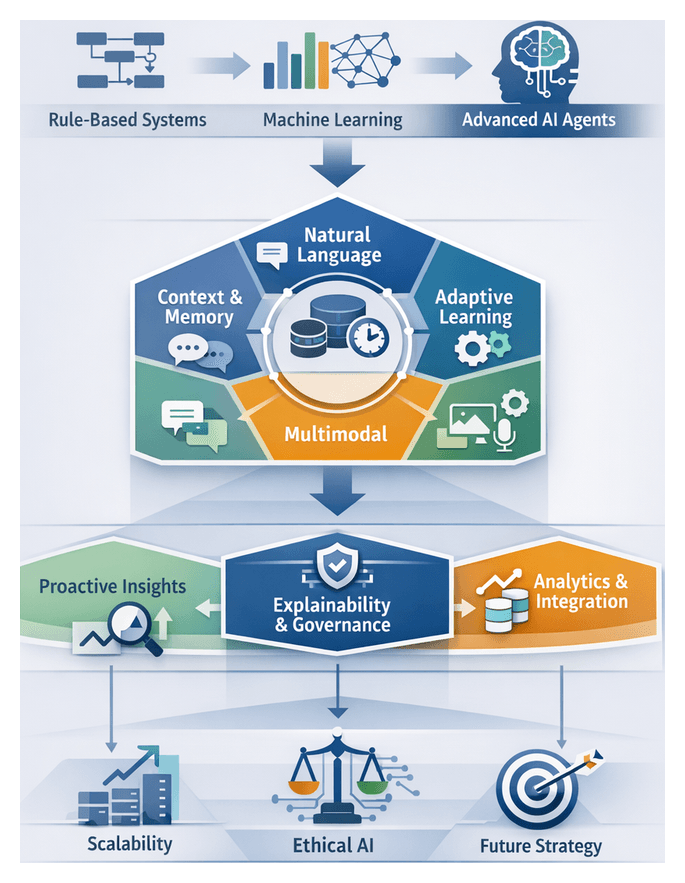
Landscape of Advancing Agent Capabilities
Over the past decade AI-driven agents have evolved through distinct technological phases, transforming from rigid expert systems to adaptive collaborators that augment human expertise. Early rule-based bots encoded static decision trees that struggled with scalability and nuance. The shift to statistical machine learning introduced predictive pattern recognition but lacked deep contextual understanding. Recent breakthroughs in deep learning—particularly transformer architectures—have unlocked sophisticated natural language understanding and generation, powering fluent, coherent dialogues across customer and employee touchpoints.
Today’s leading agents demonstrate five core capabilities. First, advanced natural language models interpret intent, sentiment and nuance rather than simple keyword matching. Second, contextual memory and state tracking preserve coherence over multi-turn conversations, referencing prior exchanges, user profiles and session history. Third, adaptive learning frameworks continuously ingest feedback from conversation logs, performance metrics and user ratings to refine models without full retraining. Fourth, multi-modal processing fuses text, speech, image and sensor data, enabling agents to analyze product images, transcribe calls or integrate IoT signals for richer interactions. Finally, autonomous decision-making empowers real-time execution of tasks—such as verifying identity, updating CRM records, applying loyalty discounts and scheduling service appointments—while adhering to governance policies.
Proactivity distinguishes next-generation agents from reactive chatbots. By monitoring user behavior and operational system metrics, agents can predict churn risk, recommend tailored offers based on browsing history or flag anomalies before they escalate. This anticipatory engagement drives value beyond transactional responses.
As autonomy increases, explainability and governance become paramount. Explainable AI techniques and detailed audit trails clarify how an agent derived insights or selected actions, meeting regulatory requirements in finance, healthcare and other compliance-intensive industries. Cloud-native, containerized deployments and microservices architectures ensure scalability and resilience. Enterprises can elastically provision agent instances during peak loads, perform incremental A/B testing of new models and rapidly roll back changes if performance deviates.
Integration with analytics and business intelligence platforms closes the loop between front-line interactions and strategic decision-making. Conversation analytics tools aggregate metrics such as resolution rates, handle times and customer satisfaction scores. Advanced analytics uncover emerging trends, knowledge gaps and product improvement opportunities, feeding insights back into model training and business processes.
The democratization of agent capabilities is fueled by open source frameworks and pre-trained models for natural language processing, computer vision and reinforcement learning. Organizations of all sizes can leverage community-supported libraries for foundational research. Concurrently, mature vendor platforms offer end-to-end solutions with low-code interfaces, integrated development environments and pre-built connectors to common enterprise applications. This duality enables cross-functional teams—data scientists, developers and business analysts—to collaborate within unified frameworks, accelerating time to value.
Another emerging trend is the convergence of generative and analytical AI. Generative models excel at creating human-like text and imagery, while analytical models specialize in forecasting, classification and anomaly detection. Hybrid architectures combine these strengths, allowing agents to generate personalized content—such as product descriptions or troubleshooting guides—while simultaneously evaluating risk factors and operational KPIs for compliance and performance management.
Looking forward, agent capabilities will continue to advance along multiple dimensions: language fluency, situational awareness, autonomous reasoning and ethical alignment. Organizations that invest in modular, extensible frameworks and adopt phased, pilot-driven approaches will be best positioned to validate performance, scale deployments responsibly and meet evolving customer expectations.
Analytical Perspectives on Innovation Trajectories
Evaluating AI agent technologies requires a blend of technical, market and organizational analyses. Market adoption follows classical diffusion models but is influenced by data governance regimes, vendor ecosystems and regulatory catalysts. Technology-intensive verticals such as financial services, e-commerce and telecommunications often lead early pilots, establishing reference architectures that guide later entrants. Adoption accelerates when industry consortia standardize interoperability, data-privacy frameworks gain clarity and vendor solutions reach enterprise-grade stability.
Technological maturity models assess dimensions such as language model scale, contextual state management, feedback-driven optimization velocity, multimodal fusion proficiency and explainability safeguards. Vendors are plotted on capability heat maps to highlight leadership zones and integration risks. Benchmarking exercises compare prominent solutions—ChatGPT, Google Bard and Anthropic Claude—across response fidelity, latency under load, integration ease with CRM and knowledge management systems, and resilience through failover mechanisms.
Interpretive frameworks help align investments with strategic priorities. The Gartner Hype Cycle illustrates technology maturity from innovation trigger through the trough of disillusionment to the plateau of productivity. The Forrester Wave ranks vendors on current offerings, strategic vision and market presence. NIST Technology Readiness Levels adapt concept-to-deployment stages for AI solutions. Value Chain Impact Analysis quantifies efficiency gains, cost reductions and revenue uplift across functions such as marketing, sales, support and product development.
Thought leaders emphasize balanced investment across incremental optimizations—improving speech recognition accuracy or reducing inference latency—and radical innovations like affective computing and vision-driven context awareness. Key recommendations include establishing continuous feedback loops between research and operations, adopting modular architectures for component-level upgrades, cultivating partnerships with academia and startups, and creating controlled sandboxes for risk-managed experimentation.
Cross-industry comparative insights reveal that robust transactional datasets accelerate ROI, while stringent compliance landscapes prolong pilot phases. Retail and hospitality prioritize customer engagement agents to drive personalization and loyalty. Manufacturing focuses on supply chain orchestration and predictive maintenance. Financial services deploy regulatory compliance and fraud detection agents. Healthcare emphasizes diagnostic support and patient triage. Benchmarking against peers in adjacent sectors uncovers transferable practices and potential performance gaps.
Monitoring a balanced scorecard of metrics ensures adaptive governance and informed prioritization. Leading indicators include adoption velocity measured by active users or interactions, engagement depth in multistep dialogues, first-contact resolution rates, frequency of escalations, learning maturity reflected in feedback-driven updates, economic impact measured by cost savings and revenue contributions, and trust metrics such as satisfaction scores and compliance incident reports.
AI agent ecosystems evolve through iterative cycles of research ingestion, prototype validation under real-world conditions and rapid iteration based on performance data. Agile methodologies tailored to AI workflows, robust testing frameworks and data governance platforms that secure training and validation data are foundational. Cross-functional teams uniting data scientists, engineers, legal experts and business stakeholders drive joint accountability for innovation outcomes.
Scenario planning and strategic forecasting envision agents transitioning from specialized assistants to enterprise orchestration engines, autonomously coordinating workflows across people, systems and external partners. Variables influencing these futures include data localization mandates, talent market dynamics with roles like prompt engineers and AI ethicists, advances in privacy-preserving computation, and integration with distributed ledger technologies for auditability. Embedding these variables into roadmaps enables organizations to stress-test plans and pivot proactively as disruptions arise.
Investment strategies span three horizons: core optimizations that refine existing deployments, adjacent expansions into new functions or geographies, and transformational breakthroughs that redefine industry standards. Capability development programs should establish centers of excellence, partner with academic institutions for specialized research, deploy tailored training in AI literacy and prompt engineering, and adopt modular architectures for seamless integration of emerging agent components.
By synthesizing adoption patterns, maturity assessments, interpretive frameworks and strategic forecasts, organizations can navigate uncertainty, capture transformative potential and allocate resources effectively. Integrating these analytical insights into governance structures and capability-building initiatives ensures enterprises remain agile, resilient and positioned for sustained innovation.
Transforming Organizational Strategy Through Next-Generation Agents
As conversational AI and adaptive learning architectures mature, organizations must pivot their strategies to harness these capabilities for competitive advantage. No longer mere cost-saving tools, intelligent agents now enable new modes of customer engagement, operational agility and service innovation. Retailers deploy multimodal assistants that blend textual chat, voice input and visual product recognition to create immersive shopping journeys. Financial services firms integrate real-time risk assessment modules into advisory agents, delivering personalized portfolio guidance and compliance oversight simultaneously.
Success requires a holistic roadmap that aligns agent features—such as domain-specific reasoning, proactive outreach and seamless channel switching—with brand positioning, customer journey mapping and long-term innovation objectives. Analytical tools like the Capability Value Chain can map emerging functionalities to performance levers, ensuring investments translate into differentiated experiences and sustainable growth.
Workforce transformation is central to this strategic shift. Platforms like ChatGPT and Claude automate routine inquiries, elevating human roles toward oversight, ethical stewardship and complex problem-solving. Organizations are building hybrid expertise through cross-disciplinary AI councils, rotational immersion programs that integrate human agents into AI monitoring workflows, and collaborations with universities to co-create specialized learning modules in conversational design, data literacy and AI ethics.
Investment prioritization demands a structured, scenario-based financial model. Evaluate capability maturity to determine feature readiness, assess scalability potential through vendor roadmaps, verify interoperability with core systems like CRM and ERP, and balance short-term performance wins with strategic horizons for predictive analytics and proactive engagement. Transparent net-present-value analyses against incremental risk profiles foster stakeholder alignment and support iterative funding that scales proven pilots into enterprise-wide initiatives.
Aligning Governance and Ethical Oversight with Innovation
Rapid advances in agent autonomy necessitate governance frameworks that safeguard ethics, compliance and operational integrity without stalling innovation. An adaptive governance model embeds controls across the development lifecycle with continuous risk monitoring, real-time audits of performance and bias metrics, and multidisciplinary ethical review boards comprising legal counsel, ethicists, technical leads and business stakeholders. Clear accountability mechanisms define human oversight responsibilities for sensitive interactions, while regulatory alignment protocols update compliance checks in response to evolving data protection laws and industry-specific mandates.
This balanced approach allows experimentation with advanced features—autonomous decision loops, predictive escalation systems and personalized content generation—while maintaining transparency and trust across stakeholders.
Anticipating Market Shifts and Competitive Responses
Strategic agility requires early detection of ecosystem changes driven by competitor roadmaps, emerging startups and shifting partnership alliances. Organizations should establish market intelligence systems that track public product announcements, developer conference signals and open source contributions. Monitoring joint ventures between AI firms and sector leaders—such as healthcare-focused conversational platforms—reveals accelerating domain specialization. Regulatory developments, including new algorithmic accountability frameworks, can abruptly reallocate investment flows toward certified solutions. Customer adoption analytics—channel preferences, AI versus human interaction ratios and sentiment trends—provide real-time feedback on buyer expectations. Integrating these insights into scenario planning enables proactive adjustments to technology stacks, talent allocation and strategic roadmaps, transforming agent deployments from tactical pilots into differentiated market offerings.
Framework for Ongoing Assessment and Adaptation
To thrive in a dynamic landscape, organizations need a structured cycle of horizon scanning, impact evaluation and course correction. Key components include:
- Environmental Scanning: Monitor academic research, open source developments and competitor roadmaps to identify inflection points and emerging technologies.
- Scenario Planning: Develop plausible futures—such as stringent data localization or breakthroughs in federated learning—and assess organizational readiness across strategic, operational and technical dimensions.
- Metric Evolution: Regularly update performance indicators to incorporate trust, explainability and long-term value metrics alongside efficiency gains.
- Cross-Industry Benchmarking: Compare adoption patterns and performance outcomes with peers in adjacent sectors to uncover transferable best practices and guardrails.
- Governance Cadence: Conduct executive, technical and ethical reviews at defined intervals to validate progress, surface risks and refine control frameworks.
Embedding this continuous review cycle into strategic planning ensures that enterprises can absorb disruptive advances, iterate models rapidly and sustain performance improvements over time.
Final Reflections on Strategic Foresight
Next-generation agent technologies promise to redefine the interface between human and machine intelligence, delivering new levels of productivity, personalization and resilience. Realizing their potential requires more than technology adoption—it demands rigorous governance, a workforce fluent in AI-augmented workflows and a commitment to confronting ethical, privacy and compliance challenges head on. By synthesizing emerging trends, balancing exploratory and operational investments, and institutionalizing mechanisms for continuous adaptation, business leaders can cultivate responsible agent ecosystems that uphold trust, foster creativity and drive sustainable organizational excellence.
Chapter 10: Strategic Roadmap for Sustainable Integration
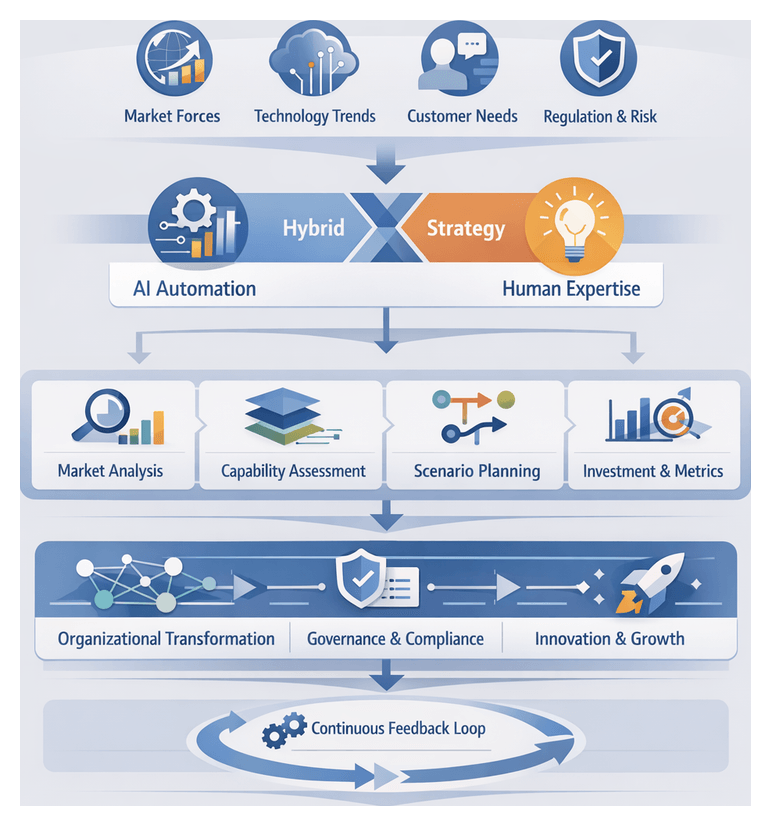
In a landscape defined by technological acceleration, competitive intensity, and evolving stakeholder expectations, organizations must orchestrate seamless collaboration between AI-driven agents and human expertise. By navigating market dynamics, establishing analytical roadmaps, transforming organizational structures, and embedding robust governance, enterprises can harness augmented intelligence for sustainable advantage.
Market Dynamics Driving AI-Human Synergy
Competitive Pressures
Globalization and digital-native challengers have shifted the basis of competition to rapid, personalized engagement. New entrants leverage AI to deliver near-instantaneous responses and tailor experiences at scale, compelling incumbents to optimize routine inquiries through self-service automation while reserving human agents for complex, high-value interactions. For example, organizations integrate ChatGPT for conversational automation, complemented by specialized advisory teams. This dual model influences customer acquisition costs, churn rates, and brand loyalty, making AI–human collaboration a strategic imperative.
Technological Trends
Advances in natural language processing, transformer models, and cloud-native services have democratized AI deployment. Modular AI offerings—such as Salesforce Einstein and IBM Watson—integrate with CRM and contact center platforms via APIs, accelerating time-to-value. Hybrid computing models combine on-premises infrastructure with scalable public cloud resources, balancing performance, compliance, and rapid experimentation. Real-time analytics and federated learning enable continuous agent refinement while preserving privacy.
Evolving Customer Expectations
Modern customers demand omnichannel, contextually relevant interactions that anticipate needs and resolve issues instantly. While AI excels at data-driven consistency and prescriptive insights, human agents provide empathy, negotiation, and creative problem-solving. Research shows that 75 percent of customers value personalization, yet 64 percent will abandon a provider after a single poor experience. A hybrid agent model—AI for routine inquiries and transparent hand-offs to humans at defined confidence thresholds—ensures both efficiency and trust.
Operational Efficiency Drivers
Enterprises face relentless scrutiny on overhead, driving the automation of repetitive tasks. AI agents handling tier-one interactions deliver measurable gains:
- Automated intent classification reduces manual ticket routing
- Predictive workload balancing improves SLA compliance
- Chatbots guide new agents through knowledge bases, lowering training costs
- Elastic scalability during demand peaks without proportional headcount increases
These efficiencies can reduce service costs by up to 30 percent while maintaining high service levels.
Regulatory and Ethical Imperatives
Strict data privacy regulations (GDPR, CCPA) and concerns over algorithmic bias demand privacy-by-design, explainable AI modules, and human-in-the-loop oversight. Organizations embed compliance workflows, regular audits, and transparent data governance into agent ecosystems to mitigate legal risks, preserve trust, and ensure fairness.
Economic and Strategic Interplay
The convergence of competitive pressures, technological innovation, customer expectations, operational demands, and regulatory requirements compels a holistic engagement framework. Cross-functional teams define the optimal balance between AI automation and human judgment, viewing agents as complementary components of a unified ecosystem. Strategic roadmaps prioritize iterative pilots that expand capabilities, validated by performance metrics and stakeholder feedback, laying the foundation for scalable, integrated operations.
Analytical Foundations for Strategic Roadmaps
Market Analysis and Competitive Context
A comprehensive market analysis uses Five Forces and PESTEL frameworks to assess competitive intensity, regulatory shifts, and customer preferences. Benchmarks of competitor AI deployments and hybrid service models inform positioning: first-mover adoption of advanced AI or differentiation through human-centric excellence. Scenario-based forecasts and sensitivity analyses translate qualitative insights into actionable projections.
Capability Assessment and Maturity Modeling
Organizations evaluate current state against desired maturity across four dimensions:
- Data and Technology Infrastructure: Data quality, system interoperability, platform scalability
- Talent and Expertise: AI development, data science, UX design, hybrid workflow management
- Governance and Compliance: Ethical AI policies, accountability structures, regulatory adherence
- Change Management and Culture: Readiness for process redesign, continuous learning, cross-functional collaboration
Gap analysis visualized through heat maps guides targeted investments, sequencing foundational capabilities before scaling advanced use cases.
Scenario Planning and Risk Modeling
To navigate uncertainty, teams develop scenarios—ranging from accelerated AI adoption to regulatory headwinds—and apply quantitative risk models (e.g., Monte Carlo simulations) to estimate outcome distributions for ROI and breakeven timelines. Roadmaps incorporate decision points and trigger thresholds, allowing agile shifts between high-investment and low-risk pilot paths based on unfolding conditions.
Investment Prioritization and Resource Allocation
Weighted scoring models, NPV calculations, real options analysis, and resource constraints modeling transform strategic aspirations into disciplined investment plans. Criteria such as strategic alignment, impact, feasibility, and time-to-value guide prioritization. Real options treat pilots as reversible bets, providing flexibility to scale successes or abandon underperforming initiatives.
Continuous Feedback Loops and Adaptive Benchmarks
Embedding feedback loops ensures roadmaps evolve with real-world outcomes. Key metrics include:
- Operational: average handle time, first-contact resolution, AI-to-human transfer rates
- Customer Experience: Net Promoter Score, satisfaction ratings, sentiment analysis
- Financial: cost per interaction, incremental revenue uplift, total cost of ownership
- Capability Maturity: data quality indices, talent development milestones, governance effectiveness
Dashboards and analytics platforms trigger periodic reviews, enabling course corrections and alignment with performance targets.
Synthesis into a Cohesive Roadmap
The final roadmap aligns market insights, maturity assessments, risk scenarios, investment priorities, and feedback mechanisms across four phases—foundation, pilot, scale, optimization—each with defined objectives, milestones, governance cadences, and communication plans. This structure transforms a conceptual blueprint into an executable program that navigates complexity and uncertainty.
Organizational Transformation and Evolution
Adaptive Structures and Boundaries
Embedding AI agents fosters modular, cross-functional teams that coalesce around customer problems rather than rigid departmental silos. Integrated centers of excellence unite customer support, data science, and operations, enabling rapid knowledge sharing, unified governance, and scalable deployment of AI-enabled processes.
Process Redesign and Agility
Workflows shift from linear sequences to parallel, iterative loops, with AI handling routine steps and humans intervening at complexity thresholds. Process metrics expand beyond cycle times to include learning velocity, error recovery rates, and trust calibration between human-machine counterparts, bolstering resilience in volatile markets.
Cultural Transformation and Mindset Shifts
Successful integration requires viewing AI as a collaborator. Cultural attributes—psychological safety, continuous learning, and experimentation—enable frontline teams to surface friction points, refine agent interactions, and pilot new capabilities without fear of failure. Storytelling reinforces the complementary strengths of human empathy and machine scalability.
Talent and Skill Evolution
As AI assumes routine tasks, human roles evolve. Three emerging archetypes guide talent strategies:
- AI Integrators: Bridge business needs and agent capabilities
- Ethical Stewards: Oversee fairness, transparency, and compliance
- Strategic Designers: Architect hybrid experience journeys and optimize hand-overs
Competency frameworks and structured learning pathways—including scenario-based simulations—prepare professionals to collaborate effectively with AI peers.
Leadership and Strategic Mindsets
Leaders adopt dual-track mindsets—balancing performance management with capability building. Four behaviors drive evolution:
- Articulate a vision of human-AI symbiosis
- Orchestrate resources across core, adjacent, and transformational initiatives
- Build internal and external networks for co-innovation
- Demonstrate adaptive resilience through setbacks and discontinuities
Innovation Ecosystems and Partnerships
No organization innovates in isolation. Strategic alliances with academic labs, technology vendors, start-ups, and industry consortiums accelerate learning and influence standards. Co-development with customers yields deeper insights and differentiated offerings, embedding external perspectives into the evolutionary pathway.
Strategic Continuity and Change Integration
Sustainable evolution balances preservation of core values, brand identity, and institutional knowledge with the integration of new practices. “Evolutionary staging” sequences cultural and structural shifts before radical transformations, ensuring coherence. Storytelling, leadership modeling, and recognition systems reinforce both incremental and breakthrough innovations as part of a unified journey.
Governance, Ecosystem and Continuous Innovation
Governance Frameworks and Policy
Robust governance defines decision rights, accountability mechanisms, and compliance standards. Cross-functional councils—comprising technology, legal, compliance, and operations—establish unified policies for agent deployment. Formal decision-rights matrices clarify approvals for new workflows, algorithm modifications, and service-level adjustments. Regular policy reviews ensure alignment with evolving regulations and ethical norms.
Strategic Alignment and Infrastructure
Linking hybrid agent initiatives to business goals requires mapping capabilities to revenue growth, customer retention, and efficiency targets. Balanced scorecards combine financial, operational, and experience indicators. Scalable, modular, cloud-native platforms—built on microservices, containerization, and API-driven integrations—support dynamic interaction volumes and seamless context switching between AI and human agents.
Performance Measurement and Feedback Loops
Multi-tiered feedback loops integrate quantitative and qualitative inputs. Key indicators include resolution times, deflection rates, satisfaction scores, sentiment analyses, and post-interaction surveys. Internal channels empower human agents to flag unexpected AI behaviors and influence iterative improvements. Analytical dashboards enable real-time diagnostics, capacity forecasting, and strategic investment guidance.
Continuous Improvement and Innovation Governance
A structured innovation pipeline balances incremental enhancements with exploratory experimentation. Innovation councils review proposals, allocate prototyping resources, and define success criteria rooted in customer and business impact. Agile methodologies, A/B testing, and stage-gate frameworks ensure rapid validation, scaling of high-value features, and sunsetting of low-performers.
Ethical Stewardship and Responsible Innovation
Ethical oversight encompasses fairness, transparency, and accountability. Ethics review boards evaluate new functionalities for bias and unintended consequences. Data governance policies safeguard privacy and mandate secure data handling. Explainability tools enable customers and agents to understand automated recommendations, strengthening trust and mitigating reputational risks.
Leadership Engagement and Cross-Functional Collaboration
Executive participation extends beyond sponsorship to active involvement. Regular forums unite leaders in reviewing dashboards, sharing learnings, and aligning strategic pivots. Workshops immerse executives in hybrid workflows to foster empathy and accelerate decisions. Transparent escalation paths enable rapid responses to emergent challenges, embedding hybrid collaboration within the corporate fabric.
Key Strategic Priorities
- Establish governance structures that balance agility with oversight
- Align AI-human initiatives with business objectives and KPIs
- Invest in scalable, modular technology platforms and data architectures
- Build a talent ecosystem that nurtures digital fluency and domain expertise
- Cultivate a culture of collaboration underpinned by disciplined change management
- Embed ethical stewardship and responsible innovation throughout the lifecycle
By addressing these priorities in an integrated manner, organizations can unlock the full potential of AI–human collaboration, driving resilience, differentiation, and sustainable growth in an increasingly digital economy.
Conclusion
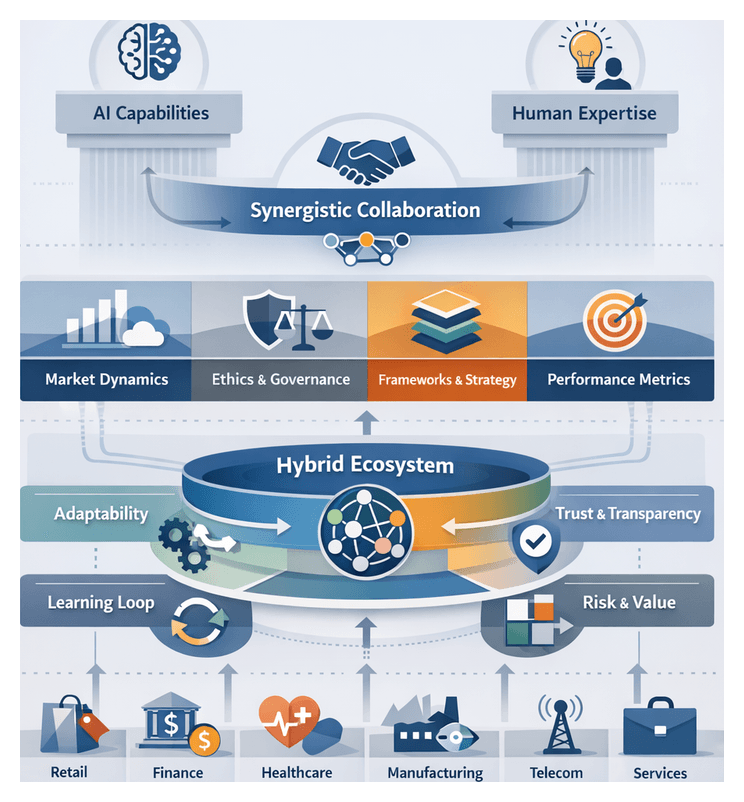
Recap of Core Principles
Over the course of this guide, we examined how artificial intelligence agents and human professionals can form unified ecosystems that optimize customer engagement, operational efficiency, and long-term value. We established that synergistic models—where automation amplifies human expertise and humans provide context and judgment to AI—represent the highest-value approach for modern enterprises. Our journey traced market forces, conceptual architectures, performance dimensions, and ethical considerations, yielding a holistic blueprint for hybrid collaboration.
Chapter summaries highlighted:
- Market dynamics driving AI-human ecosystems, including customer expectations for personalization, regulatory pressures, and technological enablers such as cloud computing, data analytics, and generative AI.
- Conceptual frameworks defining autonomy, orchestration, and shared intelligence through layered architectures that integrate data platforms and conversation management.
- The strategic urgency of integration, fueled by advances in natural language processing, digital channel proliferation, and generative models that shift the cost-benefit calculus toward ambitious hybrid deployments.
- A structured set of objectives and outcomes designed to equip leaders with decision-making frameworks, real-world case studies, and actionable best practices.
- An in-depth exploration of AI agent capabilities—scalability, consistency, 24/7 availability—supported by machine learning architectures, data pipelines, and real-time analytics.
- An analysis of human agent strengths—empathy, contextual judgment, emotional intelligence—essential for complex or high-stakes interactions that lie beyond rule-based or statistical models.
- A comparative evaluation of performance trade-offs across accuracy, speed, scalability, empathy, and adaptability, leading to informed selection of agent types based on situational requirements.
- Sector-specific use cases in insurance, healthcare, retail, and more, illustrating measurable gains from hybrid models in customer satisfaction, cost efficiency, and resolution speed.
- Design principles for hybrid architectures—microservices, event-driven frameworks, orchestration layers—and the governance, feedback loops, and training necessary for operational harmony.
- Organizational readiness factors, including leadership roles, stakeholder engagement, cultural alignment, talent development, and change management practices that enable adoption.
- Frameworks for measuring impact—first-contact resolution, customer effort score, cost per interaction, net promoter score—paired with qualitative indicators such as sentiment analysis and brand perception.
- Ethical and legal considerations, covering data privacy compliance, algorithmic fairness, transparency, and accountability structures to preserve trust and meet regulatory requirements.
- Emerging technologies—adaptive learning agents, multimodal interfaces, modular AI components—that will redefine performance benchmarks and open new frontiers in customer engagement.
- A strategic roadmap for sustainable integration, outlining governance models, scalability approaches, talent pathways, and scenario-based planning tools for multi-year execution.
This recapitulation underscores the recurring thesis: effective collaboration demands a holistic, integrated approach spanning market analysis, technology architecture, human factors, performance measurement, and ethical governance. Each chapter contributed a vital piece of the puzzle, together forming a rigorous blueprint for decision makers to harness complementary strengths and drive sustainable business excellence.
Synthesizing Patterns and Strategic Frameworks
The comparative evaluation of pure and hybrid models reveals cross-cutting themes and analytical frameworks that guide strategic choice and operational design. Rather than viewing AI and human agents as competing alternatives, leading organizations adopt a systemic synergy mindset—balancing automation efficiency with human judgment to meet the full spectrum of engagement objectives.
Emergent themes include:
- Contextual Adaptability: Dynamically adjusting between automated and human intervention based on real-time signals such as customer sentiment, inquiry complexity, and risk profile.
- Trust and Transparency: Embedding mechanisms to trace decision pathways, identify bias, and reinforce confidence among end users and stakeholders.
- Learning Loop Integration: Capturing insights from human-agent hand-overs and AI recommendations to continuously refine algorithms and agent training.
- Modular Scalability: Designing architectures for phased roll-outs, targeted pilots, and rapid adjustment to evolving market demands.
Cross-case analyses further reveal commonalities and divergences:
- Empathy Metrics: Universal measurement of emotional resonance and rapport alongside task completion rates, reflecting trust as a loyalty driver.
- Regulatory Sensitivity: Variation in audit trail rigor and compliance checks by industry, with regulated sectors prioritizing transparency and less regulated environments emphasizing speed and personalization.
- Hybrid Hand-Off Alignment: Clearly defined triggers and shared taxonomies for transitioning between AI and human agents, ensuring seamless escalations.
- Data Governance Maturity: A spectrum from unified knowledge graphs and real-time analytics to discrete silos and manual reconciliation, highlighting integration readiness differences.
Practitioners rely on four dominant analytical frameworks to interpret performance and guide prioritization:
- Value-Risk Quadrant: Plotting use cases by business impact and reputational or regulatory exposure to prioritize high-benefit hybrid initiatives.
- Maturity Stage Continuum: Mapping capabilities from proof-of-concept to enterprise adoption, aligning investments in infrastructure, talent, and governance at each stage.
- User Journey Heatmaps: Combining interaction logs and qualitative feedback to pinpoint choke points where human empathy or cognitive agility trumps automation.
- Return on Experience Index: Extending ROI metrics to include customer satisfaction, emotional engagement, and loyalty to capture intangible collaboration benefits.
From these syntheses, four strategic imperatives emerge:
- Outcome-First Mindset: Prioritize desired business outcomes—customer lifetime value, dispute resolution time—before selecting agent modalities.
- Cross-Functional Capability Investment: Develop competencies at the intersection of AI science, human factors engineering, and change management.
- Continuous Monitoring and Governance: Establish a center of excellence for performance tracking, bias detection, and compliance oversight.
- Experimentation Culture: Employ iterative pilots, A/B testing, and regular performance reviews to refine hybrid configurations and mitigate rollout risks.
Mastery of AI-human collaboration therefore hinges not on tool adoption alone but on cultivating an ecosystem defined by adaptability, transparency, and learning, guided by structured frameworks that align technology, people, and processes with strategic objectives.
Industry Implications and Future Outlook
The maturation of hybrid AI-human strategies is poised to reshape competitive dynamics and operational paradigms across sectors. By orchestrating machine efficiency and human expertise, organizations will navigate market volatility, meet rising customer expectations, and unlock novel value streams. The following industry snapshots illustrate sector-specific trajectories and shared trends.
Retail and Consumer Goods
AI analyses of purchase histories, social sentiment, and real-time browsing enable hyper-accurate recommendations and dynamic promotions. Human associates then inject contextual nuance and relationship depth. This hybrid model drives personalized omnichannel experiences that sustain brand loyalty and fuel growth.
Financial Services
Credit scoring, fraud detection, and risk assessment algorithms process extensive data at scale, while human advisors interpret regulatory contexts and refine strategic guidance. Generative AI drafts insights that human experts validate, yielding a dual-layered advisory model that balances accountability with agility.
Healthcare
Diagnostic algorithms accelerate medical imaging analysis and patient risk stratification, and administrative bots streamline routine tasks. Physicians, nurses, and care coordinators apply interpretive judgment in complex cases, ensuring ethical compliance and patient trust within hybrid care frameworks.
Manufacturing and Supply Chain
Predictive maintenance foresees equipment failures, and AI-driven forecasting optimizes routing and inventory. Human engineers validate machine insights, implement corrective actions, and manage exceptions, transforming technician roles into strategic supervisors of intelligent operations.
Telecommunications and Utilities
Real-time network monitoring and automated remediation improve uptime, while human specialists oversee complex expansions, outage responses, and stakeholder communications. Chatbots handle routine inquiries, escalating unique or high-stakes issues to experienced agents.
Service Industries
Automated itinerary planning, dynamic pricing, and virtual concierge services enrich experiences, with human professionals managing bespoke requests and crisis interventions. Hybrid ecosystems enable service leaders to differentiate through precision at scale and empathetic touch.
Across these sectors, several common trends are evident:
- Shift from cost-center automation to value-center innovation that leverages hybrid models to generate new revenue streams and deepen strategic insights.
- Context-sensitive collaboration frameworks that calibrate decision rules and escalation triggers to ensure human judgment supplements machine propositions at critical junctures.
- Integrated learning loops that synchronize AI model refinement with human team development, fostering co-evolution and performance improvement.
- Partnership ecosystems linking AI platform vendors, data providers, and talent networks to accelerate deployment and innovation.
Looking ahead, generative models, multimodal interfaces, digital twins, and advanced contextual reasoning will enable seamless engagement across text, voice, video, and sensor inputs. Organizations that anticipate regulatory shifts in AI ethics, data sovereignty, and algorithmic accountability—and embed governance protocols accordingly—will secure a competitive edge in an increasingly scrutinized landscape.
Strategic Reflections for Business Leaders
As you chart the next phase of digital transformation, view AI agents and human professionals as complementary forces within a unified value chain. Anchor decisions in desired business outcomes—revenue growth, customer lifetime value, operational resilience—before evaluating agent modalities. Apply interpretive lenses such as value chain analysis and customer journey mapping to identify high-impact injection points for automation and human intervention.
Key strategic considerations include:
- Data Governance and Infrastructure: Establish enterprise-grade architectures that ensure data quality, accessibility, security, and compliance with principles such as FAIR (Findable, Accessible, Interoperable, Reusable).
- Ethical Stewardship: Institutionalize algorithmic transparency, bias mitigation, and accountability through standards such as OECD AI Principles and IEEE Ethically Aligned Design. Embed pre-deployment audits, ongoing bias monitoring, and consent frameworks into development lifecycles.
- Cultural Alignment: Cultivate a learning culture through joint AI-human training, rotational assignments, and visible leadership sponsorship. Reward collaboration to reduce resistance and build shared ownership of hybrid strategies.
- Change Management: Deploy structured plans leveraging models such as Prosci ADKAR and Kotter’s eight-step process. Balance top-down vision with bottom-up feedback, empowering human agents to surface automation gaps and propose enhancements.
- Performance Measurement: Combine quantitative metrics (resolution rates, cost per contact, net promoter score) with qualitative insights (customer sentiment, agent morale, perception of fairness) via mixed-methods evaluation and balanced scorecards.
- Risk and Resilience Planning: Integrate AI risk profiles into enterprise risk registers using frameworks such as ISO 31000 and COSO ERM. Conduct scenario workshops, stress tests, and incident response protocols to safeguard hybrid operations.
- Partner Selection and Vendor Management: Apply weighted scoring models to assess interoperability, extensibility, compliance, support services, and total cost of ownership. Validate via sandbox environments and proof-of-concept trials.
- Innovation and Future Readiness: Maintain flexible architectures and invest in horizon scanning, innovation labs, and collaborative alliances to explore generative AI, multimodal agents, and digital twin simulations.
Key Considerations and Limitations
- Data Integrity Risks: Fragmented or low-quality data undermines model accuracy and decision transparency.
- Bias and Fairness: AI systems trained on historical biases may perpetuate inequities without remediation protocols.
- Regulatory Complexity: Evolving privacy and industry regulations demand agile legal frameworks and compliance oversight.
- Cultural Resistance: Lack of stakeholder engagement can stall adoption due to fear of displacement and skepticism.
- Interoperability Challenges: Legacy systems may impede seamless AI-human hand-offs.
- Scalability Constraints: Infrastructure and governance gaps can surface under high-volume workloads.
- Explainability and Trust: Opaque models risk eroding customer confidence without transparent communication.
- Ongoing Maintenance: Underestimating retraining, validation, and infrastructure costs can inflate total cost of ownership.
Balance remains the unifying principle: calibrate automation and human expertise in service of strategic imperatives. Foster adaptive governance, continuous learning loops, and ethical guardrails to build resilient, value-driven hybrid ecosystems. By treating AI and human agents as complementary assets, you will position your organization to thrive amid uncertainty, drive innovation, and sustain competitive advantage. The decisions made today will define operational agility, customer loyalty, and brand trust tomorrow.
Appendix
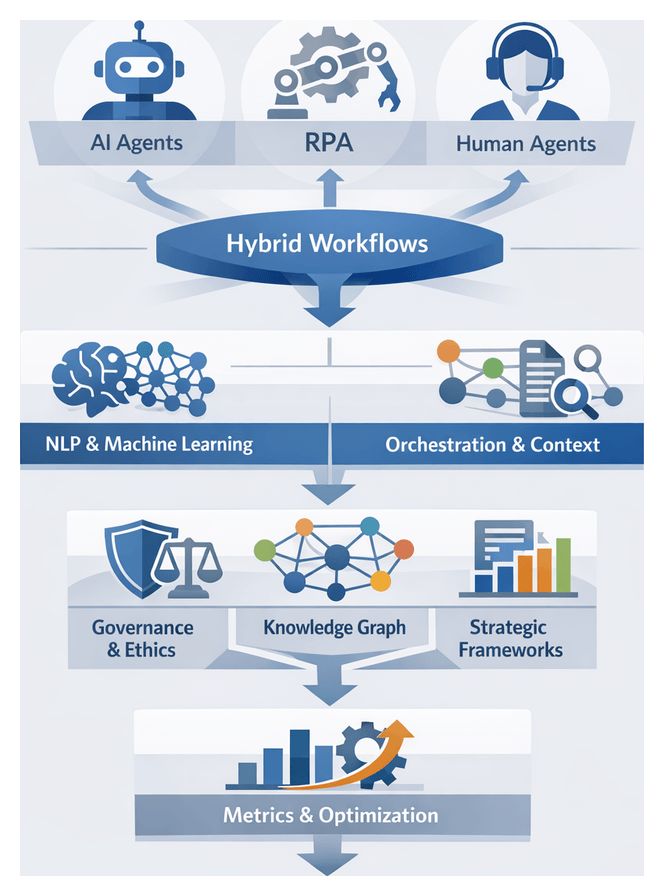
Core Terminology and Collaboration Models
AI and Automation Agents
An AI agent is a software entity that autonomously performs tasks using machine learning, natural language processing and adaptive algorithms. Autonomous agents extend these capabilities by initiating actions proactively based on real-time data, employing reinforcement learning and event-driven triggers to adjust strategies without human direction. Robotic Process Automation bots automate repetitive, rule-based tasks within structured applications but lack contextual reasoning and language understanding. Hybrid collaboration models combine RPA for high-volume rule-driven processes, AI agents for ambiguous or unstructured interactions, and human agents for oversight, complex judgments and empathetic support.
Human agents bring emotional intelligence, ethical reasoning and domain expertise to cases that exceed AI confidence thresholds. In a hybrid ecosystem, seamless hand-over mechanisms trigger escalation based on confidence scores, sentiment flags or compliance criteria, transferring session context and metadata to human agents to ensure continuity and minimize repeated queries.
Natural Language Processing and Machine Learning
Natural language processing enables machines to interpret and generate human language through functions like tokenization, named entity recognition, sentiment analysis and language generation. Enterprise platforms such as IBM Watson Assistant, Google Dialogflow and Microsoft Azure Bot Service power conversational interfaces that handle multi-turn dialogues and extract insights from unstructured inputs.
Machine learning underpins intent classification, predictive routing, anomaly detection and personalization. Supervised, unsupervised and reinforcement learning paradigms drive continuous improvement, while robust MLOps practices ensure reproducibility, governance and monitoring. Large language models such as GPT-4 and Anthropic Claude leverage transformer architectures to generate human-like text, summarize content and answer open-ended queries, often fine-tuned on proprietary data to align with brand voice and compliance requirements.
Orchestration Architecture and Contextual Intelligence
Orchestration Patterns
Integration architectures range from centralized orchestration—where a core platform routes interactions, enforces policies and archives context—to decentralized choreography that distributes decision-making across microservices via event streams. A federated hybrid model blends centralized governance with decentralized execution to balance auditability and scalability.
Task Stratification and Context Awareness
Task stratification assigns deterministic, high-volume requests to AI agents, with human specialists handling complex or emotionally sensitive cases. Adaptive collaboration introduces confidence thresholds, sentiment cues and compliance triggers to govern hand-over points. Context awareness—tracking session history, user profiles and environmental signals—ensures agents avoid repetitive questions, reference past outcomes and deliver tailored responses across channels.
Knowledge Graphs and Semantic Layers
Knowledge graphs structure entities, attributes and relationships to enable reasoning and precise information retrieval. By linking products, processes and policies, they provide semantic context that powers question-answering systems, recommendation engines and decision support tools, ensuring responses reflect organizational taxonomy and business rules.
Governance, Ethics and Data Management
Data governance defines policies for data quality, security, privacy and compliance. Controls for anonymization, encryption and lineage tracking mitigate risks of bias and breaches. Ethical AI frameworks—guided by the NIST AI Risk Management Framework, ISO/IEC JTC 1/SC 42 Standards and IEEE Ethically Aligned Design—embed principles of transparency, fairness, accountability and privacy by design. Algorithmic bias is mitigated through representative data sampling, fairness-aware modeling and regular audits, while explainability techniques like LIME and SHAP provide post-hoc transparency for stakeholder trust and regulatory compliance.
Strategic and Analytical Frameworks
Strategic planning leverages established models to align AI-human initiatives with market and organizational imperatives:
- Porter’s Five Forces and PESTEL analyses assess competitive rivalry, supplier and buyer power, regulatory complexity and technological drivers.
- The Cynefin framework categorizes engagements into clear, complicated, complex and chaotic domains to guide when automation or human sensemaking is appropriate.
- Customer journey mapping and service blueprinting visualize end-to-end interactions and backstage processes to identify automation opportunities and essential human touchpoints.
- Risk-benefit and opportunity matrices prioritize use cases by potential value and exposure, balancing efficiency gains against compliance, bias and customer satisfaction risks.
- Balanced scorecards integrate financial, customer, internal process and learning perspectives, tracking metrics such as cost per interaction, Net Promoter Score, average handle time and model improvement rates.
- Technology adoption lifecycle informs staged rollouts, targeting innovators and early adopters for pilots, followed by majority segments with tailored change management.
- Total Economic Impact™ and classical financial models (NPV, IRR, payback) quantify costs, productivity gains, revenue uplifts and risk adjustments for investment decisions.
- Scenario planning and sensitivity analysis explore best-case, base-case and worst-case futures around AI performance, cost trends and regulatory timelines.
- Capability maturity models adapted from CMMI benchmark readiness across strategy, process integration, technology infrastructure, data governance and performance monitoring.
Performance Metrics and Continuous Improvement
Metrics in hybrid ecosystems require careful interpretation:
- Average handle time measures efficiency, while customer satisfaction and sentiment scores gauge quality; analyzing their intersection ensures efficiency does not erode experience.
- First-contact resolution includes successful AI interactions above confidence thresholds to reflect true end-to-end resolution rates.
- Cost per contact allocates fixed AI platform expenses across volume and marginal human intervention costs for escalated cases.
Continuous improvement is driven by real-time analytics dashboards, governance reviews and controlled experiments such as A/B tests on hand-over thresholds or sentiment-based escalations. Quarterly bias audits, performance assessments and stakeholder feedback loops embed learning into organizational rhythms.
Change Management and Organizational Readiness
Successful integration of AI and human agents hinges on change management and cultural alignment. Models such as Kotter’s eight-step framework and ADKAR guide awareness, desire and skill development. Training covers new interfaces, interpretation of AI suggestions and exception handling, while mindset shifts emphasize AI as a collaborator. Role-playing simulations, pilot programs and feedback channels foster psychological safety, enabling agents to report frustrations and contribute improvements. Continuous engagement through governance councils and innovation forums reinforces commitment and minimizes resistance.
AI Tools and Resources
Conversational AI Platforms
- IBM Watson Assistant
- Google Dialogflow
- Microsoft Azure Bot Service
- Rasa
- Amazon Lex
- Twilio Flex
- Genesys Cloud
Machine Learning Frameworks
Analytics and BI Tools
Contact Center and Workforce Management
Development and Experimentation
- Jupyter Notebooks
- GitHub
- Docker
- Kubernetes
Ethical and Governance Frameworks
- NIST AI Risk Management Framework
- ISO/IEC JTC 1/SC 42 Standards
- IEEE Ethically Aligned Design
- European Commission AI Act
Additional Resources
- AgentLink AI
- Forrester Research Reports
- Gartner Magic Quadrant
- World Economic Forum AI Guidelines
- OpenAI Blog
The tools, methodologies and frameworks presented here equip practitioners to design, govern and optimize hybrid AI-human agent ecosystems that balance automation efficiency with human empathy, ensure ethical compliance and drive strategic value.
The AugVation family of websites helps entrepreneurs, professionals, and teams apply AI in practical, real-world ways—through curated tools, proven workflows, and implementation-focused education. Explore the ecosystem below to find the right platform for your goals.
Ecosystem Directory
AugVation — The central hub for AI-enhanced digital products, guides, templates, and implementation toolkits.
Resource Link AI — A curated directory of AI tools, solution workflows, reviews, and practical learning resources.
Agent Link AI — AI agents and intelligent automation: orchestrated workflows, agent frameworks, and operational efficiency systems.
Business Link AI — AI for business strategy and operations: frameworks, use cases, and adoption guidance for leaders.
Content Link AI — AI-powered content creation and SEO: writing, publishing, multimedia, and scalable distribution workflows.
Design Link AI — AI for design and branding: creative tools, visual workflows, UX/UI acceleration, and design automation.
Developer Link AI — AI for builders: dev tools, APIs, frameworks, deployment strategies, and integration best practices.
Marketing Link AI — AI-driven marketing: automation, personalization, analytics, ad optimization, and performance growth.
Productivity Link AI — AI productivity systems: task efficiency, collaboration, knowledge workflows, and smarter daily execution.
Sales Link AI — AI for sales: lead generation, sales intelligence, conversation insights, CRM enhancement, and revenue optimization.
Want the fastest path? Start at AugVation to access the latest resources, then explore the rest of the ecosystem from there.