

AI Driven CRM Integration A Strategic Guide to Elevating Customer Experiences
To download this as a free PDF eBook and explore many others, please visit the AugVation webstore:
Introduction
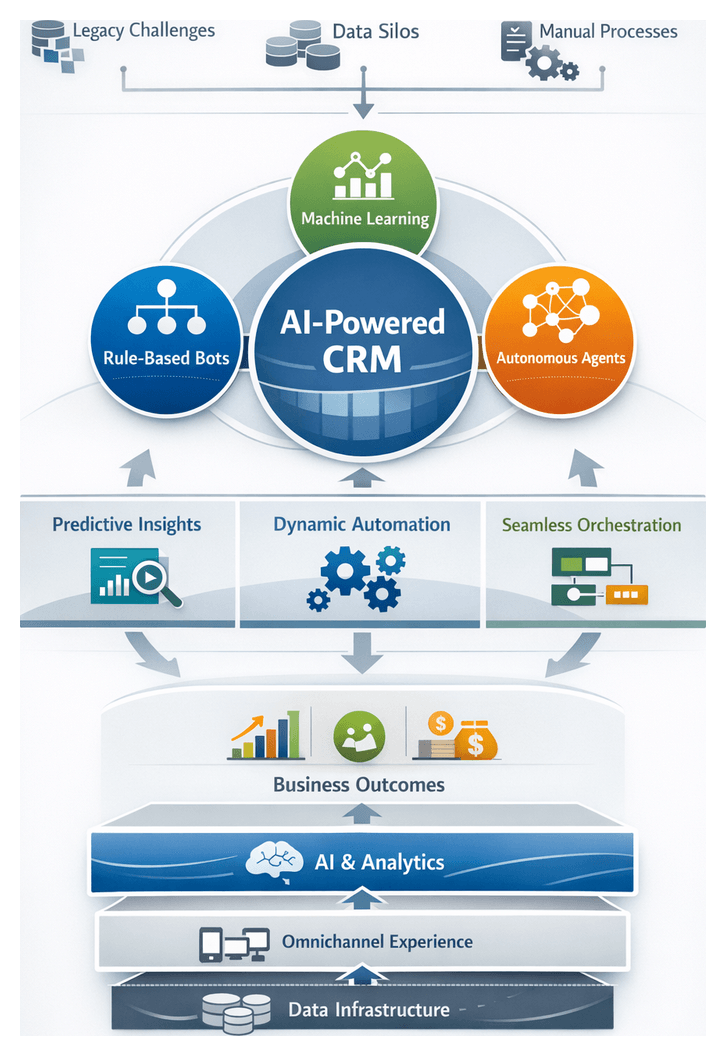
The Evolving CRM Imperative
Customer relationship management platforms have long served as central repositories for contacts, transactions, and basic workflow automation. Yet as modern customer journeys span mobile apps, web portals, social media, and in-store touchpoints, legacy CRM architectures built on static data models and rule-based processes struggle to keep pace. Organizations face fragmented data silos, manual case routing, and generic segmentation that undermine personalization, delay responses, and inflate operational costs.
Data remains scattered across email systems, e-commerce sites, social channels, and point-of-sale terminals, impeding a unified view of each customer. Rule-based campaign designs yield low engagement, while descriptive analytics fail to anticipate churn risk or upsell opportunities. As transaction volumes and interaction frequencies grow, performance bottlenecks emerge in custom integrations and hard-coded workflows. Complex interfaces and training overhead further hinder user adoption, and legacy modules often lack robust encryption, consent management, or audit trails to satisfy regulatory scrutiny.
The result is measurable business impact: marketing ROI suffers when messaging feels irrelevant, sales cycles lengthen as teams chase incomplete leads, and customer satisfaction erodes under slow service. In this environment, any friction or delay in engagement can lead to lost revenue, heightened churn, and diminished brand reputation.
Enter artificial intelligence and machine learning. By embedding intelligent agents within CRM ecosystems, organizations can automate data cleansing, surface next-best actions, and orchestrate seamless interactions across human and automated channels. These AI-powered enhancements deliver predictive foresight, contextual understanding, and real-time decisioning, transforming CRM from a static repository into a dynamic engagement hub. However, realizing this vision requires a clear grasp of existing pain points, strategic alignment, and governance frameworks to ensure responsible, value-driven adoption.
Framing AI Agents as Strategic Enablers
AI agents in CRM are software constructs that extend automation beyond predefined workflows to self-learning decision makers. They can be categorized as:
- Rule-Based Bots: Deterministic systems governed by decision trees or business rules to handle routine inquiries and data entry.
- Machine Learning Assistants: Predictive engines that analyze historical and real-time data for segmentation, scoring, and personalization. Examples include Salesforce Einstein and Microsoft Dynamics 365 AI.
- Autonomous Systems: Adaptive agents leveraging reinforcement learning for dynamic pricing, conversational AI, and multi-agent collaboration. Platforms such as SAP Conversational AI illustrate this capability.
Rather than adjunct features, AI agents must be integral to CRM architectures, governed by an AI Center of Excellence that aligns technology investments with strategic goals, ethical guidelines, and performance metrics. Industry interpretive frameworks guide this alignment:
- Service-Dominant Logic: Assesses agents on their ability to co-create value through contextual insights and continuous customer collaboration.
- Dynamic Capabilities: Evaluates how agents sense opportunities, seize them through rapid adaptation, and reconfigure resources for innovation.
- Sociotechnical Systems Theory: Examines the interplay between AI agents, human teams, and organizational processes to ensure harmonious integration.
Consulting firms advocate a business-first approach with pilot programs that measure ROI on customer satisfaction, conversion rates, and cost reductions. Academic research highlights algorithmic fairness and transparency, while vendors like Oracle Adaptive Intelligent Apps and HubSpot CRM Suite embed predictive analytics and conversational interfaces into their core offerings. A balanced evaluation of value versus risk—data quality, model drift, compliance, bias, and vendor lock-in—enables executives to articulate a robust business case and establish governance guardrails.
Architecturally, embedding AI agents involves a layered model:
- Data Infrastructure Layer: Centralized repositories and real-time streams that feed AI algorithms.
- Intelligence Layer: A portfolio of AI agents delivering predictive analytics, conversational interfaces, and decision automation.
- Orchestration Layer: Business process engines and event streaming platforms coordinating AI-human workflows.
- Experience Layer: Omnichannel touchpoints with seamless handoffs between automated and human interactions.
This blueprint ensures agents serve end-to-end customer journeys rather than isolated functions, with governance structures that foster continuous improvement and alignment with business objectives.
Market Dynamics Driving AI Adoption
Hyper-personalized, real-time experiences have emerged as critical differentiators across retail, financial services, telecommunications, and healthcare. Competitors leveraging AI agents to anticipate needs, adapt messaging, and autonomously triage support inquiries set new industry benchmarks. Enterprises that delay AI-driven CRM risk ceding market share to more agile, data-savvy rivals.
Exponential growth in customer data—from transaction logs and browsing behaviors to IoT sensor feeds and social sentiment—overwhelms legacy CRM infrastructures. Only AI agents can cleanse disparate records, normalize signals, and enrich profiles at scale. Solutions like Salesforce Einstein and Microsoft Dynamics 365 Customer Insights exemplify how embedded AI transforms raw data into timely, actionable intelligence for predictive scoring and automated segmentation.
Studies show over 70 percent of consumers expect real-time responsiveness and proactive outreach based on predictive insights. AI-enabled conversational agents and decision engines have driven significant improvements in Net Promoter Scores and customer lifetime value. To meet these demands, organizations must align marketing, sales, service, and IT teams around shared goals, supported by governance frameworks that blend innovation with ethical data usage, privacy compliance, and security protocols.
Executive leadership must define clear business outcomes—reducing response times, boosting conversion rates, and enhancing upsell velocity—while allocating resources for upskilling, pilot programs, and performance dashboards. Risk management practices such as algorithmic audits, GDPR and CCPA compliance, explainability frameworks, and encryption safeguard customer trust and ensure regulatory alignment.
Strategic and Operational Insights
Anticipated Strategic Insights
- Recognition of a performance gap in legacy CRM responsiveness and personalization
- Value of embedding AI agents to elevate engagement quality and agility
- Essential role of data-centric strategies in enabling scalable personalization
- Competitive advantage of integrating human expertise with machine-driven insights
Core Analytical Frameworks
- Technology Adoption Lifecycle: Guides timing for pilot, early adopter, and mainstream roll-outs of AI-driven processes
- Data Governance Maturity Model: Defines a path from ad hoc data collection to compliant, quality-assured pipelines
- Integration Architecture Taxonomy: Evaluates API-centric connectors, hub-and-spoke middleware, and cloud-native embeddings
- Behavioral Segmentation & Predictive Analytics Roadmap: Transitions from descriptive reporting to prescriptive and prescient decisioning
Practitioner Imperatives
- Establish a multidisciplinary AI-CRM center of excellence for governance and capability development
- Allocate budgets for pilot experiments, iterative model refinement, and ongoing skills training
- Choose vendors based on long-term roadmap alignment and open architectures to avoid lock-in
- Secure executive sponsorship to champion culture change and cross-functional collaboration
- Implement continuous training programs for technical staff and CRM end users
Key Limitations and Considerations
- Data Quality & Bias: Inadequate cleansing or normalization can skew insights and erode trust
- Integration Complexity: Legacy and bespoke systems may require extensive customization and middleware
- Regulatory Compliance: Adherence to GDPR, CCPA, and emerging AI governance standards is imperative
- Ethical Governance: Transparent model validation, bias audits, and consent management ensure responsible usage
- Measurement & Attribution: Differentiating AI agent impact from external factors demands rigorous experimentation
- Talent & Skills Gap: Ongoing investment in data science, AI engineering, and change management is required
By synthesizing pain-point analysis, strategic framing of AI agents, market dynamics, and practitioner imperatives, organizations can chart a cohesive path toward intelligent customer engagement. Armed with analytical frameworks and governance disciplines, leaders are poised to transform CRM into an adaptive, insight-driven ecosystem—securing sustainable competitive advantage in an increasingly AI-driven marketplace.
Chapter 1: The Evolution of CRM Systems and the Rise of AI Agents
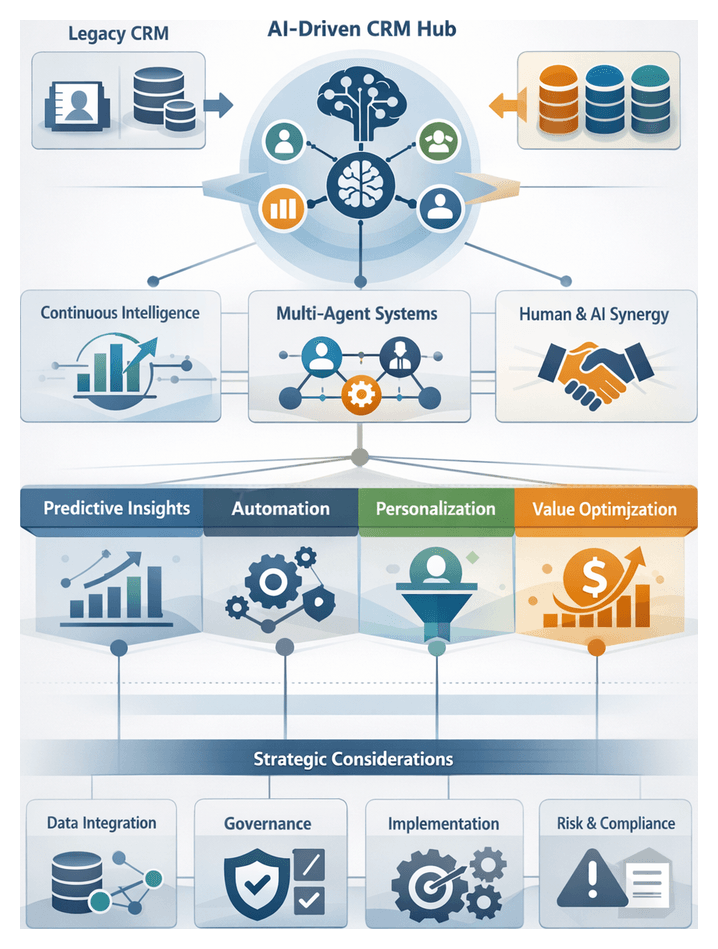
The Evolution of CRM to Intelligent Hubs
Customer relationship management began with simple contact registries—rolodexes, paper files, and basic spreadsheets—that recorded names, phone numbers, and addresses. The shift to computerized systems in the late 1980s offered digital storage and search, but data silos, manual updates, and rudimentary reporting persisted. As sales, marketing, and service teams maintained separate databases, inconsistent records undermined cohesive customer experiences.
The mid-1990s introduced dedicated CRM platforms, with solutions such as Siebel Systems centralizing touchpoint tracking and providing modules for lead management, opportunity tracking, and case resolution. Yet high deployment costs and complex maintenance limited adoption. The arrival of Software-as-a-Service in the early 2000s, led by providers like Salesforce.com, democratized CRM through cloud-native accessibility, frequent updates, and scalable architectures.
Even with SaaS innovations, core challenges remained: manual data entry, duplicate records, static reporting, and limited personalization. The explosion of digital channels—social media, live chat, and mobile apps—further strained legacy platforms. Customers demanded context-aware interactions, dynamic content delivery, and intelligent routing that traditional CRM architectures could not support.
The convergence of big data and advanced analytics offered a preview of CRM’s next phase, but insights often remained confined to specialist teams rather than embedded in front-line workflows. The emergence of machine learning and natural language processing in the 2010s introduced predictive modules. Platforms such as Salesforce Einstein, Microsoft Dynamics 365 AI and HubSpot CRM began offering lead scoring, sentiment analysis, and churn forecasting, yet these capabilities frequently operated as add-ons rather than integral features.
As digital transformation accelerated, the volume and velocity of customer interactions overwhelmed human teams. Self-service portals and chatbots delivered inconsistent experiences due to limited conversational intelligence. This tension between rising expectations and static systems catalyzed the emergence of intelligent CRM hubs—platforms that embed AI agents within operational processes to deliver proactive, personalized engagement at scale.
Intelligent hubs unify customer profiles by continuously ingesting data from email, phone, social media, and in-app behaviors. Adaptive models refine preferences and predict needs, while AI agents recommend next-best actions, automate repetitive tasks, and prioritize revenue-driving efforts. Sales teams receive scenario-based selling guidance; marketing teams gain real-time segmentation and dynamic content orchestration; service organizations deploy virtual assistants to resolve common inquiries autonomously and escalate complex cases with full context.
Transitioning to intelligent CRM hubs requires more than technology—it demands strategic transformation. Organizations must consolidate data, establish quality standards, pilot AI use cases, embed agents into daily workflows, and iterate continuously. Change management, data governance, and capability development are fundamental to realizing the promise of AI-driven customer engagement.
Conceptualizing AI Agents within CRM
Within a CRM framework, an AI agent is a software entity endowed with perception, reasoning, and action capabilities. Perception involves ingesting structured and unstructured data from customer interactions. Reasoning applies machine learning models or rule-based logic to interpret signals, infer intent, and predict next steps. Action comprises automated responses, orchestration of downstream workflows, or escalation to human operators.
Industry definitions categorize AI agents by autonomy and adaptability. Rule-based chatbots execute predefined decision trees. Machine learning assistants leverage supervised and reinforcement learning to improve over time. Fully autonomous intelligent virtual assistants combine natural language understanding, contextual analytics, and dynamic planning to handle complex dialogues and multi-step processes without human intervention.
Strategic Frameworks and Interpretive Lenses
Experts employ several frameworks to assess AI-CRM integration:
- Continuous Intelligence Paradigm: AI agents act as real-time analytics engines embedded in workflows, refining predictive models through closed-loop learning and delivering next-best-action guidance.
- Multi-Agent Systems Theory: CRM is viewed as an ecosystem of collaborating agents—sales bots, service bots, and decision agents—interoperable via shared knowledge bases and standardized messaging.
- Human-Centered AI Approach: Designs prioritize synergies between human agents and digital counterparts, ensuring transparency and trust through explainable AI mechanisms.
- Value-Chain Augmentation Model: Evaluates AI agents by their impact across the end-to-end CRM value chain—lead acquisition, conversion, and after-sales support—measuring revenue uplift, cost reduction, and customer lifetime value.
Evaluating AI Agent Capabilities
Practitioners measure AI agents against critical dimensions:
- Natural Language Understanding: Accuracy in intent recognition, entity extraction, and sentiment analysis, benchmarked by metrics such as intent accuracy and slot-filling recall.
- Decision Automation: Autonomy in executing business rules and learned policies, assessed by latency, error rates, and frequency of human escalations.
- Adaptive Learning: Ability to incorporate feedback—customer ratings and behavioral signals—into iterative retraining, monitored through model drift rates and convergence times.
- Integration Agility: Ease of embedding agents within platforms like Salesforce Einstein, Microsoft Dynamics 365 AI, or Google Cloud Contact Center AI, and connecting to data lakes and third-party services.
- Governance and Compliance: Data handling controls aligned with regulations such as GDPR and CCPA, and audit trails for decision provenance.
Strategic Imperatives for AI Adoption
Organizations face a strategic imperative to adopt AI-driven CRM to stay competitive, meet customer expectations, and optimize operations.
Market and Competitive Dynamics
- Rising Customer Expectations: Consumers demand seamless, real-time responses and personalized recommendations, which static rule-based CRM cannot deliver.
- Accelerated Decision Cycles: Shorter product lifecycles and shifting trends require proactive forecasting and propensity scoring.
- Data Proliferation: Vast volumes of customer signals—from social media to IoT—must be synthesized by AI to uncover actionable insights.
- Pressure on Margins: Automating routine tasks with AI agents in lead qualification, case routing, and cross-sell recommendations reduces manual effort and errors.
Technological Catalysts
- Cloud-Native AI Services: Managed offerings such as AWS AI services and Azure Cognitive Services deliver natural language understanding and predictive analytics without heavy infrastructure investments.
- Pre-Trained Models and Transfer Learning: Domain adaptation of large language and vision models reduces data requirements and accelerates deployment.
- API-Driven Microservices: Modular architectures and API connectors enable scalable integration of AI capabilities into existing CRM workflows.
- Open Source Ecosystems: Frameworks such as TensorFlow, PyTorch, and spaCy, supported by orchestration tools like Kubeflow, underpin robust AI pipelines.
Operational and Organizational Drivers
- Cross-Functional Alignment: AI agents unify insights across marketing, sales, and service, aligning lead scoring, campaign targeting, and case triage.
- Data-Driven Culture: Success with AI-powered dashboards and chatbots fosters broader analytics maturity.
- Talent Augmentation: AI extends the reach of scarce CRM administrators and data scientists, automating repetitive tasks and surfacing strategic insights.
- Regulatory Compliance: Automated audit trails and anomaly detection support stringent requirements in finance and healthcare.
Industry-Specific Imperatives
- Retail and Consumer Goods: AI-powered recommendation engines and predictive restocking models optimize promotions and inventory.
- Financial Services: Real-time fraud detection, credit risk assessment, and personalized wealth advice leverage predictive analytics.
- Manufacturing and Supply Chain: IoT data streams inform predictive maintenance, warranty management, and order fulfillment.
- Healthcare and Life Sciences: Virtual assistants manage appointment scheduling, medication reminders, and preliminary symptom triage.
Analytical Frameworks for Prioritization
To translate strategic imperatives into actionable roadmaps, organizations employ frameworks such as:
- Value vs. Complexity Matrix: Prioritize high-value, low-complexity use cases (for example, AI-guided email campaigns) and plan pilots for more complex applications like autonomous case routing.
- Return on Analytics (ROA): Model anticipated revenue uplift, cost savings, and risk reduction from AI interventions, including predictive lead scoring and automated chatbots.
- CRM Maturity Assessment: Evaluate readiness across data quality, technology infrastructure, and talent to align AI objectives with organizational maturity.
Critical Considerations and Risks
Successful AI-CRM integration depends on addressing both technical and organizational factors:
- Data Integrity and Governance: Establish authoritative sources, automated validation, lineage tracing, and governance bodies to ensure privacy, ethics, and compliance.
- Integration Complexity: Balance rapid API-driven deployments with scalable middleware or iPaaS solutions; consider use-case requirements, data volumes, and latency.
- Organizational Readiness: Deploy change management programs—stakeholder engagement, role redefinition, and skills development—to foster adoption and mitigate resistance.
- Skill and Resource Alignment: Build data science, machine learning engineering, and human-centered design capabilities through hiring, partnerships, and training.
- Performance Measurement: Use balanced scorecards that capture leading indicators (intent prediction accuracy, routing speed) and lagging outcomes (revenue uplift, cost savings, loyalty metrics).
Leaders must also monitor risks such as model bias, privacy breaches, over-automation, vendor lock-in, and scalability bottlenecks. Regular audits, consent management, human handover thresholds, open architectures, and performance stress testing are essential safeguards.
Strategies for Sustainable AI-CRM Implementation
- Adopt an Agile, Iterative Approach: Deliver AI-CRM capabilities in sprints—starting with personalized recommendations and lead scoring, then expanding to adaptive dialogue and predictive routing.
- Institutionalize Governance and Ethics: Create cross-functional councils to define data, model, and transparency policies; integrate ethical assessments throughout the AI lifecycle.
- Foster Collaborative Ecosystems: Align IT, data, and business units through shared KPIs, communities of practice, and review forums; partner with academic and industry bodies to share best practices.
- Implement Continuous Monitoring: Deploy real-time dashboards for model performance, sentiment trends, and operational metrics; automate alerts for drift, anomalies, and KPI deviations.
- Design for Scalability and Flexibility: Leverage cloud-native services, microservices, and containerization; plan modular ecosystems with API gateways and service meshes to accommodate evolving workloads.
Future Trends in AI-Driven CRM
- Generative AI for hyper-personalized content creation aligned with brand voice and compliance.
- Federated learning frameworks that enable privacy-preserving model training across distributed data sources.
- Edge computing deployments for ultra-low-latency inference in mobile apps and in-store kiosks.
- Composable CRM ecosystems built on event-driven architectures and standardized connectors for rapid integration.
- Ethics-by-design toolchains that automate bias mitigation, explainability, and impact analysis.
By internalizing these insights and strategies, organizations transform CRM from an operational system into a strategic engine, delivering personalized, proactive, and seamless customer engagements at scale.
Chapter 2: Understanding AI Agents Definitions and Core Capabilities
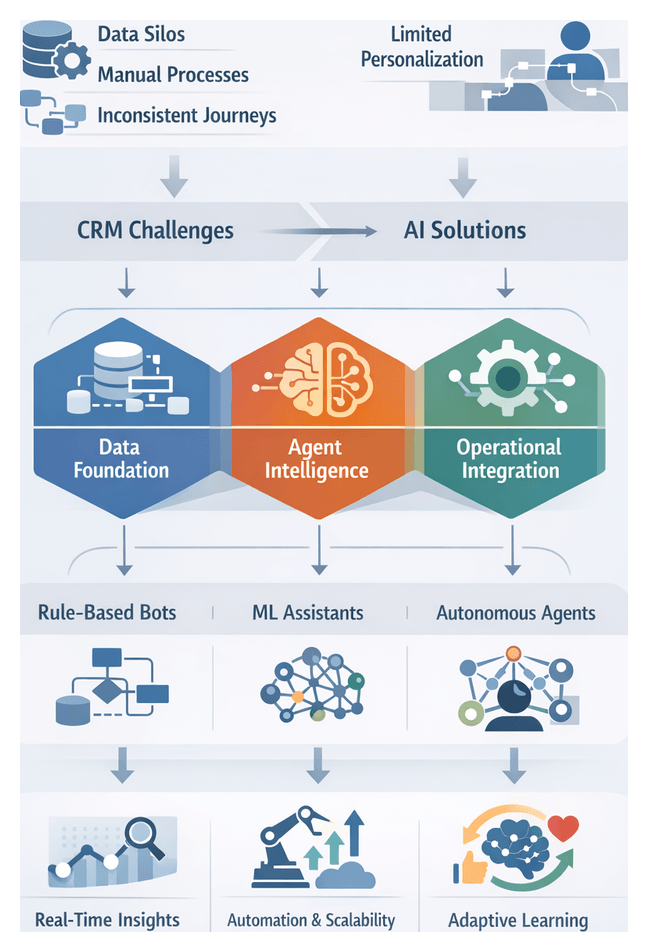
Current CRM Challenges and the AI Imperative
Fragmentation and Limited Personalization
Modern customer relationship management platforms aggregate data from sales, service, marketing, social and offline channels to create unified customer profiles. Yet persistent data silos—across email marketing systems, support ticketing tools, web analytics and legacy databases—impede real-time insight. Integration gaps introduce latency, mapping inconsistencies and incomplete records. As a result, front-line teams lack the visibility needed to anticipate needs or deliver proactive, highly personalized experiences. Static segmentation and rule-based triggers cannot adapt to dynamic behavioral shifts or contextual factors, leading to generic outreach, missed upsell opportunities and an impersonal customer journey.
- Data silos and integration gaps impair real-time visibility
- Static segmentation limits micro-targeting and dynamic personalization
- Manual case routing and follow-up introduce delays and errors
- Inconsistent journeys across channels erode brand loyalty
- Scaling manual workflows drives up operational costs
Responsiveness and Scalability Constraints
Customers demand instant, seamless service and fluid handoffs between channels. Traditional CRM workflows rely on manual intervention at every stage—case assignment, escalation, knowledge retrieval and follow-up scheduling. Under high-volume conditions, agents are overwhelmed by repetitive tasks, reducing time for strategic activities. Rule-based automations plateau in effectiveness as volumes grow, limiting elasticity. Organizations that maintain this status quo risk slower response times, inconsistent resolution quality and declining satisfaction scores.
The emergence of AI agents—autonomous systems powered by natural language understanding, predictive modeling and decision automation—offers a pathway to transcend static rules. By embedding intelligent capabilities at scale, businesses can unify data streams, automate complex workflows and deliver contextualized engagement across every touchpoint. This shift from manual scripting to adaptive, self-learning agents is critical for organizations seeking to differentiate through superior customer experiences.
AI Agents in CRM: Capabilities and Evaluation Frameworks
Agent Archetypes and Strategic Objectives
AI agents in CRM can be categorized by archetype and aligned to strategic goals such as operational efficiency, revenue growth and customer satisfaction. Key archetypes include:
- Rule-Based Bots: Execute predictable, high-volume tasks using if-then logic, ideal for simple FAQs and routine case triage
- Machine Learning Assistants: Leverage statistical models and intent classification to refine interactions over time, suited for lead scoring and dynamic personalization
- Autonomous Orchestrators: Coordinate multistep workflows end-to-end without human intervention, enabling proactive outreach and complex decision automation
Selecting the appropriate archetype requires mapping each AI capability—natural language understanding, decision automation, adaptive learning—to specific CRM use cases and desired performance metrics. Early deployment speed may favor rule-based bots, while long-term adaptability demands machine learning assistants or autonomous agents with robust governance.
Core Capabilities and Interpretive Frameworks
An analytical framework for assessing AI-CRM integration rests on three pillars:
- Data Foundation—Consolidated customer data streams with cleansing, enrichment and real-time synchronization to fuel accurate agent decisioning
- Agent Intelligence—Natural language understanding, predictive modeling and adaptive learning that enable context interpretation and continuous improvement
- Operational Integration—Seamless embedding into CRM workflows with secure data exchange, compliance adherence and intuitive user experiences
Natural Language Understanding
Natural language understanding (NLU) underpins AI agents’ ability to interpret customer inputs. It encompasses lexical parsing, syntactic analysis, semantic interpretation and pragmatic reasoning. Vendors are evaluated on intent accuracy, entity extraction precision and context retention across dialogue turns. Platforms such as Google Dialogflow and IBM Watson Assistant exemplify advanced NLU, while open-source frameworks like Rasa support extensibility. Industry models from Gartner and Forrester guide decision makers in determining whether a solution delivers surface-level pattern matching or deep contextual comprehension suited to complex customer dialogues.
Decision Automation
Decision automation spans rule engines, predictive decisioning and prescriptive analytics. Rule-based workflows use static if-then logic. Predictive systems apply machine learning to score customer needs and likelihood of conversion. Prescriptive analytics employ optimization algorithms to recommend the best action under varying constraints. Criteria for evaluation include autonomy, transparency and risk management. Organizations often establish decision review boards to audit model logic, monitor performance thresholds and handle exceptions. Explainability tools ensure that automated recommendations remain traceable and compliant.
Adaptive Learning and Continuous Improvement
Adaptive learning enables AI agents to refine behaviors based on real-time feedback. Two paradigms prevail: batch retraining, where accumulated interaction logs drive periodic model updates, and online learning, where parameters adjust incrementally with each new data point. Maturity frameworks from Forrester grade organizations on their feedback loop design, concept-drift detection, model update latency and integration across touchpoints such as support tickets and social media sentiment. Governance is essential to prevent bias amplification and unintended behaviors, with structured validation, rollback mechanisms and hypothesis-driven experiments.
Multimodal and Contextual Capabilities
Beyond text, AI agents are integrating voice, images and sensor data to enrich user context. Success is measured by an agent’s ability to fuse modalities—such as sentiment from voice transcripts, facial expressions and purchase history—into coherent responses. Contextual consistency scores track how well an agent recalls prior interactions and user preferences across channels. Pilot programs in retail leverage visual product recognition to accelerate purchase intent, while financial services use voice biometrics for secure authentication. Evaluators align multimodal performance with core CRM objectives, ensuring that each data stream enhances engagement without adding undue complexity.
Metrics and Maturity Models
Organizations quantify AI agent capabilities through technical, operational and business metrics. Common indicators include intent classification accuracy, entity extraction F1 score, decision precision, model update latency and customer satisfaction indices. Maturity models map these metrics to stages from pilot experimentation to strategic optimization. A phased measurement approach begins with technical feasibility, progresses to operational stability and culminates in business outcomes such as retention uplift and revenue growth. Balanced scorecards ensure that improvements in accuracy and scalability translate into tangible customer impact.
- Accuracy and Precision: Correct intent classification and decision outcomes
- Latency and Throughput: Response times and volume capacity under load
- Adaptivity Rate: Frequency and performance impact of model updates
- Customer Impact: Net promoter score changes, conversion uplift, support cost reduction
Market Dynamics and Strategic Imperatives
Data as a Strategic Asset
Enterprises accumulate vast customer datasets—web interactions, call logs, social media posts, transactional records. Without algorithmic curation and contextual interpretation, this data remains siloed and underutilized. AI-driven platforms such as Salesforce Einstein and Microsoft Dynamics 365 AI automate segmentation, anomaly detection and propensity scoring. Real-time enrichment and predictive analytics create feedback loops that refine customer profiles continuously. Organizations that prioritize AI integration transform raw volume into coherent insights, fueling more precise engagement and higher-quality data in return.
The Experience Economy
Consumers now expect contextualized, anticipatory interactions. Industry research shows that over 80 percent of customers engage more deeply with brands that predict their needs. AI agents act as digital intermediaries, synthesizing behavioral cues to personalize every engagement.
- Anticipatory Service: Chatbots resolve inquiries before they are fully articulated
- Dynamic Content Delivery: Algorithms adjust recommendations in real time based on browsing patterns
- Omnichannel Consistency: Models maintain context across web, mobile, social and voice channels
Embedding AI within customer engagement frameworks deepens loyalty and drives upsell pathways. Conversely, static segmentation and manual triggers erode brand equity and cede share to more responsive competitors.
Operational Resilience and Scalability
AI agents automate routine tasks—lead qualification, ticket triage, follow-up scheduling—freeing human resources for strategic work. This reallocation accelerates throughput, reduces errors and improves cost efficiency. During seasonal peaks or campaign surges, intelligent agents scale volume handling without proportional headcount increases. They codify institutional knowledge within learning systems, mitigating risks associated with talent turnover. In regulated industries, the auditability and reproducibility of AI workflows enhance compliance resilience.
Regulatory, Ethical, and Governance Imperatives
As AI agents assume critical roles, transparent governance, data privacy safeguards and bias mitigation become paramount. Organizations must comply with GDPR, CCPA and emerging global statutes by embedding consent management, anonymization and audit logging into agent workflows. Ethical AI frameworks—such as the OECD AI Principles—guide fairness, accountability and transparency. Cross-functional oversight bodies align IT, legal and business stakeholders to define policies, monitor performance and manage risk. Firms that prioritize responsible innovation build trust and avoid reputational damage or regulatory sanctions.
Selection, Deployment, and Governance Considerations
Strategic Alignment of Agent Selection
Begin with clear business objectives—improving service responsiveness, driving upsell, or refining lead qualification. Define desired outcomes and metrics before choosing an agent archetype. Map capabilities such as NLU, decision automation and adaptive learning to specific CRM use cases. Evaluate trade-offs between rapid deployment and long-term adaptability. Rule-based bots deliver quick wins in predictable scenarios, while machine learning assistants and autonomous orchestrators support evolving, complex interactions.
Data and Technology Ecosystem
Assess data hygiene—cleansing, normalization and enrichment—and conduct a gap analysis to identify biases or inconsistencies. Align integration architecture with legacy constraints and scalability requirements, using API-driven connectors or cloud-native middleware to enable real-time pipelines. Embed data governance and security protocols at the integration layer to satisfy privacy mandates and maintain low latency for interactive use cases.
Organizational Readiness and Change Management
Cross-functional collaboration is critical. Engage stakeholders from sales, service, IT and legal early to promote shared ownership and anticipate process redesigns. Establish governance forums with representation from impacted units to oversee adoption and performance monitoring. Develop role-based training that covers technical operation and ethical use of AI agents. Define clear human-in-the-loop procedures and escalation workflows for situations beyond agent authority.
Governance, Ethics, and Compliance
Implement governance frameworks that include ongoing model validation, audit trails for automated decisions and stakeholder feedback mechanisms. In regulated sectors, ensure compliance with industry standards—PCI DSS, HIPAA or other regional requirements—by integrating interpretability tools and privacy-by-design principles. Monitor evolving legal frameworks and prepare to adapt agent behavior to new obligations.
Performance Monitoring and Continuous Optimization
Deploying an AI agent initiates an iterative optimization cycle. Track key performance indicators—response accuracy, resolution rates, customer satisfaction and operational throughput—in real time. Use A/B testing and user feedback loops to compare agent versions and refine conversational flows, decision logic and personalization algorithms. Define a balanced scorecard combining quantitative metrics and qualitative insights. Schedule regular retraining and rule adjustments based on performance drift and emerging business needs. Allocate cross-functional resources for rapid experimentation and incorporate pilot learnings into enterprise-wide rollout strategies.
Risk Mitigation and Limitations
AI agents present inherent risks that require proactive management. Audit training datasets for representativeness and address biases through data augmentation or fairness techniques. Maintain human oversight in mission-critical interactions, establishing guardrails for agent autonomy. Prevent technical debt by consolidating proofs-of-concept within a centralized governance structure that standardizes tooling, documentation and lifecycle management. This approach ensures scalability, reduces maintenance overhead and preserves institutional knowledge.
Chapter 3: Integration Architectures Connecting AI Agents to CRM Platforms
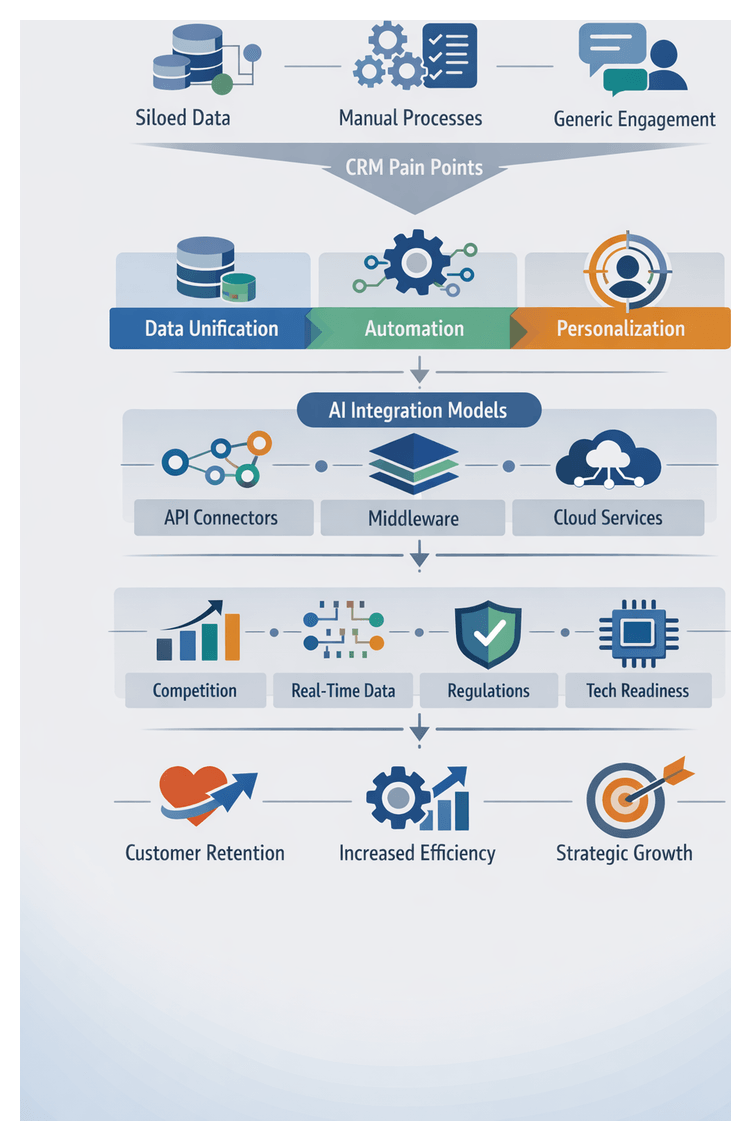
Current CRM Challenges and Imperatives
Customer relationship management platforms have matured from basic contact repositories into comprehensive suites—examples include Salesforce, HubSpot and Microsoft Dynamics—that manage sales pipelines, marketing campaigns, service tickets and feedback. Despite a global CRM market exceeding USD 80 billion, many organizations struggle with data fragmentation, manual workflows, impersonal interactions, slow responsiveness and limited predictive insights.
- Siloed Data Repositories: Marketing, sales, service and finance systems maintain disparate records, undermining a unified customer view and yielding inconsistent messaging, flawed analytics and compliance risks.
- Manual, Repetitive Processes: Lead qualification, case triage and follow-up tasks demand manual data extraction, multiple tool navigation and error-prone status updates, diverting resources from strategic activities.
- Generic Customer Engagement: Static segments and scripted responses fail to meet rising expectations for hyper-personalized experiences, leading to churn and revenue leakage.
- Delayed Responsiveness: Locating relevant history across systems introduces latency in high-volume channels—live chat, social media and email—eroding customer trust and agent productivity.
- Limited Predictive Capabilities: Without embedded forecasting, decision makers resort to manual exports to BI tools, hindering agility and proactive engagement.
Balancing automation and human touch is crucial. AI-driven rules can acknowledge support requests, provision account details or schedule routine check-ins, while skilled agents handle nuanced problem-solving and relationship building. Organizations that unify data, automate intelligently and personalize contextually report significant gains: a 36 percent increase in retention, 25 percent higher agent productivity and 20 percent reduction in costs. As omnichannel expectations expand to messaging apps, voice assistants and IoT touchpoints, addressing these pain points lays the foundation for scalable innovation and advanced AI initiatives.
Evaluating AI-CRM Integration Models
Selecting the right architecture for AI-CRM integration hinges on criteria such as scalability, latency, maintenance overhead, vendor lock-in risk, security, compliance, total cost of ownership and alignment with IT roadmaps. Three primary models dominate industry practice: API-driven connectors, middleware platforms and cloud-native integrations.
API-Driven Connectors
Direct integrations leverage RESTful endpoints exposed by CRM systems. Platforms like Salesforce Einstein and Microsoft Dynamics 365 AI provide extensive APIs for data retrieval, record updates and on-demand AI processes.
- Strengths: Low latency, transparent data flows, direct error handling and minimal infrastructure overhead.
- Limitations: Tight coupling to CRM schemas, higher maintenance when APIs evolve and complexity in orchestrating multi-step workflows.
Middleware Platforms
Middleware acts as an abstraction layer offering adapters, message routing and transformation. Solutions like MuleSoft Anypoint Platform and Dell Boomi deliver visual orchestration, reusable connectors, monitoring and governance.
- Strengths: Reusable components, built-in error recovery, hybrid cloud support and centralized policy enforcement.
- Limitations: Additional latency, subscription costs, potential vendor lock-in and specialized skill requirements.
Cloud-Native Integrations
Event-driven, serverless and microservice architectures embed AI agents within CRM workflows. For example, AWS Lambda or Google Cloud Functions invoke stateless units on CRM events, while Apache Kafka streams enable real-time event propagation.
- Strengths: Automatic scaling, pay-per-use cost models, fine-grained event handling and alignment with DevOps and CI/CD.
- Limitations: Architectural complexity, potential cold-start latency, emerging security best practices and reliance on cloud provider SLAs.
Comparative Trade-Offs and Governance
API connectors enable rapid initial builds but may require refactoring as CRM APIs change. Middleware centralizes governance yet introduces operational layers. Cloud-native solutions offer elasticity but demand advanced observability. Security considerations vary: direct APIs require robust authentication and rate limits; middleware centralizes policy enforcement but can be a single point of failure; event architectures distribute risk but complicate end-to-end auditing. Cost models range from low upfront development for APIs, subscription fees for middleware, to utility pricing for serverless compute. Benchmarking throughput, latency and failure rates under peak loads informs SLAs and capacity planning. Matrix frameworks—such as agility versus governance—help leaders visualize trade-offs and align architecture choices with strategic maturity.
Strategic Imperatives for Immediate AI Adoption
Macro-level trends have elevated AI integration from optional enhancement to strategic necessity. Competitive pressures, data proliferation, evolving customer expectations, regulatory shifts and ecosystem readiness converge to create an inflection point for CRM modernization.
Competitive Dynamics
- Market Disruption: AI-powered challengers set new service benchmarks. Legacy firms risk losing segments if they lag in personalization and responsiveness.
- Value Generation: AI transforms CRM from a cost center into a driver of revenue growth by enabling proactive opportunity management and boosting lifetime value.
Data Proliferation and Real-Time Insights
- Omnichannel Visibility: AI agents ingest and correlate multisource data to build unified profiles and deliver context-aware interactions.
- Streaming Analytics: Batch reporting cannot meet real-time demands. Platforms like Salesforce Einstein or Microsoft Dynamics 365 AI provide predictive signals at the moment of engagement.
Evolving Customer Expectations
- Proactive Engagement: Propensity models and churn predictors enable anticipatory outreach rather than reactive service.
- Omnichannel Consistency: Conversational AI solutions, such as the Virtual Agent in Adobe Experience Platform, maintain dialogue states across channels.
- Self-Service Autonomy: Intelligent virtual assistants reduce resolution times and support costs, preventing ticket backlogs and boosting satisfaction.
Regulatory and Ethical Contexts
- Data Privacy: GDPR and CCPA require privacy-by-design, transparent data lineage and consent management.
- Algorithmic Accountability: Explainable AI frameworks mandate interpretability in customer-facing decisions.
Technology Maturity and Ecosystem Readiness
- Modular, API-First Design: Modern CRM suites simplify AI integration via standard interfaces.
- Open-Source and Commercial Platforms: Organizations weigh flexibility of libraries against convenience of services from Oracle CX, SAP Customer Experience and HubSpot AI.
- Cloud Scalability: Elastic infrastructures support real-time AI workloads; delayed migration risks capacity constraints during peaks.
Assessing Organizational Readiness
- Maturity Models: Benchmark CRM and AI capabilities from experimentation to enterprise-wide optimization.
- Value-Risk Matrices: Prioritize use cases by projected business value and implementation complexity.
- Capability Heatmaps: Identify functional gaps in data management, analytics and change management to guide investments.
Operational and Cultural Implications
- Skill Shifts: Expanded roles for data scientists, analytics translators and AI ethicists require hiring and upskilling.
- Change Management: Cross-departmental pilots, steering committees and transparent communication mitigate resistance.
- Governance Bodies: AI steering councils balance innovation velocity with performance, compliance and ethical oversight.
Analytical Frameworks and Key Considerations
Effective AI-CRM transformations draw on structured frameworks and clear-eyed recognition of limitations. Leaders should apply models that align technology choices with business imperatives and governance requirements.
- AI Maturity Continuum: From pilots to optimization, maturity stages inform pilot scope, investment priorities and governance rigor.
- Technology-Organization-Environment (TOE) Framework: Balances system capabilities, culture, leadership support and external pressures.
- Value Chain Impact Analysis: Maps AI use cases—lead acquisition, conversion, support—and quantifies cost savings, revenue uplift and satisfaction gains.
- Capability Stack Assessment: Decomposes AI-CRM into data infrastructure, model development, integration middleware and user experience to sequence investments.
- Ethical and Compliance Lens: Embeds checkpoints from IEEE Ethically Aligned Design and EU Trustworthy AI guidelines to ensure fairness and transparency.
Practical Limitations and Risk Mitigation
- Data Quality: Incomplete or inconsistent records impair predictions; rigorous cleansing, normalization and enrichment are prerequisites.
- Integration Complexity: API connectors, middleware or cloud-native services each carry latency, scalability and maintainability trade-offs.
- Regulatory Compliance: Jurisdictional privacy and security mandates demand robust data residency, consent management and auditability.
- Organizational Readiness: Cultural resistance, unclear roles and skill gaps can derail initiatives without proactive change management.
- Ethical and Bias Concerns: Models may reinforce historical biases; model interpretability, bias audits and human oversight are essential.
- Performance Variability: Probabilistic predictions require monitoring dashboards, retraining schedules and validation protocols to manage drift.
- Vendor Dependencies: Proprietary services—such as Salesforce Einstein, Microsoft Dynamics 365 AI or Oracle Adaptive Intelligent Apps—accelerate deployment but may introduce lock-in and limit customization.
By integrating these analytical frameworks with strategic imperatives and practical risk mitigation, organizations can pursue balanced AI-CRM roadmaps. This alignment of data, technology, governance and culture is essential to unlock the full potential of AI-driven customer engagement while safeguarding against common pitfalls.
Chapter 4: Ensuring Data Quality and Governance for AI-Driven Insights
The Modern CRM Imperative
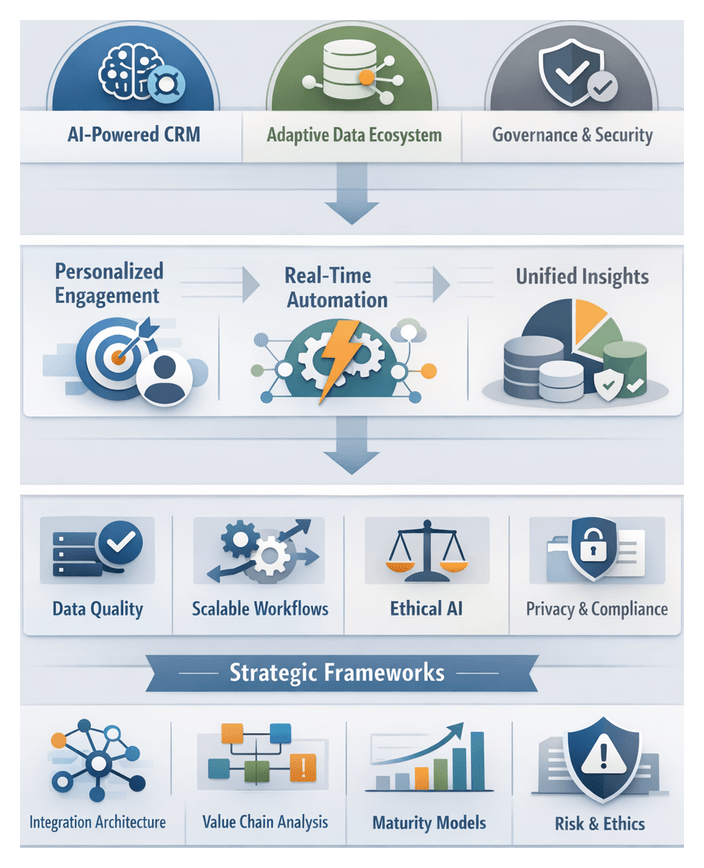
Customer relationship management (CRM) has transitioned from on-premise contact repositories to expansive cloud platforms that promise unified customer profiles, automated workflows, and predictive analytics. Market leaders including Salesforce Einstein, Microsoft Dynamics 365 AI, and HubSpot AI tools now embed machine learning models for lead scoring, chatbot-driven support, and dynamic content personalization. However, widespread adoption—exceeding 90 percent among large enterprises—belies persistent gaps in delivering the hyper-relevant, real-time experiences customers demand. Legacy CRM architectures often rely on static segmentation, fragmented data sources, and manual triggers that impede agility and limit competitive differentiation. Concurrently, evolving data privacy regulations and heightened security expectations impose rigorous governance requirements. In this environment, CRM must evolve from a static system of record into an intelligent, adaptive platform powered by AI agents capable of orchestrating seamless, end-to-end customer journeys.
Addressing Core CRM Limitations with AI Agents
Scaling Personalized Engagement
Traditional CRM segmentation depends on manually defined lists and simple rules that quickly become outdated as customer preferences shift. Marketing teams expend considerable effort maintaining static audiences, while sales representatives use generic email templates and stale account notes. This disconnect leads to underperforming campaigns and missed cross-sell opportunities. AI agents leverage real-time behavioral tracking, natural language processing, and propensity modeling to create dynamic segments that reflect each customer’s evolving context. By continuously analyzing open rates, click patterns, purchase history, and support interactions, AI-driven engines deliver tailored recommendations and messaging at scale, enhancing relevance and driving engagement across channels.
Accelerating Responsiveness and Agility
Research shows that the probability of qualifying a lead drops by over 60 percent if follow-up exceeds one hour, yet CRM workflows often introduce delays through manual notifications and rigid drip schedules. Service inquiries languish in static queues, and marketing campaigns cannot pivot quickly in response to emerging trends. AI agents remediate these issues by automating lead triage using sentiment analysis and prioritizing high-value interactions. Real-time decisioning can trigger chatbots or human outreach precisely when customers express intent, while adaptive campaign workflows adjust messages and timing based on live performance metrics. This level of responsiveness not only increases conversion rates but also strengthens customer trust by meeting expectations for immediacy.
Ensuring Data Integrity and Unified Insights
Effective AI models depend on high-quality, consistent data, yet enterprises contend with fragmented records across CRM modules, marketing automation platforms, and external sources. Duplicate entries, outdated contact details, and siloed spreadsheets undermine analytics and personalization. Robust AI-enabled ecosystems incorporate continuous data cleansing, deduplication, and enrichment processes powered by machine learning algorithms that detect anomalies, standardize fields, and append third-party demographics. Integration platforms unify internal data with external enrichments to create a single source of truth, ensuring that AI-driven insights and automated actions rest on accurate, comprehensive, and timely customer information.
Optimizing Operational Efficiency and Scalability
As organizations expand, scaling CRM solutions often demands extensive customizations, complex approval processes, and additional licensing fees. Legacy workflow engines struggle with conditional branching and exception handling, leading to technical debt and performance bottlenecks. AI agents introduce self-learning automation that can interpret context, apply business rules dynamically, and learn from outcomes to refine processes continuously. By embedding intelligent decisioning within CRM workflows, enterprises can scale operations without proportional increases in manual administration or IT overhead, enabling consistent service levels and adoption of new engagement models with minimal disruption.
Architecting AI-Driven Data Ecosystems
Adaptive Data Management Frameworks
The migration from traditional extract-transform-load (ETL) approaches to adaptive, streaming data architectures underpins effective AI-enabled CRM. Organizations must orchestrate diverse streams—sensor logs, social media feeds, web interactions—for machine learning and real-time inference. Frameworks such as the Data Management Body of Knowledge (DMBOK) and the Data Management Capability Assessment Model (DCAM) offer structured criteria for evaluating governance maturity, data quality practices, and process efficiency. By aligning data preparation routines with these benchmarks, enterprises can reduce model drift, minimize exception rates, and sustain predictive accuracy over time.
Assessing Data Quality Dimensions
AI-driven CRM success depends on four primary data quality dimensions: accuracy of contact and transaction records; completeness of customer attributes and interaction history; consistency of formats and coding across systems; and timeliness of data availability for inference. Continuous quality monitoring dashboards alert teams when thresholds fall below acceptable limits, enabling rapid remediation through automated cleansing routines and enrichment services. Aligning data quality practices with business outcomes ensures that AI models deliver reliable predictions and recommendations.
Metadata Management and Cataloging
Rich metadata accelerates discovery, contextualization, and lineage tracking of CRM data assets. Solutions like Collibra and Alation provide automated harvesting of schemas, business glossaries, and usage patterns, supporting semantic coherence across data domains. Dynamic tagging and impact analysis enable AI agents to locate relevant inputs for next-best-action algorithms, while collaborative stewardship workflows ensure accountability. Mature metadata catalogs reduce time-to-insight for data scientists and enhance transparency for auditors and compliance teams.
Integration, Harmonization, and Data Mesh Considerations
Data integration strategies range from centralized warehouses to federated data mesh architectures. Harmonization techniques—schema mapping, entity resolution, and semantic enrichment—ensure consistent interpretation of customer records. Cloud-native platforms like Snowflake and real-time integration services facilitate low-latency ingestion and synchronization of third-party enrichments. Evaluations of integration approaches consider throughput, scalability, and semantic integrity, determining how swiftly AI agents can incorporate new data sources into models that power personalization, predictive scoring, and conversational interfaces.
Lineage, Traceability, and Compliance
End-to-end visibility into data flows is critical for regulated industries and risk-averse enterprises. Automated lineage tools capture the sequence of transformations, enabling impact analysis when anomalies occur. Platforms such as Informatica Enterprise Data Catalog visualize dependency graphs and maintain version histories, supporting compliance with GDPR, CCPA, and sector-specific mandates. Transparent data provenance not only reduces model bias but also empowers stakeholders to validate and trust AI-driven decisions.
Governance for Security, Privacy, and Ethics
Security Governance Foundations
Security governance establishes a risk management framework encompassing confidentiality, integrity, and availability. Adhering to ISO 27001 and the NIST Cybersecurity Framework, organizations define access controls, encryption standards, and identity management protocols to protect customer data. Continuous monitoring, incident response planning, and redundancy strategies ensure resilience of AI-augmented CRM services against threats and disruptions.
Privacy Governance and Consent Management
Global privacy regulations mandate stringent controls over data collection, usage, and transfer. Platforms such as OneTrust and Collibra automate consent workflows, data mapping, and subject access requests. Privacy governance frameworks emphasize data minimization, transparent consent mechanisms, and robust cross-border transfer controls through standard contractual clauses or binding corporate rules, mitigating legal risks while respecting customer rights.
Ethical AI Oversight
Ethical governance extends beyond legal compliance to address fairness, accountability, and transparency. Interpretive frameworks like IEEE Ethically Aligned Design and the EU Ethics Guidelines for Trustworthy AI guide bias audits, explainability standards, and human-in-the-loop mechanisms. Cross-functional ethics committees evaluate model designs, monitor for disparate impacts, and ensure that autonomous AI actions can be explained and, when necessary, overridden by human intervention.
Organizational Roles and Enabling Tools
Effective governance relies on defined structures: a Data Governance Council sets policies; Chief Privacy Officers and Data Protection Officers interpret regulations; Security Architects and Chief Information Security Officers oversee risk; and AI Ethics Boards guide ethical considerations. Tools like BigID for data discovery and classification, and Microsoft Azure Purview for unified governance across cloud and on-premise environments, operationalize oversight and deliver dashboards for continuous compliance monitoring.
Governance Interpretive Lenses
Effective governance leverages interpretive frameworks such as risk-based prioritization to allocate resources where customer impact and regulatory exposure are greatest; stakeholder alignment to engage legal, compliance, IT, and business teams in policy formulation; and lifecycle governance to manage AI-CRM processes from data acquisition and model training through deployment, monitoring, and retirement. These lenses ensure a balanced approach to security, privacy, and ethics throughout the AI lifecycle.
Strategic Frameworks and Decision-Maker Insights
Data Governance Maturity Model
A structured maturity model evaluates organizational capabilities across data stewardship, process standardization, metadata management, and compliance monitoring. Milestones guide progression from informal data handling to a policy-driven ecosystem that underpins reliable AI insights. Benchmarking against models like DCAM helps identify gaps and prioritize interventions for maximum impact on customer engagement metrics and operational efficiency.
Integration Architecture Matrix
This matrix compares API-driven connectors, middleware orchestration layers, and embedded cloud services based on scalability, deployment speed, latency, and total cost of ownership. Decision makers use this interpretive lens to align architecture with existing vendor partnerships, application portfolios, and internal skill sets, ensuring that AI agents integrate seamlessly and support evolving CRM requirements.
Customer Engagement Value Chain Analysis
By decomposing the value chain—from data capture and signal processing to recommendation delivery and feedback assimilation—leaders can prioritize high-impact leverage points for AI augmentation. This perspective reveals upstream and downstream dependencies, ensuring that enhancements in one segment do not create bottlenecks in another, and that resources are allocated to initiatives with the highest return on investment in terms of satisfaction, retention, and lifetime value.
Ethical Risk and Impact Assessment Frameworks
Structured assessments evaluate potential biases, fairness implications, and transparency obligations across AI-driven CRM use cases. Privacy impact assessments, bias detection tools, and explainability requirements are applied to segmentation algorithms, predictive models, and conversational agents. Tools for bias detection and fairness metrics—such as disparate impact ratio, equalized odds difference, and false positive parity—enable structured analysis of model behavior across protected groups and guide corrective actions. This disciplined approach aligns AI initiatives with GDPR, CCPA, and industry-specific mandates, safeguarding customer trust and brand reputation.
Implementation Considerations and Best Practices
Limitations and Cautions
- Data Quality Dependencies: Reliable AI insights require comprehensive, accurate, and current data. Organizations must invest in automated cleansing, deduplication, and enrichment before deploying advanced models.
- Regulatory and Privacy Constraints: Jurisdictional laws governing consent, retention, and cross-border transfers impose strict requirements. Non-compliance can result in significant fines and loss of customer confidence.
- Organizational Readiness: Cross-functional alignment, change management, and executive sponsorship are essential. Resistance to new processes, unclear roles, and limited AI fluency can impede adoption without structured capability-building initiatives.
- Model Bias and Fairness: Inherent biases in historical data or algorithmic design can produce discriminatory outcomes. Continuous monitoring, inclusive sampling, and bias mitigation tools must be institutionalized to ensure equitable treatment of all customer segments.
- Vendor Lock-In and Technical Debt: Overreliance on proprietary platforms without modular, API-first integration strategies can constrain future innovation and escalate switching costs. An open architecture approach preserves flexibility.
Guiding Principles for Continuous Evolution
Adopt a cyclical process of hypothesis generation, pilot validation, rigorous A/B testing, performance measurement, and scale-out. Establish cross-functional councils to reassess strategic priorities and incorporate emerging techniques such as generative AI, federated learning, or privacy-preserving analytics. Create dedicated innovation labs and sandbox environments that allow data scientists, developers, and business stakeholders to experiment safely without impacting production. Maintain living playbooks that codify ethical guidelines, compliance guardrails, and performance standards, ensuring that AI-CRM initiatives evolve responsibly alongside regulatory changes and technological advances.
Establishing a Data Science Center of Excellence further codifies best practices, enables sharing of reusable AI components, and mentors cross-functional teams, accelerating capability building and fostering a data-driven culture across the organization.
Summary of Key Takeaways
Integrating AI agents within CRM transforms static repositories into dynamic engines for personalized, predictive, and proactive customer engagement. Success requires architecting adaptive data ecosystems, embedding robust security, privacy, and ethical governance, and leveraging strategic frameworks that guide technology integration and organizational readiness. By embracing continuous experimentation, transparent oversight, and modular architectures, enterprises can unlock the full potential of AI-driven CRM, delivering scalable, context-aware experiences that strengthen customer relationships and drive sustainable business growth.
Chapter 5: Personalization at Scale AI for Dynamic Customer Segmentation
Modern CRM Challenges and the Path to AI
Fragmented Data and Rigid Personalization
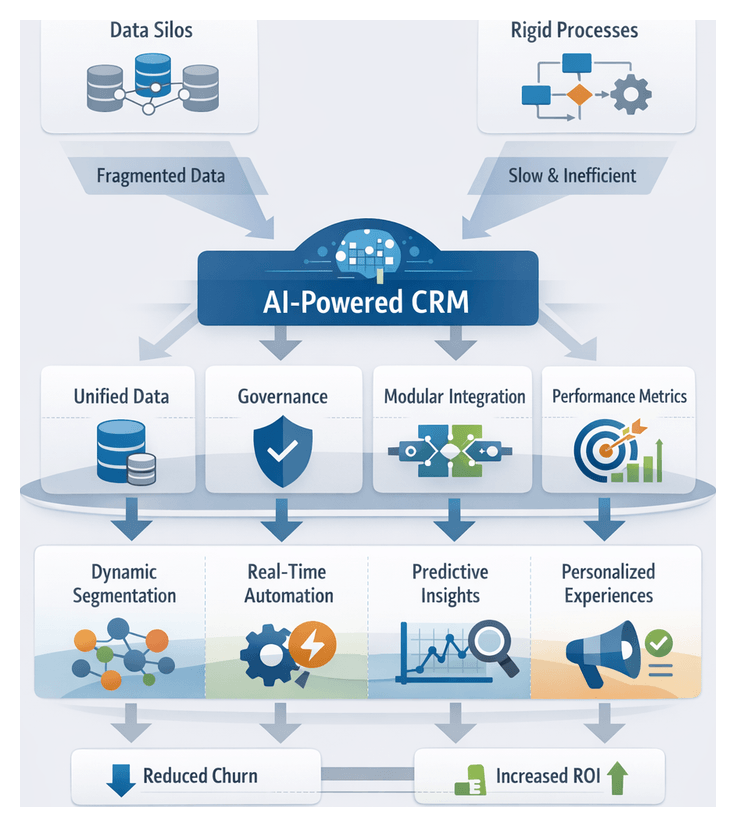
Customer relationship management platforms have evolved into comprehensive suites, yet many organizations struggle with fragmented data and rule-based personalization that fails to keep pace with dynamic customer expectations. Marketing automation, e-commerce, support ticketing and field service systems often operate in isolation, leading to inconsistent customer profiles, delayed transaction histories and extensive manual data cleansing. Traditional workflows rely on predefined rules to trigger emails or service escalations, but these rigid engines scale poorly as segments multiply, struggle to capture emergent behaviors and require constant manual updates to remain relevant.
Responsiveness and Scaling Constraints
Speed and scalability are critical in today’s marketplace. Yet manual handoffs, queue backlogs and fixed-cadence campaigns result in slow lead follow-ups, bounced support tickets and untimely marketing messages. Skilled agents spend excessive time on data entry, routing and simple qualification tasks. As customer bases grow, manual segmentation, one-off campaign builds and ad hoc reporting push organizations to the limits of available resources, leading to longer launch cycles, limited experimentation and operational bottlenecks that undermine agility.
Business Impact of Traditional CRM Limitations
The combined effect of data silos, rule-centric personalization and responsiveness gaps manifests in higher churn rates, lower lifetime value, reduced campaign ROI and elevated support costs. Customers who experience generic messaging or delayed service are more likely to defect to competitors offering real-time engagement and tailored recommendations. Without a unified data foundation and automated decisioning, organizations miss cross-sell and upsell opportunities and struggle to sustain customer loyalty.
AI as an Accelerator for CRM
Artificial intelligence introduces dynamic, real-time capabilities that transcend the limitations of legacy CRM. AI agents can process vast volumes of structured and unstructured data, uncover latent patterns and automate decisioning at scale. Key advantages include dynamic segmentation based on behavioral signals, automated next-best-action recommendations, intelligent routing of tasks, and predictive insights that identify churn risks and upsell opportunities before they materialize. By reallocating routine tasks to AI, human talent is freed to focus on strategic planning, exception handling and relationship building, driving both cost savings and elevated customer satisfaction.
Successful AI-enhanced CRM deployments rest on four foundational pillars:
- Data consolidation and enrichment to ensure complete, high-quality customer records.
- Governance frameworks addressing privacy, security and ethical use of customer data.
- Modular architectures that enable API-based connectivity between CRM platforms and AI services.
- Performance metrics and feedback loops for continuous model refinement and impact measurement.
Analytical Approaches to Dynamic Segmentation
Clustering Techniques
Unsupervised clustering remains essential for discovering latent customer cohorts. Each algorithm offers distinct strengths and limitations:
- k-Means Clustering: • Computationally efficient and simple implementation, with clear centroids representing segment prototypes. • Requires predefined segment count and assumes spherical cluster shapes. • Embedded in platforms like Salesforce Einstein for high-volume, homogeneous customer bases.
- Hierarchical Clustering: • No need to specify segment count a priori, with dendrograms providing multilevel granularity. • Computationally intensive and less suited for high-dimensional, real-time use cases. • Supported by Adobe Sensei for nested segment hierarchies.
- Density-Based Spatial Clustering (DBSCAN): • Identifies arbitrarily shaped clusters and noise without specifying segment count. • Sensitive to parameter tuning and performance degrades in high dimensions. • Applied to detect niche segments or outliers in customer behavior.
- Gaussian Mixture Models: • Provides soft segmentation through probabilistic membership and can model elliptical clusters. • Assumes normal distributions and can be prone to overfitting. • Valuable for blended customer behaviors in cross-category purchasers.
- Self-Organizing Maps: • Neural network–based topology preservation aids visualization of high-dimensional features. • Complex design and longer convergence times limit production use. • Useful for exploratory analysis and stakeholder communication.
Real-Time Profiling Strategies
Moving segmentation from batch to event-driven contexts enables highly responsive personalization. Three common approaches include:
- Streaming Clustering: Processes data continuously or in micro-batches with algorithms like incremental k-means. Critical considerations include drift detection and memory constraints.
- Windowed Profiling: Segments customers based on interactions within fixed or sliding time windows. Emphasizes recency but may over-weight anomalies.
- Hybrid Rule-and-Model Frameworks: Combines business rules (such as high-value cart thresholds) with model-based clusters to balance precision and governance.
Platforms such as Segment and IBM Watson Studio provide infrastructures for real-time data capture, model deployment and segment updates.
Predictive Scoring Models
Predictive scoring transforms segments into actionable likelihoods for future behaviors:
- Logistic Regression: • Offers interpretability and robust calibration; suited to propensity and churn models in regulated environments.
- Decision Trees and Ensembles: • Captures nonlinear relationships; high accuracy with methods like random forests and gradient boosting. • Used in Microsoft Dynamics 365 AI for Sales for next-best-action recommendations.
- Neural Networks and Deep Learning: • Models complex, heterogeneous data sources; requires extensive data and is less transparent. • Powers high-frequency personalization in services like Amazon Personalize.
- Hybrid Probabilistic Models: • Integrates expert rules with statistical inference; suited to industries balancing agility and governance.
Interpretive Dimensions and Strategic Alignment
Analytical methods must align with organizational objectives across three dimensions:
- Scalability: Ability to handle growing data volumes without prohibitive latency.
- Accuracy and Robustness: Validity of predictions and resilience to behavioral shifts.
- Interpretability: Transparent segment definitions to foster stakeholder trust, augmented by explainable AI tools when necessary.
Strategic considerations include aligning model complexity with analytics maturity, establishing validation frameworks linked to business KPIs, monitoring bias and drift, and evaluating vendor offerings for customization flexibility.
AI-Driven Personalization and Orchestration Use Cases
Omnichannel Personalization
Dynamic segmentation underpins seamless experiences across web, mobile, email, social, in-store and call center touchpoints. AI agents ingest clickstream data, transaction records and contextual signals to reclassify customers in real time. For example, a cart abandonment can trigger an immediate shift into a high-intent cluster, activating tailored incentives via email and in-app pop-ups. This adaptive approach replaces batch campaigns, enabling continuous optimization of channel performance and unified budget allocation.
Predictive Next-Best-Action Recommendations
By combining propensity scores with dynamic segments, organizations deliver personalized offers and content aligned to individual needs and life stages. Financial institutions use credit usage patterns and engagement metrics to determine optimal outreach—loan refinances, retirement advice or educational content. Platforms such as Salesforce Einstein and Microsoft Dynamics 365 AI embed NBA engines within CRM workflows, leveraging reinforcement learning and portfolio-level optimization for long-term value uplift.
Real-Time Offer Optimization
E-commerce environments leverage streaming data to refine segment definitions at the millisecond level. AI agents adjust product recommendations, promotional banners and pricing incentives on the fly. A sudden weather event might reclassify a shopper into a high-urgency segment, prompting time-limited discounts. Solutions like Adobe Sensei and Oracle Adaptive Intelligent Apps illustrate how real-time personalization drives double-digit uplifts in engagement and conversion metrics.
Hyper-Personalized Content Delivery
Media and publishing organizations use topic modeling and collaborative filtering to group audiences by consumption patterns and preferences. AI agents curate bespoke news feeds, video playlists and newsletters, increasing dwell time and subscription retention. Emerging frameworks such as latent Dirichlet allocation for topic discovery enable editorial teams to anticipate interests and commission targeted content aligned to micro-segment evolution.
Customer Journey Mapping and Orchestration
In B2B settings, dynamic segments incorporate firmographics, engagement signals and account health indicators to tailor multi-touch campaigns—from targeted digital ads to executive briefings. Tools like HubSpot AI Recommendations present unified dashboards displaying segment-based performance, facilitating cross-departmental alignment and continuous journey refinement based on retention and expansion outcomes.
Industry-Specific Scenarios
In healthcare, patient segmentation guides personalized outreach for preventive screenings and telehealth, balancing personalization with regulatory compliance. Insurance firms integrate risk scores, policy tenure and claim frequency to adjust policy communications proactively, transforming insurers into proactive risk partners. Automotive retailers unite online configurator usage and dealership interactions to deliver tailored test-drive invitations and maintenance offers, optimizing promotional budgets across local markets.
Strategic Deployment Considerations
- Data Quality and Completeness: Leverage centralized platforms like Segment or Oracle CX Unity for ongoing data profiling and enrichment.
- Model Governance and Ethics: Institute bias audits, transparency standards and compliance reviews aligned to regulatory frameworks such as GDPR and CCPA.
- Integration Complexity: Evaluate turnkey connectors versus custom APIs and middleware like Mulesoft to balance speed and maintainability.
- Performance and Scalability: Architect event-driven pipelines with frameworks like Apache Kafka or serverless compute to meet peak load demands.
- Interpretability vs Accuracy: Deploy explainable AI toolkits in IBM Watson Studio or open-source libraries to bridge technical and business stakeholder needs.
- Measurement and Validation: Define A/B test plans, uplift metrics and holdout analyses to ensure segmentation drives desired outcomes.
- Cost Management: Build financial models that include licensing, infrastructure, personnel and ongoing maintenance expenses.
- Organizational Alignment: Establish centers of excellence, cross-functional analytics guilds and agile squads to foster collaboration and change management.
- Privacy and Compliance: Employ privacy-preserving record linkage and differential privacy techniques to maintain consumer trust and legal adherence.
- Vendor Dependencies: Assess portability and interoperability of proprietary engines to guard against lock-in and facilitate future migrations.
Future Directions in AI-Enhanced CRM
Addressing Ongoing Limitations
Persistent challenges include data sparsity in emerging channels, model decay as customer behaviors evolve, and the complexity of incorporating emotional and attitudinal signals. Hybrid models combining collaborative filtering with content-based methods, automated retraining pipelines and interdisciplinary approaches to sentiment-driven segmentation offer promising avenues for research and development.
Emerging Frameworks and Technologies
Continuous improvement loops based on the Deming Cycle enable adaptive personalization that responds to market shifts. Federated learning holds potential for decentralized segment collaboration without sharing raw data, benefiting industries bound by data sovereignty and privacy constraints.
Aligning with Digital Transformation
Embedding AI-driven segmentation within a holistic CRM architecture, supported by executive roadmaps and dedicated investment, ensures sustained innovation. By situating personalization initiatives within broader customer experience modernization efforts, organizations can drive long-term customer centricity and competitive differentiation.
Chapter 6: Automating Customer Workflows with AI Agents
Core Concepts and Strategic Foundations of AI Workflow Automation
Organizations today pursue transformative approaches that streamline processes, reduce manual intervention, and deliver personalized interactions at scale. AI-driven workflow automation within CRM systems embeds intelligent agents that interpret unstructured data, learn from outcomes, and optimize decision paths over time. Unlike traditional if/then configurations, adaptive workflows analyze customer behavior, assess sentiment, predict outcomes, and adjust sequences dynamically, transforming static scripts into responsive, context-aware processes.
Defining AI-Driven Workflow Automation
Workflow automation refers to the design, execution, and monitoring of sequences in which information, tasks, or documents are routed between people or systems according to predefined rules or logic. AI workflow automation extends this by embedding decision engines that evaluate incoming information against predictive models, historical data, and evolving business rules. This enables real-time decisions—such as lead scoring or case routing—based on dynamic context rather than rigid triggers.
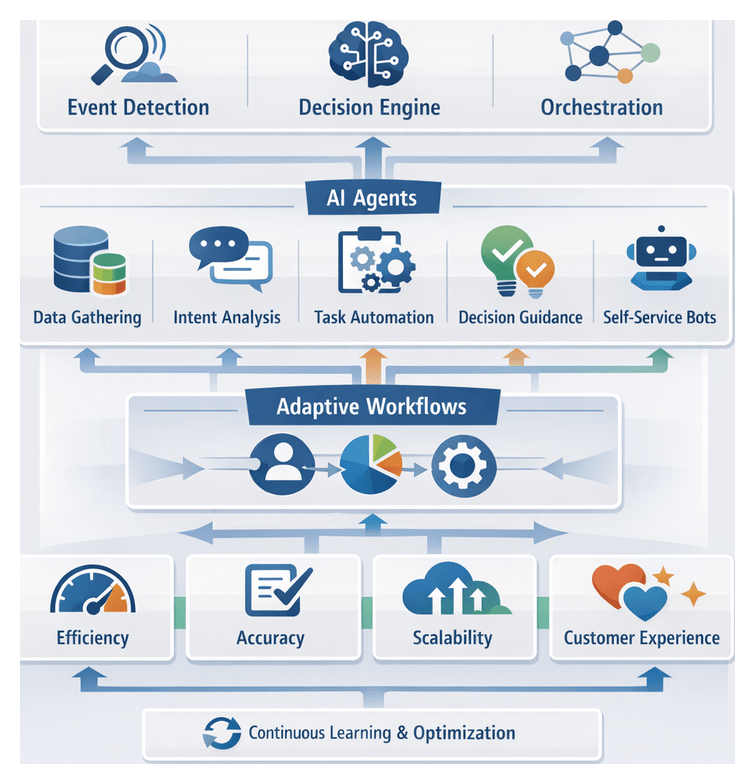
Key Components of an AI-Powered Automation Framework
- Event detection and context capture: Recognizing triggers such as new inquiries, website interactions, or profile changes.
- Decision engine: Evaluating inputs with machine learning models, business rules, and historical insights to determine optimal actions.
- Orchestration layer: Coordinating tasks across channels—email, messaging, telephony—and systems to ensure seamless handoffs.
- Execution interfaces: APIs and connectors that integrate with CRM platforms, ticketing systems, and messaging tools to carry out automated steps.
- Feedback loops: Capturing outcomes from each interaction to retrain models, refine rules, and drive continuous improvement.
Roles of AI Agents in CRM Workflows
- Data gatherer: Extracts and standardizes information from emails, chats, and records.
- Intent analyzer: Applies natural language processing to interpret requests, sentiment, and context.
- Task orchestrator: Sequences and prioritizes activities—such as follow-ups or upsell prompts—based on predictive scoring.
- Decision advisor: Recommends next-best actions to human agents, guiding resolution steps or product suggestions.
- Self-service facilitator: Powers chatbots and virtual assistants that resolve common inquiries and escalate complex cases.
Transitioning from Rule-Based to Adaptive Automation
Early CRM automation relied on static rules that addressed straightforward scenarios but faltered with complexity and scale. Adaptive automation embeds machine learning models that infer patterns from data. Trigger conditions evolve based on real-time streams and historical trends, decision criteria weight multiple factors—such as engagement history and customer value—and performance metrics drive continuous refinement through experimentation and convergence on optimal paths.
Why AI Workflow Automation Matters
- Rising customer expectations demand instant, personalized responses across channels.
- Data proliferation makes it impractical for human teams to synthesize insights at scale.
- Resource constraints require productivity gains without proportional headcount increases.
- Competitive differentiation hinges on intelligent automation to shorten sales cycles and improve retention.
Foundational Principles for Effective Deployment
- Data integrity: Invest in cleansing, normalization, and enrichment to provide reliable inputs for models.
- Modular design: Build discrete, reusable workflow components that facilitate rapid iteration and integration.
- Transparency and governance: Ensure decision paths and model outputs are auditable with clear documentation.
- Human-in-the-loop oversight: Maintain human supervision for monitoring, exception handling, and model refinement.
- Continuous learning: Capture outcomes and customer feedback to enable regular retraining and rule updates.
Aligning Strategy and Execution
Successful implementation begins by mapping high-impact processes—such as lead qualification, case escalation, or renewal notifications—and identifying automation opportunities. Collaboration among business analysts, data scientists, and IT architects ensures that workflow goals, data requirements, and integration points are defined clearly. Phased pilots, performance measurement against key metrics, and iterative scaling enable organizations to minimize risk while demonstrating tangible value early in the journey.
Measuring Impact and Business Value
Evaluating AI-driven workflow automation requires both quantitative metrics and interpretive frameworks. Industry practitioners assess improvements in operational efficiency, quality outcomes, scalability, workforce dynamics, and overall return on investment by leveraging process mining, benchmarking studies, and economic impact models.
Efficiency and Productivity Gains
- Average handling time (AHT) reductions for customer inquiries.
- Transactions processed per agent per hour.
- Percentage decrease in manual data entry and record updates.
A multinational service provider reported a 35 percent decrease in AHT after integrating Salesforce Einstein–powered case routing. Organizations using Microsoft Power Automate observed a 50 percent acceleration in lead qualification workflows. These gains translate into cost savings and free human agents to focus on strategic tasks.
Error Reduction and Quality Improvement
- Error rates in customer data records.
- Frequency of misrouted cases or incorrect follow-ups.
- Customer satisfaction scores (CSAT) tied to service quality.
Systematic automation can reduce data entry errors by up to 70 percent. A financial services case study showed that automating document verification with UiPath Insights led to a 60 percent drop in compliance exceptions, reinforcing trust in AI-enabled processes.
Throughput, Scalability, and Resilience
- Processing capacity during peak demand.
- System uptime under variable loads.
- Rate of onboarding new workflows into the framework.
Enterprises leveraging Celonis process mining can achieve two- to threefold increases in throughput for CRM activities such as follow-up scheduling and document distribution, without proportional headcount increases.
Return on Investment and Business Value
- Net labor cost savings.
- Revenue gains from accelerated sales cycles.
- Risk mitigation value from improved compliance.
Applying the Forrester Total Economic Impact (TEI) framework, one support center achieved a payback period under nine months and a three-year ROI of 215 percent through automated case prioritization. McKinsey research shows that organizations with advanced CRM automation can realize up to 30 percent higher revenue growth compared to peers.
Impact on Workforce and Organizational Maturity
Frameworks such as the Skills-Task Matrix categorize tasks into routine, cognitive, and strategic functions. Automation redistributes labor toward higher-order responsibilities, boosting job satisfaction and enabling reskilling. Maturity models assess governance structures, integration depth, and continuous improvement capabilities. Leaders exhibit comprehensive end-to-end automation, advanced analytics dashboards, and sustained performance improvement over years.
Challenges in Impact Assessment
- Attribution ambiguity when multiple initiatives coincide.
- Data quality issues undermining baseline measurements.
- Variability in customer behavior and market factors.
A/B testing and controlled pilot programs help isolate variables and monitor key performance indicators—such as routing accuracy and response latency—in real time, yielding more accurate insights into the causal impact of automation.
Operational Domains for AI-Powered Workflows
AI-driven workflow automation delivers the greatest impact when tailored to specific operational contexts. Five primary domains demonstrate how intelligent agents reshape processes, enhance customer experiences, and drive efficiencies.
- Sales Enablement and Lead Management
- Customer Service and Support
- Marketing Campaign Orchestration
- Field Service and Dispatch
- Back-Office and Knowledge Management
Sales Enablement and Lead Management
AI workflows redefine qualification, prioritization, and engagement by enabling real-time lead scoring and predictive opportunity assessment. Salesforce Einstein analyzes conversion patterns and account intelligence to trigger automated notifications to account executives, accelerating response times and aligning efforts with the most promising deals. Dynamic scoring thresholds and adaptive engagement cadences optimize pipeline velocity and resource allocation.
Customer Service and Support
AI agents automate ticket triage and case routing within platforms like ServiceNow, classifying inquiries, assessing sentiment, and assigning priority to specialized teams. Advanced systems detect trends in ticket volume, surface knowledge-base articles for self-service, and recommend proactive outreach to preempt escalations, shifting service models from reactive cost centers to engines of customer loyalty.
Marketing Campaign Orchestration
Platforms such as Microsoft Dynamics 365 integrate AI-driven orchestration tools that analyze behavior across email, social media, and websites to trigger adaptive campaigns. Continuous A/B testing at scale enables real-time adjustments to segmentation criteria, message timing, and channel mix, driving higher conversion rates and more efficient budget utilization.
Field Service and Dispatch
Solutions like Zendesk Field Service ingest sensor data and service histories to predict equipment failures and optimize technician assignments. Automated work order creation, parts requisition, and route planning reduce downtime and operational costs. Predictive maintenance regimes elevate service organizations from reactive break-fix models to strategic partners, with performance measured by equipment uptime and customer satisfaction improvements.
Back-Office and Knowledge Management
Back-office functions—finance, human resources, compliance—benefit from AI agents that parse unstructured data, apply business rules, and escalate exceptions. Automated invoice processing, document classification, and policy adherence checks transform shared service centers into intelligent operation hubs. Knowledge management agents index internal documentation, surface relevant procedures, and guide employees through exception scenarios, enhancing institutional memory and accelerating onboarding.
Governance, Risk and Ethical Imperatives
Deploying AI-driven workflows entails strategic risks, operational limitations, and ethical considerations. Organizations must institute robust governance, risk mitigation strategies, and continuous oversight to sustain trust, compliance, and performance.
Strategic Risk Considerations
- Vendor and Technology Lock-In: Evaluate portability of workflows and data schemas when selecting proprietary platforms such as Salesforce Einstein or UiPath. Emphasize open APIs and standards to reduce dependency risks.
- Alignment with Business Objectives: Map automation initiatives directly to goals like revenue growth, customer satisfaction, and cost reduction. Use frameworks such as the Balanced Scorecard to link workflows to key performance indicators.
- Change Management and Readiness: Address stakeholder concerns over job displacement with phased deployments, skill development programs, and transparent communication. Establish governance councils that include business, IT, and compliance leaders.
- Scalability and Performance Trade-Offs: Conduct capacity planning and benchmarking for cloud-native, on-premises, or hybrid architectures to handle variable workloads and avoid bottlenecks.
Operational Limitations to Anticipate
- Data Quality Dependencies: AI agents require accurate, fresh, and consistent customer data. Implement automated cleansing pipelines and feedback loops between agents and data stewards to maintain dependable inputs.
- Contextual Understanding Boundaries: Natural language understanding may struggle with domain-specific or technical queries. Define clear escalation paths to human experts for high-risk interactions.
- Integration Complexity: Orchestrating connections among legacy CRM modules, ERP systems, and third-party sources involves mapping data models, authentication mechanisms, and error-handling protocols. Middleware solutions such as Automation Anywhere simplify orchestration but require governance and monitoring.
- Monitoring and Feedback Overheads: AI workflows demand continuous performance monitoring, model retraining, and quality assurance. Establish dedicated teams, operational metrics, and alerting mechanisms to manage feedback loops effectively.
Ethical and Governance Imperatives
- Bias and Fairness: Historical data may embed biases that AI agents perpetuate. Implement bias detection frameworks and conduct fairness audits to prevent discriminatory outcomes.
- Privacy and Compliance: Adhere to GDPR, CCPA, and industry regulations by enforcing end-to-end encryption, consent management, and data minimization. Perform privacy impact assessments prior to deployment.
- Transparency and Explainability: Use interpretable models and provide human-readable explanations for automated decisions. Leverage frameworks such as the EU’s Ethics Guidelines for Trustworthy AI to enhance stakeholder trust.
- Accountability and Oversight: Define clear ownership for AI-driven tasks. Establish an AI ethics board or integrate responsibilities into existing risk committees to oversee model governance and ethical review.
Recommendations for Risk Mitigation and Continuous Oversight
- Conduct Comprehensive Risk Assessments: Use frameworks like ISO 31000 and the NIST AI Risk Management Framework to identify and prioritize threats across data, operational, legal, and reputational dimensions.
- Implement Phased Pilots with Guardrails: Validate models on low-impact use cases, embed monitoring dashboards for metrics such as routing accuracy and customer satisfaction, and establish kill switches to revert to manual processes if thresholds are breached.
- Institutionalize Governance Mechanisms: Form an AI governance council with data scientists, compliance officers, legal counsel, and business leaders. Define policies for model lifecycle management, version control, and ethical approval.
- Prioritize Explainability and User Trust: Adopt interpretable machine learning techniques and develop clear communication strategies. Provide annotation capabilities for support agents to audit and explain AI-generated decisions.
- Invest in Continuous Learning and Adaptation: Establish loops for performance monitoring, periodic retraining, and scenario testing. Leverage active learning to feed new data back into models and guard against concept drift.
- Foster a Culture of Collaboration: Encourage cross-functional teams of business, data science, and IT to co-innovate, share insights, and address emergent challenges through regular reviews of automated outcomes.
Key Limitations and Future Vigilance
AI-driven workflows may underperform when confronted with unprecedented events or radical shifts in customer behavior. Single points of failure can emerge at integration points without redundancy or fallback paths. Ethical norms and regulatory standards continue to evolve, creating compliance uncertainties for global deployments. Recognizing these limitations—and planning for adaptive governance and technical resilience—will be critical to sustaining the strategic advantages of AI agents in CRM workflows over the long term.
Chapter 7: Predictive Analytics and Forecasting Anticipating Customer Needs
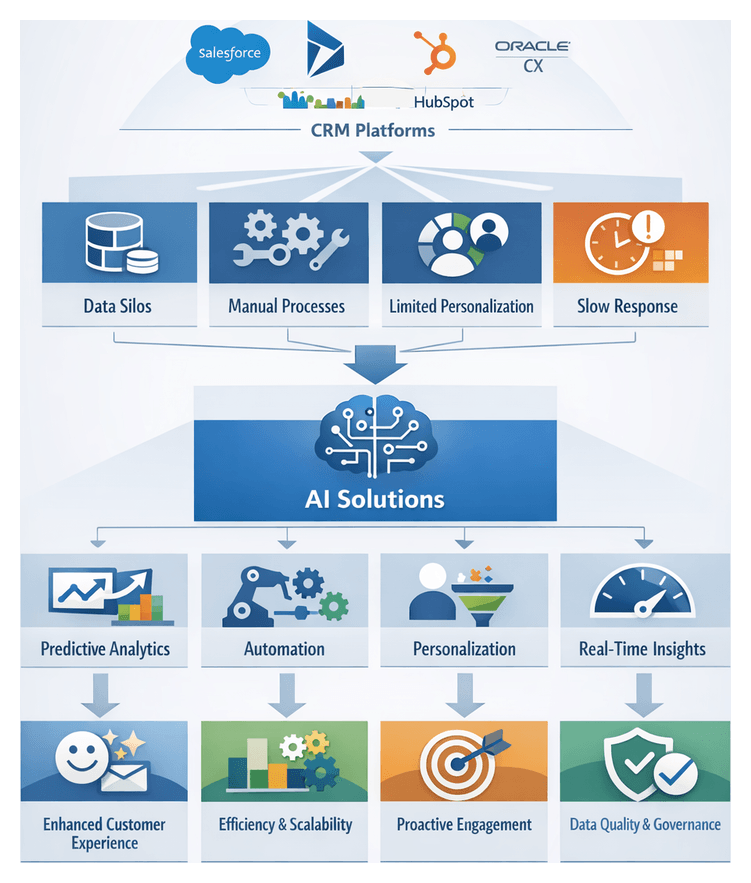
Current CRM Landscape and Challenges
Customer relationship management systems have evolved from basic contact lists to comprehensive suites that manage sales pipelines, marketing campaigns, and service interactions. Platforms such as Salesforce, Microsoft Dynamics 365, HubSpot, and Oracle CX now promise a unified view of the customer journey by aggregating email, social media, web interactions, and direct outreach into a single repository. These solutions offer modular architectures supporting sales automation, marketing orchestration, ticketing, and advanced reporting, with extensive APIs and marketplaces for industry-specific workflows.
Despite sophisticated feature sets, many organizations face persistent challenges. Data often remains fragmented across departmental silos or locked in legacy systems, undermining the promise of a single source of truth. Manual processes dominate routine tasks, creating bottlenecks that inhibit responsiveness and lead to inconsistent customer experiences. User adoption suffers when staff perceive CRM workflows as cumbersome rather than empowering.
Personalization is a particularly pervasive pain point. While CRM databases house vast transactional and behavioral data, sales and service teams often rely on static segmentation and rule-based triggers that fail to reflect real-time context, resulting in outreach that feels generic or intrusive. True one-to-one personalization at scale demands capabilities beyond conventional CRM feature sets.
Responsiveness has also become critical. Customers expect immediate acknowledgment and swift progression toward resolution—whether via chat, email, or social media. Delays measured in hours or days undermine satisfaction. Without automated, prioritized routing and intelligent triage, organizations struggle to meet elevated service expectations.
As customer engagement channels multiply, operational scalability suffers. Manual interventions proliferate, creating inconsistent data capture, process deviations, and uneven performance metrics. Data quality and governance challenges compound the problem. Duplicate records, incomplete profiles, and outdated information skew analytics and erode trust in CRM insights. Periodic data cleansing provides only temporary relief unless embedded validation rules and governance frameworks are established.
Customer expectations have risen in parallel. Buyers accustomed to personalized digital experiences demand comparable relevance and convenience in B2B and B2C interactions. They expect proactive outreach, tailored recommendations, and timely updates that anticipate their needs. Organizations that fail to align CRM processes with these heightened standards risk churn, negative brand perception, and missed revenue opportunities.
Competitive pressures are driving a shift toward AI-augmented CRM. Advanced analytics and automation offer the promise of seamless experiences and faster insight generation. Yet traditional analytics modules, focused on descriptive and diagnostic reporting, struggle to process growing volumes of high-velocity data and deliver predictive foresight in real time. Manual workflows and static business rules cannot adapt dynamically to changing conditions or uncover nuanced patterns within large datasets.
The stage is set for a new paradigm in CRM engagement—one that leverages artificial intelligence, machine learning, and natural language processing to process complex data, automate decision workflows, and deliver intelligent recommendations. AI-driven enhancements can enable true personalization at scale, hyper-responsive service, and predictive foresight. A clear understanding of current pain points—data fragmentation, manual workload burdens, limited personalization, and reactive analytics—provides the foundation for selecting and deploying AI capabilities that transform customer engagement from a transactional function into a proactive, insight-driven discipline.
Forecasting Techniques for CRM
Forecasting techniques serve as the analytical backbone for anticipating customer needs and driving proactive engagement. Methods span statistical time series models, machine learning algorithms, deep learning architectures, and hybrid ensembles. Selection depends on accuracy requirements, interpretability, data availability, and operational constraints.
Statistical Time Series Models
- AutoRegressive Integrated Moving Average (ARIMA): Decomposes non-stationary data via differencing and models autocorrelation with parametric clarity.
- Exponential Smoothing (Holt-Winters): Applies adjustable weights to recent observations to capture level, trend, and seasonality with minimal tuning.
- State Space Models: Incorporates seasonality, external regressors, and measurement error within a probabilistic framework, suitable for irregular data.
Machine Learning Approaches
- Random Forest and Gradient Boosting Machines: Aggregate decision trees to handle high-dimensional features and nonlinear relationships.
- Support Vector Regression: Applies kernel functions to model complex patterns while mitigating outlier impact.
- k-Nearest Neighbors: Adapts to localized patterns but requires careful distance metric selection and addresses data sparsity.
Deep Learning and Neural Networks
- Recurrent Neural Networks (RNNs) and Long Short-Term Memory (LSTM): Capture temporal dependencies for extended customer lifecycles.
- Temporal Convolutional Networks (TCNs): Leverage convolutional filters over time steps for parallelization and stable gradients.
- Attention Mechanisms and Transformer Models: Dynamically weight past observations to highlight critical events influencing behavior.
Hybrid and Ensemble Frameworks
- Stacked Ensembles: Combine forecasts from ARIMA, gradient boosting, and LSTM models via a meta-learner.
- Model Averaging: Weight multiple methods to reduce specific errors and enhance stability.
- Feature Augmentation: Enrich time series with machine learning–derived predictors such as propensity scores and lifetime value estimates.
Probabilistic Versus Deterministic Forecasting
- Deterministic Forecasts: Provide point estimates for volume or risk predictions.
- Probabilistic Methods: Quantile regression within gradient boosting or neural networks, and Bayesian structural time series models offer uncertainty intervals.
- Facebook Prophet: A hybrid additive model with automated changepoint detection and interval forecasts.
Interpretability and Explainability
- Feature Importance and Partial Dependence: Reveal individual predictor influence.
- SHAP and LIME: Model-agnostic techniques that attribute feature contributions for black-box models.
- Rule Extraction: Translate complex ensemble logic into human-readable decision rules.
Scalability and Real-Time Deployment
- Batch Forecasting: Periodic retraining and bulk predictions for monthly planning.
- Streaming Forecasting: Real-time scoring for chatbots and dynamic lead scoring.
- Edge Deployment: Lightweight models near data sources for low-latency recommendations in retail or call centers.
Evaluation Metrics and Model Selection
- Mean Absolute Percentage Error (MAPE) and Root Mean Squared Error (RMSE) for point accuracy.
- Prediction Interval Coverage Probability (PICP) to assess uncertainty intervals.
- Business Impact Criteria: Inventory costs, campaign ROI, or retention uplift guide final selection.
Tooling and Platforms
- Amazon Forecast: Automated time series selection and tuning.
- Salesforce Einstein: Embeds predictive analytics within CRM workflows.
- Microsoft Azure Machine Learning: Modular environment for statistical and ML forecasting.
- Google AI Platform: Integrated tools for deep learning and probabilistic forecasting.
Proactive Customer Engagement Use Cases
Transitioning from reactive to proactive engagement, organizations use predictive insights to address customer needs before explicit requests. Timing, relevance, and channel appropriateness are critical to maintaining trust and maximizing impact.
Industry-Specific Applications
- Financial Services: Early flags for attrition or credit risk trigger retention outreach.
- Retail and Consumer Goods: Forecasted purchase likelihood drives personalized offers and promotional lift analysis.
- Telecommunications: Usage anomaly detection prompts preemptive service support.
- Healthcare: Adherence and wellness risk forecasts enable preventive care campaigns.
Key Use Case Categories
- Churn Prevention: Personalized retention offers or loyalty invitations based on risk scores.
- Next-Best Action: Real-time recommendation engines suggest relevant products or services.
- Cross-Sell and Upsell: Propensity scoring highlights high-potential buyers for tailored bundles.
- Reactivation Campaigns: Win-back sequences for dormant customers with exclusive incentives.
- Event-Based Triggers: Renewal or milestone forecasts drive contextually aligned outreach.
- Risk Mitigation: Anomaly detection in usage or payment patterns prompts proactive support.
Integration with Campaign Design
Predictive scores must inform content strategy, channel timing, and personalization parameters without overriding human judgment. For example, a high churn risk may adjust email cadence while alerting a service agent to initiate a personalized call. Aligning predictive triggers with brand voice and channel etiquette preserves narrative coherence.
Ethical and Governance Considerations
Responsible proactive engagement respects privacy, consent, and communication preferences under frameworks such as GDPR and CCPA. Ethical governance boards review model assumptions and campaign logic to prevent discriminatory or intrusive outreach. Transparency about AI-driven personalization fosters customer trust.
Cross-Channel Orchestration
Omnichannel frameworks ensure coherent experiences across email, mobile push, SMS, and agent calls. Channel sequence and timing optimize impact—for example, following a digital nudge with a phone call for high-risk churn customers or pairing dynamic in-app notifications with rich HTML emails for product recommendations.
Measuring Impact and Continuous Learning
Evaluation combines leading indicators—forecast accuracy, engagement uplift—with lagging metrics—conversion rates, revenue growth, churn reduction. Embedded feedback loops feed outcome data into model retraining pipelines, refining forecasting precision and enhancing future engagement relevance.
Ensuring Predictive Analytics Success in CRM
Realizing the full potential of predictive intelligence in CRM requires rigorous attention to accuracy, business alignment, governance, and continuous adaptation. A structured approach ensures models drive measurable improvements in customer lifetime value and operational efficiency.
Model Accuracy and Data Integrity
- Data Quality: Implement continuous profiling and cleansing via platforms such as IBM Watson Studio to detect drift and manage missing values.
- Bias and Fairness: Conduct subgroup fairness tests and algorithmic impact reviews in line with regulatory standards to prevent discriminatory outcomes.
- Overfitting Control: Use cross-validation, penalized loss functions, and parsimonious feature selection to balance complexity and generalization.
- Temporal Stability: Apply time-based validation and retraining cadences to maintain robustness amid evolving customer behaviors.
Business Alignment and Operational Integration
- Clear Use Cases: Anchor predictive efforts to high-impact scenarios such as churn prevention, cross-sell targeting, or dynamic pricing.
- KPIs and Dashboards: Map model outputs to leading indicators—propensity-to-buy scores feeding pipeline acceleration or churn risk informing retention rate targets.
- Embedded Decisioning: Integrate predictions into CRM platforms like Salesforce Einstein and Amazon SageMaker for automated scoring and next-best-action recommendations.
- Change Management: Build trust through explainability dashboards and training programs that empower frontline teams to interpret and act on predictive insights.
Ethical Oversight and Risk Management
- Communicating Uncertainty: Present confidence intervals or probability distributions instead of single-point estimates.
- Managing False Signals: Quantify the business impact of erroneous predictions and set engagement thresholds aligned with risk tolerance.
- Regulatory Compliance: Ensure automated decisioning adheres to consumer protection laws, transparency requirements, and the right to explanation.
- Ethical Data Use: Conduct ongoing audits and stakeholder reviews to avoid manipulative practices and respect customer autonomy.
Continuous Validation and Adaptation
- Performance Monitoring: Real-time dashboards on metrics such as precision, recall, and calibration drift—leveraging tools on Google Cloud AI Platform.
- Retraining Pipelines: Automated schedules triggered by drift thresholds or business events to refresh feature engineering and redeployment.
- Feedback Integration: Closed-loop architectures that incorporate campaign responses and retention outcomes into ongoing model training.
- Audit Trails and Explainability: Document model versions, assumptions, feature importance, and rationale to support governance and stakeholder trust.
Organizational Readiness and Capability Building
- Data Literacy: Equip teams with workshops, certifications, and collaborative forums to bridge gaps between data science and business functions.
- Cross-Functional Collaboration: Foster joint ownership of the model lifecycle among analytics, marketing, sales, and service experts.
- Governance Structures: Establish steering committees and roles for model, data, and ethics stewardship.
- Integration Architecture: Design API-driven connectors or middleware to ensure predictive outputs flow seamlessly into CRM interfaces and operational systems.
By balancing statistical rigor with strategic alignment, mitigating biases, and institutionalizing continuous improvement, organizations can harness predictive analytics to deliver more relevant, timely, and impactful customer experiences. This integrated approach transforms CRM from a reactive repository into a proactive engine of personalized engagement and sustained competitive advantage.
Chapter 8: Conversational AI in CRM Chatbots and Virtual Assistants
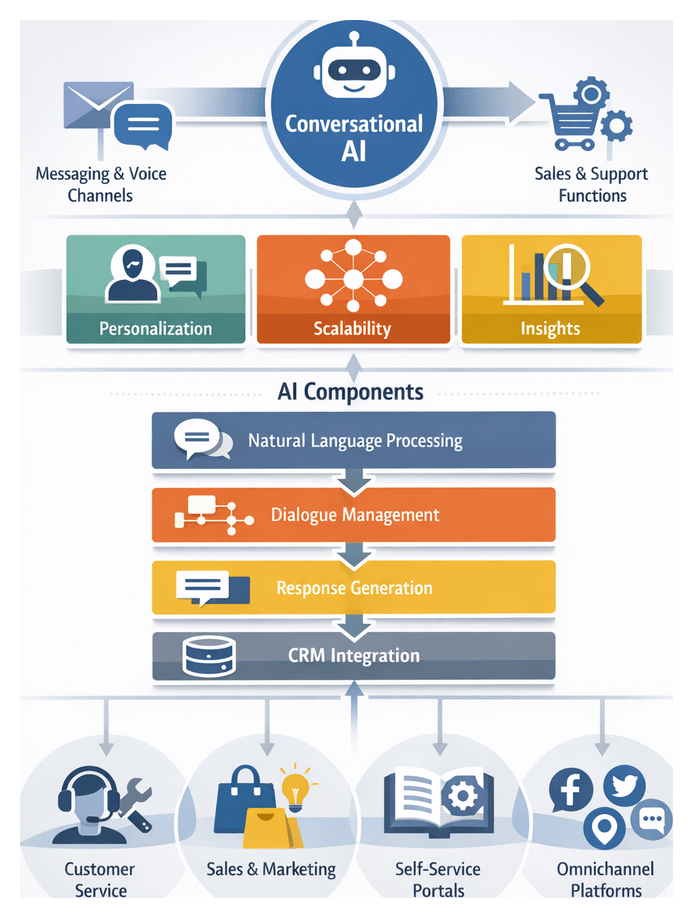
Strategic Role of Conversational AI in CRM Channels
Customer relationship management has evolved beyond static contact records and manual outreach. Today’s digital economy demands fluid, responsive engagement across multiple touchpoints. Conversational artificial intelligence, embodied in chatbots and virtual assistants, has emerged as a critical enabler of this transformation. By automating and enhancing real-time interactions, conversational AI delivers personalized support, scales service capacity, and collects actionable insights from every exchange.
At its core, conversational AI refers to systems that interpret and generate human language in context. Unlike rule-based scripts or static FAQs, these solutions leverage natural language understanding, machine learning, and advanced dialogue orchestration to handle diverse customer inquiries. When integrated into CRM channels, conversational agents become extension points of service, sales, and support functions. They can greet website visitors, answer product questions, escalate issues to human representatives, and update records within a unified interface.
The proliferation of messaging platforms, social media, and mobile apps has heightened customer expectations for instant, conversational support. Traditional phone-based call centers suffer from high wait times and limited availability, while email and ticketing systems introduce delays. Conversational AI agents operate 24 hours a day, 7 days a week, across chat windows, messaging apps, SMS, and voice channels. This omnichannel presence ensures consistent assistance when and where customers prefer, reducing friction and boosting satisfaction.
Embedding conversational AI into CRM channels addresses three key imperatives:
- Personalization: Agents access profile data, order history, and previous interactions stored in platforms such as Salesforce Einstein or Microsoft Dynamics 365, delivering responses tailored to individual preferences.
- Scalability: AI-driven assistants handle routine inquiries at peak volumes, escalating only complex issues to human teams and optimizing resource allocation.
- Data-Driven Insights: Every dialogue generates structured and unstructured data that feeds analytics engines, revealing emerging pain points, guiding product refinement, and informing marketing strategies.
Key components of conversational AI include:
- Natural Language Understanding (NLU) to interpret user intent, classify queries, and extract entities such as dates or account numbers.
- Dialogue Management frameworks that determine response sequences, manage multi-turn interactions, and maintain context.
- Response Generation modules that select or compose replies dynamically.
- Integration layers that connect agents to CRM back-end systems for real-time data retrieval and updates.
Leading platforms illustrate how these components converge:
- Dialogflow offers end-to-end NLU and fulfillment features, linking intents to CRM APIs.
- Watson Assistant provides enterprise-grade analytics and governance controls.
- Amazon Lex underpins chat and voice experiences with deep learning models integrated into AWS services.
- Microsoft Bot Framework supports multi-channel deployment with connectors to Azure Cognitive Services.
- Rasa enables open-source NLU and dialogue orchestration with full customization.
These platforms demonstrate that conversational AI is a strategic component of a broader CRM architecture. When agents are tightly coupled with customer data repositories, marketing automation engines, and analytics dashboards, they become living interfaces that both serve and learn from every interaction. This continuous feedback loop drives improvements in response accuracy, personalization depth, and operational efficiency.
Dialogue Management Techniques
Effective dialogue management determines the coherence, relevance, and adaptability of automated customer interactions. Organizations evaluate frameworks based on intent recognition, context tracking, and orchestration of multi-turn conversations, weighing scalability, explainability, and compliance.
Intent Recognition Frameworks
- Rule-Based Lexicons employ handcrafted patterns and regular expressions. They offer transparency and rapid deployment in narrowly defined domains but struggle with linguistic variability.
- Statistical Classifiers use support vector machines or conditional random fields with manually engineered features. They deliver predictable behavior and explainability, albeit with significant labeling effort.
- Neural Approaches, including transformer architectures and recurrent networks, automatically extract semantic representations. Proven in Dialogflow and Rasa, they handle diverse linguistic patterns and capture subtle intent nuances but require robust data governance to prevent bias.
Hybrid strategies often combine rule scaffolding for critical business logic with neural embeddings for open-ended dialogue. Iterative refinement of intent taxonomies, guided by conversation analytics, balances coverage and precision over time.
Context Tracking Mechanisms
- Slot-Filling Frames model conversations as sequences of attribute assignments, ideal for transactional tasks like appointment booking or order tracking.
- Context Stacks and Tree Structures capture nested dialogue flows for troubleshooting or guided sales processes, supporting branching logic at the cost of architectural complexity.
- Neural Memory Networks and transformer-based context windows embed past turns into high-dimensional spaces, enabling long-term dependency resolution. Platforms like Watson Assistant and Amazon Lex integrate such mechanisms to deliver context retention without manual schema design.
Organizations often adopt a tiered approach: reserved data schemas for regulated attributes and neural embeddings for exploratory dialogue, balancing interpretability and personalization.
Dialogue Orchestration Models
- Finite-State Machines represent conversations as directed graphs of states and transitions, offering deterministic flows suited to high-compliance scenarios but lacking adaptability.
- Frame-Based Orchestration populates schemas through interactions, enabling nonlinear progression and branching at the expense of meticulous frame design.
- Agent-Based Architectures treat each conversational function as an autonomous micro-service. Microsoft Bot Framework exemplifies this approach, facilitating integration with external knowledge bases and fault isolation.
Modular design decouples NLU, state management, and response generation, allowing organizations to iterate components independently, integrate third-party services, and implement fallback strategies. Continuous orchestration audits ensure brand alignment and regulatory compliance.
Evaluation and Benchmarking Approaches
- Task Success Rate measures the percentage of conversations achieving intended outcomes, such as bookings or issue resolution.
- Dialogue Efficiency tracks the number of turns to resolution, balancing brevity with customer satisfaction.
- User Satisfaction Scores derive from post-interaction surveys or sentiment analysis, offering insights into perceived coherence and responsiveness.
- Technical Metrics—intent classification accuracy, slot-filling precision and recall, and context retention rates—guide ongoing model refinement. Benchmarks from challenges like the Dialogue State Tracking Challenge provide external validation.
A/B testing of alternative dialogue flows and continuous monitoring dashboards drive iterative improvements, aligning conversational AI behavior with evolving customer expectations and operational priorities.
Deployment Scenarios for Chatbots and Assistants
Organizations classify deployment scenarios by customer journey stage, organizational function, and channel characteristics. Mapping these contexts guides alignment of conversational capabilities with business objectives.
Customer Service and Support Channels
- Immediate Triage and Escalation: AI agents recognize intent, categorize issues, and route clients to appropriate resources or human agents, improving first-contact resolution and handle time.
- 24/7 Availability and Global Reach: Asynchronous interactions across time zones enhance reliability and net promoter scores in sectors such as telecommunications and retail banking.
- Language Coverage and Localization: Multilingual assistants support diverse customer bases, evaluated on translation accuracy, cultural nuance, and data privacy compliance.
Sales Enablement and Pre-Purchase Engagement
- Guided Discovery and Needs Analysis: AI agents ask probing questions to surface requirements and budget considerations, shortening sales cycles and increasing deal size via platforms like Salesforce Einstein.
- Contextual Cross-Selling and Upselling: Machine-learning models infer complementary products, driving uplifts in attach rates when chatbots surface tailored bundles.
- Appointment Booking and Demo Scheduling: Seamless calendar integration reduces booking abandonment, with virtual assistants handling follow-ups and reminders automatically.
Self-Service Portals and Knowledge Management
- Knowledge Base Navigation: Virtual assistants interpret queries to retrieve relevant articles, troubleshooting guides, or policy documents, informed by AI-driven search analytics.
- Interactive Troubleshooting: Step-by-step diagnostic dialogues reduce resolution time for technical issues, increasing self-resolution rates in software and hardware industries.
- Policy and Procedure Guidance: In regulated sectors, chatbots ensure consistent dissemination of compliance-approved information, governed by robust update frameworks.
Omnichannel Messaging and Social Platforms
- Messaging Apps Integration: Deployments on WhatsApp, Facebook Messenger, and WeChat facilitate conversational continuity and consistent tone across channels.
- Social Listening and Proactive Outreach: AI agents monitor brand mentions and engage relevant audiences, leveraging sentiment analysis for real-time community management.
- Rich Media and Interactive Cards: Carousels, quick-reply buttons, and in-chat payments transform chat into transactional experiences, streamlining booking and checkout workflows.
Internal Operations and Employee Experience
- IT Service Desk Support: Chatbots handle password resets, software installations, and incident reporting, reducing ticket resolution time with solutions like Microsoft Azure Bot Service.
- HR and Onboarding Assistance: Virtual assistants guide new hires through policy acknowledgments, benefit selections, and training schedules, improving onboarding satisfaction.
- Sales and Marketing Enablement: Internal chatbots deliver product collateral, competitive intelligence, and campaign performance summaries to field teams, aligning with knowledge management frameworks.
Interpretive Frameworks for Scenario Analysis
- Conversational Maturity Model: Defines stages from rule-based FAQs to autonomous conversational ecosystems, guiding roadmaps for enhancement.
- Customer Journey Alignment: Maps AI touchpoints to awareness, consideration, purchase, and retention phases to ensure coherent experiences.
- Effort-Value Matrix: Balances implementation complexity against anticipated customer effort reduction and business value to prioritize initiatives.
- Channel Synergy Analysis: Evaluates interoperability, data consistency, and branding alignment across existing digital channels.
Analytical and Strategic Insights
Organizations integrating conversational AI at scale report up to 30 percent reductions in average response time and 25 percent increases in case resolution rates. The greatest value lies in bridging digital and human channels: AI handles high-volume inquiries while human agents focus on complex cases, balancing efficiency with service quality.
From an analytical perspective, the data-information-knowledge-wisdom framework illuminates the progression from raw interaction logs to strategic insights. Unstructured transcripts become structured metadata for real-time reporting on patterns, sentiment shifts, and topic frequencies. When contextualized within customer profiles, these insights drive targeted outreach and product innovation.
Customer journey analytics overlay agent performance metrics—such as intent recognition accuracy and handoff rates—onto journey maps, pinpointing friction hotspots and optimizing dialogue flows. The conversational maturity model categorizes interactions from reactive chatbots to proactive engagement agents and autonomous ecosystems, helping leaders prioritize capabilities that match organizational readiness.
Strategic considerations extend beyond technology selection to include organizational impacts and governance. Cross-functional collaboration among customer experience, IT, legal, and compliance teams ensures AI-driven interactions adhere to corporate standards and regulations. Workforce transformation requires reskilling programs as support staff roles shift toward content creation, escalation management, and model training oversight. Clear role definitions and performance metrics foster change adoption and mitigate resistance.
Financial planning for conversational AI must account for licensing fees, integration costs, and ongoing maintenance. Total cost of ownership analyses should include model retraining and compliance audits. When benchmarking vendor offerings such as Dialogflow, Amazon Lex, Watson Assistant, or Microsoft Bot Framework, decision makers must balance capabilities against cost profiles for sustainable ROI.
Despite its promise, conversational AI faces limitations. Natural language understanding systems can misinterpret ambiguous or idiomatic expressions, especially in specialized domains. Context retention across lengthy or asynchronous conversations remains challenging, often necessitating fallback to human agents. Bias and fairness concerns arise when models amplify skewed historical data, while data privacy and security require robust encryption, access controls, and compliance with GDPR or CCPA.
Mitigation strategies include establishing AI steering committees with legal, compliance, data science, and experience teams to define policies for model version control, deployment validation, and performance audits. Systematic bias testing using synthetic data augmentation and cross-validation detects and rectifies unfair patterns. Advanced context management solutions employ session persistence and entity tracking. Data minimization and anonymization protect privacy, while privacy-by-design embeds consent workflows into interfaces. Clear escalation protocols with SLAs ensure seamless handoff when AI confidence falls below thresholds.
Looking ahead, conversational AI will converge with generative models for richer, human-like interactions. Hybrid architectures coupling retrieval-based systems with large language models will enhance relevance and creative problem solving. Voice-enabled interfaces, IoT devices, and federated learning frameworks promise personalized, privacy-preserving agents that learn from local data while sharing aggregated insights. Edge computing advancements will support low-latency interactions even under connectivity constraints. Emerging regulatory standards will codify best practices for ethics, transparency, and accountability, making explainable AI tooling and strategic partnerships with academic and policy institutions essential for future readiness.
Chapter 9: Measuring Impact KPIs Performance Monitoring and Continuous Optimization
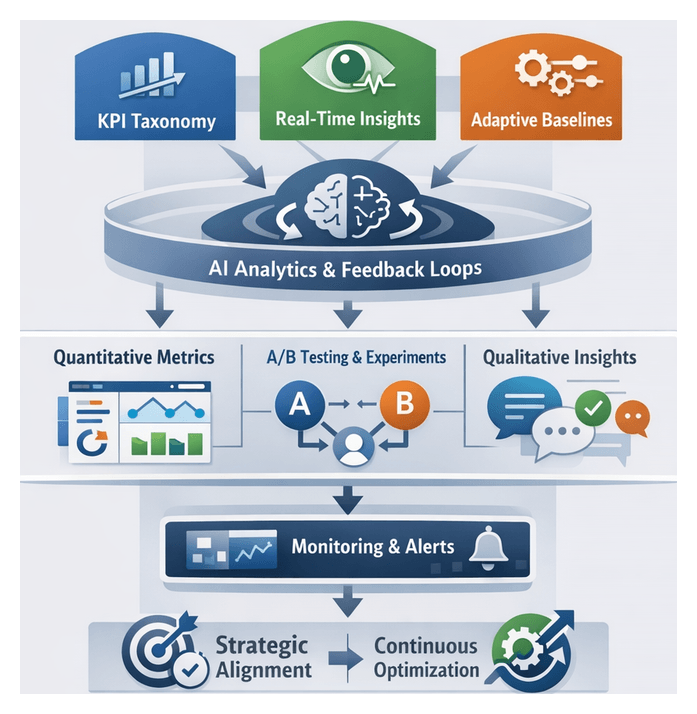
The Evolving Landscape of CRM Performance Measurement
As digital transformation drives data volumes and customer expectations skyward, traditional CRM metrics such as call volumes, email open rates, and ticket resolution times no longer suffice. Static, monthly dashboards generated by legacy reporting engines offer snapshots of operational activity but obscure real-time trends and strategic insights. Marketing teams can track click-through rates yet miss the quality of subsequent interactions. Service managers measure first-response times without linking them to satisfaction scores or retention. Sales leaders monitor deal velocity but lack visibility into conversational cues and process bottlenecks that influence conversions. The proliferation of digital channels—from web and social media to chat platforms and e-commerce touchpoints—demands a dynamic measurement framework capable of continuous monitoring, rapid feedback, and adaptive optimization.
Core Principles of AI-Driven CRM Metrics
Integrating AI agents into CRM transforms customer engagement from reactive to proactive and data-intensive. Performance measurement must evolve accordingly, anchored in clear, actionable metrics that validate AI investments, guide iterative refinements, and align with strategic objectives.
- KPI Taxonomy – Define categories covering operational performance, customer outcomes, and strategic impact. Examples include task completion rates for service bots, incremental revenue from AI-driven recommendations, and post-interaction satisfaction scores.
- Closed-Loop Feedback – Embed continuous feedback loops that capture human and customer corrections, enabling model retraining and rule refinement based on real-world usage.
- Real-Time Visibility – Deploy dashboards and automated alerts that surface deviations from expected performance bands without delay. Platforms such as Salesforce Einstein, Microsoft Dynamics 365 AI, and Zendesk Sunshine provide embedded analytics and anomaly detection for AI-powered workflows.
- Adaptive Baselines – Use machine learning to adjust benchmarks dynamically, accounting for seasonal patterns, campaign cycles, and evolving customer segments.
- Governance Protocols – Establish data access controls, ethical guidelines, and role definitions to ensure metric integrity, regulatory compliance, and responsible AI usage.
Analytical Frameworks for Monitoring and Optimization
A robust analytical framework blends quantitative rigor with qualitative insight, supporting both real-time vigilance and strategic interpretation.
Quantitative Monitoring Techniques
- Dashboard Analytics – Consolidate interaction logs, transaction records, and performance metrics into unified visualizations via Microsoft Power BI or Tableau. Monitor indicators like response time, resolution rate, and conversion ratios in real time.
- Statistical Process Control – Apply control charts and tolerance intervals to detect special-cause variation in AI agent metrics, triggering root-cause analysis or retraining as needed.
- Multi-Touch Attribution Models – Evaluate the influence of AI interactions across the customer journey using linear, time-decay, or data-driven attribution techniques.
- Cohort and Funnel Analysis – Segment users by acquisition date, behavior, or demographics to assess performance across groups and identify drop-off points within inquiry-to-purchase funnels.
- Anomaly Detection Algorithms – Deploy unsupervised models such as isolation forests or autoencoders to flag unusual spikes or dips in performance, enabling immediate investigation.
Experimental and A/B Testing Frameworks
- Hypothesis-Driven Design – Articulate clear hypotheses, for example, “A proactive greeting improves first-contact resolution by 10 percent,” to guide test design and success criteria.
- Randomized Control Groups – Distribute traffic evenly across control and treatment cohorts to isolate causal effects of agent variants.
- Sequential Testing – Use interim analyses with predefined stopping rules to balance speed and statistical validity, avoiding inflated error rates.
- Feature Rollouts and Canary Releases – Employ toggles for partial deployments, monitoring early adopter metrics before full-scale rollout.
- Cross-Functional Review – Involve data scientists, business analysts, and frontline users in interpreting results, contextualizing findings within operational and customer realities.
Qualitative Assessment Approaches
- Customer Feedback Surveys – Collect ratings on agent helpfulness, clarity, and satisfaction, complemented by open-ended comments to surface nuanced insights.
- Sentiment Analysis – Classify customer messages or survey responses as positive, negative, or neutral, tracking shifts in emotional tone over time.
- Conversation Reviews – Audit chat transcripts and voice recordings to assess compliance with brand voice and escalation protocols, tagging themes for systematic analysis.
- Customer Journey Mapping – Overlay AI touchpoints on journey maps to identify context gaps and optimize dialogue flows.
- Usability Testing – Observe real users interacting with chatbots or virtual assistants to uncover interface friction and inform refinements.
Real-Time Monitoring and Alerts
- Event Stream Processing – Ingest logs via platforms like Apache Kafka or cloud-native equivalents, enabling continuous metric evaluation.
- Alerting and Incident Management – Integrate with incident systems to notify operations teams when key metrics breach thresholds, accelerating response.
- Live Dashboards – Maintain war-room visualizations during peak events, coordinating cross-functional responses to surges or anomalies.
- Auto-Scaling and Self-Healing – Configure rules to adjust resource allocation under load and scripts to restart stalled agent instances or revert problematic updates.
- Predictive Alerts – Apply predictive modeling to forecast threshold breaches and recommend preemptive actions like model retraining or resource reallocation.
Interpretive Frameworks for Continuous Improvement
- Balanced Scorecard Alignment – Map AI agent metrics to financial, customer, internal process, and learning dimensions, ensuring holistic performance tracking.
- Impact-Effort Matrix – Prioritize enhancements by expected ROI and implementation complexity, fast-tracking high-value, low-effort changes.
- Root Cause Analysis – Employ techniques such as the five whys and fishbone diagrams to diagnose performance gaps and target sustainable fixes.
- Capability Maturity Models – Benchmark monitoring sophistication from basic reporting to predictive and prescriptive analytics, guiding investments in tools and skills.
- Governance and Review Cadence – Establish cross-functional committees to validate metrics, ensure data quality, and evolve monitoring practices in line with business goals.
Organizational Integration and Strategic Alignment
Technical frameworks must align with strategic priorities and governance structures to translate metrics into business value. Organizations should adopt structured alignment processes—such as the balanced scorecard or Objectives and Key Results (OKRs)—to cascade top-level goals into CRM-specific KPIs. Key steps include:
- Define core use cases for AI agents—improving first-contact resolution, increasing conversion rates, or driving upsell revenue—and map each to SMART metrics.
- Develop phased rollout plans that evolve from basic accuracy and throughput indicators to advanced measures of customer lifetime value and sentiment shifts.
- Assign ownership of data streams, analysis workflows, and feedback loops to dedicated teams or a centralized AI Council, ensuring accountability and cross-functional collaboration.
- Invest in integration layers like AgentLinkAI to aggregate data across disparate systems, creating a unified view of AI performance and customer outcomes.
By embedding strategic metric governance alongside technical execution, enterprises foster a virtuous cycle where data-driven insights inform AI refinements, enhancing engagement and driving measurable results.
Continuous Optimization and Iterative Refinement
Continuous optimization is a strategic imperative, transforming AI-CRM from a static deployment into an adaptive capability. Rooted in the learning organization model, each interaction and metric deviation serves as a data point, informing collective intelligence and fueling iterative improvements. Experts recommend:
- Aligning Refinement with Outcomes – Establish a hierarchy of metrics, where primary KPIs (such as net promoter score improvement) reflect business outcomes and secondary metrics (like dialogue length or escalation rate) provide diagnostic detail.
- Structuring Governance for Agility – Form cross-functional bodies—AI Councils or Customer Experience Boards—that convene regularly to review dashboards, share insights, and prioritize refinement cycles within a federated data ownership model.
- Interpreting Signals with Rigor – Use statistical process control, change-point detection, and anomaly algorithms to distinguish meaningful trends from noise, validating hypotheses through controlled experiments.
- Balancing Exploration and Exploitation – Structure AI-CRM teams to pursue both exploratory innovation—testing novel engagement strategies or generative models—and exploitative refinement of proven workflows.
- Embedding Ethical Guardrails – Integrate AI ethics checklists, explainability tools, and automated audit trails into the optimization pipeline, ensuring fairness, transparency, and compliance at every iteration.
Looking ahead, multi-armed bandit frameworks, reinforcement learning, and causal inference techniques will further enhance real-time adaptation, while federated learning and privacy-enhancing technologies safeguard data confidentiality during model refinement.
Long-Term Strategic Metrics and Adaptation
Sustained success in AI-driven CRM depends on portfolios of leading and lagging indicators, robust governance, and adaptive metric strategies.
- Balancing Leading and Lagging Indicators – Combine predictive signals such as model confidence scores on churn propensity with outcome measures like customer lifetime value and campaign ROI to maintain forward-looking vigilance.
- Contextual Interpretation – Employ variance decomposition, cohort analysis, and peer benchmarking to isolate external effects—from market volatility to promotional cycles—and provide accurate diagnoses of performance shifts.
- Adaptive Metric Audits – Implement regular reviews to assess metric relevance, data feed integrity, threshold recalibration, and stakeholder feedback, ensuring that KPIs evolve alongside business priorities and AI capabilities.
- Mitigation of Common Limitations – Address attribution complexity with multivariate models, combat data quality drift using observability tools like Datadog and Snowflake, enforce guardrails on metric proliferation, and institutionalize cross-functional review boards to rationalize the metric portfolio.
- Integrating Qualitative Insights – Incorporate voice-of-customer programs, user interviews, and frontline surveys into strategic dashboards to validate statistical trends, uncover emerging themes, and inform roadmaps for agent enhancements.
- Cultivating Continuous Learning Culture – Embed data-driven decision making, cross-functional collaboration, and executive sponsorship into organizational DNA, ensuring metrics remain alive, relevant, and instrumental in steering AI-powered CRM toward sustained competitive advantage.
Chapter 10: Strategic Considerations and Future Trends in AI-Enabled CRM
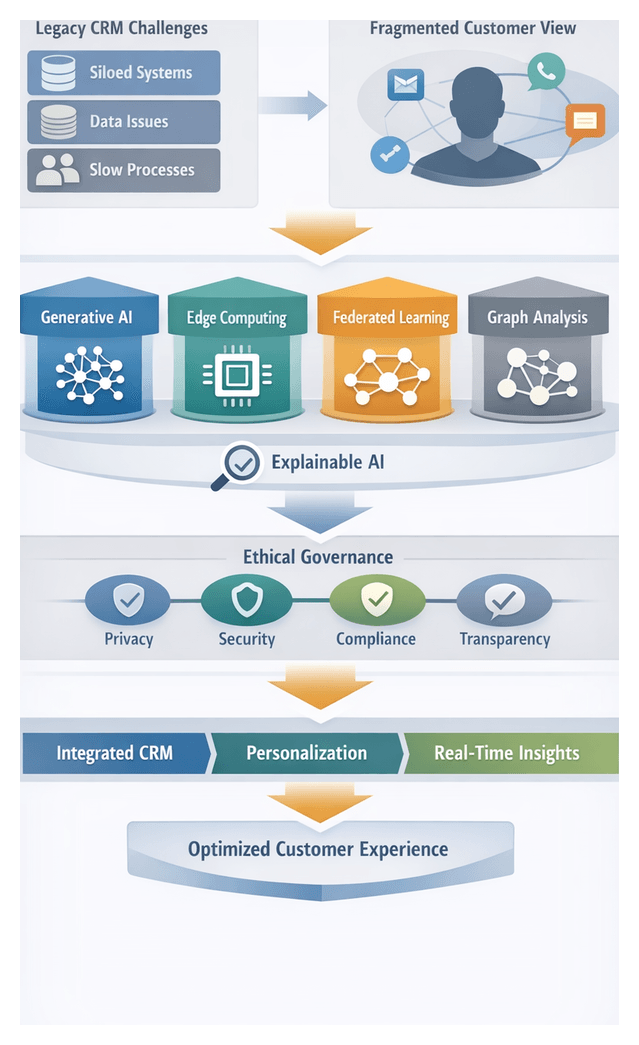
Understanding the Current CRM Landscape and Pain Points
Customer relationship management is central to modern business strategy, yet many enterprises struggle to realize its full potential. Initial CRM systems offered only basic contact management and pipeline tracking. Over time, vendors added modules for marketing automation, support ticketing, and social listening, but deployments often remain siloed or underutilized. Fragmented architectures, custom code sprawl, and low user adoption turn platforms into disconnected feature sets rather than engines of growth.
Multichannel engagement—email, web chat, social media, mobile apps, voice assistants—yields rich behavioral data but complicates context management. Organizations wrestle with merging disparate streams into unified customer profiles, leading to inconsistent messaging and missed opportunities. Attempts at one-to-one personalization frequently rely on static segments and rule-based triggers, producing generic campaigns that fail to resonate. As open rates and conversions plateau, marketers incur higher acquisition costs and risk eroding brand affinity.
Responsiveness remains another critical challenge. Manual lead distribution, complex approval workflows, and overloaded service agents introduce delays that prospects and customers find unacceptable. Even brief lapses in response can result in lost sales or churn. Meanwhile, routine tasks—data entry, follow-up reminders, ticket categorization—consume valuable agent time, driving operational costs and error rates upward.
Data quality issues exacerbate these operational inefficiencies. Incomplete records, duplicate accounts, and mismatched offline and online datasets hinder accurate analysis and personalization. Efforts to integrate third-party demographics or transactional data often reveal inconsistencies that require manual reconciliation. Poor data hygiene undermines reporting accuracy and customer trust when outreach is based on outdated or incorrect information.
Siloed systems for marketing, sales, support, and analytics compound these challenges. Point-to-point connectors and middleware may bridge some gaps, but real-time interoperability remains elusive. Delays in data synchronization produce stale insights, and security or compliance constraints further restrict cross-departmental data sharing. The result is fragmented customer views, duplicated efforts, and decision paralysis.
Technical complexity and heavy customization add risk. Tailoring off-the-shelf CRM platforms to industry-specific processes often requires extensive development, creating brittle environments that complicate upgrades and stifle innovation. Technical debt from legacy integrations and unsupported plugins traps organizations in outdated paradigms, limiting agility and inflating maintenance costs.
The business implications of these pain points are profound. Inefficient processes inflate operating expenses and dampen employee morale. Inconsistent experiences erode customer loyalty and lifetime value, while slow response times and generic outreach drive prospects toward more agile competitors. As buyers’ expectations for proactive, personalized, and seamless interactions continue to rise, maintaining the status quo jeopardizes revenue, retention, and reputation.
Evaluating Emerging AI Technologies for CRM
To address these challenges, organizations are turning to advanced AI capabilities. A structured evaluation framework—assessing innovation diffusion, capability maturity, risk-reward balance, and integration complexity—helps leaders prioritize investments in generative models, edge computing, federated learning, graph neural networks, and explainable AI.
Generative AI for Personalized Content and Insights
Generative models synthesize human-like text, images, and data patterns to enhance personalization and predictive analytics. Key offerings include OpenAI GPT-4 and Vertex AI Generative. Evaluation criteria encompass API maturity, developer support, model robustness, domain specificity, and safety protocols to guard against misinformation and brand incongruity. In CRM, generative AI augments human creativity by drafting personalized outreach, refining messaging based on real-time signals, and generating scenario responses for support agents. Effective governance ensures brand integrity and regulatory compliance.
Edge Computing for Real-Time, Privacy-Preserving Inference
Edge architectures shift AI processing to devices at the network periphery—smartphones, point-of-sale terminals, IoT sensors—enabling instantaneous personalization and improved privacy. Platforms like AWS SageMaker Edge Manager and Edge Impulse offer orchestration for deploying and monitoring models on diverse hardware. Organizations assess inference performance, on-device encryption, secure boot mechanisms, and offline resilience to maintain continuous service. Retail checkout personalization and field-service optimization illustrate edge computing’s potential, provided teams align on deployment, updates, and endpoint monitoring.
Federated Learning for Collaborative Model Training
Federated learning enables multiple parties to collaboratively train AI models without sharing raw data, preserving privacy and regulatory compliance. Frameworks such as Flower and TensorFlow Federated support extensible, open-source ecosystems. Key considerations include statistical efficiency, communication overhead, secure multiparty computation, differential privacy, and incentive structures—such as tokenization or revenue-sharing—to encourage high-quality data contributions. Multi-brand retailers and financial institutions can leverage federated networks for cross-category recommendations or fraud detection while ensuring fairness and preventing data leakage.
Graph Neural Networks for Relationship Mapping
Graph neural networks (GNNs) model customers and their interactions as nodes and edges, uncovering influencer networks, cross-sell opportunities, and fraud rings. Implementations using PyTorch Geometric and Deep Graph Library are evaluated for expressiveness, scalability on large graphs, and integration effort into existing CRM data stores. GNNs complement traditional machine learning methods by enriching behavioral insights, enabling more nuanced engagement strategies.
Explainable AI for Transparency and Trust
As AI drives more customer-facing decisions, transparency becomes critical. Tools such as IBM Watson OpenScale and Microsoft InterpretML provide model auditing, explanation generation, and dashboards highlighting feature importance, decision pathways, and potential biases. Local methods (LIME, SHAP) and global surrogate models enable stakeholders to understand and trust AI outputs, satisfy regulatory “right to explanation” requirements, and equip service teams with justifications for automated recommendations.
Ensuring Organizational Readiness and Ethical Governance
Implementing AI-enabled CRM demands alignment across people, processes, and technology, underpinned by ethical governance and compliance.
Assessing Maturity and Cultivating Human-AI Collaboration
Organizations should benchmark their AI-CRM maturity—from fragmented data silos to advanced real-time orchestration—using frameworks from Gartner and Forrester. Continuous assessment of data literacy, analytics sophistication, and executive sponsorship identifies readiness gaps. Equally important is fostering a culture of experimentation and cross-disciplinary collaboration. Communities of practice, internal hackathons, and role rotations build shared understanding and algorithmic literacy across marketing, sales, service, and IT teams.
Establishing Ethical Governance Frameworks
Ethical AI is central to trust and compliance. Guided by the European Commission’s Ethics Guidelines for Trustworthy AI and the IEEE’s Ethically Aligned Design, leading organizations form ethics review boards or AI councils with legal, compliance, data science, and customer advocacy representatives. These bodies set policies on data use, bias detection, and incident response, translating principles of fairness, transparency, accountability, and privacy into operational guardrails.
Navigating Regulatory and Compliance Requirements
Data protection laws—GDPR, CCPA and emerging Asian regulations—mandate consent, data minimization, and explanation rights. A privacy-by-design approach embeds compliance into each AI lifecycle phase: data mapping, bias impact assessments, model validation, and ongoing audits. Close collaboration between compliance and AI architecture teams helps prevent enforcement actions and reputational damage.
Embedding Transparency, Accountability, and Skills Development
Accountability requires comprehensive documentation of model provenance, feature selection, and performance metrics. Explainable AI tools further demystify complex logic for both technical reviewers and customers. Talent strategies must address data science hires and upskilling functional teams in statistical reasoning and AI ethics. Partnerships with academic institutions, internal boot camps, and cross-functional rotations foster continuous learning and a culture that embraces AI responsibly.
Developing a Strategic Roadmap for AI-Enabled CRM
A holistic roadmap integrates technical advances with business objectives, governance, and organizational capability building.
Core Principles
- Outcome-Driven Design: Focus on use cases with clear ROI—customer retention, sales acceleration, cost reduction—to secure executive support.
- Modular Architectures: Enable incremental integration of AI capabilities, supporting parallel experiments and streamlined updates.
- Data Gravity and Interoperability: Prioritize master data management, governance, and real-time connectivity between CRM and analytics platforms.
- Ethical and Regulatory Alignment: Incorporate privacy, security, and fairness into every adoption phase with adaptive governance bodies.
- Continuous Learning: Establish feedback loops for performance metrics, user insights, and anomaly detection to inform model retraining and process tuning.
Phased Adoption
- Phase 1: Foundational Stabilization – Audit CRM processes, resolve data quality gaps, and pilot a targeted AI use case such as automated lead scoring.
- Phase 2: Core Capability Expansion – Scale personalization, predictive insights, and conversational agents in low-risk channels; strengthen API orchestration for real-time data sync.
- Phase 3: Cross-Functional Orchestration – Deploy AI-powered routing, recommendation engines, and unified dashboards; formalize AI literacy and change management.
- Phase 4: Continuous Innovation – Institutionalize an AI center of excellence, explore federated learning and edge AI, and partner with research institutions to stay at the technological forefront.
Critical Considerations and Limitations
- Data Bias – Audit training datasets, apply fairness constraints, and monitor outputs to prevent disparate impacts.
- Model Drift – Implement drift detection, regular retraining, and validation processes to maintain predictive accuracy.
- Resource Constraints – Combine off-the-shelf services—such as Salesforce Einstein or Microsoft Dynamics 365 AI—with in-house development to balance cost and expertise.
- Cultural Resistance – Engage stakeholders early, demonstrate benefits, and provide hands-on training to foster ownership.
- Vendor Lock-In – Emphasize open standards, containerization, and layered architectures to preserve future flexibility.
- Regulatory Uncertainty – Monitor evolving laws, participate in industry consortia, and design policies that exceed current requirements.
Aligning Stakeholders and Governance
- Establish multidisciplinary governance bodies with clear decision rights and accountability for AI investments.
- Maintain transparent reporting channels for progress, risks, and performance metrics.
- Include customer and ethical perspectives via advisory panels or external reviews.
- Ensure governance frameworks adapt as new technologies—federated learning, generative AI—emerge.
Measuring Progress and Ensuring Agility
- Define a balanced scorecard with financial, customer, and operational KPIs.
- Use real-time dashboards to detect performance deviations and alert stakeholders.
- Conduct regular roadmap reviews to recalibrate priorities based on data and market trends.
- Leverage A/B testing and controlled experiments to validate new AI features before broad rollout.
By weaving together rigorous evaluation, ethical governance, phased implementation, and continuous measurement, organizations can build an AI-enabled CRM capability that delivers immediate value while remaining agile in the face of future innovations.
Conclusion
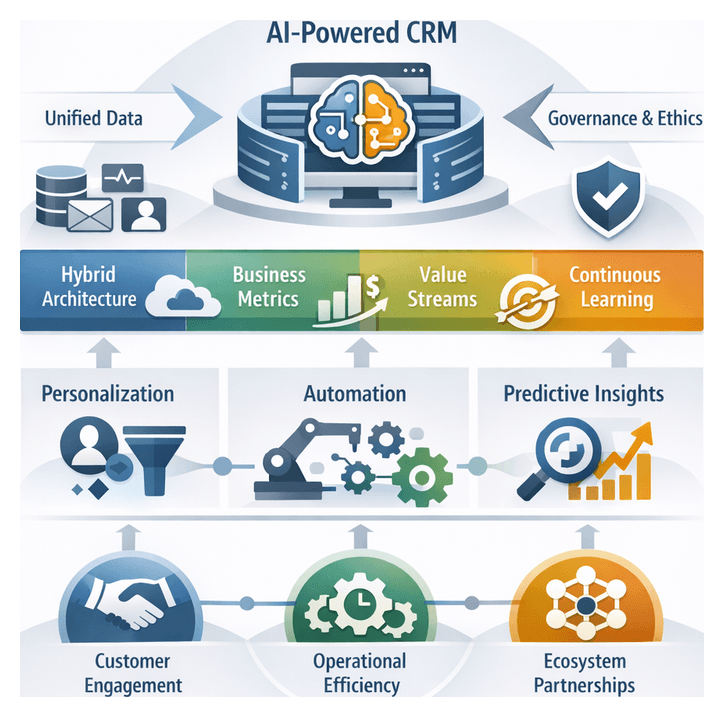
Transforming CRM with AI-Driven Intelligence
Customer relationship management platforms have progressed from simple contact lists to sophisticated suites designed to centralize interactions, automate workflows, and drive cross-functional collaboration. Yet enterprises still encounter fragmented data, repetitive manual tasks, rigid processes, and limited personalization that undermine customer engagement and operational agility. As buyers demand contextually relevant, real-time experiences, traditional CRM pipelines and templated outreach prove insufficient, leading to missed opportunities, elongated sales cycles, and dissatisfied customers.
AI-driven agents offer a fundamental shift—from reactive, rule-based systems to proactive engagement engines capable of natural language understanding, predictive analytics, and dynamic orchestration. By embedding intelligence into every stage of the customer lifecycle, organizations can unify disparate data sources, automate routine activities, and deliver hyper-personalized recommendations at scale. This transformation requires more than technology adoption; it demands an integrated strategy aligning data governance, architectural flexibility, performance metrics, and organizational readiness to ensure sustainable value and customer-centric innovation.
Strategic Patterns for AI-Enabled CRM
Leading adopters and industry analysts have distilled a set of strategic patterns that consistently drive impact in AI-CRM initiatives. These patterns serve as guideposts for designing roadmaps that balance ambition with pragmatism and deliver measurable outcomes.
- Unified Data Foundations: Breaking down silos across marketing lists, service tickets, billing systems, and third-party channels is a non-negotiable first step. A cohesive data layer enables real-time segmentation, accurate propensity scoring, and unified customer profiles.
- Governance-Centered Operating Models: Establishing cross-functional Centers of Excellence ensures consistent policies for data quality, model validation, ethical oversight, and compliance. This structure reduces drift, fosters stakeholder trust, and accelerates knowledge sharing.
- Business-Aligned Metrics: Rather than optimizing solely for model accuracy or containment rates, high-performers tie AI outcomes to customer lifetime value, Net Promoter Score, case resolution time, and operational efficiency. Clear metric mapping to executive dashboards secures ongoing sponsorship.
- Hybrid Architectures: Balancing agility and control through cloud-native AI services and on-premises CRM platforms facilitates compliance and performance. Solutions like Salesforce Einstein and Microsoft Dynamics 365 AI embed pre-trained models while enabling custom extensions.
- Composable Ecosystems: Adopting best-of-breed components—from natural language engines such as HubSpot AI to workflow orchestration and analytics modules—allows incremental upgrades and vendor neutrality without disrupting core CRM workflows.
- Value Stream Segmentation: Categorizing use cases into discrete streams—lead management, service automation, cross-sell/upsell, and retention—provides clarity on resource allocation, sequences initiatives by ROI potential, and generates early wins to build momentum.
- Behavioral Insights Integration: Applying frameworks from behavioral economics and the Technology Acceptance Model informs personalization maturity and user adoption strategies, emphasizing perceived usefulness and ease of use.
- Continuous Learning Loops: Embedding feedback mechanisms such as automated satisfaction surveys after AI interactions creates virtuous cycles of model retraining, reducing intent recognition errors and improving response relevance over time.
- Ecosystem Partnerships: Co-innovation via vendor consortia and industry labs accelerates standardization efforts—such as federated learning connectors—and fosters shared best practices that elevate the entire CRM-AI competency.
Industry Implications and Best Practices
Evolving Customer Expectations and Service Models
AI-driven CRM integration raises the bar for real-time, personalized experiences across sectors. Retailers deploy recommendation engines as baseline functionality, financial services firms leverage platforms like Salesforce Einstein for proactive risk alerts and investment prompts, and healthcare providers integrate virtual assistants such as those listed on AgentLinkAI to manage appointment scheduling and follow-up. Contact centers evolve into intelligent engagement hubs powered by conversational AI; travel companies implement dynamic pricing algorithms informed by individual traveler patterns. To stay competitive, organizations must embed AI at every touchpoint and continuously refine service frameworks to meet rising customer standards.
Shifts in Organizational Structures and Roles
Automated lead scoring, churn prediction, and case routing dissolve functional silos, shifting roles from execution to oversight and exception management. In manufacturing, field service teams respond to predictive maintenance alerts delivered within the CRM, transitioning from reactive repairs to proactive support. This demands hybrid teams combining domain expertise and data science skills, with roles such as Chief Customer Officer and AI governance committee members responsible for aligning technology capabilities with ethical and business objectives.
Redefining Value Chains and Ecosystem Collaboration
AI‐enabled CRM extends beyond single enterprises, reshaping value chains through federated learning and data co-ownership models. Automotive OEMs partner with telematics and aftermarket platforms to deliver personalized maintenance offers and loyalty programs based on real-time usage data. Consumer goods firms collaborate with retailers under shared privacy-preserving frameworks, orchestrating promotions aligned to inventory and shopper behaviors. Governance models must address secure data sharing, shared KPIs, and revenue-sharing arrangements to support these deeply integrated ecosystems.
Regulatory and Ethical Considerations
Deploying AI within CRM raises significant compliance and ethical challenges. Financial institutions must adhere to GDPR and CCPA requirements, ensuring explainability in credit assessments and churn predictions. Healthcare providers need HIPAA-compliant controls for patient engagement tools. Robust ethical governance—comprising audit trails, bias mitigation, and transparency protocols—builds customer trust and reinforces brand reputation in regulated environments.
Benchmarking and Competitive Differentiation
As AI-driven CRM matures, organizations benchmark progress using advanced performance metrics: predictive accuracy, autonomous resolution rates, and Net Promoter Scores influenced by proactive outreach. Telecommunications and insurance leaders report improved first-contact resolution when routine inquiries are handled by AI agents, freeing human experts for complex tasks. Retailers employing real-time segmentation achieve higher average order values, while B2B sellers integrating upsell prompts into pipelines accelerate deal cycles. Continuous benchmarking against these leaders guides strategic prioritization and maintains differentiation.
Sector-Specific Impact Summaries
- Retail and e-commerce: Real-time personalization engines revolutionize merchandising and journey orchestration.
- Financial services: Integrated risk scoring and fraud detection enhance security and cross-sell opportunities.
- Healthcare and life sciences: Conversational AI streamlines scheduling, medication adherence, and telehealth follow-ups.
- Manufacturing and logistics: Predictive maintenance and service orchestration optimize asset uptime and after-sales support.
- Telecommunications: Automated troubleshooting agents reduce network downtime and improve customer satisfaction.
Standards and Best Practices
Adherence to emerging frameworks—such as Customer Data Platform Institute specifications and IEEE P7000 ethical AI guidelines—ensures interoperability, data portability, and model transparency. Incorporating continuous monitoring, retraining schedules, and fairness audits into governance routines preserves data integrity, regulatory compliance, and stakeholder confidence over the AI model lifecycle.
Key Considerations and Risk Mitigation
Realizing the promise of AI-driven CRM requires anticipation of potential constraints and proactive safeguards:
- Data Quality and Bias: Unreliable or unrepresentative data risks reinforcing existing biases. Implement rigorous validation, periodic audits, and bias mitigation methods throughout the data pipeline.
- Privacy and Compliance: Embed privacy-by-design principles, anonymization, and consent management to navigate GDPR, CCPA, HIPAA, and sector-specific regulations.
- Integration Complexity: Legacy systems and siloed data may slow adoption. Employ phased pilots, API-first architectures, and middleware to manage technical debt and ensure alignment with existing landscapes.
- Vendor Lock-In and Interoperability: Favor open standards, containerization, and orchestration layers to maintain flexibility in choosing or replacing AI services.
- Model Governance and Explainability: Use registries, version control, and interpretability tools to maintain transparency and accountability for automated decisions.
- Scalability and Performance: Plan for cloud elasticity, edge computing, and capacity management to support high-volume, low-latency transactions.
- Skill Gaps and Change Management: Invest in training, Centers of Excellence, and executive sponsorship to build AI fluency and drive adoption across marketing, sales, service, and IT teams.
- Cost and ROI Uncertainty: Develop rigorous business cases, iterative cost-benefit analyses, and milestone-based funding models to track value and adjust investments dynamically.
Analytical Frameworks for Continuous Improvement
Structured evaluation models help organizations measure progress, manage risk, and iterate effectively:
CRM AI Maturity Model
- Initial Exploration: Launch isolated AI pilots to validate feasibility and uncover integration challenges.
- Operational Deployment: Scale successful pilots into production workflows, standardize governance, and deploy monitoring dashboards.
- Optimization and Enhancement: Integrate advanced capabilities such as generative content, federated learning, and real-time orchestration to deepen personalization.
- Strategic Differentiation: Achieve seamless AI integration across touchpoints, supported by proactive forecasting and continuous innovation cycles.
Balanced Scorecard Metrics
- Customer Perspective: Net Promoter Score, customer satisfaction, personalization accuracy.
- Process Perspective: Throughput rates, resolution times, automation adoption.
- Learning and Growth: Training completion, AI literacy, innovation pipeline velocity.
- Financial Perspective: Cost savings, revenue from cross-sell/upsell, total cost of ownership.
Risk Assessment Matrices
Mapping potential impact against likelihood for each identified constraint allows prioritization of mitigation efforts. Regular review cycles aligned to agile sprints or quarterly business updates ensure insights from performance monitoring and risk assessments guide strategic adjustments and resource allocation.
Future Directions for Sustainable Advantage
To stay ahead in the evolving AI-CRM landscape, organizations should embrace emerging trends while maintaining ethical stewardship and customer trust:
- Generative Intelligence: Leverage large language models for dynamic content creation and hyper-personalized interactions, underpinned by responsible use frameworks to control bias and quality.
- Distributed Intelligence: Adopt edge computing and federated learning to process sensitive data locally, reduce latency, and enhance privacy protection for global operations.
- Ethical Governance at Scale: Implement third-party audits, cross-functional ethics committees, and transparent reporting to uphold algorithmic fairness and accountability as AI agents assume greater decision-making roles.
- Adaptive Organizational Design: Build resilient structures with cross-disciplinary teams, decentralized decision rights, and rapid feedback loops to foster continuous experimentation and learning.
- Partner Ecosystems: Cultivate alliances with specialized AI providers, academic institutions, and industry consortia to co-innovate, share best practices, and accelerate standardization.
- Focus on Long-Term Value: Align AI investments with enduring brand promise and customer trust. Prioritize transparency, explainability, and human-in-the-loop controls to reinforce credibility and loyalty.
By uniting these strategic patterns, industry insights, risk mitigation strategies, and forward-looking imperatives, organizations can harness AI agents to transform CRM into a proactive, customer-centric engine of growth. With disciplined data governance, modular architectures, clear performance metrics, and ethical oversight, the promise of AI-driven customer experiences can be fully realized—delivering measurable value, sustainable competitive differentiation, and deeper, more meaningful relationships with customers.
Appendix
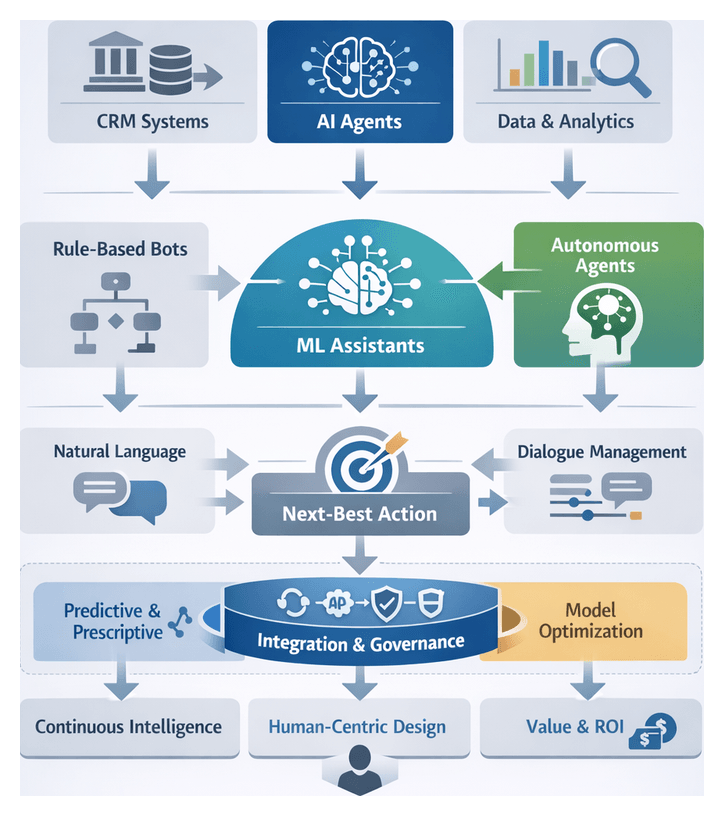
Key Definitions and Terminology
Customer Relationship Management (CRM)
CRM encompasses the strategies and technology platforms used to capture, store and analyze interactions across sales, marketing and service channels, centralizing contact records, pipelines, workflows and cases while integrating analytics, automation and collaboration tools.
AI Agent
An AI agent perceives structured and unstructured customer data, reasons with business rules or machine learning models, and acts by automating responses, orchestrating tasks or escalating to human operators, continuously learning from feedback.
Rule-Based Bot
A rule-based bot follows predefined decision trees or conditional logic to process inputs and deliver responses or trigger workflows; it is transparent and predictable but lacks adaptability to novel scenarios.
Machine Learning Assistant
A machine learning assistant trains on historical data using supervised or reinforcement learning, refines its policies based on outcomes and adapts to evolving language patterns and customer behaviors without explicit rule updates.
Autonomous Virtual Agent
An autonomous virtual agent combines advanced natural language understanding, predictive analytics and dynamic planning to manage multi-step customer interactions end to end, maintaining contextual memory and orchestrating downstream processes with minimal human oversight.
Natural Language Understanding (NLU)
NLU interprets human language inputs through parsing, semantic interpretation and intent classification, extracting entities and sentiment to drive coherent conversational flows.
Dialogue Management
Dialogue management tracks context, orchestrates multi-turn exchanges and determines appropriate responses or actions, ensuring seamless escalation to human agents when necessary.
Next-Best Action (NBA)
NBA engines recommend the most relevant offer, content or engagement step by combining predictive scores, customer profiles and business rules to sequence personalized interactions for both automated agents and human representatives.
Predictive Analytics
Predictive analytics uses statistical and machine learning techniques—such as logistic regression, gradient boosting and time series modeling—to forecast customer behaviors and business outcomes for proactive interventions.
Prescriptive Analytics
Prescriptive analytics extends forecasting by recommending optimal actions under defined objectives and constraints via optimization algorithms and scenario analysis.
Integration Architecture
Integration architecture defines patterns—API-driven connectors, middleware platforms or cloud-native event-driven pipelines—that connect AI agents to CRM systems, balancing latency, scalability, governance and maintenance.
Data Quality and Governance
Data quality ensures accuracy, completeness, consistency and timeliness through cleansing, deduplication and enrichment. Data governance establishes policies, roles and procedures—covering stewardship, access controls and compliance with GDPR or CCPA—to manage data responsibly.
Model Drift and Explainable AI (XAI)
Model drift occurs when predictive performance degrades due to shifts in data distributions, triggering retraining or recalibration. XAI techniques—such as SHAP and LIME—provide transparent rationales for model predictions to support auditability and trust.
Federated Learning and Edge Computing
Federated learning enables collaborative model training without sharing raw data by aggregating local updates. Edge computing brings AI inference closer to data sources—such as mobile devices and kiosks—reducing latency and preserving data privacy.
Generative AI and Continuous Intelligence
Generative AI synthesizes new content—text, images or code—for personalized communications and knowledge articles, while continuous intelligence embeds real-time AI insights and feedback loops into CRM workflows for proactive, context-aware engagement at scale.
Key Performance Indicators (KPIs) and Return on Investment (ROI)
Common KPIs include engagement rates, conversion lift, first-contact resolution, revenue uplift and customer satisfaction. ROI analysis compares software, infrastructure and implementation costs against incremental revenue, cost savings and risk reduction.
Center of Excellence (CoE) and Customer Lifetime Value (CLV)
A CoE standardizes methodologies, governance and tools for AI-CRM integration. CLV measures the net present value of future revenue from a customer, guiding segmentation and resource allocation for long-term profitability.
Omnichannel Engagement
Omnichannel engagement orchestrates seamless customer interactions across digital, social, mobile and in-person channels, with AI agents maintaining context and delivering consistent experiences.
Conceptual Frameworks
Continuous Intelligence Paradigm
Positions AI agents as embedded real-time analytics engines that refine predictive models and inform next-best actions through closed-loop feedback within CRM workflows.
Multi-Agent Systems Theory
Frames CRM as an ecosystem of specialized, interoperable agents collaborating via shared knowledge bases and messaging protocols to decompose complex processes into scalable, modular roles.
Human-Centered AI Approach
Prioritizes human judgment and experience by designing AI interfaces that augment expertise, preserve transparency and maintain user trust through explainable interactions and human oversight.
Value-Chain Augmentation Model
Evaluates AI’s impact across lead acquisition, qualification and support by mapping agent interventions to revenue uplift, cost reduction and CLV improvements.
Dynamic Capabilities Theory
Describes an organization’s ability to sense opportunities, reconfigure resources and adapt AI-driven CRM operations for sustained competitiveness.
Socio-Technical Systems Thinking
Emphasizes co-design of AI agents and organizational practices, aligning technology adoption with culture, processes and change management to ensure user adoption.
Dialogic Systems Theory
Models customer conversations as dynamic, context-sensitive narratives, guiding the design of conversational agents that manage multi-turn dialogues and indirect requests.
Bayesian Decision Theory
Underpins probabilistic reasoning engines that update action preferences as new evidence emerges, balancing exploration and exploitation to maximize expected business value.
Systems Dynamics
Analyzes feedback loops and time delays in CRM ecosystems, simulating how AI-driven outreach influences customer behavior and loyalty over time.
Data Governance Frameworks
Standards like DMBOK and DCAM define roles, controls and workflows for metadata management, lineage tracking and policy enforcement in AI-CRM data landscapes.
Maturity Models
Chart progression from pilot deployments to enterprise-wide AI-CRM optimization by assessing governance, talent readiness, integration sophistication and continuous improvement.
Value vs. Complexity Matrix
Prioritizes AI use cases by mapping anticipated business value against implementation difficulty to sequence high-impact, low-complexity initiatives first.
Return on Analytics (ROA) Model
Quantifies financial impact by estimating revenue uplift, cost savings and risk reduction from predictive and prescriptive analytics in CRM workflows.
Technology-Organization-Environment (TOE) Framework
Assesses AI readiness by evaluating technological attributes, organizational practices and external pressures such as regulations and competitive dynamics.
Balanced Scorecard
Aligns AI-CRM metrics across financial, customer, internal process and learning perspectives to ensure holistic performance management.
Common Questions and Clarifications
How can we integrate AI agents without disrupting existing CRM operations?
Use API-driven connectors and middleware that sit alongside core CRM systems, starting with non-critical use cases—such as lead scoring or FAQ chatbots—and validate performance before extending to sensitive processes. A hybrid approach combining real-time APIs with batch data sync minimizes risk.
Is a full CRM overhaul required for AI adoption?
No. AI agents can coexist with legacy platforms via modular, loosely coupled designs. Over time, cloud-native modernization may occur, but initial AI capabilities can be embedded in front-end interfaces or adjunct services without replacing the system of record.
What data quality and governance practices are essential?
Begin with a data audit to identify duplicates, missing values and inconsistencies. Implement cleansing routines and enrichment pipelines, establish metadata management and lineage tracking, and enforce privacy-by-design with role-based access, encryption and regular impact assessments under GDPR or CCPA.
How do we choose between rule-based bots, ML assistants and autonomous agents?
Align agent archetypes to use-case complexity: rule-based bots handle predictable tasks; ML assistants adapt to evolving patterns; autonomous agents manage complex, multi-step workflows. Conduct a capability assessment to match tools with business goals.
Which capabilities matter most when evaluating AI agents?
Assess NLU accuracy, decision automation reliability, integration agility and adaptive learning capacity. Measure intent classification precision, action latency, API connectivity and feedback-loop mechanisms to ensure alignment with strategic objectives.
When can we expect ROI from AI-CRM initiatives?
Pilots like email personalization or chatbots often deliver results within 3–6 months. Advanced deployments—predictive lead scoring or autonomous routing—may require 9–18 months. Track leading indicators (model accuracy, adoption rates) alongside lagging metrics (revenue uplift, cost savings) from day one.
Which KPIs best measure AI agent impact?
For sales: pipeline velocity, win rates and deal size uplift. For service: first-contact resolution, handle time and deflection rates. For marketing: engagement lift, conversion rates and campaign ROI. Cross-functional metrics such as Net Promoter Score and CLV reflect overall value creation.
How do we detect and mitigate bias?
Perform bias audits by comparing error rates across demographic cohorts. Apply fairness-aware techniques—re-sampling, adversarial debiasing or calibrated adjustments—integrate checks into retraining pipelines and use explainability tools with diverse stakeholder validation.
What security controls are essential?
Implement end-to-end encryption, secure API gateways, authentication, tokenization and minimal data retention. Monitor access via audit logs and anomaly detection, perform regular penetration tests, and ensure conversational memory buffers do not expose private information.
How will AI agents affect job roles?
AI agents automate repetitive tasks, freeing teams to focus on strategic, high-value activities. Reskill staff for AI supervision, exception handling and model training. Clarify new roles, update performance metrics and involve frontline teams in pilot design to foster ownership.
What change management practices ensure smooth adoption?
Engage stakeholders early, validate pilots with user groups, provide role-based training and communicate clear benefits. Empower “AI champions,” align incentives with new metrics and sustain momentum with regular showcases of success stories and lessons learned.
Should we build in-house or partner with vendors?
In-house development offers customization but demands data science expertise and ongoing maintenance. Vendor solutions—such as Salesforce Einstein or Microsoft Dynamics 365 AI—accelerate deployment. A hybrid approach leverages vendor NLU and predictive services with in-house adaptation and governance.
How can we avoid vendor lock-in?
Adopt modular microservices, containerize models, negotiate API-first licensing, and use vendor-agnostic orchestration platforms. Maintain documentation of integration points, data schemas and model configurations to simplify future transitions.
How do we design for scalability?
Use cloud-native services, serverless functions and event-driven architectures that auto-scale. Decouple NLU, decision engines and orchestration into microservices, implement CI/CD pipelines, and employ feature flags and canary releases for controlled rollouts. Ensure comprehensive monitoring and observability for proactive tuning.
Which emerging technologies should we monitor?
Track generative AI for dynamic personalization, federated learning for privacy-preserving training, edge AI for low-latency inference and graph neural networks for relationship analytics. Stay abreast of AI governance standards and data sovereignty regulations through industry consortia and academic partnerships.
AI Tools and Platforms
CRM-Embedded AI
- Salesforce Einstein – Predictive lead scoring, opportunity insights and next-best-action within Salesforce CRM.
- Microsoft Dynamics 365 AI – Sentiment analysis, churn forecasting and prescriptive guidance in Dynamics 365.
- HubSpot CRM AI Tools – Deal probability scores, email subject optimization and contact insights.
Conversational AI Suites
- Google Cloud Contact Center AI – Virtual agents, agent assist and call center analytics.
- IBM Watson Assistant – Intent recognition, dialog orchestration and multichannel deployment.
- Google Dialogflow – NLU platform for web, mobile and messaging interfaces.
- Amazon Lex – Conversational bots with speech recognition integrated with AWS services.
- Microsoft Bot Framework – SDK for building bots across Teams, Skype and web chat.
- Rasa Open Source – On-premises conversational AI with customizable NLU and dialogue management.
Integration and Orchestration
- MuleSoft Anypoint Platform – Middleware with connectors and visual orchestration for AI-CRM integration.
- Dell Boomi – iPaaS with drag-and-drop tools, connectors and governance features.
- Zapier – No-code automation between AI tools and CRM systems.
- Apache Kafka – Distributed streaming for real-time event-driven pipelines.
- AWS Lambda – Serverless compute for AI inference in response to CRM events.
Data Governance and Catalog
- Collibra – Business glossaries, lineage tracking and policy enforcement.
- Alation – Automated metadata harvesting and impact analysis.
- Informatica Enterprise Data Catalog – Data discovery, lineage visualization and stewardship.
- OneTrust – Privacy management for consent tracking and compliance.
- BigID – Discovery and classification of personal data across pipelines.
- Azure Purview – Unified data governance for Microsoft Azure environments.
Machine Learning Frameworks
- TensorFlow – Library for building and deploying predictive models.
- PyTorch – Flexible deep learning framework for research and production.
- spaCy – NLP library optimized for production intent recognition and entity extraction.
- Kubeflow – End-to-end ML orchestration on Kubernetes.
- Apache Airflow – Workflow orchestration for data pipelines feeding CRM models.
Workflow Automation and RPA
- UiPath – RPA with integrated analytics for automating CRM tasks.
- Automation Anywhere – AI-powered bots for high-volume workflows.
- Microsoft Power Automate – Low-code automation connecting CRM systems to AI services.
Cloud AI Services
- AWS AI Services – SageMaker, Comprehend and Amazon Personalize for model building, NLP and recommendations.
- Azure Cognitive Services
– Pre-built APIs for language, speech and vision integrated with Dynamics 365.
- Google AI Platform – Environment for developing and deploying AI models supporting TensorFlow and PyTorch.
Monitoring and Analytics
- Celonis – Process mining to visualize CRM workflows and optimization opportunities.
- Datadog – Infrastructure and application monitoring for AI-powered services.
- Tableau – Interactive dashboards reporting on AI agent performance and engagement metrics.
- Snowflake – Cloud data platform for consolidated CRM and AI workloads.
Emerging Technologies
- OpenAI GPT-4 – Generative language model for text synthesis and advanced recommendations.
- Vertex AI Generative – Managed service for deploying large-language and multimodal models.
- AWS SageMaker Edge Manager – Model deployment and monitoring on edge devices.
- Flower Federated Learning – Open-source framework for privacy-preserving model training.
- TensorFlow Federated – Library for decentralized training on sensitive data.
- PyTorch Geometric – Graph neural network modeling for relationship analytics.
- Explainable AI Toolkits – Frameworks such as SHAP and LIME for interpreting model decisions.
Additional Resources
- McKinsey & Company “The State of AI” – Industry report on AI adoption trends and value realization.
- Forrester Research “Predictions 2024: CRM and AI” – Forecast of generative AI integration in customer engagement.
- Gartner “Magic Quadrant for CRM Customer Engagement Center” – Evaluation of leading AI-embedded CRM platforms.
- Harvard Business Review “Using AI to Drive Digital Customer Journeys” – Case studies on AI-human collaboration in digital channels.
- Adobe Digital Insights “Personalization at Scale” – Examples of dynamic segmentation and AI-powered content delivery.
- Conferences – Dreamforce, Microsoft Ignite and Adobe Summit for AI-CRM innovation tracks.
- Online Learning – Coursera, Udacity and LinkedIn Learning courses on NLP, ethical AI and CRM integration.
- Community Forums – GitHub, Stack Overflow and vendor user groups for code samples and best practices.
- Vendor Documentation – Official guides and tutorials from cloud providers and CRM vendors.
- Open-Source Repositories – GitHub projects with reference architectures for chatbots, predictive models and automation workflows.
The AugVation family of websites helps entrepreneurs, professionals, and teams apply AI in practical, real-world ways—through curated tools, proven workflows, and implementation-focused education. Explore the ecosystem below to find the right platform for your goals.
Ecosystem Directory
AugVation — The central hub for AI-enhanced digital products, guides, templates, and implementation toolkits.
Resource Link AI — A curated directory of AI tools, solution workflows, reviews, and practical learning resources.
Agent Link AI — AI agents and intelligent automation: orchestrated workflows, agent frameworks, and operational efficiency systems.
Business Link AI — AI for business strategy and operations: frameworks, use cases, and adoption guidance for leaders.
Content Link AI — AI-powered content creation and SEO: writing, publishing, multimedia, and scalable distribution workflows.
Design Link AI — AI for design and branding: creative tools, visual workflows, UX/UI acceleration, and design automation.
Developer Link AI — AI for builders: dev tools, APIs, frameworks, deployment strategies, and integration best practices.
Marketing Link AI — AI-driven marketing: automation, personalization, analytics, ad optimization, and performance growth.
Productivity Link AI — AI productivity systems: task efficiency, collaboration, knowledge workflows, and smarter daily execution.
Sales Link AI — AI for sales: lead generation, sales intelligence, conversation insights, CRM enhancement, and revenue optimization.
Want the fastest path? Start at AugVation to access the latest resources, then explore the rest of the ecosystem from there.