

Smart Inventory AI Agents and Predictive Stocking for the Future of Supply Chains
To download this as a free PDF eBook and explore many others, please visit the AugVation webstore:
Introduction
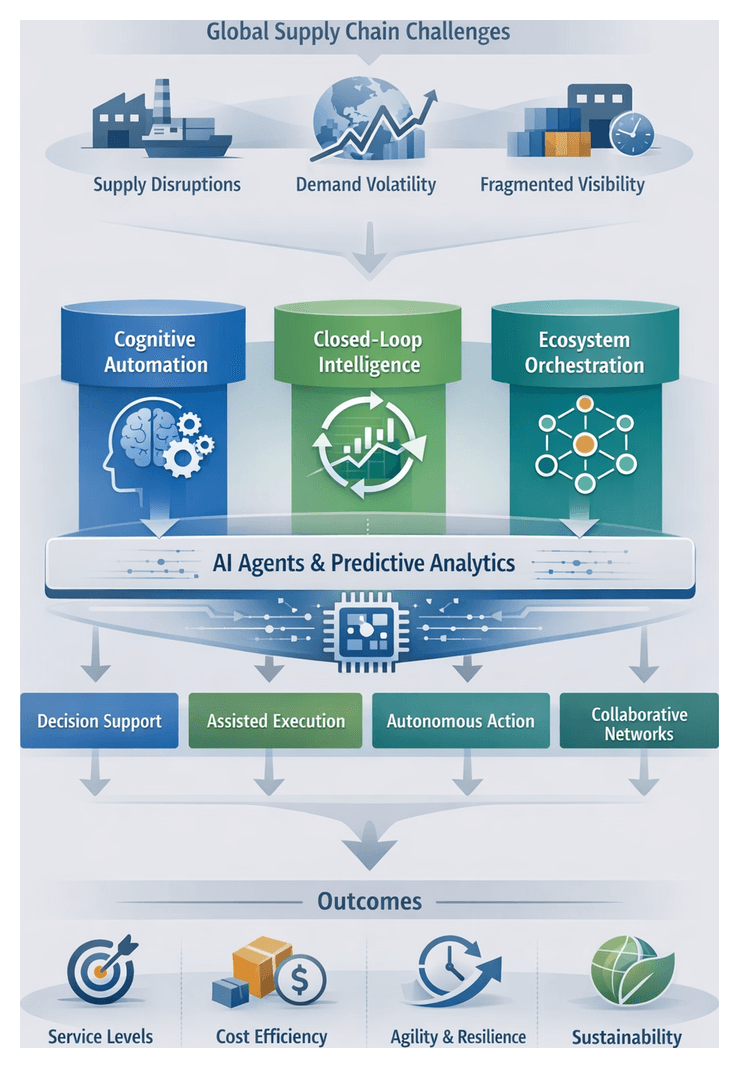
Modern Inventory Challenges in Global Supply Chains
In today’s interconnected economy, inventory management sits at the nexus of product availability, cost control, and service quality. As organizations expand sourcing networks across continents, they encounter unprecedented complexity: multi-tiered suppliers, variable lead times, regional demand fluctuations, and transportation disruptions. Traditional models based on fixed reorder points and periodic reviews struggle to maintain reliable guidance in this dynamic environment. Fragmented visibility, static parameters, and siloed decision making drive either excessive holding costs or critical stockouts, undermining operational resilience and competitive positioning.
Complex global networks expose organizations to diverse variables at each node—capacity constraints, quality issues, customs delays, and geopolitical events. Conventional inventory approaches calibrated for one segment can produce imbalances elsewhere, inflating safety stock across low-risk tiers while leaving high-risk nodes vulnerable. Rapid shifts in consumer behavior, fueled by digital channels and emerging market trends, further amplify demand volatility. Promotional activities, seasonal surges, and off-premise channels such as e-commerce and subscriptions introduce erratic patterns that simple extrapolation methods cannot capture.
Disruptions from natural disasters, trade restrictions, health crises, or labor shortages often trigger reactive measures—expedited freight, regional stock reallocations, or halted production—incurring premium costs and eroding reliability. Fragmented visibility across suppliers and transport modes leaves planners with blind spots, while conflicting objectives among procurement, operations, finance, and sales impede alignment on safety stock strategies and contingency plans.
The financial impact of rising inventory costs is substantial. Capital tied up in idle stock represents lost opportunity for innovation or expansion. Warehousing expenses scale with volume and duration, and accelerated product life cycles heighten obsolescence risks. Decentralized fulfillment to meet customer expectations of same-day or next-day delivery multiplies stock positions and increases waste when demand forecasts miss the mark. Legacy systems and data silos perpetuate latency and errors, while functional incentives discourage enterprise-wide collaboration. In this context, a shift toward intelligence-driven inventory management becomes imperative for organizations seeking to optimize service levels, reduce costs, and enhance resilience.
Framing AI Agents and Predictive Stocking Concepts
Inventory management reframed through AI agents and predictive stocking transforms static rules into dynamic, data-driven disciplines. An AI agent in this context is an autonomous or semi-autonomous software entity that ingests multiple data streams—transactional records, supplier performance metrics, market indicators—reasoning about stock requirements and executing decisions once reserved for human planners. Predictive stocking encompasses forecasting algorithms and statistical estimators that anticipate demand fluctuations and supply variability.
Conceptual Frameworks
- Cognitive Automation: AI agents emulate expert judgment in demand planning, continuously calibrating safety buffers using machine learning models.
- Closed-Loop Intelligence: Forecasting engines and agents form an iterative feedback loop, executing replenishment actions, monitoring outcomes, and refining algorithms in real time.
- Ecosystem Orchestration: Specialized agents coordinate across demand sensing, supplier collaboration, and logistics optimization, negotiating lead times and contingency plans within an integrated network.
Agent Autonomy and Adaptability
Agent functionality is evaluated along autonomy and adaptability dimensions. Autonomy tiers range from decision support to fully autonomous replenishment:
- Decision Support: Agents recommend actions; human planners retain final approval.
- Assisted Execution: Agents handle routine tasks under predefined rules, escalating exceptions.
- Autonomous Replenishment: Agents interface with ERP systems to trigger orders and transfers.
- Collaborative Networks: Agents coordinate across external partners, adjusting parameters based on shared data.
Adaptability reflects learning mechanisms:
- Static Learning: Periodic offline retraining.
- Incremental Learning: Continuous updates from recent performance data.
- Reinforcement-Driven Adaptation: Agents optimize decisions via reinforcement learning, using service levels and cost metrics as reward signals.
Performance Metrics and Interpretive Frameworks
Predictive stocking efficacy extends beyond forecast accuracy metrics such as mean absolute percentage error (MAPE) or weighted root mean square error (wRMSE). Leading organizations assess:
- Service Level Optimization: Achieving target fill rates with minimal stockouts.
- Inventory Capital Efficiency: Reducing working capital through precise buffer calibration.
- Supply Responsiveness: Adapting to demand spikes or supplier delays.
- Cycle Time Reduction: Shortening the interval from signal generation to on-shelf availability.
Domain Perspectives
Supply chain practitioners focus on risk mitigation, process stability, and governance, viewing predictive stocking as an evolution of reorder-point models with clear audit trails and escalation protocols. Technology vendors emphasize autonomy and rapid deployment. Platforms such as Blue Yonder Luminate, IBM Watson Supply Chain, Oracle Cloud SCM, and Kinaxis RapidResponse champion self-healing supply networks with minimal human oversight. Bridging these views requires integrated frameworks that address operational realities and technological ambitions.
Key Debates
- Explainability versus Performance: Balancing black-box model accuracy with regulatory and stakeholder transparency requirements.
- Centralized Core versus Edge Autonomy: Central digital platforms offer unified control, while distributed intelligence at warehouses accelerates local decision making.
- Short-Term Gains versus Long-Term Resilience: Aggressive inventory reduction can expose vulnerabilities during demand anomalies.
- Human Oversight versus Full Automation: Industry risk profiles dictate the degree of human-in-the-loop governance.
Unified Taxonomy
A consolidated taxonomy maps predictive stocking and agent capabilities across five domains:
- Data Intelligence: Diversity of data sources from transactional logs to macroeconomic signals.
- Analytical Rigor: Forecasting sophistication, including ensemble and probabilistic models.
- Decision Autonomy: Execution authority from recommendations to self-initiated replenishment.
- Integration Flexibility: Ease of connecting agents with ERP, TMS, and warehouse systems.
- Governance and Controls: Exception workflows, auditability, and compliance features.
Strategic Imperative for Intelligent Stocking
Intelligent stocking—driven by AI agents and predictive analytics—is now a strategic necessity rather than an innovation. By treating inventory as strategic capital, organizations optimize stock levels in real time, anticipate demand shifts, and allocate resources dynamically. The benefits extend beyond cost reductions to enhanced service levels, risk management, and market responsiveness.
Market Volatility and Demand Uncertainty
With volatility as the norm, traditional forecasting falters. AI-driven stocking reads early indicators—social media sentiment, macro data—and recalibrates inventory recommendations near real time, transforming supply chains into agile value generators that mitigate financial impacts of erratic demand.
Digital Transformation Trends
Cloud adoption, IoT integration, and embedded analytics platforms underpin intelligent stocking as a hallmark of digital maturity. Solutions from Blue Yonder and Kinaxis RapidResponse illustrate how predictive and prescriptive analytics are embedded into core workflows, enabling API-driven orchestration and continuous forecast refinement.
Competitive Differentiation
Service excellence based on optimized inventory positions distinguishes market leaders. AI-empowered stocking delivers service level gains of 5–15 percentage points and reduces carrying costs by 10–20 percent, bolstering customer loyalty and elevating enterprise valuation.
Regulatory and Sustainability Drivers
Stricter reporting on carbon footprints and waste disposal, combined with corporate ESG agendas, drive the integration of environmental and social metrics into stocking algorithms. AI-informed stocking minimizes overstock, supports circular economy goals, and meets compliance mandates.
Globalization and Risk Landscapes
In multi-tier networks, intelligent stocking continuously assesses risk signals—port congestion, supplier health, commodity volatility—and adapts buffers across nodes. During disruptions, AI agents reprioritize shipments, adjust regional stocks, and activate secondary sourcing to preserve service commitments.
Strategic Takeaways
- Resilience: Predictive insights create adaptive buffers against volatility.
- Efficiency: Dynamic alignment minimizes capital lock-up and waste.
- Competitiveness: Agility and service excellence drive differentiation.
- Sustainability: Integrated ESG metrics enhance compliance and reputation.
Thematic Insights and Practical Considerations
Four core insights define the frontier of AI-driven inventory management:
- Volatility as a Constant: Policies grounded in probabilistic forecasts replace deterministic reorder points.
- Agent-Based Autonomy: Continuous feedback systems enable real-time replenishment within defined guardrails.
- Strategic Resilience: Predictive stocking builds networks that absorb shocks and recover with minimal manual intervention.
- Data Integrity and Integration: Robust, governed data architectures underpin accurate demand and supply signals.
- Cross-Functional Alignment: Collaboration among procurement, operations, finance, and IT turns insights into unified strategies.
- Continuous Learning: Feedback loops monitor forecast accuracy, measure KPIs, and trigger model retraining as conditions evolve.
Core Limitations
- Model Scope: SKU-level optimization demands network-wide context to avoid unintended interactions.
- Data Quality: Bias from incomplete or inconsistent data undermines forecast reliability.
- Technical Debt: Legacy systems require phased integration and may limit real-time connectivity.
- Human-Machine Alignment: Transparent model logic and clear governance foster trust and accountability.
- Governance: Automated decisions must comply with procurement policies and audit requirements.
- Model Drift: Evolving market conditions necessitate ongoing monitoring, retraining, and version control.
- Cybersecurity: Protecting real-time data flows and agent interfaces demands strong encryption and access controls.
Strategic Frameworks
Multiple interpretive lenses guide AI-driven deployments:
- Dynamic Capabilities: Sensing, seizing, and transforming resources using real-time intelligence.
- Digital Maturity: Assessing readiness across data infrastructure, process standardization, and culture.
- Risk-Return Analysis: Balancing service improvements against carrying cost trade-offs and autonomy thresholds.
- Systems-of-Systems: Ensuring local optimizations align with global performance metrics.
Implications for Practitioners
- Redefine Success Metrics: Include forecast bias, fill-rate variability, and resilience indicators alongside traditional KPIs.
- Establish Governance Councils: Align replenishment policies, approve agent parameters, and manage trade-offs across functions.
- Create a Center of Excellence: Multidisciplinary teams manage data pipelines, model development, and institutionalize best practices.
- Conduct Test-and-Learn Pilots: Isolate factors such as seasonality and promotions to validate ROI in controlled environments.
- Implement Continuous Feedback: Dashboards and alerts track agent performance, enabling rapid tuning and corrective action.
Chapter 1: Foundations of Modern Inventory Management
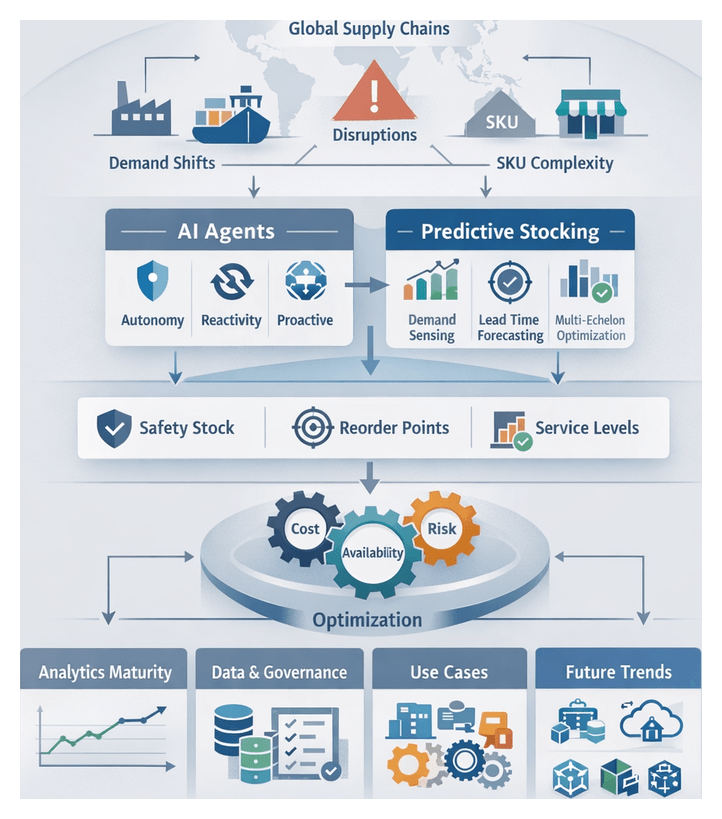
Modern Inventory Challenges in Global Supply Chains
Global supply chains today span continents, products and partners, creating intricate networks that magnify disruptions and strain traditional inventory practices. Rapid shifts in consumer demand, driven by digital commerce and evolving preferences, undermine the predictive power of historical data. At the same time, geopolitical events, raw material shortages and logistics bottlenecks introduce lead-time variability and stock-out risks. Meanwhile, SKU proliferation and multi-echelon distribution raise coordination complexity across factories, warehouses, cross-docks and retail locations. Finally, balancing working capital against service commitments demands ever-finer trade-offs: excess safety stock ties up funds while insufficient buffers threaten lost sales and customer dissatisfaction. In this volatile environment, static reorder formulas and preset safety-stock rules are no longer adequate. Organizations need dynamic, data-driven strategies that adapt in real time to emerging signals and reconcile cost-service tensions across the network.
Conceptual Foundations: AI Agents and Predictive Stocking
Intelligent stocking frameworks hinge on two interdependent elements: AI agents and predictive stocking techniques. AI agents are autonomous software entities characterized by four essential attributes: the ability to make independent decisions, coordinate with other agents and systems, respond swiftly to fluctuations in demand or supply, and anticipate disruptions to adjust inventory parameters proactively. Predictive stocking enhances traditional forecasting by leveraging machine learning and probabilistic models to calculate reorder points and safety-stock levels dynamically. This process involves real-time demand sensing, which integrates point-of-sale, e-commerce, and external market data; lead-time estimation models that refine supplier expectations based on performance metrics; multi-echelon coordination algorithms that optimize stock placement across the supply chain; and autonomous decision engines that initiate purchase orders, transfers, or emergency replenishments within established parameters. By integrating AI agents with predictive stocking, businesses can transform inventory management from a reactive cost center into a strategic asset that enhances service levels and capital efficiency.
Core Metrics and Multi-Objective Optimization
At the heart of any AI-driven inventory system lie three core metrics: safety stock, reorder points and service-level targets. Safety stock quantifies the buffer required to absorb demand variability and supply disruptions; in AI-enabled environments it becomes a dynamic variable influenced by real-time market trends, supplier reliability and logistical risk. Reorder points set the trigger thresholds for replenishment; by leveraging probabilistic demand distributions and live lead-time forecasts, AI agents recalibrate these thresholds continuously and tailor them to product clusters based on demand patterns and margin profiles. Service levels express the probability of meeting demand without stockouts and translate into penalty functions within optimization algorithms, balancing revenue impact against carrying costs. Rather than optimizing each metric in isolation, multi-objective frameworks integrate them via weighted objective functions, Pareto-front analyses or constraint programming. Cross-functional feedback loops ensure that shifts in one parameter—such as elevated service targets—are assessed in terms of their downstream effects on working capital and risk exposure.
Analytical and Maturity Frameworks
Supply chain leaders often gauge their predictive stocking capabilities through maturity models that progress from descriptive analytics (reporting past performance) and diagnostic analyses (root-cause investigations) to predictive forecasting (anticipating demand trajectories) and prescriptive recommendations (autonomous replenishment actions). The apex stage—adaptive learning—features AI agents that continuously refine models based on execution data and emergent market signals. From an analytical standpoint, the power of these systems emerges when predictive models and agent autonomy form a closed feedback loop: demand insights inform automated orders, execution outcomes feed back into model retraining, and control-theory principles ensure system stability around target inventory levels. Leading frameworks emphasize four governance pillars: data fidelity for accurate and timely signals; algorithmic robustness and explainability; orchestration architecture that seamlessly integrates AI agents with ERP, WMS and supplier portals; and governance structures defining accountability, auditability and exception-handling protocols.
Industry Adaptations and Use Cases
Sectors leverage intelligent stocking concepts tailored to their unique needs. High-volume retail emphasizes short-term demand sensing and inventory clustering to reduce markdown risks. Discrete manufacturing prioritizes synchronizing multi-tier bills of materials, ensuring component availability while controlling work-in-progress levels. In pharmaceutical supply chains, risk-based assessments are crucial for maintaining critical drug availability within regulatory frameworks. Consumer electronics face the challenge of rapid SKU sunsetting and reallocating safety stock as product lifecycles shorten. Practitioners in these fields monitor key metrics like forecast accuracy, inventory turns, fill-rate attainment, and cash-to-cash cycle time. A/B pilot frameworks evaluate the performance of AI-enabled SKUs against traditional methods, with benchmarks showing that a mean absolute percentage error (MAPE) below 15 percent can lead to 10–20 percent reductions in inventory while achieving a 95 percent fill rate. Additionally, third-party studies from leading analyst firms demonstrate that integrating predictive analytics platforms with autonomous reorder agents can drive double-digit improvements in service levels and working capital efficiency.
Data Architecture and Governance
Robust data infrastructure underlies every predictive stocking initiative. Organizations must develop holistic data domain maps that integrate sales transactions, external market signals (including weather and economic indicators), supplier performance metrics and internal operational telemetry. Governance maturity models adapted from frameworks such as CMMI guide practices for data stewardship, version control and lineage tracking, ensuring transparency and compliance. Quality-control mechanisms—real-time anomaly detection, outlier screening and missing-value thresholds—guard against concept drift and data skew. Event-driven architectures and message queuing protocols support continuous data streams, while schema evolution processes allow AI models to accommodate new product attributes, changing service agreements and evolving cost structures.
Implementation Strategies and Change Management
Embedding AI agents within organizational structures requires clear delineation of decision rights, escalation protocols and human-agent collaboration models. Interpretive lenses such as the Viable System Model help align agent autonomy with oversight and accountability. Stakeholder alignment tools—RACI matrices—clarify roles during integration with ERP, warehouse management and procurement systems. Organizational readiness assessments measure digital fluency, change-management capacity and executive sponsorship, with high-readiness environments reporting faster time to value. Pilot programs should define performance metrics, establish cross-functional governance forums and apply iterative scaling approaches. Robust error-handling and rollback capabilities in data pipelines preserve resilience during initial deployments.
Resilience, Real-Time Analytics, and Autonomous Replenishment
Advanced scenario modeling techniques—probabilistic risk networks and Monte Carlo simulations—enable stress-testing of inventory buffers under extreme demand and supply shocks. Real-time analytics architectures borrow from stream processing to balance decision latency against computational complexity. Unsupervised learning algorithms detect anomalies in order patterns, warehouse throughput and supplier lead times, triggering autonomous replenishment orders or exception workflows. Effective governance frameworks define allowable intervention thresholds, human override mechanisms and audit trails, ensuring that AI agents enhance resilience without compromising risk controls.
Emerging Trends, Limitations, and Future Readiness
- Edge Computing Paradigms: Deploying inference engines at warehouse and factory nodes to reduce latency and support localized replenishment logic.
- Federated Learning Architectures: Enabling collaborative model training across partner networks without exchanging raw data, enhancing forecast accuracy while preserving privacy.
- Digital Twin Simulations: Creating virtual replicas of supply-chain nodes to perform what-if analyses and align stocking policies with real-world performance.
- Blockchain Traceability: Leveraging immutable ledgers for verified supplier reliability records, informing predictive adjustments and compliance audits.
Despite their promise, AI-driven stocking systems face limitations: data bias and quality gaps can degrade model performance, opaque algorithms may erode stakeholder trust, and cybersecurity vulnerabilities pose operational risks. Over-reliance on automation without adequate human oversight can lead to systemic blind spots. Effective governance must embed explainability, continuous model validation, access controls and clear escalation protocols to mitigate these challenges and sustain long-term value.
Reader Outcomes and Strategic Steps
- Diagnose Inventory Challenges by mapping volatility, carrying costs and stock-out risks to targeted AI solutions.
- Design Data Architectures that integrate essential internal and external data domains with rigorous governance practices.
- Frame Intelligent Agent Roles, defining decision scopes, learning mechanisms and coordination models within the supply chain.
- Evaluate Forecasting Techniques, comparing statistical and machine learning methods against operational interpretability and computational constraints.
- Develop Predictive Replenishment Strategies, configuring dynamic safety stocks, adaptive reorder points and multi-echelon rules driven by probabilistic models.
- Plan Integration and Deployment, assessing technical architectures, change-management requirements and scaling pathways.
- Implement Real-Time Analytics, establishing continuous monitoring, anomaly detection and autonomous replenishment triggers.
- Build Risk-Resilient Frameworks through scenario analysis, stress-testing and contingency buffer design.
- Overcome Adoption Barriers with stakeholder alignment, pilot frameworks and performance measurement practices.
- Anticipate Future Trends by exploring edge computing, federated learning, digital twins and blockchain traceability.
Chapter 2: Data Architecture and Quality for Predictive Insights
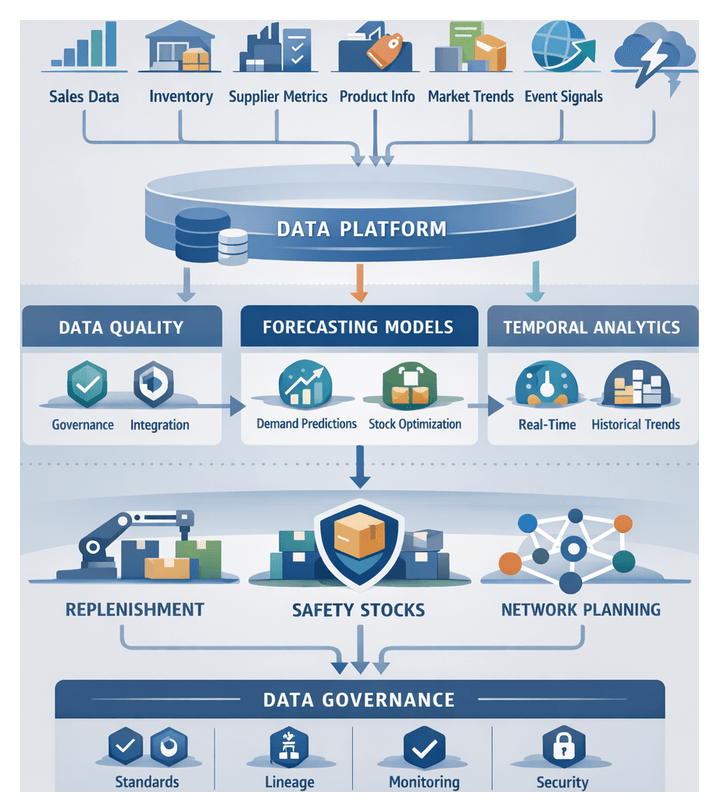
Data Foundations for Predictive Inventory Management
Accurate demand forecasting depends on a comprehensive data architecture that captures internal operations and external market signals. By integrating sales history, inventory transactions, supplier metrics, product attributes, macroeconomic indicators, and event-based data, organizations gain the multidimensional context required for reliable predictive models. These inputs become the signals that drive dynamic replenishment decisions, safety stock calibration, and strategic network planning.
Key Data Domains
- Sales and Transaction History: Granular SKU-level order and return records reveal seasonality, trend shifts, and promotional impacts.
- Inventory and Warehouse Operations: Real-time stock-on-hand, inbound receipts, outbound shipments, and cycle count variances highlight throughput and bottlenecks.
- Supplier Performance Metrics: Lead-time variability, fill rates, and defect ratios inform buffer requirements and stockout risk.
- Product Attributes and Lifecycle Data: Stage-of-life classification, physical characteristics, and substitution relationships refine demand projections.
- Market and Macroeconomic Indicators: Currency fluctuations, commodity price indices, consumer sentiment, and employment rates contextualize demand for discretionary goods.
- Environmental and Event-Based Data: Weather conditions, holiday calendars, trade restrictions, and social media sentiment serve as leading indicators of demand anomalies.
Temporal Resolution and Architecture Patterns
Aligning data granularity with product dynamics is critical. Fast-moving goods may require hourly or daily intervals, while industrial items suit weekly or monthly aggregates. Key considerations include time interval consistency, lookback window selection, and multi-horizon forecasting for tactical and strategic planning.
Common data architecture patterns include centralized data warehouses for batch reporting, data lakes for flexible analysis, and hybrid or lambda architectures that blend streaming ingestion with batch retraining. Selection should reflect existing infrastructure, data volume growth, and latency requirements.
External Signal Integration
Leading platforms such as Amazon Forecast, and Google Cloud AI Forecast demonstrate the value of enriching sales data with external factors. Effective integration involves source validation, feature engineering (for example, temperature deviations or sentiment indexes), and correlation analysis to quantify the impact on demand.
Data Quality and Master Data Management
Predictive model performance hinges on data accuracy, consistency, and completeness. Automated data profiling detects anomalies, while error correction workflows fill gaps, standardize codes, and remove duplicates. Tools such as Talend Data Quality and Informatica Data Quality automate cleansing tasks and reduce model bias.
Master Data Management practices establish canonical definitions for products, customers, suppliers, and locations. Data governance frameworks enforce policies through stewardship committees, metadata catalogs, and role-based access controls, ensuring integrity and compliance with regulations like GDPR and CCPA.
Data Governance and Integration Strategies
Robust data governance and seamless integration form the backbone of predictive intelligence. Governance transforms compliance obligations into strategic assets by ensuring data integrity, lineage visibility, and secure access. Integration strategies balance centralized repositories with decentralized, domain-oriented approaches.
Governance Pillars
- Policy and Standards: Guidelines for data classification, accessibility, and permissible use aligned with regulations.
- Roles and Responsibilities: Defined data custodians, stewards, and domain experts enforcing quality thresholds.
- Data Quality Metrics: KPIs for accuracy, completeness, consistency, timeliness, and validity feeding into scorecards.
- Lineage and Traceability: End-to-end tracking of data origin, transformations, and consumption for auditability.
Integration Patterns and DataOps
Practitioners weigh batch ETL/ELT, streaming event-driven flows, and API-led connectivity. Batch pipelines suit structured operational data, while streaming platforms like Apache Kafka and Confluent enable low-latency updates. API-driven microservices enhance modularity. High-maturity organizations orchestrate these patterns through DataOps workflows with CI/CD for data pipelines.
Leading integration and governance suites include Informatica, Collibra, and open-source tools like Apache NiFi for real-time flow management.
Monitoring, Metrics, and Lineage
Integration success is measured through latency compliance, throughput consistency, error rates, and recovery time objectives. Automated anomaly detection on pipeline performance and data quality—powered by platforms such as DataRobot—provides proactive alerts for data drift. Lineage visualization tools like Alation enable rapid impact analysis and accelerate root-cause investigations.
Contextual Use Cases of AI-Driven Forecasting
Predictive models deliver maximum value when aligned with specific operational and strategic contexts. Continuous validation against service level targets, fill rate thresholds, and cost minimization objectives ensures that insights translate into actionable decisions across diverse inventory scenarios.
SKU-Level Forecasting in High-Variability Environments
Segment SKUs by variability metrics—coefficient of variation, intermittency, outlier events—to tailor forecasting approaches. Hybrid models combining statistical smoothing with machine learning capture sudden shifts. Exception-based review frameworks automate replenishment for stable items while surfacing anomalies for expert intervention.
Multi-Echelon Planning and Network Effects
In distribution networks with central warehouses, regional centers, and retail outlets, forecasts at each node must account for lead-time variability, replenishment policies, and transshipment. Simulation-based validation under disruption scenarios quantifies error propagation and informs safety stock calibration to balance service levels against carrying costs.
Seasonal and Promotional Demand
Decompose time series into trend, seasonal, and event-driven components. Enhance additive or multiplicative models with promotional intensity, competitor activity, and search trends. Lift factor methodologies and causal inference isolate the incremental impact of promotions, calibrated through cross-validation across seasons and regions.
New Product Introduction and Lifecycle Phases
For items lacking historical data, use analog forecasting by clustering new products with mature items sharing attributes. Employ phased models that shift from qualitative inputs—market research, expert judgment—to quantitative techniques as sales data accrues, refining accuracy over the product lifecycle.
Omnichannel Fulfillment and Inventory Pooling
Unified forecasts must serve store replenishment, e-commerce shipping, and click-and-collect pickups. Hierarchical time series methods reconcile national, regional, and store forecasts. Real-time allocation engines adjust safety stock distribution in response to forecast updates, optimizing service across channels without inflating total inventory.
Risk Mitigation and Scenario-Based Planning
Monte Carlo simulations and “what-if” analyses explore supplier disruptions, geopolitical events, and demand shocks. Integrate risk indicators—supplier lead-time volatility, market sentiment, climate risk—into scenario models. Executive dashboards display worst-case coverage, service breach probabilities, and incremental holding costs to inform contingency strategies.
Integration with Business Planning and Financial Objectives
Embed forecasts into Sales and Operations Planning cadences and integrate with ERP platforms such as SAP Integrated Business Planning or Oracle NetSuite. Align model performance metrics—mean absolute percentage error, bias—with financial KPIs like return on invested capital and inventory turns to ensure measurable business impact.
Analytical Insights, Anticipated Outcomes, and Critical Considerations
Anticipated Competencies and Outcomes
- Strategic Framing of Inventory Challenges: Diagnose volatility drivers and position AI solutions as targeted responses.
- Architectural Appreciation of Data Pipelines: Grasp data integration, governance, and quality assurance roles in forecasting.
- Interpretive Frameworks for AI Agents: Evaluate autonomous agent architectures, coordination protocols, and decision frameworks.
- Analytical Assessment of Forecasting Techniques: Compare ARIMA, gradient boosting, and deep learning against SKU lifecycles and promotional patterns.
- Optimization Trade-Off Analysis: Balance service levels, holding costs, and stock-out risks using sensitivity and multi-echelon models.
- Integration and Change Management Insights: Map dependencies between AI agents, ERP platforms, data infrastructures, and stakeholders.
- Risk and Resilience Planning: Master scenario modeling to quantify supply disruptions and design buffer strategies.
- Future-Readiness and Emerging Technologies: Anticipate the impact of edge computing, federated learning, digital twins, and autonomous logistics.
Key Analytical Insights
- Data Integrity as Foundation: Treat governance as a strategic enabler to normalize, version, and trace all inputs.
- Forecasting Beyond Point Estimates: Adopt probabilistic and scenario-based frameworks to quantify uncertainty.
- Agent Coordination Dynamics: Explore multi-agent negotiation protocols and reward structures for network-wide optimization.
- End-to-End Optimization Lens: Integrate replenishment decisions with procurement, production, and distribution processes.
- Real-Time Analytics Imperative: Leverage streaming anomaly detection and event-driven triggers for supply chain responsiveness.
- Interpretability and Trust: Use SHAP values and attention-weight visualizations to validate model outputs.
- Change Management for AI Integration: Align stakeholder mapping, communication flows, and governance checkpoints across teams.
- Resilience Through Predictive Buffers: Apply stress-testing and dynamic safety stock methodologies across multi-tier networks.
- Continual Learning and Model Governance: Establish drift detection, retraining cadences, and model-ops pipelines for ongoing calibration.
- Future-Proofing Inventory Architectures: Explore federated learning and digital twins with platforms like Azure Machine Learning and AWS Forecast.
Critical Considerations and Limitations
- Data Quality and Representativeness: Historical biases and outliers can skew forecasts without rigorous profiling and outlier treatment.
- Infrastructure and Latency Constraints: Legacy warehouses may bottleneck real-time analytics; assess compute, bandwidth, and event-processing frameworks.
- Model Complexity vs. Transparency: Deep learning may sacrifice interpretability; simpler models or explainable AI may be needed for auditability.
- Organizational Readiness and Skill Gaps: Cross-disciplinary teams require data engineering, machine learning, and supply chain expertise.
- Change Management and Stakeholder Alignment: Pilot programs and clear governance help build trust in autonomous decision-making.
- Scalability and Maintenance Overheads: Automate version control, testing, and deployment through model-ops to manage growth in SKUs and nodes.
- Integration Complexity: Middleware and pre-integration assessments reduce schema mismatches and authentication hurdles with ERP and WMS systems.
- Regulatory and Ethical Considerations: Ensure AI policies and override rules comply with regulations in critical supply contexts.
- External Unpredictables: Complement data-driven forecasts with manual contingency protocols for black swan events.
- Cost-Benefit Calibration: Develop rigorous financial models to compare software, hardware, and change management costs against expected ROI.
Chapter 3: Understanding AI Agents in Supply Chains
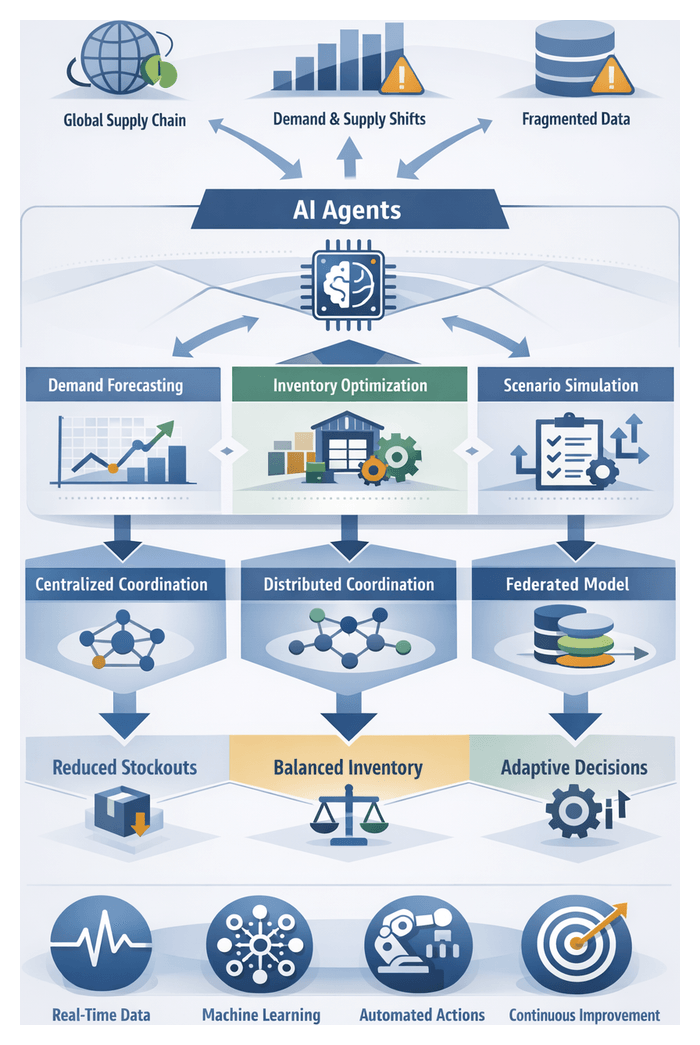
Addressing Modern Inventory Challenges with AI Agents
Global supply chains have evolved into complex, multi-tiered networks spanning continents and stakeholders. Demand volatility—driven by shifting consumer preferences and unpredictable market trends—combines with supply-side disruptions such as natural disasters and geopolitical shifts to upend traditional inventory methods. Fragmented data across legacy enterprise resource planning (ERP), warehouse management, and point-of-sale systems often results in siloed insights, manual reconciliation delays, and decisions based on incomplete information. As a result, organizations face stockouts, overstock, inflated carrying costs, and degraded service levels. Incremental improvements to rule-based systems no longer suffice; the need for tools that process real-time signals, adapt continuously, and coordinate decisions across nodes has become paramount. AI agents equipped with predictive stocking capabilities offer a transformative approach, shifting inventory management from reactive responses to anticipatory orchestration.
Fundamentals of AI Agents and Predictive Stocking
AI agents are autonomous software constructs that perceive their environment, apply reasoning, and execute actions to meet predefined objectives. In supply chains, these agents ingest diverse data streams—historical sales, lead times, market indicators—and leverage machine learning to forecast demand, calculate dynamic safety stocks, and simulate scenarios. Unlike static rule-based systems, AI agents continuously refine their models based on real-time outcomes, enabling:
- Continuous demand estimation using time-series models, regression analysis, or neural networks.
- Dynamic inventory policy optimization that adjusts reorder points and safety stocks in response to emerging trends.
- Scenario simulation to evaluate the impact of disruptions and alternative fulfillment strategies.
AI agents integrate forecasting with execution, autonomously placing purchase orders, routing replenishments, and triggering exception workflows. For example, an agent may detect a regional surge in SKU demand, assess supplier capacities and lead times, and recommend staggered replenishment plans. If transportation delays occur, the agent recalibrates safety stocks and explores alternative routes, all without manual intervention. When embedded within ecosystems such as IBM Watson Supply Chain or integrated with Microsoft Azure AI services, these agents unlock real-time decision making at scale, balancing service levels, cost efficiency, and sustainability objectives.
Architecting and Coordinating AI Agents
Effective deployment of multiple AI agents hinges on coordination architectures, communication protocols, and negotiation mechanisms. Organizations typically choose from three paradigms:
- Centralized Coordination: A single orchestration hub aggregates data and issues directives, simplifying global optimization but introducing potential bottlenecks.
- Distributed Coordination: Peer-to-peer agent communication enhances scalability and resilience, requiring robust consensus protocols to maintain alignment.
- Federated Coordination: A hybrid model combining local autonomy with periodic synchronization via a federated controller, balancing responsiveness with oversight.
Standardized communication protocols ensure semantic interoperability. Industry frameworks like the FIPA agent communication language define message performatives—request, inform, propose, agree—while lightweight JSON or XML schemas transported through message brokers support domain-specific attributes. Negotiation mechanisms address conflicting objectives across agents:
- Contract Net Protocol for task allocation through calls for proposals and bid evaluation.
- Auction-Based Mechanisms, including combinatorial auctions, to allocate resources based on bid competitiveness and demand variability.
- Consensus Algorithms such as iterative averaging or belief propagation, driving agreement on shared variables like reorder quantities.
Performance evaluation spans operational, technical, and strategic metrics:
- Operational: Order fulfillment rate, stockout frequency, inventory turnover.
- Technical: Message latency, throughput, error rates.
- Strategic: Adaptability to demand shifts, resilience against disruptions, cost-benefit ratios.
By aligning coordination protocols with network topology, governance constraints, and performance targets—and by leveraging simulation tools for stress testing—organizations can select coordination architectures that drive resilience and scalability.
Transforming Inventory Processes with AI Agents
Embedding AI agents into inventory workflows reshapes decision dynamics, organizational roles, and continuous learning cycles:
Redefined Decision Dynamics
- Accelerated response times through real-time ingestion of sales, supplier, and logistics signals.
- Contextual prioritization that weighs service targets, cost thresholds, and lead-time variability to present ranked replenishment scenarios.
- Enhanced forecast predictability as agents learn seasonality, promotions, and trend patterns, reducing error and smoothing replenishment.
Transformed Organizational Roles
- Planners evolve into orchestrators who interpret agent insights, manage exceptions, and adjust risk parameters.
- Governance frameworks define agent autonomy levels, escalation thresholds, and audit processes.
- Cross-functional forums align supply chain planning, procurement, and finance teams around agent-generated recommendations.
Continuous Learning and Feedback
- Online learning techniques enable incremental model refinements as new data arrives.
- Anomaly-driven retraining triggers model updates when forecast errors exceed thresholds.
- Knowledge graphs capture causal relationships, accelerating adaptation to recurring disruptions.
Real-World Application Contexts
- High-velocity consumer goods: Agents tune reorder suggestions hourly using web analytics and social sentiment.
- Multi-echelon networks: Agents coordinate buffers across factories, distribution centers, and retail outlets to minimize total system cost.
- Perishable assortments: Agents integrate spoilage rates and weather forecasts to balance freshness and waste.
- New product introductions: Agents leverage analog clustering and early sales signals to bootstrap forecasts.
Technology Ecosystem Integration
Successful agent deployments integrate with existing ERP and WMS landscapes. Leading platforms include:
- Blue Yonder’s Platform, embedding autonomous replenishment agents within its supply chain suite.
- IBM Sterling Inventory Control Tower, leveraging Watson AI for demand sensing and network-wide optimization.
- DataRobot for robust API orchestration between legacy systems and AI platforms.
Organizational and Technical Readiness
Cultural Alignment and Governance
Adopting AI agents demands executive sponsorship, data-driven mindsets, and agile change management. Readiness assessments gauge data literacy, collaboration, and governance maturity, guiding organizations from awareness to advanced agent autonomy. Key elements include leadership endorsement, cross-functional forums, targeted training on AI concepts, and feedback loops for refining agent decisions.
Data Infrastructure and Integration
AI agents require comprehensive, high-quality data. A federated data mesh approach accelerates integration of ERP modules, WMS, transportation platforms, and third-party sources while maintaining domain ownership and governance. Event-driven architectures and message brokering—using frameworks such as Apache Kafka—support real-time visibility. For cloud-based pipelines, services such as Azure Event Grid enable seamless data flow between operational systems and agent platforms.
Technical Scalability and Performance
Scaling from pilot to enterprise involves aligning agent architectures with decision rhythms. Containerized deployments on Kubernetes offer elasticity for inference workloads, while serverless functions handle event-triggered tasks. Hybrid models offload training to centralized cloud resources and deploy inference at the edge near warehouse execution systems. Performance metrics include compute utilization, inference latency, autoscaling policies, and observability through telemetry pipelines.
Trust, Interpretability, and Risk Management
Building trust requires explainable models, bias detection, and policy enforcement. Techniques such as SHAP values and counterfactual analysis illuminate agent reasoning, while rule-based guardrails ensure compliance with business and regulatory constraints. Risk mitigation strategies include continuous validation against legacy systems, fallback mechanisms to manual processes, periodic retraining to address model drift, and stress-testing with digital twins. Cross-functional incident response teams investigate anomalies and restore operations swiftly.
Continuous Improvement and Future Outlook
Recognizing limitations—such as cold-start challenges and multi-agent objective conflicts—guides ongoing refinement. Integrating alternative data sources, implementing meta-learning or reinforcement learning, and developing arbitration layers for conflicting agent recommendations enhance performance. Industry standards like those emerging from the Open Agent Standard Consortium and federated learning approaches will drive interoperability and collaboration across supply chain partners. Advancements in edge-native coordination and blockchain-anchored messaging promise ultra-low latency decisions and audit-ready trails. Organizations that invest in holistic agent ecosystems, embrace iterative improvement, and participate in standards development will secure lasting competitive advantage and resilient supply chains.
Chapter 4: Machine Learning Techniques for Demand Forecasting
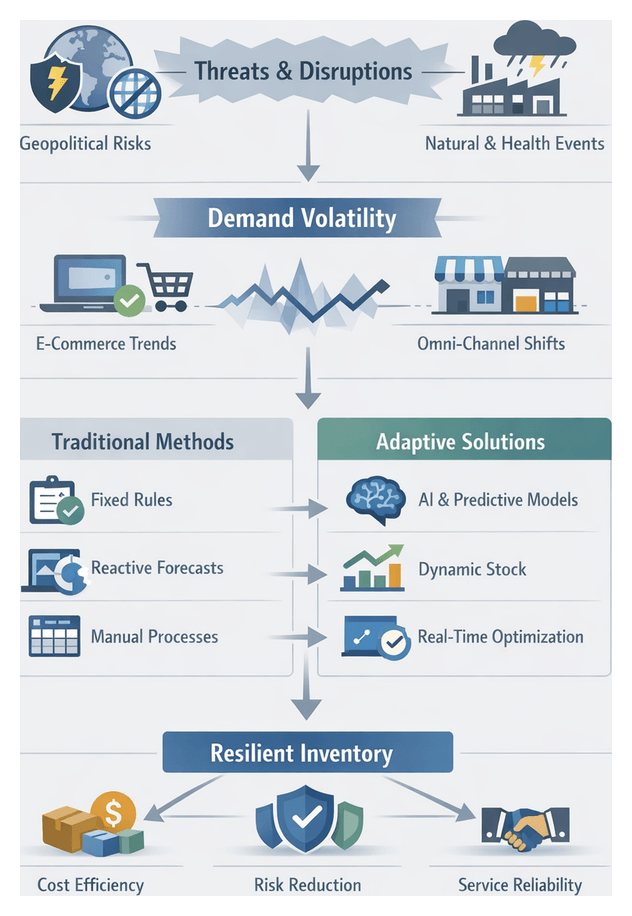
Industry Volatility and Demand Uncertainty
Global supply chains have grown more complex and interdependent, exposing inventory systems to geopolitical tensions, natural disasters, pandemics and regulatory shifts that can disrupt production, logistics and lead times overnight. At the same time, digitization, e-commerce and dynamic marketing amplify demand volatility through real-time trends, overlapping promotions and shifting channel preferences.
- Regional conflicts and sanctions can close critical trade lanes without warning
- Natural disasters in manufacturing hubs may halt output for weeks
- Public health measures can affect labor availability, transportation capacity and consumer behavior simultaneously
- Digital marketing campaigns and social media trends trigger rapid, localized demand spikes
- Omni-channel fulfillment requires balancing shared inventory across retail, online and marketplaces
In this environment, rigid safety-stock rules and static reorder points either inflate carrying costs or expose businesses to stockouts. An adaptive, data-driven inventory framework is essential to navigate frequent shocks, minimize risk and maintain service levels.
Limitations of Traditional Inventory and Forecasting Models
Conventional planning methods—periodic review systems, fixed reorder thresholds and uniform safety-stock policies—rest on assumptions of stable lead times and demand patterns. These assumptions break down under modern volatility, leading to:
- Reactive decision cycles that lag market shifts and amplify oscillations
- One-size-fits-all buffers that ignore SKU-level volatility and criticality
- Reliance on historical data alone, without forward-looking risk indicators
- High manual overhead as planners consolidate data across spreadsheets
The result is working capital tied up in slow movers and insufficient stock for fast movers, with the bullwhip effect magnifying small disruptions into costly imbalances.
Objectives for Intelligent Inventory Management
- Enhance forecast accuracy by integrating transaction records, market signals and disruption indicators
- Dynamically adjust safety stock and reorder parameters in real time
- Reduce carrying costs while maintaining or improving service levels
- Automate routine adjustments and exception handling to cut manual cycle times
- Provide cross-functional visibility so procurement, logistics and finance share a single source of truth
Realizing these objectives requires continuous optimization routines, exception-driven dashboards and AI algorithms that learn from incoming data and evolving risk landscapes.
Comparative Analysis of Forecasting Techniques
Demand-forecasting models are evaluated on predictive accuracy, robustness and operational feasibility. Key metrics include Mean Absolute Percentage Error, Root Mean Square Error and Weighted Absolute Percentage Error. Common methodological categories are:
Time-Series Models
Classic methods such as ARIMA, exponential smoothing and Holt-Winters deliver transparency and computational efficiency. Implementations in Prophet and open-source R or Python packages are widely used.
- Strengths: Explainable seasonal and trend components; low data requirements; fast training
- Limitations: Linear assumptions; difficulty incorporating external regressors; sensitivity to structural breaks
Regression-Based Approaches
Machine-learning regressions—XGBoost, Random Forest, elastic net—enable inclusion of promotional calendars, pricing and macroeconomic indicators. Platforms such as Azure Machine Learning streamline feature engineering and model evaluation.
- Strengths: Handles heterogeneous signals; robust to outliers; scalable to large SKU portfolios
- Limitations: Reduced interpretability with complex interactions; extensive hyperparameter tuning; batch retraining latency
Neural Network Architectures
Deep-learning models—LSTM, GRU and transformer-based networks—capture nonlinear demand patterns and multi-step dependencies. Frameworks like TensorFlow and PyTorch provide the necessary compute capabilities.
- Strengths: Superior handling of promotions and complex seasonality; multi-horizon coherence; transfer learning opportunities
- Limitations: Black-box nature; high data volume requirements; need for GPU acceleration
Hybrid and Ensemble Strategies
Blending models—such as combining ARIMA baselines with gradient-boosting residuals or integrating neural forecasts via weighted averaging—yields variance reduction and accuracy gains. Managed services like Amazon Forecast automate ensemble selection at scale.
- Evaluated on ensemble consistency, model diversity and operational complexity
- Offers 2–4 percent MAPE improvements but increases maintenance and governance demands
Application Contexts for Forecasting Methods
Effective forecasting aligns methodologies with the nature of the product, data availability and risk profile. Key contexts include:
- Product Lifecycle: Causal regressions or Bayesian frameworks for new product introductions; exponential smoothing or gradient boosting in growth phases; SARIMA in maturity; machine learning for decline management
- Seasonality and Cycles: Deterministic approaches (STL, SARIMA) for stable seasonal patterns; tree-based regressors and RNNs in Amazon Forecast for shifting seasonal interactions
- Promotions and Events: Time-series models with impulse functions; multivariate regressions in Azure Machine Learning for cross-SKU lift and substitution; Bayesian models for elasticity analysis
- New Product Introductions: Analogue mapping and hierarchical aggregation; expert elicitation with Bayesian updating to address data sparsity
- Multi-Echelon Networks: Centralized forecasts for baseline planning; edge-level adjustments with lightweight algorithms; graph neural networks to model spatial-temporal dependencies
- Turnover and Obsolescence: LSTM networks for high-frequency FMCG demand; probabilistic decay models for perishables and season-limited items
- Regional Variations: Local econometric regressions; transfer learning to adapt neural models across markets; clustering to share parameters among similar regions
- Granularity Trade-Offs: Fine-grain SKU forecasts for high-impact items; coarse-grain category forecasts for sparse data; dynamic granularity strategies based on SKU velocity
Model Selection Criteria and Key Considerations
Data Characteristics and Model Alignment
Match model complexity to data volume and granularity. Use ARIMA and exponential smoothing for stable, aggregate series. Deploy gradient boosting or deep networks when transaction frequency and feature diversity warrant advanced methods. Cloud services such as Vertex AI Forecasting automate covariate integration, while LSTM architectures handle unstructured inputs.
Complexity Versus Interpretability
Balance accuracy gains against the need for transparency. Linear and hierarchical time-series models offer clear parameter interpretations. Black-box methods require explainability toolkits—SHAP, LIME or integrated gradients—often embedded in solutions like Azure Machine Learning.
Scalability and Maintenance
- Retraining Frequency: Trigger retraining based on error drift rather than fixed schedules
- Version Control: Use MLflow registries and containerization to manage model lifecycles and rollbacks
- Automation: Orchestrate data pipelines and exception alerts to minimize manual interventions
Infrastructure Constraints
Evaluate hosting options and compute requirements. Statistical methods run on commodity hardware; deep learning benefits from GPU clusters. Consider data-sovereignty needs when choosing between cloud and on-premises deployments, and assess total cost of ownership.
Integration with Business Processes
Ensure forecasts seamlessly feed inventory optimization, procurement planning and executive dashboards. Align model outputs with KPIs—service levels, inventory turnover, lost-sales reduction—and involve cross-functional committees in decision-making to secure stakeholder buy-in.
Risk Factors and Governance
- Concept drift: Monitor for shifts in consumer behavior or disruption patterns
- Data quality: Implement rigorous cleansing and anomaly detection
- Overfitting/Underfitting: Guard with cross-validation and out-of-sample testing
- Explainability versus accuracy: Weigh marginal precision gains against stakeholder trust
- Operational scalability: Automate high-frequency retraining and prediction delivery
Model selection should be a continuous strategic practice. Organizations that institutionalize performance reviews, maintain robust governance and align technology with business objectives will harness both classical and modern forecasting to deliver resilient, cost-effective inventory management in an increasingly volatile landscape.
Chapter 5: Predictive Stocking Strategies and Optimization
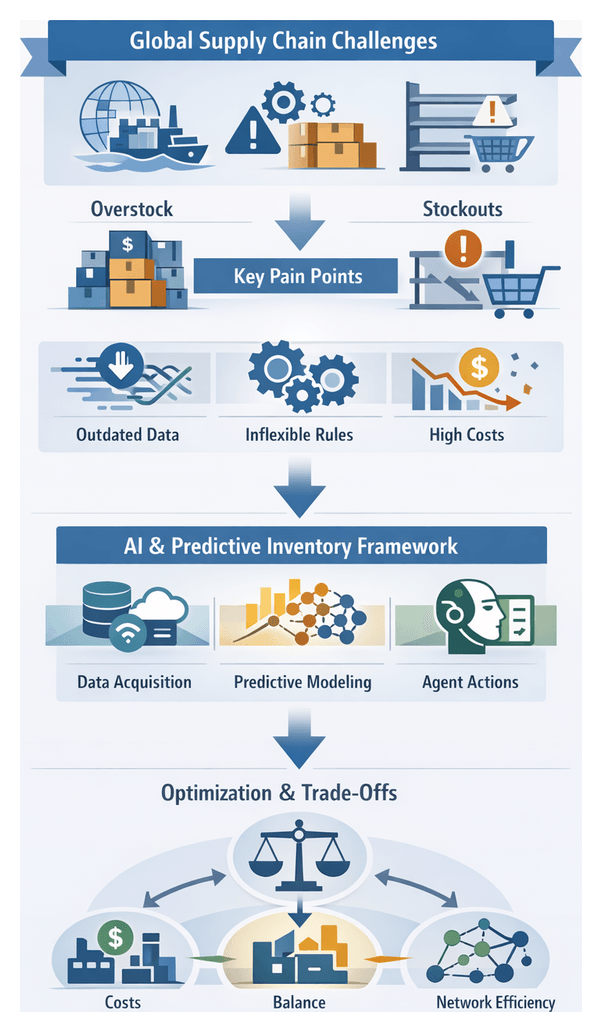
Modern Inventory Challenges in Global Supply Chains
Global supply chains today operate under unprecedented complexity. Companies source components across continents, adjust to fluctuating consumer demand in real time, and navigate evolving regulatory regimes. Traditional inventory management—relying on static reorder points and fixed safety stock buffers—struggles to address lead-time variability, geopolitical disruptions, and seasonal demand surges. The result is a precarious balance between overstocking, which ties up capital and erodes margins, and stockouts, which damage customer loyalty and revenue.
Recent shocks—from pandemic-induced factory closures to port congestions and material shortages—have revealed the brittleness of conventional replenishment models. Siloed operations limit multi-tier supplier visibility, and delayed demand signals amplify the bullwhip effect. SKU proliferation and niche assortments further complicate linear forecasting approaches.
Three core pain points emerge:
- Inability to process real-time data streams from point-of-sale systems, supplier performance feeds, social media trends and external market indicators, leading to outdated or inaccurate demand projections.
- Rigid replenishment rules that cannot adapt instantaneously to sudden disturbances such as supplier failures or promotional spikes.
- Magnified financial impacts of excess inventory or lost sales due to thin margins and high customer fulfillment expectations.
Organizations must shift from reactive, manual planning to predictive, autonomous decision-making to enhance resilience, reduce waste and maintain competitive advantage.
AI Agents and Predictive Stocking Framework
Implementing predictive stocking requires intelligent agents—autonomous software entities that perceive their environment, make decisions based on objectives, and act to optimize inventory. These agents leverage advanced predictive analytics, applying machine learning algorithms to uncover demand patterns, seasonality and emergent market signals.
The framework rests on three pillars:
- Data Acquisition: Integrates structured and unstructured inputs—including historical sales, supplier lead-time distributions, macroeconomic indicators, weather forecasts and social sentiment—into a unified repository.
- Predictive Modeling: Utilizes time-series decomposition, ensemble learning and deep neural networks to generate probabilistic demand forecasts at the SKU and location level.
- Agent Orchestration: Translates forecasts into replenishment directives, with continuous feedback loops measuring performance against predictions to refine strategies.
AI agents negotiate replenishment cycles, initiate emergency orders and schedule lateral transfers between distribution centers without human intervention. They evaluate trade-offs in real time—balancing holding costs, service-level objectives and sustainability targets—to dynamically calibrate reorder points and inventory allocations.
Analytical Examination of Optimization Trade-Offs
Evaluating Economic Trade-Offs
Effective inventory optimization balances carrying costs against the revenue impact of stockouts. Total Cost of Ownership (TCO) and cost-to-serve models capture:
- Holding Costs: Warehousing, insurance, obsolescence and capital costs for on-hand inventory.
- Stockout Penalties: Lost sales, expedited shipping and customer churn.
- Ordering Costs: Transaction costs and variability costs from unpredictable demand.
- Opportunity Cost: Foregone returns on alternative uses of tied-up capital.
Scenario analysis simulates incremental safety stock adjustments against service level gains. Tools like Amazon Forecast enable finance and operations teams to model how service level improvements affect profitability, offering a dynamic cost curve instead of static order-point calculations.
Balancing Responsiveness and Efficiency
Supply chains must be both agile and cost disciplined. Responsiveness addresses demand spikes and supply shocks, while efficiency avoids waste across thousands of SKUs. Differentiated service policies align stocking rules with SKU velocity:
- High-velocity items: Aggressive reorder triggers, smaller economic order quantities and intra-day demand sensing.
- Slow-movers: Periodic review cycles and higher safety stocks to minimize stockouts amid sporadic demand.
Segmentation frameworks such as ABC and XYZ categorize SKUs by consumption value and demand variability, guiding tailored stocking strategies.
Multi-Echelon Considerations
Inventory decisions at one network node affect the entire supply chain. Multi-echelon optimization (MEO) evaluates:
- Centralization vs. Decentralization: Central buffers reduce aggregate safety stock but increase regional lead times.
- Transshipment Costs: Regional stock transfers may prove more economical than direct supplier replenishment.
- Risk Pooling Benefits: Aggregating demand variability across sites lowers safety stock, balanced against network transport costs.
Platforms such as Kinaxis RapidResponse and Relex Solutions offer multi-echelon modules that weight transportation expenses against inventory savings, integrating lead-time variability metrics to ensure robust buffer sizing.
Sensitivity and Scenario Analyses
Robust stocking strategies require understanding sensitivity to key assumptions. Analysts perform:
- Parameter Sensitivity: Varying safety stock multipliers, service level targets and demand volatility inputs to test solution robustness.
- Stress Testing: Simulating supply disruptions, demand spikes and lead-time fluctuations to quantify resilience.
- What-If Modeling: Evaluating alternative supplier performance, promotional events and geopolitical risks to outline outcome ranges.
Advanced platforms automatically recalibrate scenarios as new ERP and IoT data arrive, ensuring continuous alignment with evolving conditions.
Key Performance Indicators
Diverse metrics must be evaluated collectively:
- Fill Rate: Percentage of demand fulfilled from stock on hand.
- Inventory Turnover: Frequency of stock cycling, indicating capital efficiency.
- Days of Supply: Forecasted consumption horizon, highlighting potential overstock or understock.
- Order Cycle Time: Lead time from order placement to receipt, influencing safety stock.
High fill rates with low turnover suggest excessive buffers, while rapid turnover paired with low fill rates indicates stockout risk. Comparative dashboards and peer benchmarking establish realistic performance targets.
Decision Governance Frameworks
Effective governance ensures that optimization insights translate into reliable policies. Key elements include:
- Model Assumptions: Regular validation of demand forecasts, lead-time distributions and cost estimates.
- Policy Overrides: Defined criteria for manual exceptions in cases like new product launches or critical customers.
- Continuous Review Cadence: Scheduled re-optimization of parameters to reflect market shifts.
Such governance fosters transparency, aligns finance, procurement and operations, and mitigates over-reliance on black-box outputs.
Strategic Use Contexts for Predictive Stocking
Predictive stocking strategies deliver value across diverse operational environments. Tailoring models to demand patterns, risk exposures and service mandates maximizes impact.
High-Velocity and Fast-Moving Consumer Goods
Environments with rapid turnover—such as consumer packaged goods—require real-time demand sensing, intra-day replenishment triggers and micro-seasonal safety stock adjustments. Forecast granularity at hourly or daily levels informs tiered reorder points. Lead-time sensitivity analyses guide buffer sizing. Continuous feedback loops refine anomaly detection and demand drivers. Solutions like IBM Sterling Inventory Insight with Watson ingest real-time sales streams and generate automated reorder suggestions, reducing out-of-stock incidents and carrying costs by up to 15% in the first year.
Seasonal and Promotional Planning
Industries such as fashion and consumer electronics face short-duration demand surges that defy typical patterns. By mapping promotional calendars to probabilistic demand distributions and event lift multipliers, organizations calibrate safety stocks in alignment with promotional intensity and lead-time elasticity. Scenario-based simulations stress-test inventory positions under varying campaign parameters. Platforms like SAP Integrated Business Planning synchronize marketing forecasts with supply chain constraints, ensuring balanced service levels and minimal post-event markdown inventory.
Spare Parts and Service Inventory
Capital-intensive industries—such as aerospace and energy—contend with intermittent, skewed demand for long-tail SKUs. Bayesian updating of failure distributions and multi-tier stocking between central warehouses and regional hubs balances responsiveness against inventory investment. Oracle Cloud SCM integrates maintenance schedules and warranty data, applying predictive algorithms to position critical parts, reduce mean time to repair and improve equipment effectiveness.
Agile Buffer Strategies in Contingent Networks
In volatile global networks, risk-adjusted buffer analysis maps disruption probabilities against cost trade-offs, optimizing buffer placement for network-wide service metrics. Safety stocks adjust dynamically in response to real-time alerts and predictive risk scores. Coupa Supply Chain Design simulates disruption scenarios and recommends buffer nodes that reduce expected stockout costs by up to 20% in high-risk regions.
Omnichannel and E-Fulfillment Environments
Unified inventory views and responsive replenishment are essential when online and physical channels converge. Models incorporate cross-channel demand correlations and multi-touch attribution to forecast facility-level fulfillment volumes. Safety stocks account for local sales and internal transfers. Manhattan Active Warehouse Management enables intelligent agents to prioritize fulfillment waves, adjust buffers dynamically and maintain consistent service expectations across channels.
Perishable Goods and Cold Chain Logistics
Perishables—such as food and pharmaceuticals—require expiration-aware safety stocks and decay-adjusted demand forecasts. Shelf-life segmentation, temperature excursion data and spoilage rates inform buffer sizes that balance waste reduction with availability. Blue Yonder Luminate Platform integrates real-time telemetry to refine spoilage predictions, reducing waste by up to 25% annually while upholding quality standards.
Implementation Pillars and Essential Takeaways
Successful predictive stocking initiatives rest on five interdependent pillars: data integrity, model rigor, operational integration, organizational alignment and continuous governance.
Data Quality and Governance
- Ensure completeness and consistency of historical sales, lead times and supplier reliability data.
- Establish data governance processes for ownership, stewardship and validation across ERP and warehouse systems.
- Leverage scalable architectures for real-time ingestion of transactional and external signals using platforms like Amazon Forecast or Google Cloud AI Platform.
- Regularly audit for data bias and drift to detect non-stationary patterns from promotions and disruptions.
- Balance data enrichment with privacy and compliance, ensuring alignment with regional regulations.
Model Design and Interpretability
Trade-offs between accuracy, complexity and transparency guide model selection. Hybrid frameworks that combine explainable time-series models with targeted machine learning ensembles often yield optimal performance and stakeholder trust. Embed interpretability metrics—such as feature importance and partial dependence plots—into evaluation dashboards. Sensitivity analyses on hyperparameters and feature sets quantify forecast uncertainty and inform safety stock adjustments.
Operational Integration and Scalability
APIs and microservices enable modular integration of forecasting outputs into ERP and warehouse execution systems. For example, IBM Watson Studio offers deployment pipelines that link model predictions to automated reorder triggers. Plan for compute elasticity to handle peak processing needs during promotions and period-end cycles. A phased rollout—piloting select SKUs in controlled centers—validates performance while minimizing operational risk.
Organizational Alignment and Change Management
Transforming to AI-driven stocking redefines roles across functions. Supply planners become analytical interpreters; procurement leverages forward-looking insights for supplier negotiations; finance adjusts working capital forecasts. Leadership must foster a data-driven culture, invest in upskilling and establish cross-functional governance committees to align service-level targets, KPIs and escalation protocols. Transparent communication of objectives, pilot outcomes and feedback loops accelerates adoption.
Governance, Monitoring and Continuous Improvement
Ongoing oversight detects model degradation and sustains performance. Define KPIs—forecast accuracy, fill rate, turnover—and set thresholds for automated alerts. Continuous monitoring dashboards track demand drift and supply disruptions, triggering retraining or scenario updates. Root-cause analyses of forecast errors guide iterative feature engineering. Periodic reviews of safety stock multipliers ensure alignment with evolving risk tolerances. Feedback loops between planners and data scientists drive a test-learn-refine cycle for incremental improvements.
Key Limitations and Cautionary Notes
- Data Scarcity for New Products: Cold-start challenges require analog projections or expert judgment for SKUs with limited history.
- Market Volatility and Black-Swan Events: Models excel within historical regimes but may fail under unprecedented disruptions; stress-testing remains essential.
- Model Overfitting and Technical Debt: Complex ensembles deliver short-term gains but increase maintenance overhead; favor interpretability to manage technical debt.
- Integration Bottlenecks: Legacy systems may lack real-time interfaces; plan modernization roadmaps to avoid brittle point-to-point connections.
- Regulatory Constraints: Data privacy and trade compliance can limit external data enrichment and cross-border forecasting.
- Human-In-The-Loop Dependencies: Critical decisions—such as safety stock overrides—often require expert judgment; avoid fully black-box deployments.
Chapter 6: Integrating AI Agents with Enterprise Systems
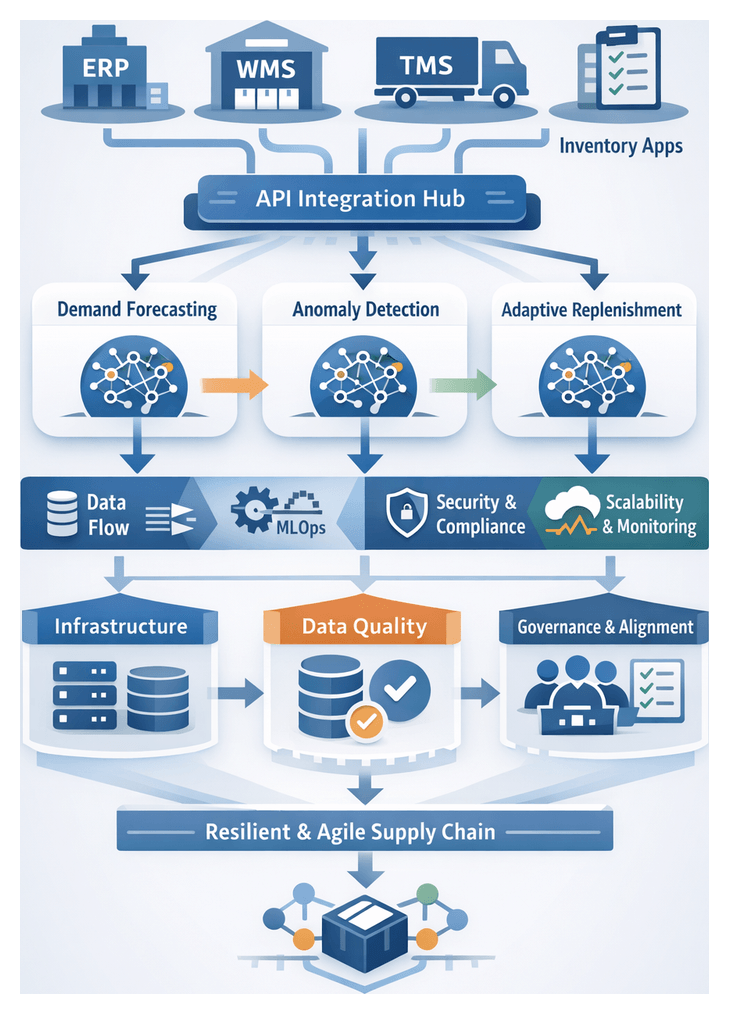
Enterprise System Landscape and Integration Drivers
Global supply chains operate on a tapestry of enterprise resource planning platforms, warehouse management systems, transportation management solutions, and specialized inventory applications. These systems underpin procurement, production planning, order fulfillment, and logistics execution, yet often reflect a heterogeneous architecture of mergers, phased upgrades, regional customizations, and legacy on-premise deployments. As e-commerce growth intensifies demand volatility and customer expectations for rapid fulfillment, organizations seek to infuse AI agents capable of continuous demand forecasting, real-time anomaly detection, and adaptive replenishment into their existing environments. By integrating intelligent agents without discarding core investments, companies can pursue resilience and agility while maintaining stability, compliance, and performance across ERP and warehouse management frameworks.
Technical Architecture for AI Agent Integration
API Orchestration and Interface Standardization
Rather than creating point-to-point connections, leading organizations adopt an intermediary integration layer to harmonize interfaces, transform payloads, enforce versioning, and embed governance rules. Platforms such as MuleSoft and Boomi enable unified service endpoints across ERP, WMS, CRM, and third-party applications. This strategic API orchestration reduces schema mismatches, simplifies connector maintenance, and allows AI agents to invoke a standardized set of services for data retrieval and action execution.
Data Flow Design and Latency Management
Timely decision making requires balancing batch processing and real-time streaming. Batch pipelines handle large volumes of transactions but introduce latency, while event-driven architectures using technologies like Apache Kafka enable near-instantaneous transmission of order, shipment, and inventory events. A hybrid approach reserves streaming feeds for critical signals and scheduled batch jobs for less time-sensitive data, ensuring downstream systems remain performant and consistent even under high event volumes.
Model Operationalization and MLOps
Operationalizing machine learning models demands production-grade frameworks to version, deploy, monitor, and retrain inference services. Open-source solutions such as Kubeflow and MLflow, alongside managed pipelines offered by cloud providers, automate continuous integration and continuous deployment of models. AI agents access inference endpoints to generate restocking recommendations and demand anomaly alerts. Feedback loops that detect drift, log mispredictions, and trigger retraining pipelines are essential to sustain model accuracy and business impact.
Security, Compliance, and Governance
Inventory data often contains sensitive partner agreements, pricing schedules, and customer histories. Integration architects enforce end-to-end encryption, role-based access controls, and audit trails to safeguard data across on-premise and cloud environments. Identity-aware proxies, token-based authentication frameworks such as OAuth2 and JWT, and governance tools from providers like Informatica ensure that AI agents operate within defined security perimeters and comply with regulations such as GDPR and CCPA.
Scalability, Resilience, and Observability
AI-driven workloads exhibit peaks during promotions, seasonal surges, and supply disruptions. Elastic compute and storage resources—provisioned through cloud platforms like Microsoft Azure and Amazon Web Services—allow auto-scaling of model serving clusters. Containerization strategies, orchestration frameworks, and circuit breaker patterns ensure resilience, while observability platforms monitor latency distributions, error rates, and resource utilization. Failover mechanisms enable AI agents to degrade gracefully or switch to fallback modes when downstream systems are unavailable, preserving core operational continuity.
Organizational Readiness and Governance
Cross-Functional Alignment and Decision Rights
Successful AI integration hinges on cross-functional collaboration among supply chain planners, IT architects, data scientists, compliance officers, and executive sponsors. A steering committee or Center of Excellence establishes integration standards, performance metrics, and accountability frameworks. RACI matrices delineate roles for pipeline maintenance, model performance oversight, and operational authority, ensuring that AI agent recommendations are trusted, actionable, and aligned with strategic objectives such as inventory turnover and fill rate improvement.
Skills, Change Management, and Cultural Readiness
Integrating AI agents requires specialized skills in API design, event streaming, data engineering, MLOps, and change management. Organizations bridge capability gaps through targeted training programs, partnerships with system integrators, and “train-the-trainer” initiatives. Rigorous change management frameworks, informed by models such as the Technology Acceptance Model, address stakeholder concerns, communicate benefits, and pilot AI workflows in controlled settings. By positioning AI agents as partners rather than replacements, companies foster a culture of data-driven decision making and mitigate resistance.
Vendor and Partner Ecosystem Dynamics
Enterprises assemble ecosystems of ERP, WMS, integration middleware, cloud platforms, and AI specialists. Strategic selections—such as standardizing on Oracle for core ERP, engaging SAP for warehouse management, and leveraging niche tools like DataRobot for automated data quality controls—balance ecosystem coherence with domain innovation. Collaborative partnership models, including co-innovation workshops and joint governance boards, align roadmaps, prevent version mismatches, and ensure rapid issue resolution as integration complexity scales.
Infrastructure Flexibility and Data Management at Scale
Elastic Compute and Containerization
Supporting growth in data volume and agent concurrency requires infrastructure platforms that auto-scale compute clusters and decouple data stores. Modular architectures leverage cloud services from Azure and AWS, while containerization frameworks like Kubeflow and MLflow enable independent deployment, updates, and rollbacks of AI agent services. Without elasticity and isolation, enterprises risk latency spikes, outage risk, and degraded decision speeds at peak loads.
Master Data Consistency and Quality Controls
Master data inconsistencies—duplicate SKUs, misaligned location identifiers, or conflicting supplier records—undermine AI agent decisions. Enterprises establish single sources of truth, enforce consistent naming conventions, and implement automated validation rules. Solutions like DataRobot assist by detecting drift in feature distributions, while metadata catalogs document source systems, refresh cadences, and data quality metrics. Versioned data pipelines with rollback capabilities preserve lineage and enable forensic analysis when anomalies arise.
Security, Privacy, and Regulatory Compliance
- Role-based access controls and least-privilege principles restrict AI agents’ reach to sensitive financial or contractual data.
- TLS encryption for API communications and field-level encryption at rest prevent unauthorized exposure.
- Comprehensive audit logs capture agent inputs, model versions, and decision outputs for regulatory audits and incident investigations.
- Geo-fencing controls ensure compliance with data sovereignty regulations across jurisdictions.
Continuous Monitoring, Maintenance, and Risk Mitigation
Performance Monitoring and Model Drift Detection
Key performance indicators—forecast error rates, fill rates, decision latency—inform service-level objectives for AI agents. Automated monitoring alerts detect deviations, triggering retraining pipelines when drift is observed. Shadow deployments run new model versions in parallel to compare performance before full roll-out, reducing risk of degradation and preserving accuracy across multi-tier networks.
Limitations and Mitigation Strategies
- Data availability gaps from remote sites: mitigate via hybrid batch-stream architectures that default to safe thresholds when real-time feeds lag.
- Model overfitting on narrow SKU segments: ensure representative training data and segment-specific retraining cycles.
- Cloud cost management: conduct total cost of ownership analyses and consider on-premises GPU clusters for sustained high-volume workloads.
- Cultural inertia: sustain executive sponsorship, demonstrate measurable ROI, and embed transparent governance to foster continued adoption.
Key Implementation Principles
- Modular, event-driven service architecture to minimize coupling and support iterative enhancements.
- Centralized orchestration for interface standardization, security policies, and version control.
- Explainable AI features and comprehensive logging to build stakeholder trust and meet compliance demands.
- Feedback loops for outcome tracking—stockouts avoided, carrying cost savings—that drive continuous model improvement.
By uniting robust technical frameworks, scalable infrastructure, data governance, and organizational alignment, enterprises can integrate AI agents seamlessly into their supply chain ecosystems. This holistic approach transforms reactive inventory processes into proactive, intelligent stocking strategies, delivering sustained resilience, cost efficiency, and competitive advantage.
Chapter 7: Real-Time Analytics and Autonomous Replenishment
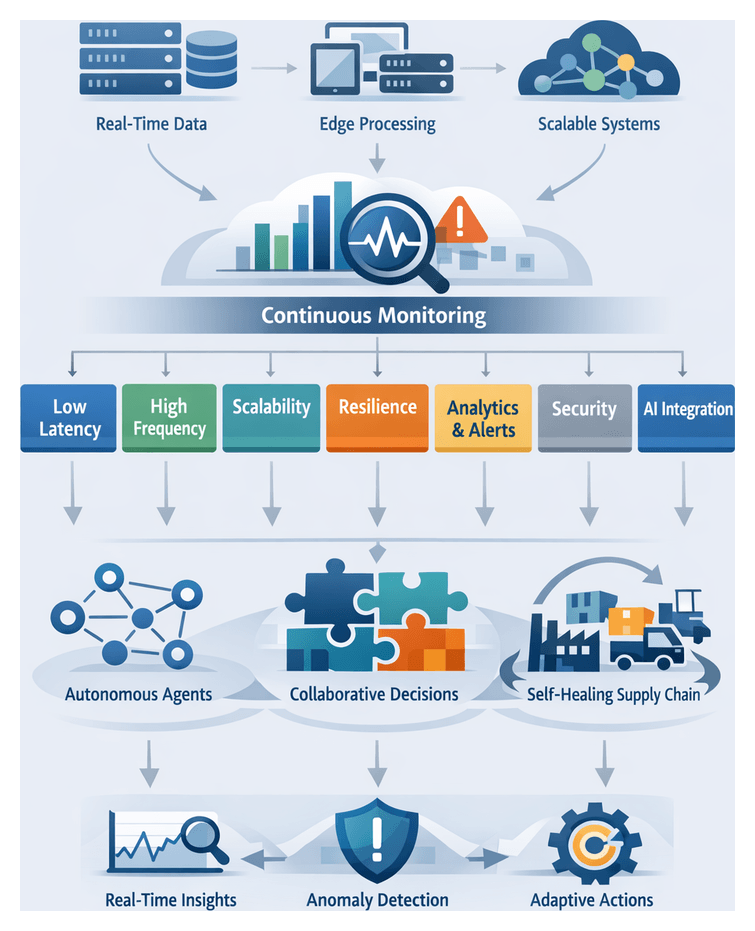
Core Principles of Continuous Monitoring
Continuous monitoring has redefined inventory management by replacing periodic snapshots with real-time data streams. This approach delivers immediate visibility into stock levels, demand signals and supply disruptions, forming the sensory layer for autonomous replenishment and self-healing supply chains. Effective continuous monitoring rests on seven core principles that ensure reliability, accuracy and agility in dynamic environments.
1. Low-Latency Data Ingestion and Processing
Real-time insights require ingesting high-volume event streams with minimal delay. Key enablers include:
- Event-Driven Architectures using platforms such as Apache Kafka and AWS Kinesis.
- Edge Processing that filters, aggregates or anonymizes IoT sensor data close to its source.
- In-Memory Computing to process events instantly, bypassing disk I/O bottlenecks.
2. High-Frequency Sampling and Data Fidelity
Capturing granular changes demands frequent updates and robust quality controls:
- Sampling Intervals tuned in seconds or minutes based on product velocity.
- Real-time Validation Rules to detect missing fields, timestamp discrepancies and sensor drift.
- Synchronization Mechanisms that align timestamps across disparate sources.
3. Scalability and Elasticity
Monitoring platforms must scale seamlessly to accommodate promotional peaks and seasonal surges. Design patterns include:
- Microservices and Containerization orchestrated via Kubernetes.
- Auto-Scaling Policies that provision compute and I/O resources on demand.
- Serverless Streaming Services that abstract infrastructure, letting teams focus on analytics logic.
4. Fault Tolerance and Resilience
Systems under constant load must withstand failures without data loss. Resilience techniques include:
- Redundant Data Paths with failover to alternate ingestion routes.
- Checkpointing and Replay to persist stream offsets and recover missed events.
- Graceful Degradation that preserves core monitoring functions under partial outages.
5. Real-Time Analytics and Anomaly Detection
Embedding analytics engines into live streams transforms data into actionable intelligence:
- Streaming Analytics with platforms such as Apache Flink and Azure Stream Analytics.
- Unsupervised Learning Models to identify outliers in inventory movement and lead times.
- Dynamic Threshold and Alerting Systems that trigger notifications or replenishment actions when breached.
6. Governance, Security and Compliance
Continuous monitoring touches sensitive commercial data and must adhere to corporate policies and regulations:
- Role-Based Access Controls and encrypted channels for data streams.
- Data Retention Policies balancing traceability with storage costs and privacy laws.
- Audit Trails capturing metadata on ingestion, transformation and consumption.
7. Integration with AI Agents and Autonomous Workflows
Seamless integration with intelligent agents closes the automation loop:
- API-First Design exposing real-time metrics and alerts to agents.
- Event Brokers publishing normalized topics for multi-agent subscriptions.
- Feedback Loops that feed agent actions back into monitoring pipelines for continuous learning.
Analytical View on Autonomous Collaboration
Autonomous collaboration positions AI agents as nodes in a distributed decision network. Evaluating agent interactions involves communication frameworks, conflict resolution mechanisms, transparency layers and governance models.
Agent Communication Frameworks
Effective collaboration begins with well-defined protocols drawn from multi-agent systems research:
- Blackboard Architectures using a shared data repository with strict governance.
- Message-Passing Protocols for real-time negotiation via structured event streams.
- Broker-Mediated Coordination with an orchestration layer managing registrations and topic subscriptions.
Conflict Resolution and Consensus Building
Agents must reconcile competing recommendations through interpretive frameworks:
- Nash Equilibrium Models where agents iteratively adjust proposals for mutual optimality.
- Voting and Preference Aggregation using weighted confidence scores.
- Rule-Based Overrides enforcing domain policies in high-risk scenarios.
Trust and Transparency Mechanisms
Cultivating trust requires visibility into agent decisions:
- Explainable AI Interfaces powered by platforms such as ExplainX Pro.
- Provenance Trackers logging data lineage, model versions and parameter changes.
- Peer Review Processes benchmarking interim proposals against human-validated forecasts.
Performance Metrics and Evaluation
Quantitative assessment spans coordination efficiency, decision quality, robustness under disturbance and scalability. Benchmarks from Blue Yonder show hybrid broker-mediated and message-passing protocols can maintain sub-200 ms coordination latency at scale.
Scalability and Network Effects
The value of agent networks grows with nodes, following adaptations of Metcalfe’s Law. Modular ecosystems of specialized agents—such as Kinaxis RapidResponse—require robust interoperability standards to avoid integration friction.
Governance and Ethical Considerations
Embedding corporate policies and regulatory mandates into agent logic is critical. Governance layers include:
- Policy Embedding aligning decisions with inventory and environmental rules.
- Escalation Protocols for human approval when combined risk scores exceed thresholds.
- Continuous Audit Cycles reviewing collaboration logs for bias and unintended risks.
Interpretive Frameworks and Organizational Alignment
Practitioners employ hybrid simulation, behavioral economics and adaptive learning to refine collaboration. Success depends on cultural literacy in AI, cross-functional governance bodies and vendor ecosystem management to oversee SLAs on data sharing and protocol changes.
Use Cases for Self-Healing Supply Chains
Self-healing supply chains detect anomalies, diagnose root causes and initiate corrective actions without human intervention. Representative use contexts include:
Demand Surge Response in E-Commerce
Real-time clickstream and POS feeds calibrate allocations across fulfillment centers. Continuous learning algorithms adjust forecasts and trigger order releases within seconds of anomaly detection to prevent stockouts and control freight costs.
Supplier Failure Mitigation
Shipment acknowledgments, port congestion metrics and financial health scores feed resilience engines that reroute demand to alternative sources based on lead-time elasticity and cost impact.
Perishable Goods Management
IoT temperature sensors and GPS trackers feed anomaly models that flag spoilage risks. Intelligent agents recalculate routes, adjust safety stocks and expedite replenishment to reduce waste and ensure compliance.
Automotive Assembly Continuity
Factory floor data and dispatch signals inform just-in-sequence replenishment. Autonomous systems reallocate inventory from buffers or invoke alternate suppliers to prevent downtime.
Omnichannel Retail Fulfillment
Unified analytics of in-store and online sales balance allocations between channels. Cross-dock modeling and multi-echelon optimization inform automated rebalancing to enhance service and reduce markdowns.
Global Multi-Tier Network Adaptation
Digital twins and network flow analysis detect cascading delays. Self-healing agents replan shipments and revise availability across tiers to align supply with demand realities.
High-Tech Manufacturing Innovation
Real-time tracking of fab output and aftermarket demand drives dynamic adjustments. When design changes render inventory obsolete, agents trigger rework or reallocation to minimize exposure.
Regulatory Compliance and Traceability
Event monitoring of batch numbers, test results and chain-of-custody records enables quarantine, recall initiation and replenishment adjustments, supporting risk-based thinking and failure mode analysis.
Crisis and Disaster Response
Public alerts, network statuses and demand surges for essentials feed stress-testing frameworks. Agents preemptively redirect stock, activate alternate routes and adjust buffers to sustain critical services.
Sustainable and Circular Supply Chains
Real-time data on material flows, emissions and returns guide self-healing agents to minimize waste and support reverse logistics, reinforcing circular economy objectives.
Key Considerations for Deployment
- Architectural Scalability and Resilience: Define latency and throughput SLAs, employ event sourcing, partitioned streams and circuit breakers.
- Data Governance and Quality Assurance: Standardize master data, enforce lineage and audit capabilities.
- Policy Frameworks and Ethical Constraints: Embed corporate and environmental rules as hard or soft decision constraints.
- Cross-Functional Collaboration: Align supply chain, IT, finance and legal through steering committees and workshops.
- Change Management and Skills Development: Reskill planners on real-time dashboards, agent logic and exception handling.
- Observability and Performance Monitoring: Instrument pipelines, inference engines and execution modules; track latency, success rates and fill-rate improvements.
- Integration Roadmap and Technical Debt Management: Phase API integrations, refactor middleware and retire obsolete silos.
- Regulatory and Security Considerations: Enforce encryption, tokenization and role-based access; conduct regular audits.
Limitations and Potential Risks
- Model Overfitting: AI agents excel probabilistically but cannot eliminate all uncertainty; manage expectations.
- Data Drift: Continuous validation and retraining pipelines are essential to maintain forecasting accuracy.
- Operational Complexity: Streaming platforms and brokers introduce maintenance overhead and new failure points.
- Network Oscillations: Decentralized orders can overwhelm upstream nodes; implement coordination protocols and throttling.
- Regulatory Uncertainty: Algorithmic accountability rules may require disclosure and extensive logging.
- Financial Trade-Offs: Increased order frequency can raise transportation costs; evaluate total landed cost holistically.
- Infrastructure Dependency: Contingency plans must revert to periodic reviews during outages.
- Human-Machine Tensions: Clear escalation protocols ensure human interventions are timely and informed.
Strategic Guidance and Future Directions
- Center of Excellence: Establish a cross-disciplinary team to codify best practices, oversee pilots and scale successes.
- Pilot Strategic Use Cases: Focus on high-variability categories to validate technology stacks and quantify uplifts.
- Continuous Learning Loops: Embed feedback ingestion to refine policies and drive ongoing enhancements.
- Balance Autonomy and Oversight: Automate routine actions while routing high-impact or low-confidence cases to human review.
- Align Incentives: Integrate real-time metrics into scorecards that reward collaboration and data-driven outcomes.
- Invest in Observability Platforms: Adopt solutions for log aggregation, distributed tracing and real-time alerting.
- Plan for Evolution: Roadmaps should anticipate edge analytics, causal AI and federated ecosystems to keep foundational investments future-proof.
Evolution and Next Steps
Emerging trends will further advance autonomous replenishment:
Digital Twin Integration: Parallel scenario testing against live operations to validate strategies and enhance resilience planning.
Decentralized Intelligence and Federated Learning: Local model training with privacy-preserving aggregation to balance data sovereignty and collective insights.
Causal Inference and Explainable AI: Distinguishing causation from correlation to improve decision robustness and transparency.
Collaborative Multi-Enterprise Networks: Shared data fabrics and standardized protocols enabling joint replenishment ecosystems across suppliers and partners.
Chapter 8: Risk Management and Inventory Resilience
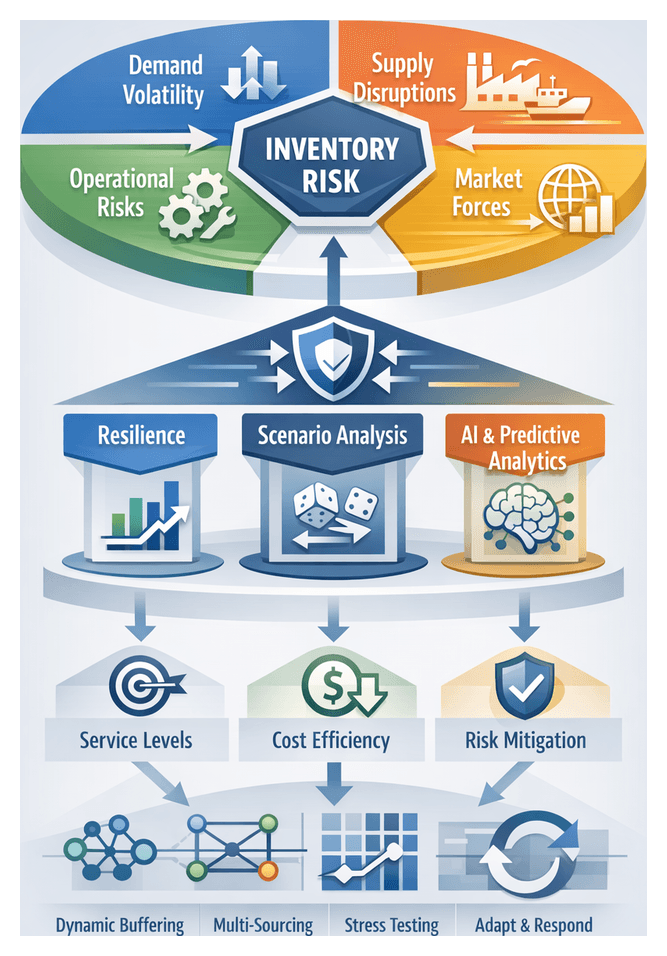
Foundational Concepts in Inventory Risk
Global supply chains face constant uncertainty driven by shifting customer preferences, geopolitical events and market volatility. Inventory risk can be decomposed into four interrelated vectors—demand volatility, supply disruptions, operational risks and external market forces—that collectively determine service levels, working capital requirements and competitive resilience.
- Demand Volatility: Unpredictable fluctuations in orders measured by coefficient of variation, skewness and autocorrelation, which influence both stockout probability and excess inventory carrying costs.
- Supply Disruptions: Interruptions from supplier failures, logistics bottlenecks or geopolitical shocks that amplify delays in just-in-time networks.
- Operational Risks: Internal breakdowns such as equipment failures, labor shortages or system outages that stall inbound receiving, replenishment and fulfillment.
- External Market Forces: Macroeconomic trends, regulatory changes, currency movements and competitive actions that indirectly shift optimal inventory positions.
Unchecked inventory risk can erode customer trust, inflate expedited freight expenses and tie up capital in slow-moving stock. A structured risk framework enables organizations to quantify potential impacts, balance service-level targets against cost, and prioritize resilience investments where they deliver the highest risk-adjusted return.
Resilience in inventory management entails absorption capacity, adaptation agility and rapid recovery. Safety stock remains important, but dynamic reallocation across tiers, multi-sourcing flexibility and real-time scenario activation transform buffer strategies from static calculations into continuous optimization under uncertainty.
Artificial intelligence and predictive analytics elevate traditional risk management by ingesting historical demand, supplier performance, anomaly alerts and external data feeds. Machine learning models generate probabilistic forecasts, while intelligent agents monitor risk indicators—port delays, currency swings—and trigger scenario simulations. These systems continuously recalibrate safety-stock levels and replenishment triggers to optimize service levels and capital efficiency.
Analytical Scenario Analysis
Scenario analysis provides a strategic lens to evaluate inventory resilience across a spectrum of plausible futures. Rather than relying on point forecasts, organizations define scenarios—from baseline demand variability to extreme supplier insolvency or global logistics breakdown—and map inventory positions, lead times and service targets against each.
Demand shock scenarios simulate abrupt order ramp-ups or collapses based on historical extremes and synthetic spike patterns. Key interpretive questions include which product families are most sensitive to ramp-up speed, how replenishment frequency affects stockouts, and the trade-off between emergency shipments and higher pre-shock buffers. Dynamic safety-stock policies and dual-sourcing strategies emerge from comparing buffer sufficiency across shock magnitudes.
Stress-testing safety stock exposes inventory rules to simultaneous variations in lead times, forecast errors and target fill-rates. By constructing multi-dimensional stress matrices, practitioners calculate service levels, stockout frequencies and penalty costs, revealing nonlinear interactions—such as marginal lead-time increases disproportionately eroding marginal buffers. Iterative refinement of scenario parameters ensures continuous resilience assessment rather than a one-off exercise.
Probabilistic modeling through Monte Carlo simulation generates thousands of demand and supply trajectories. Tail-risk metrics—Value at Risk (VaR) or Conditional VaR—quantify the likelihood and impact of extreme deficits, justifying investments in expedited replenishment or strategic pre-positioning. For example, a 95th-percentile shortage estimate may show that traditional safety stock covers only half of extreme surges, prompting adoption of probabilistic safety-stock formulas.
Digital twin simulations replicate end-to-end networks with platforms such as AnyLogistix and Llamasoft. Analysts inject disruptions—factory shutdowns, port congestion, labor strikes—and observe real-time impacts on inventory and service levels. This what-if experimentation at scale informs dynamic replenishment strategies and buffer reallocations before capital commitments.
War-gaming brings cross-functional teams together to role-play stakeholders—suppliers, carriers, customers—and negotiate inventory allocations under stress. By simulating workflows and decision thresholds, participants uncover operational blind spots and validate governance structures. Incorporating live supplier risk scores from Resilinc enriches war-games with real-time constraints and enhances organizational alignment.
Structured interpretive frameworks translate scenario outputs into actionable insights: risk matrices to prioritize responses, bow-tie diagrams to map controls and recovery measures, control-tower dashboards for real-time monitoring, and heat maps highlighting high-exposure nodes. Embedding scenario analysis into Sales and Operations Planning (S&OP) processes ensures continuous recalibration to emerging risks.
Resilience-Oriented Inventory Strategies
Resilience shifts inventory management from reactive replenishment to proactive orchestration of adaptive buffers. Predictive stocking powered by AI agents shapes quantities, safety thresholds and real-time adjustments in response to emerging risk signals. Governance standards such as ISO 31000 and resilience engineering principles guide the identification, assessment and treatment of exposures across interconnected networks.
Coordinated multi-echelon buffering considers shared risk pools and node criticality rather than isolated warehouse calculations. AI-driven scenario reveal where reallocating stock reduces overall vulnerability most effectively. Scenario-based playbooks, informed by probabilistic simulations and integrated risk registers in IBM Supply Chain Insights, define trigger points for rapid buffer deployment or expedited procurement.
Network-level resilience strategies evaluate the marginal benefit of adding secondary suppliers, cross-dock facilities or alternate routes against cost premiums. Cross-functional governance ensures that operations goals, financial imperatives and enterprise risk priorities align around a unified resilience scorecard. Predictive analytics transform buffer decisions into measurable components of the enterprise risk posture, enabling transparent reporting to boards and regulators.
Financial trade-offs between carrying costs and disruption avoidance are quantified through cost-benefit matrices and risk-adjusted service-cost curves. Predictive models forecast scenario likelihoods and impacts over time, framing resilience investments as portfolio decisions that balance mitigation returns against capital efficiency.
Organizational culture and change management underpin sustained resilience. AI-derived buffers must be contextualized through training, transparent dashboards and executive forums using solutions like Blue Yonder Luminate. Regular resilience reviews drive rapid decision cycles, while continuous learning loops from post-event analyses refine models and governance protocols.
Technology integration demands scalable, event-driven architectures connecting AI engines with ERP, TMS and control towers. Real-time data feeds from IoT sensors and shipping APIs maintain model accuracy and latency thresholds. Industry-specific constraints—cold-chain requirements in pharmaceuticals enabled by IBM Watson Supply Chain, SKU proliferation in retail managed via SAP Integrated Business Planning, or federated learning for automotive suppliers—require tailored resilience frameworks.
Emerging risks—climate events, trade tensions, cyber threats—are incorporated through external data sources such as satellite imagery, social media sentiment and customs declarations. Early-warning signals inform buffer adjustments and supplier rerouting before disruptions materialize.
Strategic Insights and Analytical Frameworks
- Dynamic Buffering: Continuous recalibration of safety stock in response to real-time signals minimizes stockouts and carrying costs.
- Multi-Echelon Visibility: End-to-end transparency ensures inventory decisions reflect upstream and downstream variability.
- Agent Collaboration Protocols: Contract-net frameworks and multi-agent reinforcement learning establish hierarchies, conflict resolution rules and asynchronous communication.
- Scenario-Driven Risk Mitigation: AI-powered stress-testing and probabilistic modeling align buffer strategies with defined risk appetites.
- Cross-Functional Alignment: Shared metrics and governance models foster accountability across procurement, finance, operations and sales.
Key analytical tools translate AI outputs into actionable metrics for diverse stakeholders:
- Demand Variability Index: Composite of coefficient of variation, forecast error trends and external volatility indicators for SKU prioritization.
- Resilience Scorecard: Integrated measure of risk exposure, recovery speed and absorption capacity mapped to network nodes.
- Lead Time Probability Distribution Analysis through parametric and non-parametric models to underpin adaptive reorder policies.
- Agent Performance Dashboards visualizing decision accuracy, latency and conflict resolution outcomes for continuous governance.
- Cost-Service Trade-Off Curves illustrating marginal service improvements against incremental inventory investments.
Industry Perspectives
- Consumer Electronics: Samsung and Apple leverage Blue Yonder Luminate for multi-tier forecasting and automated replenishment under rapid obsolescence.
- Pharmaceuticals: Conservative buffers meet regulatory demands as AI agents conduct probabilistic scenarios and supplier risk clustering via IBM Watson Supply Chain.
- FMCG: Leaders integrate point-of-sale data into AWS Forecast for hourly stocking adjustments during promotions and seasonal spikes.
- Automotive: Toyota and Volkswagen pilot federated learning models to preserve supplier data privacy while coordinating multi-tier parts sourcing.
- Apparel and Retail: Retailers use SAP Integrated Business Planning to allocate inventory dynamically based on AI-driven sell-through and markdown optimization.
Critical Considerations and Limitations
- Data Quality Dependencies: AI models replicate biases in historical data, requiring ongoing validation and enrichment.
- Model Interpretability: Explainable AI techniques are essential to maintain stakeholder trust and accountability.
- Change Management Overhead: Training and governance frameworks are necessary to integrate AI agents without cultural resistance.
- Scalability Constraints: Real-time architectures demand robust compute, low-latency networks and container orchestration.
- Regulatory and Ethical Boundaries: Governance must define permissible data sources, usage policies and auditing mechanisms.
- Overfitting and Adaptation Lag: Regular retraining and feedback loops mitigate, but cannot eliminate, model drift when novel disruptions occur.
Chapter 9: Implementation Challenges and Best Practices
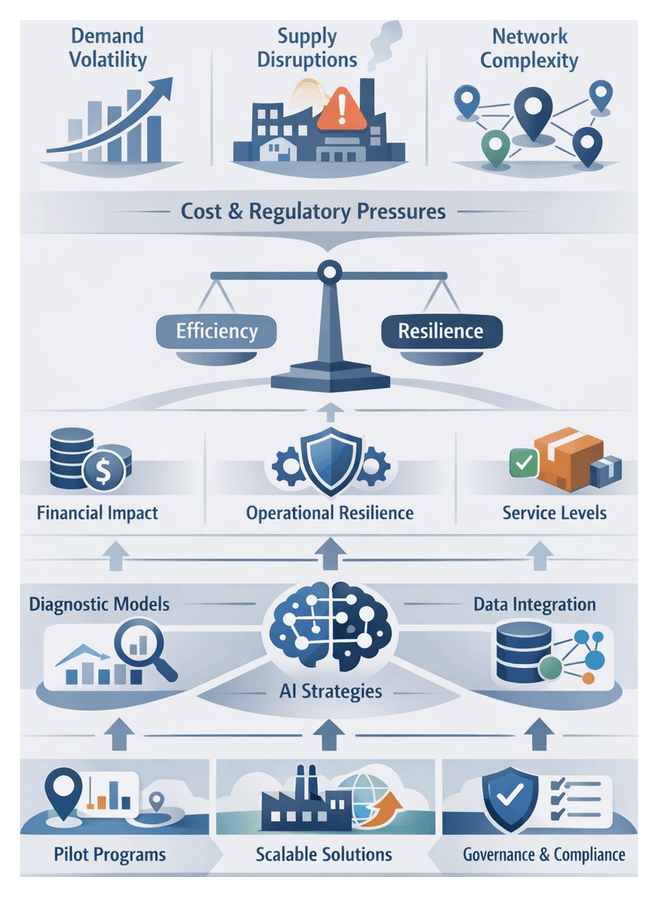
Modern Inventory Challenges in Global Supply Chains
Global supply chains today face unprecedented complexity. Expansion into new markets, fragmented supplier bases, and rising customer expectations have stretched traditional inventory practices to their limits. Organizations navigate frequent demand shocks, unpredictable lead times, and operational risks driven by geopolitical shifts, natural disasters, and regulatory changes. Maintaining optimal inventory levels has become both a strategic imperative and a formidable challenge.
At the core lies the tension between efficiency and resilience. Lean strategies that minimize carrying costs can expose companies to stockouts when disruptions occur. Conversely, excessive buffers erode margins and trap working capital. As networks extend across multiple tiers and regions, visibility diminishes and decision cycles lengthen, complicating the balance of service levels against cost pressures. Legacy reorder-point systems and static safety-stock formulas struggle in this dynamic environment.
Core Drivers
- Demand Volatility: Rapid market shifts, digital channels, seasonal spikes, promotions, and competitive pricing increase forecast errors at the SKU level.
- Supply Disruptions: Natural disasters, geopolitical tensions, and supplier insolvencies introduce variability in lead times and fill rates, triggering downstream shortages.
- Network Complexity: Multi-echelon chains with dispersed manufacturing sites and distribution centers hinder accurate demand sensing and timely replenishment.
- Cost Constraints: Rising transportation, warehousing, and raw-material expenses force tight optimization of inventory investment.
- Regulatory Dynamics: Tariffs, import/export restrictions, and compliance requirements add planning complexity beyond the reach of standard policies.
Strategic Imperatives
Inventory control influences working capital, cash flow, and profitability while shaping responsiveness to market shifts. In an era of same-day or next-day delivery expectations, stockouts result in lost sales and reputational damage. Excess inventory ties up capital and raises obsolescence risk, particularly in high-innovation industries.
Financial Impact
Inventory is often one of the largest balance-sheet items. Carrying costs—including capital, storage, insurance, and obsolescence—can reach 20–30 percent of inventory value annually. Small improvements in turnover rates free significant capital for reinvestment or debt reduction.
Operational Resilience
Adaptive safety-stock policies and dynamic buffers serve as shock absorbers against demand surges and supply interruptions, reducing expedited shipping and emergency procurement costs.
Competitive Differentiation
High fill rates and rapid fulfillment support brand loyalty and sustainable practices by minimizing waste, returns, and supporting circular-economy initiatives.
Analytical Frameworks for AI-Driven Inventory Readiness
Diagnostic Models
Structured frameworks assess organizational readiness across dimensions such as data governance, technical infrastructure, talent competency, and executive sponsorship. An AI Maturity Index assigns quantitative scores to identify capability gaps. The Technology Adoption Curve maps teams as innovators, early adopters, or laggards, guiding pilot site selection for early ROI demonstration.
Prioritization and Roadmapping
A two-by-two matrix contrasting expected business impact against implementation complexity helps prioritize initiatives. Quick wins, such as integrating Amazon SageMaker for demand forecasting, can yield significant accuracy improvements if APIs and data pipelines exist. High-impact, high-complexity projects—like global multi-agent coordination—require sensitivity analyses and probabilistic scenario planning to set realistic timelines and risk bounds.
Cross-Functional Alignment
Successful AI-driven inventory programs rely on governance forums that include supply chain planning, IT, data science, finance, and operations. A RACI matrix defines roles for each project phase, while a Stakeholder Influence–Interest Grid maps engagement strategies. High-influence sponsors such as Heads of Operations and Chief Data Officers drive resource allocation and decision rights.
Data Integration and Technical Architecture
Data silos impede AI adoption. A Data Landscape Assessment catalogs sources, owners, refresh frequencies, and quality metrics. Data lineage maps visualize dependencies. An Integration Maturity Scale determines whether batch ETL suffices or real-time streaming is needed—for example, streaming supplier lead-time data for anomaly detection. A System Capability Audit measures API readiness, throughput limits, and latency, informing choices between refactoring, microservices, or cloud migration to platforms like Microsoft Azure Machine Learning.
Change Management and Metrics
Organizational culture is pivotal. The ADKAR model (Awareness, Desire, Knowledge, Ability, Reinforcement) gauges human readiness. Surveys and focus groups uncover fears about AI replacing roles. Communication strategies tied to metrics—employee confidence, adoption rates of AI dashboards—provide real-time feedback. A balanced scorecard aligns data pipeline uptime, model training cycle time, and user engagement with service-level improvements, carrying-cost reductions, and expedited-freight decreases, often visualized through dashboards in IBM Watson Studio. Continuous PDCA cycles refine predictive stocking algorithms based on root-cause analyses of regional performance variances.
Scaling AI Agents and Predictive Stocking Across Contexts
Contextual Framework
Scaling involves strategic mapping of organizational maturity, technical infrastructure, and domain complexity. This three-dimensional approach tailors scaling strategies to current capabilities and long-term goals.
Pilot Environments
Pilots validate models, refine agent behaviors, and establish benchmarks. SKU velocity, location variability, and seasonality inform pilot design. Metrics include forecast error distribution, manual override frequency, and exception-resolution time. Providers like Blue Yonder co-design scenarios to reflect demand spikes and supply disruptions for transferable insights.
Multi-Location and Industry-Specific Rollouts
Expansion across regions demands context-aware approaches. Network topology, regulatory requirements, and supplier reliability vary by location. Global electronics vendors integrate Amazon Forecast engines for baseline forecasts, with local agents adjusting in real time for holidays, promotions, and geopolitical events. In pharmaceuticals, cold-chain constraints and expiration dates require integration with temperature monitoring and decay-curve analytics. Automotive just-in-sequence inventory demands real-time ERP collaboration rather than periodic batch forecasts.
Regulatory and Governance Contexts
Regulated industries face data sovereignty, audit-trail, and reporting obligations. Organic food suppliers need end-to-end traceability, while chemical manufacturers must maintain minimum stock levels for hazardous materials. Governance models designate compliance officers as key stakeholders to ensure AI agents respect regulatory thresholds. Federated models balance central guardrails on data security and ethics with local execution autonomy, while centralized Centers of Excellence standardize methodologies and infrastructure.
Scaling Criteria and Real-World Examples
- Forecast Accuracy Stability: Consistent mean absolute percentage error (MAPE) across demand scenarios.
- Operational Adoption Rates: Percentage of replenishment decisions autonomously initiated or approved by agents.
- ROI Benchmarks: Validated cost reductions and service-level gains through controlled experiments.
- Data Integration Robustness: Seamless exchange of master data, transactions, and real-time sensor feeds.
- Governance Compliance: Audit logs and model validation reports demonstrating adherence to policies.
- Global Apparel Retailer: Expanded predictive stocking across 150 stores with Blue Yonder, combining centralized oversight and local merchandising tuning.
- Automotive Tier-1 Supplier: Scaled autonomous agents to four global plants using a federated data mesh, syncing agents with just-in-sequence assembly lines.
- Healthcare Distributors: Deployed Amazon Forecast to predict demand for implants and reagents, integrating temperature-controlled supply data and compliance metadata under a central CoE.
Governance, Integration, and Continuous Improvement
Key Themes and Structures
- Strategic Alignment: Anchor AI initiatives to measurable outcomes—forecast accuracy, reduced working capital, improved service levels, enhanced resilience.
- Rigorous Governance: Establish steering committees, data and model councils, and change management charters to define decision rights, validation protocols, and communication plans.
- Modular, API-First Architectures: Partition forecasting, optimization, and alerting into microservices to enable incremental deployment and avoid vendor lock-in.
Data Quality and Model Oversight
- Data Lineage Tracking: Capture provenance from ERP transactions to external market indicators for transparent root-cause analysis.
- Bias and Fairness Audits: Detect skew that could privilege certain products or regions, preventing systematic overstocking.
- Model Drift Monitoring: Use platforms like Amazon Forecast and TensorFlow Extended to flag input distribution shifts or performance degradation.
- Retraining Cadence: Schedule retraining to incorporate seasonal trends, promotions, and supply disruptions while balancing stability and responsiveness.
Performance Management
- Balanced Scorecards: Combine forecast accuracy (MAPE, RMSE) with business impact indicators (inventory turns, fill rates, carrying-cost reduction).
- Real-Time Dashboards: Empower planners to monitor exceptions, drill into variances, and trigger investigative workflows.
- Root-Cause Analysis Protocols: Establish procedures for investigating significant errors or stockouts, documenting refinements to models and data sources.
- Stakeholder Feedback Loops: Regular forums for planners, procurement, and sales leadership to inform scenario modeling and prioritize enhancements.
Risk Management and Ethical Considerations
- Transparency Mandates: Document model architectures, feature importance, and decision logic to foster trust and support audits.
- Fail-Safe Mechanisms: Revert to conservative rules or human supervision during severe data disruptions or external shocks.
- Ethical Guidelines: Guard against discriminatory allocations, ensuring equitable service across all segments.
- Regulatory Compliance: Align practices with frameworks such as the EU AI Act and industry-specific regulations in healthcare, automotive, and aerospace.
Addressing Key Limitations
- Forecasting under extreme volatility remains uncertain; scenario simulations and contingency buffers improve preparedness but cannot eliminate all risk.
- Data fragmentation in multi-tier networks may constrain visibility despite advanced integration middleware.
- Skills shortages in data science and AI supply-chain teams can impede scaling; in-house expertise or consulting partnerships are essential.
- Cultural resistance to algorithmic decision-making may slow adoption; transparent governance and pilot success stories help build trust.
- Maintenance overhead for AI ecosystems—model monitoring, data- pipeline upkeep, software versioning—must be factored into total cost of ownership.
By treating AI as an evolving capability, anchoring every decision to business objectives, and fostering transparency in data and model governance, organizations can build intelligent inventory systems that forecast more accurately, adapt resiliently to uncertainty, and deliver sustained competitive advantage.
Chapter 10: Future Trends and Emerging Technologies
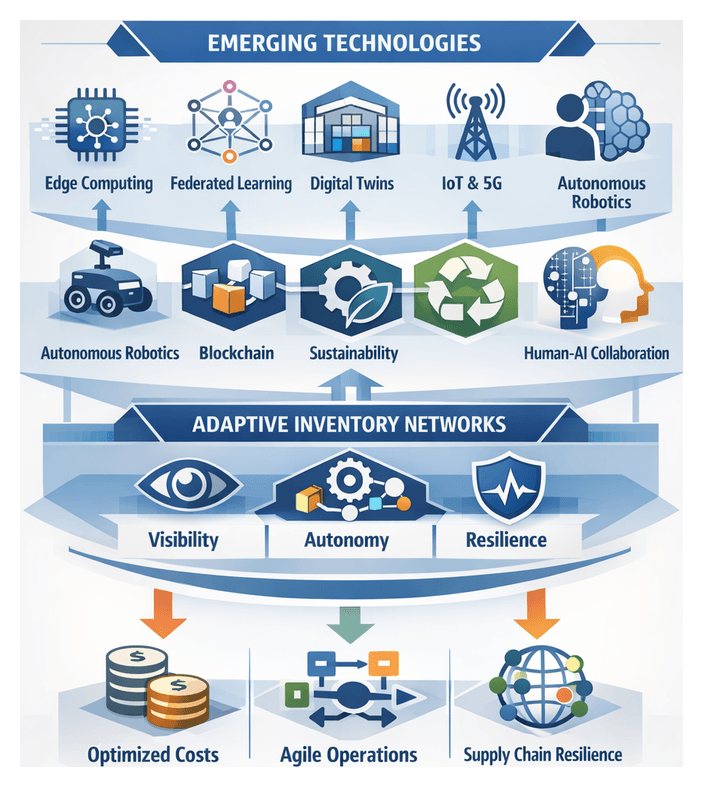
Core Trends Shaping Inventory Futures
Supply chain leaders confront mounting complexity as networks fragment, lead times vary and customers demand real-time fulfillment. A convergence of eight emerging technologies promises to transform inventory management by enhancing visibility, autonomy and resilience. Understanding these trends enables decision makers to align priorities, invest strategically and build adaptive networks capable of self-adjustment amid disruptions.
- Edge Computing and Real-Time Intelligence
- Federated Learning and Data Privacy
- Digital Twins for Virtual Inventory Simulations
- Internet of Things and 5G Connectivity
- Autonomous Robotics and Vehicle Integration
- Blockchain for Traceability and Transparency
- Sustainable Inventory and Circular Economy Models
- Hybrid Human-AI Partnerships
Edge Computing and Real-Time Intelligence
By decentralizing data processing close to sensors, edge computing reduces latency and bandwidth use while ensuring continuous operation despite intermittent connectivity. Local inference engines trigger restocks, detect anomalies and adjust shelf-level decisions within milliseconds. Solutions such as Microsoft Azure IoT, Azure IoT Edge and AWS IoT Greengrass integrate edge modules with cloud analytics, balancing centralized oversight and on-site autonomy.
Federated Learning and Data Privacy
Federated learning distributes model training across warehouses or regional hubs, sharing only aggregated updates to preserve data sovereignty. This approach enhances forecasting by leveraging diverse datasets without exposing raw transaction logs, complying with regulations such as GDPR. Platforms like IBM Watson Supply Chain and frameworks such as TensorFlow Federated enable collaborative intelligence across trading partners under strict governance.
Digital Twins for Virtual Inventory Simulations
Digital twins create dynamic virtual replicas of warehouses, transport nodes and demand points by integrating real-time sensor feeds, historical orders and market data. Planners can run what-if scenarios—testing port delays, demand surges or routing changes—in a risk-free environment. Solutions such as Oracle Autonomous Database, PTC ThingWorx and Siemens MindSphere support large-scale simulations, accelerating strategy validation and continuous improvement.
Internet of Things and 5G Connectivity
RFID tags, pallet trackers and smart scales generate granular visibility into item location and condition. When paired with low-latency, high-bandwidth 5G networks, IoT sensors stream high-frequency data across extended networks. Advanced analytics detect temperature anomalies in cold-chain storage, predict equipment failures and optimize shelf-life dispatch, reducing waste and maximizing service levels.
Autonomous Robotics and Vehicle Integration
Fleets of autonomous mobile robots (AMRs), driverless vehicles and drones collaborate to handle inventory with minimal human intervention. AI-driven navigation and dynamic task assignment enable robots to reprioritize pick sequences based on real-time demand. Vendors such as Locus Robotics and Fetch Robotics embed predictive decision modules within robot controllers, synchronizing replenishment actions with forecasted surges.
Blockchain for Traceability and Transparency
Blockchain offers a tamper-evident ledger for recording inventory provenance from raw materials to delivery. Smart contracts automate settlements and trigger quality exception workflows. Platforms like IBM Food Trust and VeChain enhance traceability, support ethical sourcing and enable faster recalls and audit readiness.
Sustainable Inventory and Circular Economy Models
Circular economy principles emphasize reuse, remanufacturing and end-of-life management. AI-driven stocking algorithms optimize returnable packaging flows and align procurement with green sourcing targets. Balancing carbon footprint minimization with service levels, organizations reduce waste, secure regulatory favor and differentiate their brands in resource-constrained markets.
Hybrid Human-AI Partnerships
AI agents process complex data to generate recommendations, while human planners apply judgment to handle exceptions and validate strategies. Intuitive dashboards, natural language interfaces and augmented reality overlays facilitate collaboration, enhancing trust and accelerating organizational learning.
Analytical Frameworks and Technology Impact
To guide investment and deployment, leaders use diffusion models such as Rogers’ adoption curve and the Gartner Hype Cycle, supplemented by Technology Readiness Levels (TRLs). These frameworks help position capabilities—edge computing at the “Plateau of Productivity,” federated learning near the “Peak of Inflated Expectations”—and assess risk, cost and integration timelines.
Edge Computing Evaluation
Performance metrics include time-to-trigger for restocks, anomaly detection rates and reduction in cloud data loads. Pilot installations benchmark solutions such as Azure IoT Edge and AWS IoT Greengrass on SDK flexibility, security posture and model drift between edge and cloud. Interoperability with central forecasting engines ensures seamless decision loops.
Federated Learning Assessment
Key metrics cover convergence speed, communication overhead and privacy guarantees. Evaluations of TensorFlow Federated and proprietary aggregation protocols measure latency in multi-tier networks. Privacy impact assessments and adversarial testing inform governance and contractual frameworks for collaborative forecasting without data exposure.
Digital Twin Metrics
Analysts track simulation accuracy, update latency and scenario throughput to gauge platform fidelity. Tools like PTC ThingWorx and Siemens MindSphere are evaluated on multi-source data ingestion, large-scale what-if capabilities and collaborative version control for predictive models.
Blockchain Feasibility Studies
Assessments focus on transaction throughput, consensus efficiency and integration complexity. IBM Food Trust and VeChain implementations are benchmarked for real-time asset verification and smart-contract automation, with cost-benefit analyses exploring reduced recalls and premium pricing for certified goods.
Robotics and Autonomous Vehicle ROI
Discrete event and agent-based simulations quantify cycle time reductions, throughput improvements and safety incident rates. Solutions from Locus Robotics and Fetch Robotics are analyzed for scalability, fleet coordination, charging infrastructure and maintenance overhead, guiding phased deployments from high-velocity zones to cross-dock and last-mile operations.
Adaptive Supply Networks and Organizational Readiness
Adaptive supply networks shift from static planning to dynamic self-configuration. Continuous monitoring, predictive analytics and scenario modeling enable real-time resource alignment, optimizing inventory deployment and orchestrating end-to-end processes with minimal latency.
- Resilience through proactive risk mitigation and rapid response
- Cost optimization via flow-oriented inventory over buffers
- Strategic alignment of network design with market signals
- Agility in product launches, market expansions and omni-channel fulfillment
Industry Drivers
Electronics firms face component shortages and short lifecycles; pharmaceuticals require cold-chain integrity and regulatory compliance; retail and ecommerce grapple with seasonal spikes and omnichannel complexity; automotive supply chains demand synchronized just-in-time parts sequencing. Only networks that self-heal through intelligent rerouting, automated replenishment and digital-twin simulations can maintain service levels under volatility.
Interpretive Frameworks
Complex systems theory explains emergent behavior among autonomous agents. Network orchestration models emphasize digital platforms that facilitate stakeholder collaboration and governance. Scenario-based planning and Monte Carlo simulations provide probabilistic insights into disruptions, guiding trade-off decisions under uncertainty.
Governance and Culture
Cross-functional collaboration across procurement, planning, logistics and finance is essential. Decentralized decision rights empower regional teams, supported by digital control towers that surface performance metrics, anomaly alerts and AI recommendations. Cultivating an adaptive mindset through pilots, iterative learning and executive sponsorship underpins network agility.
Collaborative Ecosystem Integration
Real-time data sharing across suppliers, carriers and customers creates a networked intelligence fabric. Solutions such as IBM Watson Supply Chain and SAP Integrated Business Planning use standardized APIs to synchronize forecasts, inventory balances and transport visibility, enabling seamless multi-enterprise reactions to disruptions.
Metrics for Adaptiveness
Beyond fill rate and turnover, leaders track time-to-recovery, elasticity indices and adaptation velocity—the speed of network rebalancing post-disturbance. Scenario stability measures and real-time alignment metrics compare forecasts to actual demand across echelons, informing AI-driven control calibrations.
Real-World Use Cases
Consumer goods brands simulate promotional impacts on stock buffers via digital twins. Pharmaceutical distributors deploy edge-based temperature monitoring with predictive rerouting to safeguard cold chains. Automotive manufacturers integrate production data with supplier dashboards to automate part reorders. Retailers leverage AI within warehouse management systems to reallocate inventory dynamically across stores and fulfillment centers.
Future Evolution
Adaptive networks will increasingly leverage federated learning for cross-enterprise model training, edge AI for decentralized decisions and blockchain for trusted data sharing. Ultimately, supply chains will become self-organizing entities where digital twins, autonomous agents and continuous intelligence converge to anticipate shifts and orchestrate resources automatically.
Strategic Insights for Future-Ready Inventory Management
Invest in Flexible Data Infrastructure
Hybrid architectures must support real-time streams, batch processing and device telemetry. Modular data pipelines ingest ERP transactions, sensor feeds and market indicators, exposing them via standardized APIs to AI agents. Platforms like AWS IoT Greengrass and Azure IoT Edge enable local inference, but require governance to maintain consistency across distributed nodes.
Establish Cross-Functional Governance
Form steering committees spanning IT, operations and business units to oversee data ownership, model validation and exception management. Regular forums to review AI performance and update business rules ensure accountability. Change management programs should include transparent training, user feedback loops and clear metrics to bridge the gap between technical capabilities and operational realities.
Prioritize Ethical and Transparent AI
Implement explainable AI frameworks from IBM Watson and open-source initiatives to surface feature importance and decision paths. Establish policies around data privacy, bias mitigation and supplier fairness. Use federated learning to collaborate on forecasting without exposing sensitive data, supported by robust key management and cryptographic safeguards.
Build Modular, Interoperable Systems
Adopt microservices and containerization to decouple forecasting models, optimization engines and data connectors. Leverage OpenAPI definitions and messaging protocols like MQTT for seamless integration. Insist on open standards to prevent vendor lock-in and facilitate rapid experimentation and rollback.
Embed Continuous Learning and Model Governance
Implement MLOps frameworks to manage model lifecycles—from development and validation to deployment and retirement. Tools such as Google Cloud Vertex AI Model Monitoring detect drift and flag anomalies. Define ownership, retraining thresholds and audit trails to satisfy compliance requirements and maintain model integrity.
Balance Innovation and Risk Mitigation
Adopt phased pilots in controlled environments to validate emergent technologies. Measure impact on service level, inventory turns and working capital. Use risk frameworks to quantify upside potential and downside exposure, guiding allocation across legacy, incremental and breakthrough initiatives.
Cultivate Talent and Strategic Partnerships
Invest in upskilling programs, internal academies and rotational assignments to build cross-disciplinary expertise. Partner with research institutions, vendors and specialists in digital twins or federated learning. Clarify intellectual property rights, data stewardship and support SLAs to align collaborations with long-term objectives.
Anticipate Regulatory and Sustainability Imperatives
Monitor data sovereignty laws and adapt hybrid deployment models to comply with cross-border restrictions. Incorporate environmental impact metrics into AI-driven decisions, optimizing for carbon footprint and waste reduction. Engage legal, compliance and sustainability teams early to preempt regulatory constraints and reporting requirements.
Recognize Limitations and Cautions
- Data quality dependencies can misguide AI insights when streams are incomplete or inconsistent.
- Technology maturity gaps require careful proof-of-concept validation for federated learning and digital twins.
- Organizational readiness variances may hinder adoption without strong executive sponsorship and skills development.
- Integration complexity arises when legacy systems lack open APIs, demanding specialized layers.
- Model interpretability trade-offs must balance predictive accuracy with transparency to maintain trust.
By integrating these trends, frameworks and strategic insights, organizations can build an AI-driven inventory paradigm that combines technological innovation, rigorous governance and cross-functional collaboration to achieve intelligent, resilient and sustainable supply chains.
Conclusion
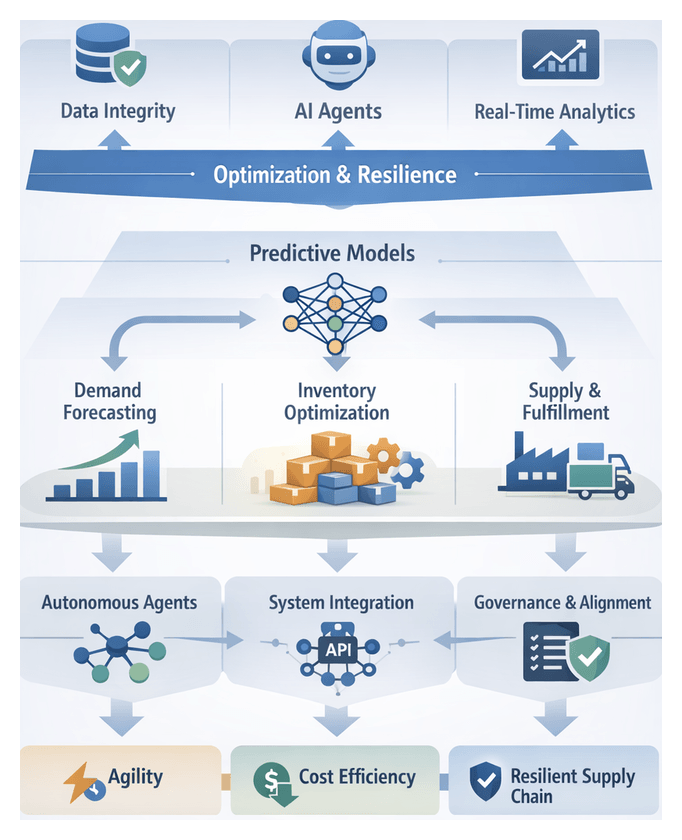
Strategic Transformations in Inventory Management
The evolution of inventory management reflects a shift from reactive tactics to proactive, AI-driven stock orchestration. Early practices relied on spreadsheet-based reorder triggers and rule-of-thumb safety stocks that were ill-suited to volatile demand patterns and complex multi-stage supply networks. As market unpredictability grew, traditional paradigms exposed their limitations: manual interventions lagged behind real-time events, static buffers led to overstock or stockouts, and siloed data hindered visibility. This transformation journey positions artificial intelligence at its core, replacing static thresholds with continuous, data-driven decision frameworks that balance agility, cost efficiency, and resilience.
Predictive analytics serve as the engine for this new paradigm. Time-series and regression models ingest historical sales, promotional calendars, economic indicators, and seasonal trends to forecast demand with greater precision. Advanced techniques such as neural networks and ensemble learning uncover complex, nonlinear relationships across multiple variables. Reinforcement learning layers reinforce adaptability, enabling systems to fine-tune replenishment policies over time as market conditions and operational contexts evolve.
Complementing these forecasting capabilities are optimization routines that translate insights into concrete actions. Adaptive safety stock algorithms dynamically adjust buffer levels based on real-time variability in consumption and supply lead times. Reorder optimization balances holding costs against service level targets, determining not only when to reorder but also optimal batch sizes and sourcing strategies. Multi-echelon inventory models synchronize stocking across warehouses, distribution centers, and in-transit nodes, reducing redundant buffers while ensuring downstream availability.
Autonomous agents operationalize predictive stocking by acting as software entities with domain-specific expertise. Demand-planning agents refine forecasts, supply-management agents mitigate supplier delays, and fulfillment agents orchestrate allocation and routing. These agents communicate through standardized protocols and semantic schemas, negotiating priorities and sharing insights across locations. By executing decisions within predefined risk tolerances, they accelerate response times, reduce manual workloads, and improve consistency in replenishment.
Technical integration and organizational alignment are critical enablers. API–based data orchestration connects AI modules with enterprise resource planning and warehouse management systems, ensuring reliable streams of master and transactional data. Middleware frameworks support real-time event processing, while user interface extensions provide planners with visibility into agent recommendations and override capabilities. Governance structures—cross-functional steering committees, data stewardship councils, and performance oversight boards—align stakeholders on objectives, risk parameters, and success metrics. Training and change management programs build confidence in autonomous systems by exposing teams to pilot initiatives, scenario simulations, and evidence of operational impact.
The result of these transformations is a supply chain that moves from batch-oriented planning cycles to continuous, autonomous replenishment. Forecasts and adjustments occur in near real time, anomalies trigger immediate corrective actions, and agents collaborate to reallocate stock or reroute shipments in flight. These capabilities deliver strategic outcomes: compressed response cycles increase agility; optimized stocking reduces carrying costs; and scenario-based resilience buffers maintain service levels in the face of disruptions. As a cohesive operating model, AI-driven inventory management redefines what it means to maintain the right stock at the right place and time.
Foundational Themes: Data Integrity, Agent Orchestration, Real-Time Analytics, and Resilience
Data Integrity and Quality
High-fidelity data underpins every forecasting and autonomous decision. Successful organizations establish unified definitions for demand signals, lead times, fill rates, and other key metrics, enforcing these taxonomies across ERP, warehouse management, and analytic platforms. Proactive data cleansing and validation through continuous anomaly detection, rather than retroactive correction, maintain the reliability of master and transactional records. Tools such as Collibra enable stewardship workflows, metadata lineage tracking, and automated reconciliation. Rich metadata transparency—capturing timestamps, transformation logs, and data origin—allows data science teams to interpret model outputs confidently, align assumptions, and conduct robust root-cause analyses when real-world outcomes diverge.
Agent Collaboration and Autonomy
The shift from linear, rule-based automation to interconnected networks of learning agents transforms replenishment into a dynamic, negotiating process. Standardized communication protocols and semantic schemas define how agents exchange inventory requisitions, capacity updates, and disruption alerts. Distributed decision rights assign domain-specific authority: supplier-facing agents manage delay mitigation, demand-planning agents refine safety stocks, and fulfillment agents optimize allocation and routing. Reinforcement learning loops empower agents to adapt their policies based on observed outcomes, such as stockouts or overstock events, continuously improving replenishment triggers and escalation thresholds.
Real-Time Analytics as a Strategic Enabler
Latency in data capture or model refresh cycles directly erodes competitive positioning in fast-moving markets. Stream processing architectures—which marry lightweight event brokers with in-memory analytical engines—enable sub-second aggregation of transactional and sensor data. Anomaly detection frameworks flag deviations from expected patterns, serving as both operational controls and triggers for autonomous agents to enact corrective actions, such as rerouting stock or adjusting safety levels. Visualization and alerting tools bridge the gap between AI and human oversight, providing intuitive dashboards and context-aware notifications that preserve accountability and facilitate quick intervention when needed.
Balancing Optimization and Resilience
Managing the tension between lean inventory and resilience-oriented buffering demands multi-objective frameworks. Scenario-based cost curves, exemplified by Relex Solutions, visualize the incremental cost of achieving higher service levels against diminishing returns from additional safety stock. Probabilistic stress testing—using Monte Carlo simulation and bootstrapping—evaluates buffer requirements under correlated disruptions, fluctuating supplier reliability, and demand surges. Adaptive policy bands replace fixed reorder points with dynamic control intervals that adjust in real time based on risk indicators like port congestion metrics or supplier failure probability. This approach ensures that buffering strategies evolve in concert with external volatility and internal performance metrics.
Integration and Organizational Context
Technological sophistication must be matched by governance models, stakeholder alignment, and cultural readiness. Effective implementation frameworks convene cross-functional steering committees—including supply chain, IT, finance, operations, and key suppliers—to define performance objectives, risk tolerances, and data governance standards. Capability development programs build analytical acumen among planners, teaching them to interpret model confidence intervals, scenario outputs, and agent negotiation logs. Change management rituals—such as pilot deployments, iterative feedback loops, and success celebrations—underscore learning, mitigate resistance, and foster institutional trust in AI-driven recommendations. Modular technology architectures and robust API frameworks facilitate incremental scaling, allowing organizations to integrate AI agent components without disrupting core enterprise systems.
Leadership Imperatives for AI-Driven Inventory
Supply chain leaders must shift from operational oversight to strategic stewardship of intelligent systems. This requires translating analytical insights into organizational agility, resilience, and sustainable competitive advantage. Rather than viewing AI adoption as a technology project, executives should treat predictive agents as dynamic capabilities that must be embedded in vision, governance, talent strategies, and performance metrics.
Vision and Strategic Alignment
At the executive level, leaders must articulate a compelling vision that positions intelligent inventory as a cornerstone of corporate strategy—advancing market differentiation, enhancing customer experience, and optimizing working capital. This vision should integrate AI-driven inventory metrics—forecast accuracy, dynamic fill rates, and service-level resilience—into balanced scorecards alongside financial and sustainability objectives. Executive sponsorship should bridge supply chain, IT, finance, and commercial functions, ensuring unified resource allocation and strategic prioritization. Roadmaps that illustrate phased growth—from pilot applications to enterprise-wide deployment—reinforce commitment to long-term transformation while delivering quick-win value.
Governance and Decision Rights
AI agents introduce autonomous decision nodes that coexist with human stakeholders, necessitating clear governance frameworks. Leaders should define tiered decision rights that delineate when agent recommendations become actionable and when human override is required. Elements of robust governance include:
- Threshold-based escalation protocols for high-impact or anomalous recommendations.
- Data stewardship councils overseeing model inputs, metadata standards, and ethical considerations.
- Performance oversight boards evaluating agent accuracy, alignment with service-level agreements, and regulatory compliance.
Talent and Organizational Capabilities
Embedding AI into inventory operations demands new skills and hybrid roles. Supply chain planners, data scientists, and IT architects must collaborate in cross-functional teams to design, deploy, and refine predictive systems. Essential talent strategies include:
- Continuous learning programs that upskill planners on machine-learning concepts and train data professionals on supply chain dynamics.
- Creation of analytics translator roles to bridge the gap between technical and operational domains.
- Cross-disciplinary “war rooms” for joint model calibration, scenario testing, and rapid iteration.
Risk Management and Ethical Stewardship
As autonomous agents assume greater operational responsibility, leaders must address risks related to model drift, data bias, and unintended consequences. Critical practices include:
- “Model on standby” protocols that revert to manual processes when performance falls below defined thresholds.
- Regular audits of AI-driven decisions to detect disproportionate impacts on specific products, regions, or customer segments.
- Engagement with external ethics boards or advisors to validate alignment with corporate social responsibility and regulatory frameworks.
Change Management and Cultural Adaptation
Cultivating a data-centric, experimental mindset is essential for adoption. Leaders should deploy structured change programs that demystify AI, highlight success stories, and clarify collaborative roles between humans and agents. Key levers include:
- Internal communication campaigns that explain AI-agent capabilities and boundaries.
- Recognition programs that reward cross-functional teamwork and innovative use of predictive insights.
- Peer-to-peer learning sessions where early adopters share lessons on model calibration and operational impact.
Technology Investment and Infrastructure
Strategic technology decisions require rigorous evaluation of total cost of ownership, vendor maturity, and integration constraints. Leaders should favor modular architectures that allow plug-and-play deployment of AI agent components and ensure robust API and data pipeline frameworks. Considerations include:
- Assessing the fit of third-party AI platforms against specific inventory complexities and data environments.
- Designing phased deployment plans that validate model efficacy at SKU level before scaling across geographies.
- Ensuring data integrity, security, and compliance through end-to-end pipeline monitoring.
Cross-Functional Collaboration and Stakeholder Alignment
Intelligent inventory extends its impact beyond supply chain into procurement, sales, marketing, and finance. Collaborative forums unify stakeholders around service-level objectives, promotion plans, and contingency protocols. Effective practices include:
- Regular cross-functional review meetings to examine AI-agent dashboards, demand signals, and inventory policies for new products.
- Joint scenario-planning workshops that simulate supply shocks, demand surges, and logistic constraints using predictive models.
- Integrated performance metrics linking AI-driven inventory outcomes to revenue, margin, and working capital efficiency.
Continuous Improvement and Adaptive Leadership
AI-driven systems require ongoing refinement. Leaders should establish feedback loops for performance monitoring, hypothesis testing, and iterative enhancements. Key enablers include:
- Embedding KPIs for forecast bias, model confidence, replenishment cycle times, and manual override frequency into executive reports.
- Implementing small-scale experimentation frameworks (A/B tests) to validate algorithmic adjustments before roll-out.
- Allocating dedicated resources for technology scouting, proof-of-concept trials, and partnerships with research institutions.
By evolving leadership across vision, governance, talent, risk oversight, cultural adaptation, and continuous improvement, organizations can convert predictive insights into strategic advantage—driving inventory efficiency, strengthening resilience, and sustaining competitive differentiation.
Future Outlook and Ethical Considerations
Intelligent inventory management represents an enduring ecosystem of data stewardship, adaptive algorithms, and organizational readiness. As pioneers chart their course, emerging technologies such as edge computing for decentralized forecasting, federated learning for privacy-preserving model training, digital twins for real-time virtual supply-chain representations, autonomous vehicles, robotics, and blockchain for provenance tracking promise to deepen integration of intelligence throughout inventory lifecycles. Each of these advances offers potential gains in responsiveness, transparency, and operational speed.
However, the allure of cutting-edge solutions must be tempered by pragmatic constraints. Premature adoption of nascent technologies can introduce integration complexity, magnify technical debt, and distract from core objectives of forecast accuracy and service reliability. Technology roadmaps should prioritize proven frameworks, modular enhancements, and incremental validation through sandbox environments and phased rollouts. Total cost of ownership, vendor lock-in risks, and interoperability with existing ERP and warehouse management systems must guide investment decisions.
Ethical considerations and risk boundaries intensify as autonomous agents assume greater decision-making responsibility. Transparent communication about agent capabilities, decision logic, and error rates builds stakeholder trust and mitigates workforce concerns. Ethical guidelines should govern data usage, ensure fairness in inventory allocation, and align algorithmic strategies with corporate social responsibility objectives and regulatory requirements. Robust contingency protocols—such as threshold-based fallback to manual processes, sandboxed testing environments, and rapid cyber-incident response plans—safeguard continuity while preserving the benefits of AI-driven agility and precision.
Balancing centralized oversight with local autonomy remains essential in heterogeneous global networks. Federated architectures delegate stocking decisions to regional or business-unit agents, enabling context-specific agility, while a central intelligence hub sets core policies and governance standards. Periodic joint optimization sessions and performance reviews ensure coherence in strategy and enable calibration of autonomy boundaries based on evolving market rhythms and operational insights.
Continuous engagement with external ecosystems—industry consortia, academic partnerships, technology alliances, and start-up incubators—expands access to new data sources, algorithmic innovations, and interoperable solutions. Collaborative experimentation accelerates learning, surfaces emerging best practices, and cultivates a network of expertise that extends beyond internal confines. A disciplined approach to ecosystem engagement, featuring pilot programs, shared benchmarks, and transparent performance reporting, ensures that external innovations translate into demonstrable value.
Ultimately, the future of intelligent inventory is not defined by a single breakthrough but by sustained orchestration of people, processes, and predictive intelligence toward a singular goal: resilient, responsive, and right-sized supply chains. By internalizing these insights—grounded in data integrity, adaptive learning, agent collaboration, ethical stewardship, and cross-functional alignment—organizations can navigate complexity, harness AI-driven advances responsibly, and secure enduring competitive advantage in dynamic global markets.
Appendix
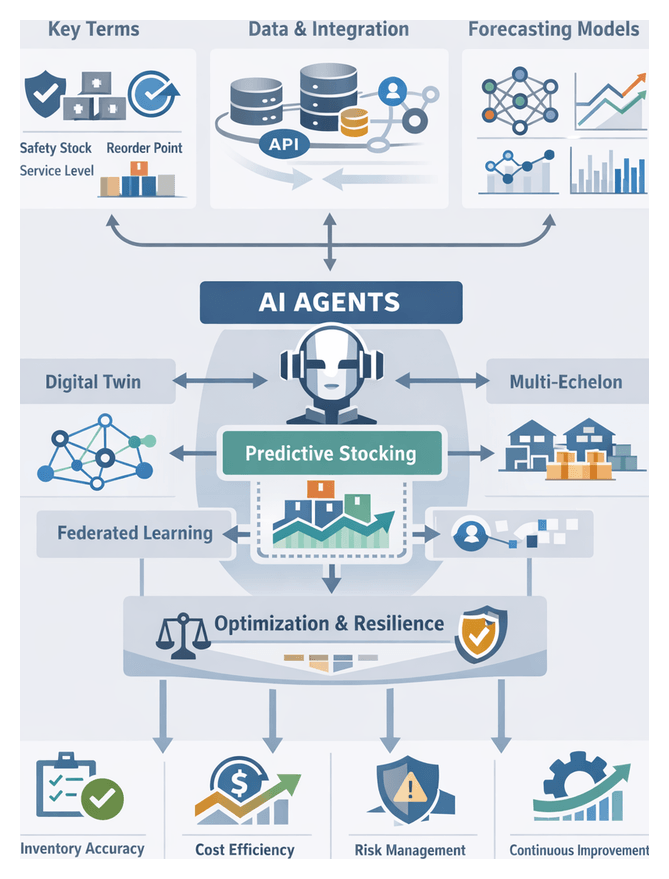
Key Definitions and Terminology
This section defines the foundational terms used throughout the eBook, establishing a common language for AI-driven inventory optimization.
- Safety Stock: A dynamic buffer calculated via probabilistic analyses of forecast errors, lead-time variability and market volatility to maintain service levels.
- Reorder Point: The inventory threshold triggering replenishment, derived from real-time demand and lead-time forecasts and adaptive to context-aware signals.
- Service Level: The probability of meeting customer demand without stockouts, used as a constraint or penalty in optimization algorithms.
- Lead Time: The interval from order placement to receipt, modeled as a probabilistic distribution incorporating supplier performance and external risk indicators.
- Forecast Error: The deviation between predicted and actual demand, measured by MAPE and RMSE and used to calibrate dynamic stocking policies.
- Demand Variability: Fluctuations in customer demand quantified by statistical measures, addressed by segmenting SKUs into volatility profiles and machine learning models.
- Bullwhip Effect: Amplification of demand variability upstream, mitigated by real-time data sharing, collaborative forecasting and multi-echelon optimization.
- Multi-Echelon Inventory: Coordinated stock management across network tiers, optimized for holding costs, transportation and service levels via unified AI frameworks.
- Autonomous Agent: A software entity that ingests data streams, applies decision logic, learns continuously and executes replenishment actions with limited human oversight.
- Predictive Stocking: Dynamic inventory policies derived from machine learning forecasts, real-time demand sensing, lead-time estimation and multi-echelon coordination.
- Machine Learning Model: Algorithms—time-series, regression ensembles, neural networks—identifying patterns to forecast demand, often enhanced with explainable AI techniques such as SHAP.
- Digital Twin: A virtual replica of inventory systems and networks, synchronized with live data to simulate scenarios and stress-test strategies.
- Federated Learning: Decentralized training across multiple data sources, sharing aggregated parameters to preserve privacy and enhance model robustness.
- Edge Computing: Local processing of sensor and IoT data for real-time anomaly detection, small-scale forecasting and autonomous triggers when connectivity is limited.
- Data Governance: Policies and processes ensuring data integrity, quality, lineage and compliance, vital for reliable AI-driven models under regulations like GDPR and CCPA.
- Master Data Management: Establishing a single source of truth for products, suppliers and locations to support coherent integration of ERP, WMS and analytics.
- API Orchestration: Managing interfaces that connect AI agents, forecasting engines and enterprise systems, enforcing versioning, security and modular integration.
- Scenario Analysis: Constructing hypothetical supply chain states via Monte Carlo simulation and digital twin experiments to evaluate buffer adequacy and contingency strategies.
- Control Tower: A centralized platform providing real-time visibility, analytics and decision support, embedding AI agents for exception detection and self-healing responses.
- Fill Rate: The proportion of demand satisfied from available stock, monitored in real time to adjust stocking policies based on forecast accuracy and lead-time variability.
- Inventory Turnover: The frequency of stock movement over a period, optimized by aligning replenishment with demand forecasts and promotional calendars.
- Cash-to-Cash Cycle Time: The interval between cash outflow for procurement and inflow from sales, shortened by reducing inventory days without sacrificing service.
- Mean Absolute Percentage Error (MAPE): A gauge of forecast accuracy expressed as average absolute percentage deviation.
- Root Mean Square Error (RMSE): A metric that penalizes larger forecast deviations, sensitive to outliers and used alongside MAPE for robust evaluation.
- Multi-Objective Optimization: Balancing carrying costs, service levels and risk exposures using weighted functions, Pareto analysis and constraint programming.
Analytical and Integration Frameworks
Effective predictive stocking relies on mature data governance, robust integration and advanced analytical frameworks.
Data Governance and Integration
Organizations adopt frameworks such as EDM Council DCAM, DAMA DMBOK and CMMI for Data to assess and mature data quality, master data and metadata management. Decentralized patterns like Data Mesh and Data Fabric promote domain ownership and interoperability. Integration archetypes include batch ETL pipelines, real-time streaming with AWS Kinesis or Apache Kafka, and API-led connectivity via MuleSoft or Boomi.
Forecasting Methodologies
Demand forecasting methods span:
- Time-Series Decomposition (ARIMA, SARIMA, Exponential Smoothing, Prophet).
- Regression and Ensembles (XGBoost, Random Forest, Elastic Net) balancing bias-variance trade-offs.
- Neural Architectures (LSTM, GRU, Transformers) with XAI tools like SHAP and LIME for interpretability.
- Hybrid Ensembling (averaging, stacking) to reduce error variance and support regulated environments.
Multi-Agent Coordination
AI agents coordinate via centralized orchestration, peer-to-peer messaging or federated synchronization. Communication standards include FIPA ACL, RESTful APIs and MQTT. Negotiation leverages Contract Net Protocol, auction mechanisms and consensus algorithms. Key metrics track coordination latency, throughput and order fulfillment improvements.
Optimization and Resilience
Inventory optimization frameworks integrate:
- Control Theory feedback loops adjusting safety stock and reorder points.
- Theory of Constraints for bottleneck management.
- Lean principles for waste reduction and just-in-time replenishment.
- Scenario analysis via Monte Carlo and digital twins using platforms such as AnyLogistix or Coupa Llamasoft.
- Multi-echelon optimization with Pareto front analysis balancing cost, service and risk.
- Resilience engineering aligned with ISO 31000 for risk governance.
Maturity Models and Change Management
Maturity stages progress from descriptive reporting to diagnostic root-cause analysis, predictive forecasts, prescriptive autonomous agents and adaptive continuous learning. Technology readiness follows TRL scales, guided by Gartner Hype Cycle positions. Adoption frameworks include ADKAR for individual change, RACI matrices for roles, PDCA cycles for iterative improvement and stakeholder grids for engagement.
MLOps and Model Governance
Productionizing AI demands pipelines and tools such as Kubeflow and MLflow for version control, reproducibility and automated retraining. CI/CD processes validate and deploy models, while drift detection and monitoring trigger retraining. Explainability via SHAP, LIME and counterfactual analysis ensures auditability and stakeholder trust.
Distinguishing Concepts and Common Questions
AI Agents versus Traditional Automation
- Adaptivity: Agents refine policies as data evolves; rule-based scripts remain static.
- Probabilistic Reasoning: Dynamic safety stocks replace fixed reorder formulas.
- Autonomy: Real-time signals trigger actions without manual intervention.
- Continuous Learning: Execution outcomes feed back to improve future decisions.
Predictive Stocking versus Conventional Ordering
- Multi-horizon forecasting for tactical and strategic planning.
- Integration of external signals—weather, social sentiment, macro indicators.
- Dynamic replenishment rules adjusting to live lead-time and demand uncertainty.
- Scenario-driven buffers for resilience under stress events.
Core Data and Integration Questions
- Essential Data: SKU-location sales, supplier performance, inventory transactions, external indicators.
- Integration Patterns: Batch ETL, event-driven streams (Kafka, Kinesis), API-led connections.
- Quality Controls: Data profiling, master data management, lineage tracking.
Model Selection, Explainability and Metrics
- Evaluation: MAPE, RMSE, bias analysis, computational latency.
- Explainability: SHAP values, attention visualizations, rule-based guardrails.
- KPIs: Leading—forecast drift, trigger latency; Lagging—fill rates, turns, days on hand.
Governance, Risk and Regulatory Clarifications
- Structures: Oversight committees, decision rights, approval workflows, audit trails.
- Compliance: Batch recording, data residency, access controls for regulated industries.
- Ethics: Monitoring biases, validating equitable risk assessments for suppliers.
Implementation and Scaling Strategies
- Pilots: Select representative SKUs, moderate-complexity facilities, baseline metrics.
- Scaling Criteria: Forecast improvement thresholds, adoption rates, system performance SLAs.
- Timelines: Discovery (4–6 weeks), pilot (8–12 weeks), tuning (4–8 weeks), rollout ongoing.
Human-Machine Collaboration and Change Management
- Role Evolution: Planners focus on exceptions, strategic analysis and governance.
- Skills: AI interpretability, data literacy, change management.
- Culture: Communicate wins, feedback loops, recognize AI champions.
Clarifying Key Terms
- AI Agent: Autonomous software perceiving data, making predictions and executing actions under constraints.
- Predictive Stocking: Machine learning–driven dynamic reorder points and safety stocks.
- Service Level: Probability of meeting demand without stockouts (e.g., 95 percent fill rate).
- Forecast Error: Deviation between predicted and actual demand (MAPE, RMSE).
- Multi-Echelon Optimization: Network-level allocation of inventory buffers balancing global cost and service.
- Digital Twin: Virtual model of physical networks for scenario planning and stress testing.
- Federated Learning: Collaborative model training sharing aggregated updates without raw data exchange.
AI Tools and Platforms
Forecasting and Machine Learning Platforms
- Amazon Forecast
- Amazon SageMaker
- Google Cloud AI Forecast
- Google Vertex AI
- Microsoft Azure Machine Learning
- IBM Watson Studio
- Prophet
Integration and Data Governance
- MuleSoft
- Boomi
- Snowflake
- Confluent
- Apache Kafka
- Apache NiFi
- Talend Data Quality
- Informatica Data Quality
- Collibra
- Alation
Orchestration and Workflow Platforms
- IBM Sterling Inventory Control Tower
- Blue Yonder Luminate Platform
- SAP Integrated Business Planning
- Oracle Cloud Supply Chain Management
- Kinaxis RapidResponse
- Relex Solutions
- Coupa Supply Chain Design
- Manhattan Active Warehouse Management
Infrastructure and Streaming Analytics
IoT and Edge Computing
Robotics and Automation
Digital Twin and Simulation
Blockchain and Traceability
Data Management and Standards
Additional Learning Resources
- Supply Chain Resilience Frameworks from the Council of Supply Chain Management Professionals
- Open Agent Standard Consortium interoperability guidelines for multi-agent collaboration
- Online Courses and Certifications on Coursera, edX and MIT CTL in supply chain analytics and AI
The AugVation family of websites helps entrepreneurs, professionals, and teams apply AI in practical, real-world ways—through curated tools, proven workflows, and implementation-focused education. Explore the ecosystem below to find the right platform for your goals.
Ecosystem Directory
AugVation — The central hub for AI-enhanced digital products, guides, templates, and implementation toolkits.
Resource Link AI — A curated directory of AI tools, solution workflows, reviews, and practical learning resources.
Agent Link AI — AI agents and intelligent automation: orchestrated workflows, agent frameworks, and operational efficiency systems.
Business Link AI — AI for business strategy and operations: frameworks, use cases, and adoption guidance for leaders.
Content Link AI — AI-powered content creation and SEO: writing, publishing, multimedia, and scalable distribution workflows.
Design Link AI — AI for design and branding: creative tools, visual workflows, UX/UI acceleration, and design automation.
Developer Link AI — AI for builders: dev tools, APIs, frameworks, deployment strategies, and integration best practices.
Marketing Link AI — AI-driven marketing: automation, personalization, analytics, ad optimization, and performance growth.
Productivity Link AI — AI productivity systems: task efficiency, collaboration, knowledge workflows, and smarter daily execution.
Sales Link AI — AI for sales: lead generation, sales intelligence, conversation insights, CRM enhancement, and revenue optimization.
Want the fastest path? Start at AugVation to access the latest resources, then explore the rest of the ecosystem from there.