

Agents of Change How AI Agents Are Revolutionizing 24 7 Customer Support in 2026
To download this as a free PDF eBook and explore many others, please visit the AugVation webstore:
Introduction
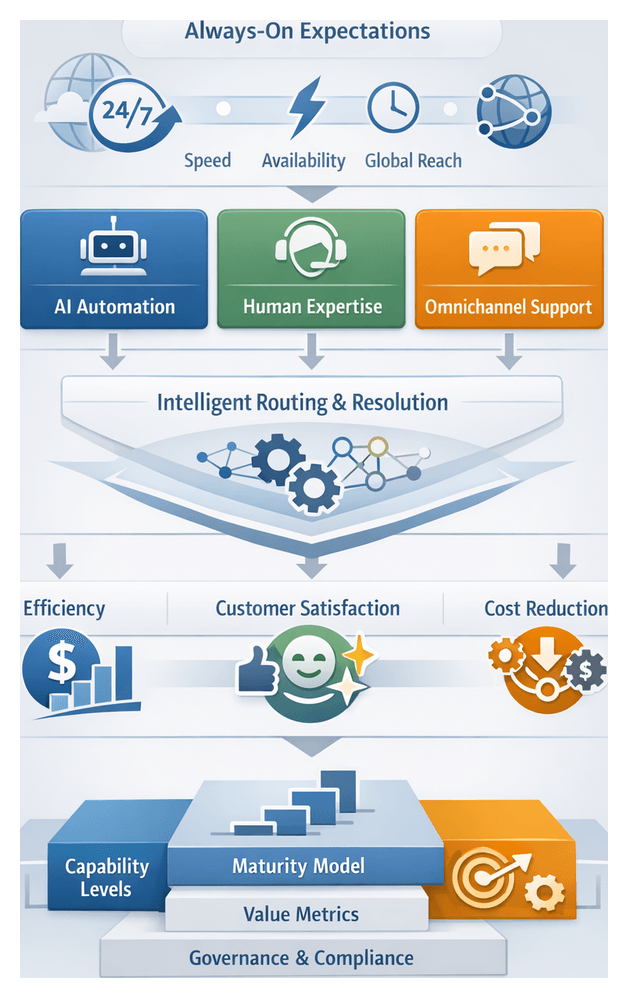
The Imperative for Continuous, AI-Driven Support
In today’s digitally connected world, customers expect assistance any time, anywhere. The rise of global commerce and instant-access platforms has blurred the boundaries of traditional business hours, making service interruptions a costly liability. Industry research shows that a single hour of support downtime can cost large enterprises upwards of $100,000 in lost revenue and customer churn. Customers who encounter friction during critical interactions—such as checkout, account recovery or technical troubleshooting—are significantly less likely to return, underscoring the strategic value of uninterrupted support for long-term growth and brand credibility.
Delivering true 24/7 service challenges conventional call center models built on fixed shifts and manual routing. Rigid schedules and siloed knowledge bases struggle to keep pace with fluctuations in demand, seasonal peaks and unexpected surges driven by product launches or marketing events. Service leaders must therefore design infrastructures that blend human expertise with automated capabilities, enabling rapid triage, intelligent routing and consistent resolution regardless of volume or time zone.
Meeting these demands is not merely an operational efficiency play; it is fundamental to customer loyalty. Surveys reveal that over 75 percent of consumers consider immediate response time critical to their satisfaction. High-value B2B clients similarly demand personalized responses within minutes. Across demographics, from digitally native younger cohorts who favor messaging channels to traditional customers reliant on email or voice, the expectation for speed and continuity remains constant.
Around-the-Clock Customer Expectations
Digital-first experiences on social media, streaming services and mobile apps have instilled an on-demand mindset among consumers. Any delay in communication is perceived as a service failure. Data points illustrate the stakes:
- 40 percent of customers abandon a chat session if not replied to within one minute
- Organizations that respond within five minutes see a 30 percent increase in customer satisfaction
- Proactive outreach during off-hours can reduce inbound volume by up to 20 percent
- Customers who experience latency during checkout or technical support are 50 percent less likely to complete a purchase or renew a subscription
Beyond initial engagement, customers expect proactive updates on issue status, seamless transitions between channels and personalized guidance informed by prior interactions. Maintaining this level of responsiveness requires unified data platforms and AI-driven orchestration layers that can access context, enrich conversation histories and deliver proactive notifications without human intervention.
Competitive Differentiation Through Agility
In markets saturated with comparable offerings, customer support has emerged as a key differentiator. Brands that enable continuous, reliable assistance build trust advantages that are difficult for competitors to replicate. Early adopters of AI-enabled platforms such as Salesforce Einstein, Zendesk and LivePerson leverage automated routing, self-service bots and intelligent escalation to transform support touchpoints into growth opportunities.
Challenger brands increasingly market always-on availability as a core promise. Incumbent organizations, in turn, invest in automation to maintain relevance and drive renewal rates. One global travel company, for example, integrated Zendesk with AI-driven chatbots to extend its support window. Within six months, average first-response times during off-hours decreased by 75 percent and customer satisfaction scores rose by 15 points. By positioning continuous availability as a differentiator, the company not only improved loyalty but also reduced reliance on costly outsourced services, channeling savings into innovation.
Globalization and Omnichannel Complexity
As businesses expand internationally, support teams confront the challenges of diverse time zones, languages and cultural expectations. Without mechanisms to bridge these divides, critical customer inquiries can remain unattended for hours, undermining brand trust. Traditional solutions—follow-the-sun rotations, offshore teams and outsourced vendors—often struggle with knowledge consistency, quality control and cultural alignment.
Compounding this is the proliferation of digital channels. Customers may begin a conversation on live chat, share photos via messaging apps, continue via social media and eventually switch to voice. Disconnected back-end systems and manual handoffs disrupt context, forcing customers to repeat themselves. To deliver frictionless omnichannel experiences, organizations must adopt unified data architectures and intelligent orchestration layers that manage context enrichment, routing and channel-specific adaptations in real time.
Self-service channels add another dimension of complexity. Well-maintained knowledge bases and interactive FAQs can deflect routine inquiries, but outdated or poorly structured resources frustrate users and increase support volume. Integrating AI-driven semantic search and guided troubleshooting flows ensures that self-service content remains relevant, context-aware and capable of resolving issues without human intervention, thus extending support coverage around the clock.
Economic and Operational Drivers
Sustaining a fully human-staffed 24/7 operation inflates labor expenses and risks burnout. Headcount strategies often lead to overstaffing during slow periods and understaffing during peaks. Analysts estimate that deploying AI agents for routine inquiries can reduce contact center costs by up to 30 percent over three years.
In hybrid support models, AI agents—configured to handle low-complexity, high-volume tasks—free human specialists to focus on strategic and emotionally nuanced interactions. When complexity arises, human teams intervene with full context provided by AI-driven session transcripts and knowledge graphs. This approach delivers near-continuous coverage at a fraction of the cost of a purely human operation, while preserving service quality for critical cases.
Realizing these efficiencies demands careful change management. Organizations must invest in training and upskilling to shift workforce roles from rule-based task execution to oversight, conversational design and exception handling. Process realignment, transparent communication and ethical frameworks are equally important to maintain trust and foster adoption.
AI Agents as the Cornerstone of Modern Support
From Scripted Bots to Cognitive Assistants
The evolution from traditional chatbots to AI agents marks a transformative leap. Conventional bots follow predetermined scripts and decision trees, requiring manual rule updates. In contrast, AI agents leverage advanced machine learning, natural language processing and cognitive reasoning to interpret intent, maintain context and learn from every interaction.
Leading platforms such as IBM Watson Assistant, Amazon Connect and Google Cloud Contact Center AI illustrate how AI agents can autonomously handle large volumes of customer inquiries. These systems employ intent classification, sentiment analysis and knowledge graph integrations to resolve issues accurately and escalate appropriately when human intervention is needed. Over time, their supervised and reinforcement learning capabilities refine dialogue strategies and expand coverage without continuous human oversight.
Analytical Frameworks for Understanding AI Agents
Evaluating AI agents requires multidimensional frameworks that align technology capabilities with business objectives:
- Capability Taxonomy—Classifies features into perception, comprehension, decision making and action. This helps organizations identify which cognitive capabilities—such as multi-turn dialogue or sentiment detection—are essential for their support goals.
- Maturity Model—Stages agent sophistication from Level 1 rule-based automation to Level 5 fully autonomous, self-optimizing systems, guiding roadmap planning and incremental enhancements.
- Value Continuum—Maps functionalities to business metrics like efficiency gains, cost avoidance and customer satisfaction uplift, highlighting trade-offs between rapid deployment of basic bots and long-term investment in advanced AI.
Distinct Capabilities and Evaluation Criteria
To distinguish AI agents from legacy automation and assess vendor offerings, organizations focus on several key dimensions:
- Flexibility versus Rigidity—AI agents adapt responses based on real-time context, whereas traditional bots rely on static scripts.
- Learning Capability—Agents employ supervised and reinforcement learning to refine interactions without manual rule updates.
- Contextual Understanding—Agents maintain dialogue state across sessions, enabling personalized recommendations and continuity.
- Proactive Engagement—Predictive analytics enable agents to detect rising frustration, forecast issues and initiate outreach or next-best actions.
- Integration Depth—Seamless data exchange with CRM systems, knowledge bases and analytics platforms supports unified customer experiences.
Evaluation criteria typically include:
- Response Accuracy—Precision in intent classification, recall rates and F1 metrics.
- Resolution Efficiency—First-contact resolution rates, average handle times and deflection percentages.
- Scalability and Resilience—Load testing results, auto-scaling capabilities and fault tolerance.
- Learning Velocity—Retraining frequency, volume of annotated data required and improvement in model performance.
- Governance and Compliance—Data privacy controls, bias mitigation measures and auditability aligned with GDPR, CCPA and industry regulations.
Technological Catalysts Fueling Adoption
The recent surge in AI adoption is driven by breakthroughs in computational power, data availability and algorithmic innovation. Transformer-based models, popularized by platforms such as ChatGPT, have elevated natural language understanding to new levels of accuracy and nuance. At the same time, cloud-based services like Amazon Lex, Google Dialogflow and Microsoft Azure Bot Service offer scalable, consumption-based access to enterprise-grade AI tools, significantly lowering the barrier to entry.
Pre-trained models, transfer learning and collaborative open research have accelerated development cycles, shifting the challenge from building algorithms to fine-tuning domain-specific data and conversational flows. As a result, organizations can deploy pilot projects in weeks rather than months, iterating rapidly based on user feedback and performance metrics.
Strategic Implications and Roadmap
To translate market demand into operational excellence, service leaders must adopt a strategic framework encompassing demand analysis, technology selection, organizational alignment and continuous optimization. Key steps include:
- Assess support requirements against customer journeys to identify high-impact automation opportunities.
- Evaluate AI platforms using structured matrices that weigh NLP performance, integration ease, security certifications and licensing models.
- Rearchitect workflows to blend AI agents with human experts, defining clear escalation protocols and governance policies.
- Implement pilot programs with measurable success metrics—first-contact resolution, response time, deflection rate and customer sentiment scores.
- Scale based on iterative feedback loops, refining AI models, expanding channel coverage and aligning resources to emerging demands.
Embedding agile principles in support operations enables rapid adaptation to new channels, evolving customer preferences and technological advances. Governance structures, data privacy safeguards and ethical guidelines must be integral to this journey to maintain compliance and customer trust.
Building a Resilient Support Ecosystem
Analytical Models and Decision Tools
Strategic planning for AI-driven support is supported by robust analytical models that bring clarity to complexity:
- Support Maturity Assessment Framework—Benchmarks organizational capabilities across people, processes, technology, data and governance, pinpointing areas for improvement in self-service adoption, AI accuracy and escalation protocols.
- AI Technology Selection Matrix—Compares vendors and platforms on parameters such as NLP performance, integration ease, security certifications and licensing structures, using weighted scoring to reflect strategic priorities like scalability or explainability.
- Customer Journey Analytics Model—Maps every support touchpoint to business outcomes, overlaying sentiment, effort scores and resolution effectiveness to identify high ROI intervention zones.
- Performance and Measurement Blueprint—Establishes a layered metrics architecture with real-time dashboards, periodic health checks and longitudinal studies, balancing quantitative KPIs such as average response time and containment rate with qualitative customer feedback.
- Stakeholder Alignment Canvas—Visualizes roles, responsibilities and decision rights across IT, operations, compliance and customer experience teams, reducing governance friction and accelerating approval cycles.
Interpretive Perspectives
Beyond structured frameworks, interpretive lenses provide strategic insights that uncover hidden risks and opportunities:
- Risk Management Lens—Focuses on data privacy exposures, vendor concentration risks and continuity threats, supporting scenario planning for system outages, cyber incidents and regulatory shifts.
- Ethical AI Lens—Prioritizes fairness, transparency and user dignity in automated interactions, guiding bias detection, transparency protocols and consent mechanisms.
- Customer-Centricity Lens—Ensures AI engagements uphold empathy and brand values, aligning automated experiences with human-centric expectations across demographics and use cases.
- Operational Resilience Lens—Examines architectural redundancies, load balancing and failover strategies required to sustain uninterrupted service even under peak demand.
- Cross-Channel Consistency Lens—Evaluates coherence of AI-driven responses across digital, voice and messaging platforms, highlighting the importance of a unified knowledge core to prevent fragmentation.
- Innovation Velocity Lens—Balances rapid experimentation in sandbox environments with governance guardrails, promoting continuous learning and model improvements without compromising production stability.
Key Considerations and Limitations
Implementing AI agents at scale requires acknowledging key constraints and planning accordingly:
- Data Readiness and Quality—High-fidelity, representative datasets are essential. Addressing data silos, inconsistent taxonomies and classification errors demands significant remediation effort.
- Regulatory and Compliance Boundaries—Strict mandates in finance, healthcare and other sectors—such as GDPR, HIPAA and PCI-DSS—govern data handling, model explainability and auditability, carrying legal and reputational consequences for non-compliance.
- Model Interpretability—While black-box algorithms may excel in performance, explainable AI techniques are vital for impact analysis, stakeholder assurance and regulatory alignment.
- Cultural Resistance and Change Management—Frontline teams may view AI as a threat. Effective adoption hinges on transparent communication, skills development programs and leadership endorsement to frame AI as a collaborator.
- Total Cost of Ownership—Beyond licensing fees, recurring expenses for cloud infrastructure, data pipelines, ongoing model retraining and integration maintenance must be factored into long-term budgets.
- Integration Complexity—Legacy systems lacking modern APIs or standardized schemas may require reengineering or middleware to achieve seamless interoperability with AI platforms.
- Multilingual and Multicultural Support—Operating in global markets demands localized NLP models that account for language diversity, dialects and cultural nuances, adding layers of development and maintenance complexity.
- Evolving Technology Landscape—Rapid advances in generative AI, computer vision and predictive analytics can outpace existing solutions, underscoring the need for vendor-neutral, modular architectures to mitigate obsolescence risk.
- Ethical and Social Impacts—Automated interactions risk dehumanization or bias amplification. Continuous monitoring, user feedback loops and governance review boards are essential to safeguarding trust.
Looking Ahead: A Roadmap for Continuous Innovation
Achieving AI-enabled, round-the-clock support is a strategic journey that unfolds in phases. The initial steps involve high-level market analysis and organizational readiness assessments to establish a clear baseline for ambition and capability. Subsequent phases focus on targeted pilot projects that validate use cases and measure outcomes against predefined success criteria—such as first-contact resolution, average handle time reduction and customer effort score improvement.
Later chapters will delve into the core AI technologies that power autonomous support—machine learning algorithms, natural language understanding engines and knowledge graph architectures—examining how they interoperate with leading platforms like Salesforce Einstein, Zendesk, IBM Watson Assistant and Google Cloud Contact Center AI. Readers will learn how to design omnichannel strategies that personalize interactions across digital, voice and messaging channels, underpinned by robust data governance and ethical frameworks.
The journey culminates with measurement and optimization protocols—frameworks for defining key performance indicators, conducting total economic impact analyses, and establishing continuous feedback loops. Governance structures, bias mitigation strategies and real-world case studies from retail, finance, healthcare and telecommunications will illustrate critical success factors and common pitfalls.
Equipped with this comprehensive strategic toolkit—encompassing analytical models, interpretive lenses and phased implementation roadmaps—executives and practitioners can navigate the complexities of AI agent adoption. The result is a resilient, scalable support ecosystem that delivers seamless, empathetic customer experiences around the clock, transforming support from a cost center into a sustainable competitive advantage.
Chapter 1: The Evolution of Customer Support in the Digital Age
Industry Dynamics Driving 24/7 Support
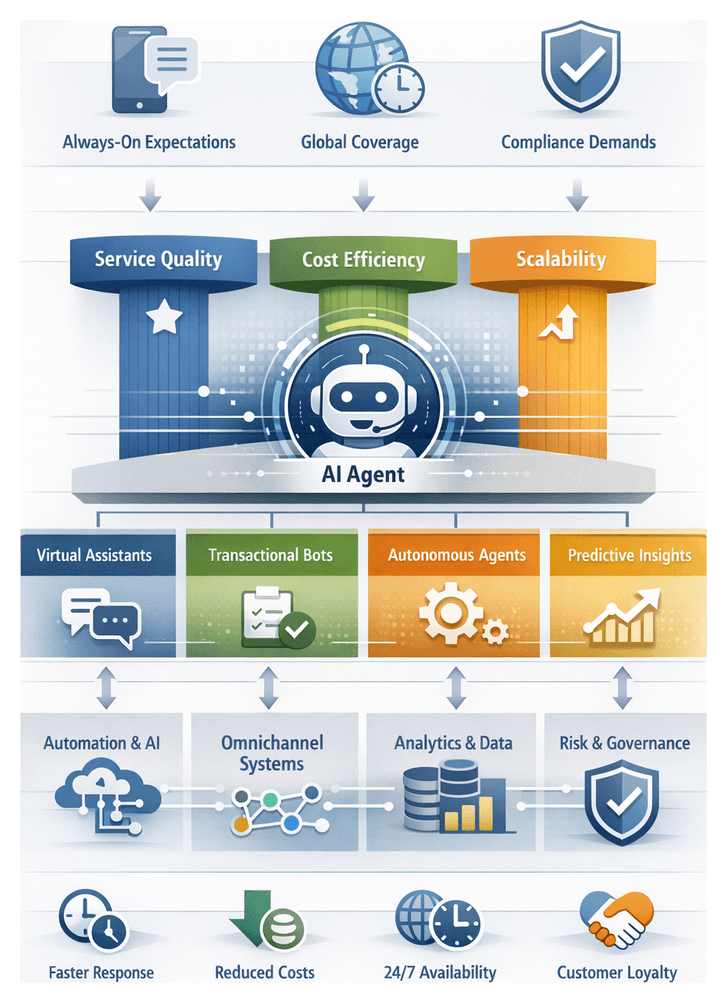
In the digital economy, customer expectations have shifted from acceptance of fixed operating hours to an expectation of uninterrupted availability. Mobile applications, social media, and real-time messaging have conditioned users to demand immediate responses. A delay of even a few hours can erode trust, drive abandonment, and prompt customers to seek competitors. Sectors such as e-commerce, financial services, and travel are especially sensitive, where urgent inquiries often arise outside traditional business hours. Ensuring round-the-clock service is no longer a luxury—it is the baseline for leading customer experience.
Competitive pressures amplify the need for continuous availability. In markets saturated with similar products and pricing, service responsiveness becomes a key differentiator. Organizations offering 24/7 support consistently report higher net promoter scores, reduced churn, and increased cross-sell opportunities. Global brands leveraging perpetual assistance across time zones have seen measurable growth in repeat purchases and subscription renewals, demonstrating that sustained investment in continuous support yields long-term returns that outweigh initial costs.
Global expansion introduces further complexity. Distributed customer bases across multiple time zones create service gaps when support centers operate on local schedules. Staggered shifts and follow-the-sun models mitigate coverage issues but introduce management, training, and quality-control challenges. Inconsistent language mastery, cultural nuances, and handoff risks can undermine the promise of a unified global brand experience.
Traditional support models face mounting operational strains. Extending human-agent coverage to nights and weekends incurs elevated labor costs, complex shift planning, high turnover, and quality assurance challenges across distributed or outsourced teams. During peak demand or product launches, scalability falters. Manual processes, knowledge silos, and fragmented routing further increase resolution times and limit first-contact success. Moreover, regulatory mandates in industries such as finance (GDPR, PCI DSS) and healthcare (HIPAA) impose stringent response and audit requirements, compounding operational burdens.
Technological accelerators have responded to these dynamics. Cloud platforms, omnichannel systems, and real-time analytics lay the groundwork for more scalable and resilient support frameworks. Automation and artificial intelligence now promise to handle routine inquiries and orchestrate engagement across channels. Understanding these industry forces establishes the strategic imperative for transitioning to AI-driven, 24/7 support models.
The AI Agent Paradigm
AI agents are software entities that engage autonomously with users, interpret natural language input, and execute tasks toward resolution. Unlike traditional scripted chatbots or IVR menus, AI agents integrate learning capabilities, context management, and decision logic to handle complex, multi-turn inquiries without continuous human intervention. Their maturity can be assessed across four dimensions: intelligence, autonomy, adaptability, and integration.
At the simplest level, agents rely on keyword matching and predefined decision trees. At the most advanced, they harness deep learning models and knowledge graphs to infer intent, anticipate needs, and initiate proactive outreach. This intelligence spectrum provides a roadmap for organizations to assess current capabilities and plan incremental enhancements.
Distinguishing AI Agents from Traditional Automation
- Response Scope: AI agents adapt responses based on real-time analysis of context, sentiment, and user history; rule-based systems follow rigid scripts.
- Learning Mechanisms: AI agents refine intent classifiers and response strategies through machine learning pipelines ingesting conversation logs; traditional tools require manual script updates.
- Context Retention: AI agents maintain dialogue state over extended interactions; legacy models reset context after each query.
- Proactivity: Advanced agents trigger notifications, reminders, and follow-up tasks without explicit user prompts; rule-based systems lack autonomous initiative.
Taxonomy of AI Agents
- Assistive Virtual Assistants: Embedded in digital interfaces for navigation, FAQs, and simple transactions. Examples include Zendesk Answer Bot and IBM Watson Assistant.
- Transactional Chatbots: Execute predefined tasks such as appointment booking or returns processing. Platforms include Google Dialogflow and Microsoft Azure Bot Service.
- Autonomous Service Agents: Handle end-to-end support workflows, integrating with back-office systems for data retrieval and updates.
- Predictive Engagement Agents: Use predictive analytics and user profiling to anticipate issues—such as subscription renewals or payment failures—and initiate proactive outreach.
Analytical Frameworks and Governance
- Autonomy Maturity Model: Stages from human-assisted to fully autonomous delivery, guiding capability roadmaps and risk mitigation.
- Cognitive Capability Matrix: Assesses perception (input interpretation), reasoning (decision logic), and action (task execution).
- Service Science Lens: Views agents within a socio-technical ecosystem, emphasizing co-creation of value, governance, and performance monitoring.
- ROI and Value Mapping: Combines cost savings, efficiency gains, and customer satisfaction impacts into a business case with sensitivity analysis and payback timelines.
Balancing autonomy and oversight through human-in-the-loop protocols, confidence thresholds, and continuous bias detection ensures ethical, auditable, and compliant operations. Key performance indicators—first-contact resolution, deflection rates, customer effort scores, and net promoter scores—quantify progress from reactive support to predictive engagement.
Technological Enablers for Autonomous Support
Recent advances have made AI agents both practical and imperative for modern support. Large-scale transformer architectures such as GPT-4 have delivered breakthroughs in natural language understanding and generation, enabling fine-tuning with modest data volumes to capture domain-specific terminology. Cloud providers have embedded AI services into elastic platforms: Vertex AI, Amazon Lex, and Watson Assistant offer preconfigured pipelines for intent recognition, sentiment analysis, and dialogue management.
Open-source communities around Hugging Face and TensorFlow have fostered continuous innovation in lightweight, domain-adaptable models. The microservices paradigm allows modular AI components to integrate seamlessly with existing CRM platforms, knowledge bases, and analytics pipelines. Cloud migration, omnichannel engagement, and integrated analytics underpin proactive monitoring and elastic scaling.
Competitive imperatives drive adoption. Organizations benchmark service agility in sub-minute response times, viewing AI capabilities as strategic assets. Proprietary training data, domain ontologies, and feedback loops create barriers to imitation and sustainable advantage. Economic pressures—rising labor costs, agent shortages, and demands for operational efficiency—further propel AI integration. Cloud-based agents offer variable cost structures, measured handle-time reductions, and rapid payback within months.
Regulatory frameworks such as GDPR, CCPA, and industry-specific mandates catalyze responsible AI deployment through privacy-by-design, consent management, and auditable data governance. Frameworks like the NIST AI Risk Management Framework guide balanced innovation with accountability, reinforcing brand trust and competitive positioning.
Organizational readiness—driven by executive sponsorship, cross-functional collaboration, and agile governance—ensures rapid iteration of prototypes, continuous learning from performance metrics, and incremental scaling. Assessments of digital maturity, skill gaps, and clear accountability structures align technology deployment with long-term support transformation.
Strategic Principles for Next-Generation Support
Designing resilient, AI-augmented support requires service models that are agile, customer-centric, and sustainable. Leading organizations apply the following principles to guide future service design.
Aligning Support Strategy with Business Objectives
- Map customer journeys to strategic priorities and metrics such as retention, upsell rates, and satisfaction indices.
- Define success criteria in business terms—customer lifetime value impact, net promoter score improvements, and market share gains.
- Embed support considerations in product and service roadmaps via early collaboration among support, product, and marketing teams.
Balancing Automation with Human Empathy
- Implement tiered engagement models where AI agents handle routine inquiries and seamlessly escalate complex or sensitive issues to human agents.
- Maintain human-in-the-loop oversight with real-time monitoring protocols and escalation thresholds.
- Establish personalization guardrails to mitigate bias and privacy risks, defining clear boundaries for automated decision-making.
Designing for Scalability and Resilience
- Adopt elastic capacity planning to anticipate peak demand without excessive overprovisioning.
- Ensure failover and redundancy with distributed backups and automatic rerouting of critical components.
- Deploy continuous performance monitoring frameworks to identify anomalies before customer impact.
Prioritizing Contextual Continuity
- Aggregate cross-channel interaction histories into unified records for seamless dialogue resumption.
- Leverage sentiment analysis and intent signals to adapt conversational tone and determine self-service or human intervention.
- Orchestrate omnichannel transitions—chatbot to live chat or voice—while preserving context.
Embedding Governance, Ethics, and Compliance
- Adopt ethical AI policies outlining acceptable use cases, data handling, and bias mitigation.
- Align with regional and industry regulations—GDPR, CCPA, HIPAA—through consent management and data sovereignty controls.
- Maintain transparent communication, explainability of AI responses, and clear escalation paths for contested decisions.
Leveraging Data as a Strategic Asset
- Establish unified data models for customer profiles, product catalogs, and interaction logs.
- Implement data quality management processes for cleansing, enrichment, and validation to prevent model drift.
- Embed privacy-by-design with anonymization, encryption, and access controls from data ingestion through lifecycle.
Cultivating Organizational Readiness and Culture
- Foster cross-functional collaboration among IT, operations, marketing, and compliance to break down silos.
- Invest in training programs to upskill agents in AI oversight, data literacy, and emotional intelligence.
- Secure executive sponsorship and define clear accountability for AI governance, performance targets, and iterative improvements.
Evaluating Future Service Models
- Strategic Alignment: Assess how design advances core business objectives and customer loyalty.
- Technical Feasibility: Evaluate existing infrastructure, data maturity, and vendor capabilities.
- Operational Impact: Estimate staffing, training, and process redesign requirements.
- Risk and Compliance: Identify regulatory obligations, ethical considerations, and mitigation strategies.
- Customer Acceptance: Gauge user sentiment through pilots or surveys to refine flows and escalation thresholds.
By integrating these strategic principles, organizations can design support models that not only meet the demands of continuous availability but also drive long-term differentiation, operational efficiency, and customer trust.
Chapter 2: Anatomy of AI Agents: Core Technologies and Capabilities
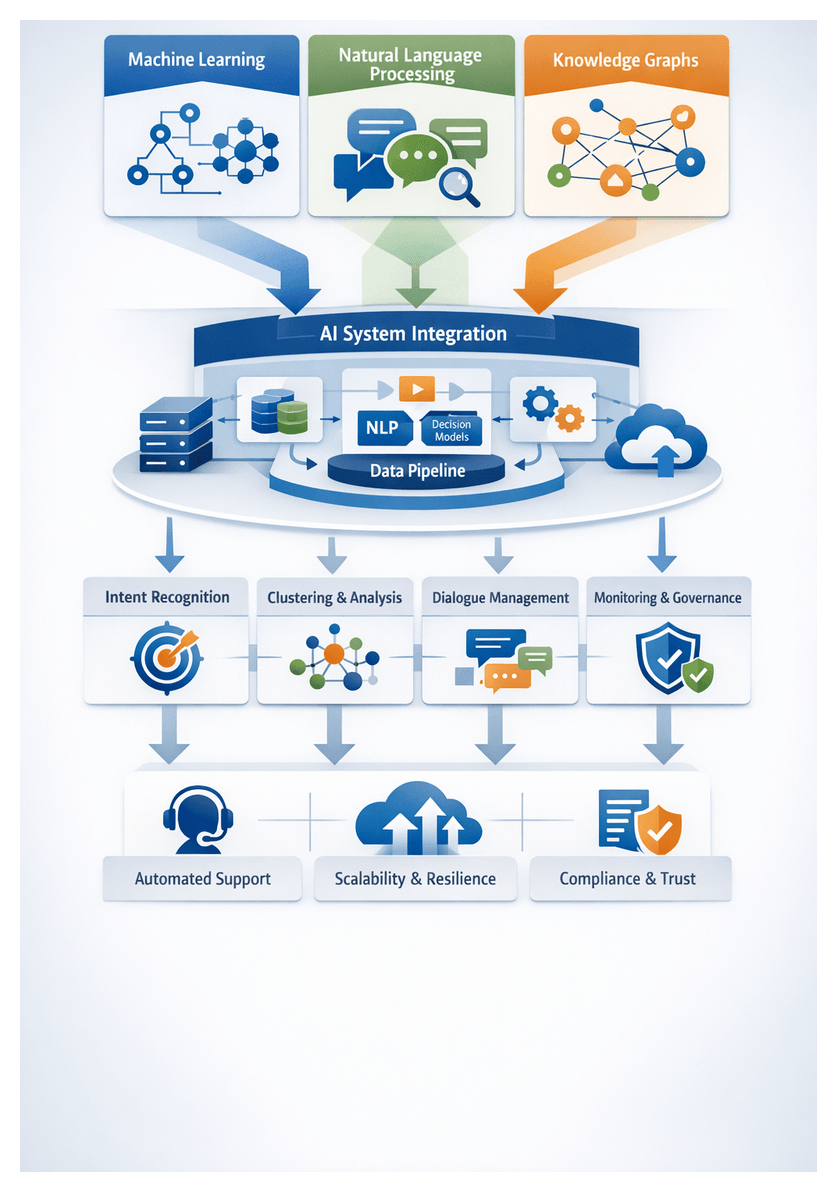
Machine Learning as the Decision Engine
Machine learning transforms historical interaction logs into predictive models that guide autonomous support. Supervised techniques ingest chat transcripts, agent resolutions, and outcomes to train classifiers—from decision forests and support vector machines to deep neural networks and transformers—that determine the next best actions in real time. Feature engineering converts raw inputs such as message text, sentiment, metadata, and past resolution codes into structured vectors that capture patterns essential for accurate predictions. Iterative retraining cycles refine model weights as new labeled data arrives, enabling agents to adapt to evolving customer concerns and product changes.
- Unsupervised clustering detects emerging topics and shifting sentiment trends without labeled examples.
- Reinforcement learning optimizes multi-turn dialogues by assigning rewards to successful resolutions and penalties to unsatisfactory exchanges.
- Continuous integration pipelines automate data ingestion, model retraining, and validation, while monitoring frameworks flag drift and performance degradation.
Natural Language Processing for Human-Centric Interactions
Natural language processing equips AI agents to interpret and generate human language through intent recognition, entity extraction, sentiment analysis, and context management. Transformer-based models pre-trained on large corpora and fine-tuned on domain-specific data drive high-precision intent classifiers, ensuring messages about billing, technical issues, or account updates are routed correctly. Named entity recognition pipelines combine statistical tagging with gazetteers to extract dates, product names, error codes, and user identifiers, enabling personalized and efficient backend operations.
- Sentiment analysis gauges emotional tone, allowing agents to adapt tone or escalate to live specialists when frustration peaks.
- Dialogue state tracking maintains memory across multi-turn and multi-channel interactions, preserving context and avoiding redundant questions.
- Fallback mechanisms incorporate rule-based grammars or human intervention for ambiguous or high-risk scenarios.
Knowledge Graphs as the Semantic Backbone
Knowledge graphs represent domain entities—products, services, workflows—and the relationships between them, enabling AI agents to navigate complex knowledge domains. Nodes such as “router,” “firmware update,” or “network outage” connect via edges denoting compatibility, causation, or prerequisites. This flexible structure supports dynamic schema evolution and enriches graph content through automated pipelines that integrate structured manuals and unstructured forums via NLP annotations.
- Query languages like SPARQL enable real-time graph traversal to retrieve relevant resolution paths.
- Reasoning engines apply rule-based or probabilistic logic to infer implicit relationships, powering proactive recommendations and incident escalations.
- Continuous enrichment ensures the graph reflects new product versions, policy updates, and emerging support articles.
Architectural Synergies and Scalable Pipelines
An integrated pipeline unites machine learning, natural language processing, and knowledge graphs within a modular microservices architecture. Incoming messages flow through NLP modules that detect intent and entities, then reference knowledge graph context before decision models select resolution strategies. Generated responses may invoke API calls to backend systems for ticket creation, account updates, or order inquiries. Containerized services and orchestration platforms manage service discovery, load balancing, and autoscaling, ensuring fault tolerance and minimal latency even under volatile demand.
- Automated scaling policies dynamically allocate compute resources based on predicted ticket volumes and live throughput metrics.
- Multi-region deployments bolster resilience, while auto-healing mechanisms detect and recover from failures without human intervention.
- Unified telemetry aggregates performance data—latency, resolution rates, sentiment scores—into dashboards that inform continuous optimization.
Operational Resilience and Autonomous Service Delivery
Autonomous AI agents deliver 24/7 support with digital elasticity that outpaces traditional human staffing. Predictive analytics anticipate peak loads, triggering preemptive resource provisioning and prioritizing high-value interactions. Advanced fault-tolerance features—such as circuit breakers, retry policies, and degraded-mode fallbacks—allow systems to maintain core functionality during infrastructure disruptions. This self-recovering design shifts the resilience burden from manual on-call rosters to automated monitoring and remediation frameworks.
- Resilience metrics extend beyond uptime to include self-recovery rates and adaptation to evolving query patterns.
- Sandbox environments validate new AI capabilities in parallel, ensuring that full autonomy is deployed only after rigorous performance thresholds are met.
- Escalation triggers embed human-in-the-loop checkpoints for sensitive or complex cases, balancing automation with empathetic intervention.
Analytical Framework for Technology Evaluation
A structured analytical approach compares machine learning, NLP, and knowledge graph components across performance, robustness, and interpretability criteria. Key metrics include classification accuracy (precision, recall, F1-score), predictive reliability (MAE, RMSE), and throughput under stress tests. Robustness assessments examine model resilience to concept drift, adversarial inputs, and multilingual variations, while governance frameworks enforce explainability through SHAP values, LIME explanations, and audit logs.
- Robustness under real-world conditions is ensured by stress-testing models against seasonal spikes, diverse languages, and multimodal data.
- Interpretability safeguards enable compliance with regulations and ethical standards by making decision pathways transparent.
- Error attribution frameworks pinpoint failure modes—misclassified intents, parsing errors, or missing graph relations—to guide targeted improvements.
Governance, Compliance, and Ethical Oversight
Scaling autonomous agents demands clear accountability for automated actions—processing refunds, updating records, or initiating communications. Cross-functional ethics councils and privacy officers embed bias detection and fairness assessments within the AI lifecycle, using demographic parity metrics and continuous bias monitoring tools. Platforms log every agent action, supporting auditability and enabling compliance with regulations such as GDPR and industry-specific mandates.
- Role-based access controls restrict sensitive actions until compliance reviews are complete.
- Audit logs and explainability features provide traceable records of model decisions and data sources.
- Hybrid oversight models combine automated enforcement with periodic human audits to maintain trust and regulatory alignment.
Strategic Alignment and Business Impact
Effective AI-driven support aligns with enterprise objectives through formal governance forums that bridge business leaders, support executives, and technical architects. Frameworks like Objective and Key Results ensure investments advance metrics such as customer satisfaction, first contact resolution, and operational efficiency. Mapping technology capabilities—real-time analytics, multilingual support, predictive routing—to targeted outcomes creates a strategic matrix that guides vendor selection and deployment roadmaps.
- Financial services may prioritize fraud detection and compliance, while retail focuses on conversion uplift and basket size expansion.
- Cultural readiness and change management capacity influence implementation timelines and scalability potential.
- Incremental pilots validate interoperability and performance before extending autonomy to critical touchpoints.
Integration, Interoperability, and Vendor Ecosystem
AI agents must integrate seamlessly with CRM, ERP, and order management systems via API-first designs—RESTful endpoints, GraphQL schemas, or event-driven architectures based on Apache Kafka. Knowledge graphs normalize disparate taxonomies, ensuring consistent entity and intent interpretation across services. Organizations leverage vendor ecosystems that offer prebuilt connectors and industry modules, and tap open source communities for rapid innovation and risk mitigation.
Platforms such as IBM Watson and Google Dialogflow exemplify deeply integrated solutions where semantic relationships from knowledge graphs enhance reasoning across data silos, and unified analytics provide holistic service health insights.
Scalability, Maintainability, and Future-Proofing
Capacity planning employs queueing theory and load testing to validate sub-second response times under burst loads. Choices between serverless functions and containerized microservices balance the simplicity of auto-scaling with the control of orchestration. MLOps practices—version-controlled datasets, automated training pipelines, and deployable model registries—ensure reproducibility, traceability, and auditable lifecycles. Continuous monitoring dashboards detect drift and trigger retraining, while runbooks and technical documentation prevent “black-box abandonment.”
Future-proof architectures embrace open standards such as ONNX for model interchange and Kubernetes for orchestration, and support multiple ML frameworks—from TensorFlow to PyTorch. Emerging paradigms like federated learning and edge inference expand deployment to retail stores, manufacturing lines, and mobile devices, offering new privacy and latency advantages.
Cost Modeling and Risk Mitigation
Total cost of ownership analysis incorporates subscription fees, variable cloud infrastructure costs, data labeling, and ETL overhead. Sensitivity analyses identify cost levers—data volume, model complexity, feature scope—enabling trade-offs between performance and expense. Financial projections, augmented by Monte Carlo simulations, quantify risk-adjusted returns and inform budget allocations.
- Risk registers categorize technical and organizational threats—vendor bankruptcy, security breaches, algorithmic bias—and assign mitigation plans.
- Stress tests simulate data poisoning, model drift, and infrastructure failures to validate fallback strategies and escalation protocols.
- Transparent risk communication with stakeholders builds organizational buy-in and clarifies thresholds for acceptable performance variances.
Balancing Trade-Offs with a Multidimensional Framework
A decision-matrix aligns IT, legal, finance, and customer experience priorities by scoring vendor capabilities, technical fit, and risk profiles against weighted criteria. Workshops define evaluation weights, pilot deployments validate proofs of value, and comparative dashboards guide vendor selection. This structured process minimizes subjective bias and lays the groundwork for sustainable, scalable AI support systems that adapt to evolving market demands and technological innovations.
Chapter 3: Natural Language Processing and Understanding
Understanding Advanced Natural Language Techniques
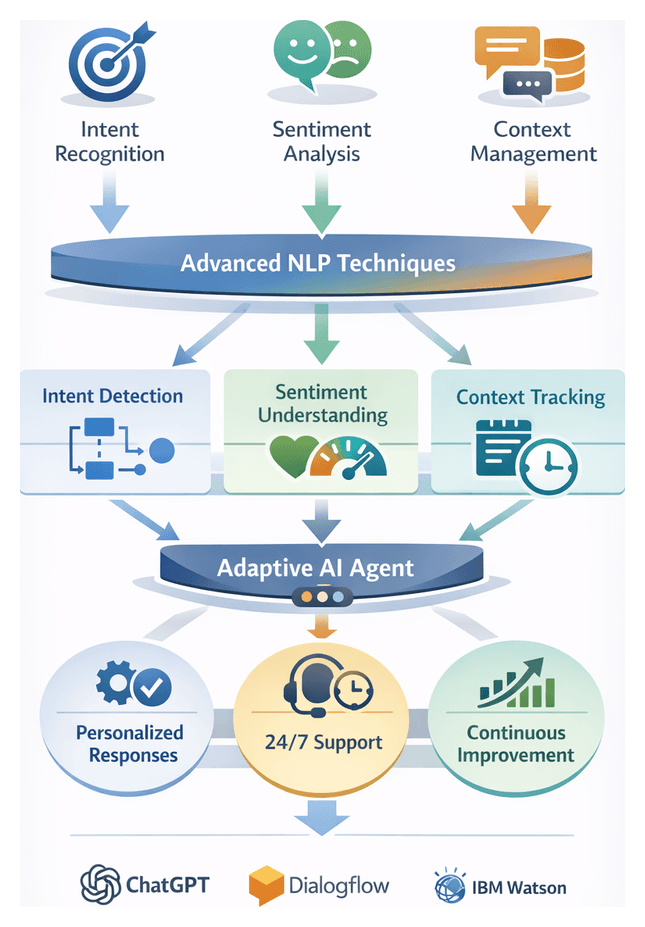
Advanced natural language techniques form the foundation of AI-driven customer support, enabling human-like interaction at scale. These techniques include intent recognition, sentiment analysis, and context management. Intent recognition deciphers user goals, sentiment analysis gauges emotional tone, and context management preserves conversational continuity. Together, they allow organizations to move beyond scripted responses toward adaptive, 24/7 support. Leading platforms such as ChatGPT, Google Dialogflow, and IBM Watson exemplify how these capabilities boost resolution rates, reduce handling times, and improve customer satisfaction.
Intent Recognition
Intent recognition maps user utterances to actionable objectives. By accurately detecting whether a user wants to “check order status,” “reset a password,” or “request a refund,” AI agents can automate full-ticket resolution without human handoffs. Advanced systems also handle compound and nested intents, supporting complex workflows.
- Tokenization and Embedding: Converting text into vectors that capture semantic relationships.
- Supervised Classification: Training models such as support vector machines, random forests, or deep neural networks on annotated datasets.
- Hierarchical Intent Structures: Organizing broad intents and specialized sub-intents to manage scalability.
Accurate intent classification drives workflow routing, knowledge retrieval, and API invocation. It enables personalized interactions, streamlines business logic, and reduces operational costs. In high-volume environments, misclassification rates above 5–10 percent can erode satisfaction. Mitigating these errors requires ongoing training pipelines, active learning, and close integration with annotation platforms.
Methodologies and Evaluation
- Rule-Based Systems: Handcrafted patterns and decision trees, offering transparency but limited scalability.
- Statistical Models: Classical machine learning requiring feature engineering, balancing performance and interpretability.
- Deep Learning: Architectures such as CNNs, RNNs, and transformers (for example, BERT or GPT) that process raw text with minimal feature design, delivering high accuracy at the cost of greater data and compute demands.
- Accuracy Metrics: Precision, recall, and F1 scores per intent class guide performance thresholds.
- Latency and Throughput: Inference speed under peak load must meet service-level agreements.
- Explainability: Transparent decision logic is critical in regulated industries; auxiliary tools can demystify deep learning outputs.
- Scalability: Transfer learning and fine-tuning frameworks reduce data requirements when adding new intents.
Best-in-class teams conduct iterative A/B testing, combining quantitative metrics with qualitative feedback to refine intent models continuously.
Sentiment Analysis
Sentiment analysis interprets the emotional context of user messages—frustration, urgency, satisfaction, or neutrality. By detecting sentiment shifts in real time, AI agents can modulate tone, escalate critical cases, and de-escalate tense interactions to protect brand reputation.
Core Techniques
- Lexicon-Based Approaches: Use predefined sentiment dictionaries with heuristic rules to assign polarity scores.
- Machine Learning Classifiers: Employ features such as n-grams and part-of-speech tags to train models like logistic regression or support vector machines.
- Deep Learning Models: Utilize CNNs and transformer-based architectures to capture complex semantic patterns and context.
Operational Benefits
- Adaptive Tone Modulation: Switching language style from neutral to empathetic when frustration is detected.
- Priority Routing: Flagging negative sentiment for rapid human review or high-priority workflows.
- Sentiment Analytics: Aggregating sentiment data to uncover product pain points and service bottlenecks.
Combining lexicon and machine learning methods often yields the best balance of interpretability and accuracy. Regular updates to sentiment dictionaries and retraining with domain-specific data guard against concept drift and maintain relevance to evolving customer language.
Context Management
Context management tracks dialogue state across turns, ensuring AI agents remember past interactions, resolve pronouns, and handle follow-up questions. Unlike intent recognition and sentiment analysis, which operate per utterance, context management preserves conversational coherence over extended exchanges.
- Dialogue State Tracking: Recording variables such as user identity, selected options, and unfilled slots throughout a session.
- Context Windows: Maintaining a memory of recent exchanges to disambiguate references.
- Long-Term Profiling: Linking sessions to historical data—past tickets, preferences, and purchases—for personalized service.
Business Impact
- Reduced Repetition: Avoiding redundant questions accelerates resolution and boosts satisfaction.
- Enhanced Self-Service: Guiding users through multi-step tasks without human intervention.
- Personalized Follow-Through: Suggesting next-best actions and upsell opportunities based on stored context.
Implementations range from simple rule-based session variables to enterprise-grade state stores and graph-based representations. Ensuring secure handling of sensitive context, especially when integrated with CRM or ERP systems, is paramount.
When intent recognition, sentiment analysis, and context management work in concert, AI agents can emulate human adaptability and empathy. Joint interpretation enhances response relevance and emotional resonance:
- Intent-Context Alignment: Disambiguating requests dependent on prior turns, such as “Apply that discount now.”
- Sentiment-Aware Routing: Escalating interactions where negative sentiment persists across exchanges.
- Dynamic Response Generation: Leveraging advanced language models to craft tailored, contextually grounded replies.
Investing in a unified NLP architecture rather than isolated point solutions positions organizations to deliver seamless, scalable, and human-centered support around the clock.
Analytical Frameworks for Continuous Improvement
Rigorous evaluation and governance elevate AI agents from basic automation to nuanced, adaptive support. Analytical frameworks encompass both technical and business metrics, interpretive structures, and continuous feedback loops.
Performance Metrics
- Task-Level Metrics: Intent accuracy, entity extraction performance, and sentiment classification F1.
- End-to-End Measures: First-contact resolution rate, average handling time, and customer satisfaction scores (CSAT).
- Latency and Scalability: Inference speed under peak loads and the ability to onboard new intents or languages efficiently.
- Bias Monitoring: Counterfactual testing and disparate impact analysis to detect unintended biases.
- Explainability: Utilizing tools such as SHAP or LIME to clarify model decisions for compliance and auditability.
Governance and Feedback Loops
- Error Analysis Workshops: Cross-functional teams review high-impact misclassifications to resolve root causes.
- Human-in-the-Loop: Expert annotators validate edge cases and guide incremental retraining.
- Dashboards and Cadence: Weekly and monthly performance reviews align data scientists, support managers, and UX researchers.
- Benchmarking: Participating in industry challenges and sharing anonymized metrics to compare performance against peers.
Contextual Dimensions and Business Implications
Context shapes every aspect of conversational AI, from interpretation to user trust. Four key dimensions inform design and measurement:
- Session Context: Real-time dialogue state, recent utterances, and detected sentiment.
- User Context: Historical interactions, purchase history, and preferences.
- Domain Context: Industry-specific terminology and regulatory constraints.
- Environmental Context: External factors such as location, device, or time.
Embedding these dimensions enhances conversational coherence, efficiency, trust, and personalization. For example, an AI agent leveraging medical history in healthcare can deliver safer advice, as demonstrated by IBM Watson Assistant. In finance, agents integrate transaction context via Microsoft Azure Bot Service to detect anomalies and comply with regulatory standards. Retail platforms using Google Dialogflow tailor recommendations based on regional promotions and customer profiles.
Considerations for NLP Implementation
Implementing NLP-driven support requires navigating technical, organizational, and ethical complexities. Key considerations include:
- Data Quality and Annotation: Adopt clear label taxonomies and active learning to refine datasets. Monitor for data drift with continuous sampling and reannotation.
- Domain Customization: Leverage transfer learning and maintain dynamic glossaries of industry jargon. Combine rule-based components for compliance-sensitive queries.
- Language Coverage: Calibrate multilingual embeddings and validate cultural nuances through local focus groups. Ensure regional compliance for data residency.
- Model Lifecycle Management: Apply MLOps practices for version control, automated testing, and canary releases. Integrate user feedback to drive continuous retraining.
- Metrics and Bias Monitoring: Balance technical performance metrics with business outcomes. Conduct systematic bias audits and human-in-the-loop evaluations.
- Privacy and Ethical Governance: Enforce data minimization, end-to-end encryption, and role-based access controls. Establish cross-functional ethics committees to guide policy.
- Scalability and Integration: Optimize inference with quantization and microservices architectures. Evaluate vendor lock-in risks and plan for portability.
- Organizational Alignment: Define roles such as conversation designers and compliance officers. Build centers of excellence and invest in training to foster cross-functional collaboration.
By grounding NLP initiatives in rigorous data practices, governance frameworks, and collaborative operating models, organizations can mitigate risks and unlock the full potential of AI-driven conversational support.
Chapter 4: AI Agent Architectures for Continuous Support
Architectural Paradigms for Scalable AI Agents
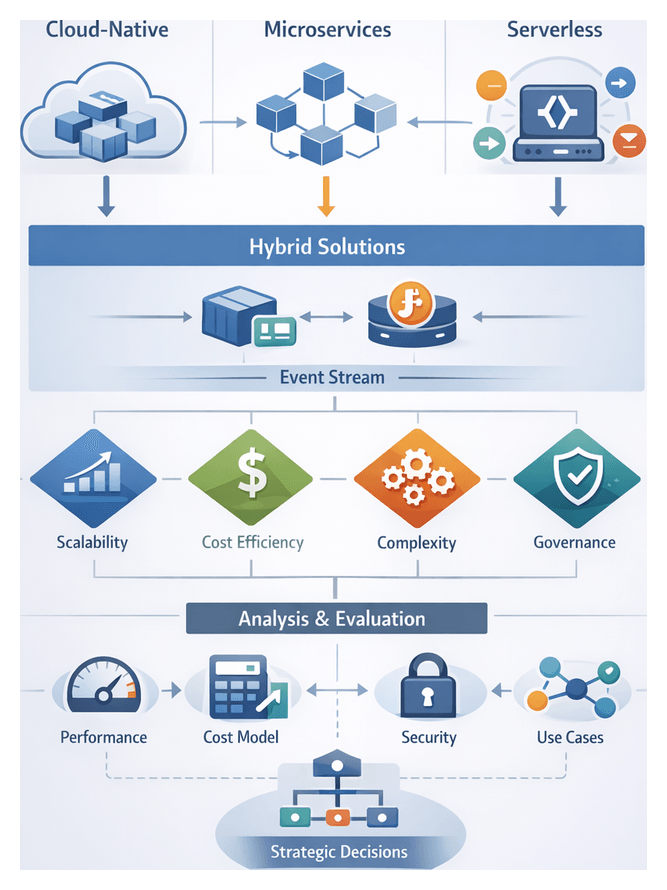
Delivering uninterrupted, high-quality AI-driven customer support around the clock demands architectures that balance control, flexibility, resilience, and cost. Three principal paradigms—cloud-native, microservices, and serverless—each offer distinct advantages and trade-offs. Many organizations adopt hybrid patterns, combining containerized core engines with event-driven functions to meet diverse workload characteristics and service-level objectives.
Cloud-Native Architecture
Cloud-native design decouples application components, leverages containerization, and automates infrastructure through orchestration. By abstracting hardware concerns, teams focus on feature delivery while platforms handle scaling, failover, and service discovery.
- Elasticity: Automatic scaling adjusts compute and network resources in real time to match demand.
- Resilience: Orchestrators detect failures and self-heal detached components without manual intervention.
- Continuous Delivery: Pipelines support blue/green or canary deployments, minimizing downtime during updates.
- Vendor Independence: Standards-based containers and open APIs ease migration across public, private, or hybrid clouds.
Core tools include Kubernetes for orchestration, Docker for container images, service meshes such as Istio or Linkerd for traffic management and security, and Infrastructure-as-Code solutions like Terraform or AWS CloudFormation to declaratively provision resources.
Microservices Architecture
Microservices decompose the platform into independently deployable services, each owning a specific capability. Teams manage the full lifecycle of their services, enabling rapid iteration without impacting the broader system.
- Independent Scaling: Components such as natural language processors or recommendation engines scale separately from lightweight modules.
- Fault Isolation: Circuit breakers and retry policies prevent failures from cascading across services.
- Polyglot Flexibility: Teams select languages and frameworks best suited for each service’s requirements.
- Targeted Deployment: Rolling updates and A/B testing enable experimentation with new AI models or dialogue flows.
Key considerations include service discovery using platforms like HashiCorp Consul or Kubernetes DNS, API gateways such as the NGINX Ingress Controller or Ambassador, and communication patterns—synchronous (REST, gRPC) versus asynchronous (message queues, event streams)—to optimize latency and consistency.
Serverless Architecture
Serverless computing abstracts server management entirely, allowing functions to execute in response to events. Providers like AWS Lambda, Google Cloud Functions, or Azure Functions handle provisioning, scaling, and patching, charging only for execution time.
- Cost Efficiency: Idle functions incur no charges, making serverless ideal for unpredictable or low-baseline workloads.
- Automatic Scaling: Functions scale instantly in response to triggers without capacity planning.
- Minimal Operations Overhead: Eliminates server maintenance and patch management.
Trade-offs include cold-start latency, execution time and memory limits, vendor lock-in, and the need for specialized tracing solutions to achieve observability.
Hybrid Patterns
A hybrid approach combines containerized services for core, low-latency conversational engines with serverless functions for asynchronous or bursty tasks. Event streaming platforms like Amazon SQS or Google Pub/Sub bridge front-end channels with back-end pipelines, while a unified API gateway routes requests to the appropriate runtime environment. This pattern leverages the strengths of each paradigm while mitigating individual limitations.
Comparative Analysis
Selecting between cloud-native, microservices, and serverless—or blending them—requires a multidimensional evaluation of performance, cost, complexity, and governance. Decision-makers employ analytical frameworks to align architecture with business priorities and customer experience targets.
Performance and Scalability
Experts assess metrics such as latency, throughput, and resource footprint. Cloud-native systems maintain warm containers and tune autoscaling policies based on CPU, memory, or custom indicators. In serverless, cold starts introduce variability—tens to hundreds of milliseconds depending on runtime and platform optimizations. Strategies like provisioned concurrency or hybrid warm services can mitigate latency spikes.
- Cloud-native pros: predictable latency, fine-tuned autoscaling, granular resource allocation.
- Cloud-native cons: operational overhead, orchestration complexity.
- Serverless pros: zero-ops scaling, pay-per-use cost model, rapid deployments.
- Serverless cons: cold-start variability, execution limits, constrained local resources.
Frameworks such as queuing theory models guide the comparison of autoscaling delays versus concurrency limits. Mapping these characteristics to service-level objectives ensures alignment with customer experience thresholds.
Cost Models and Financial Implications
Financial analysis differentiates capital expenditure on reserved infrastructure from operational expenditure on consumption-based services. Unit economics compare per-second function pricing against amortized container costs. High, steady request rates often favor containers, while spiky or low-volume workloads benefit from serverless.
- Container cost factors: reserved instance fees, utilization rates, overprovisioning buffers.
- Function cost factors: compute duration, memory footprint, invocation count, provisioned concurrency surcharges.
Monte Carlo simulations project cost variability under potential traffic patterns, enabling informed decisions on upfront commitments versus pay-as-you-go spending.
Operational Complexity and Governance
Cloud-native ecosystems demand robust DevOps practices, including continuous integration pipelines, container registries, and policy enforcement via tools like Open Policy Agent. The expanded attack surface requires specialized teams for cluster and network security.
Serverless reduces infrastructure management but shifts governance to event orchestration and dependency validation. Distributed tracing tools such as AWS X-Ray or Google Cloud Operations are critical for diagnosing issues across ephemeral functions.
Frameworks like the Cloud Adoption Framework or the Serverless Framework provide structured guardrails. Dedicated platform teams often abstract complexity for product owners, balancing agility with compliance.
Maintainability and Evolution
Modular microservices facilitate independent lifecycles and incremental migrations. Clear APIs and versioning support backward compatibility. In serverless architectures, granular functions can proliferate, requiring naming conventions and deployment descriptors to manage scale. Testing strategies must combine unit tests for functions with integration tests that simulate event-driven workflows.
Service maturity models guide when to decompose monoliths into microservices or functions, factoring team size, release velocity, and workflow complexity.
Use-Case Alignment
Workloads such as high-volume generic queries, escalated issue triage, and proactive notifications exhibit unique demands:
- Core conversational engines in containers guarantee low latency and persistent state.
- Background tasks like transcript analysis or sentiment aggregation run as serverless functions for cost efficiency.
- Event streaming and message queuing via Amazon SQS or Google Pub/Sub connects interaction channels to processing pipelines.
The Function Suitability Matrix evaluates tasks by execution time, state requirements, and invocation frequency to determine the optimal execution environment.
Resilience and Scalability Strategies
Building resilient, scalable AI agent platforms ensures continuity in the face of failures, disruptions, and demand spikes. Resilience metrics include mean time between failures (MTBF), recovery time objectives (RTO), and graceful degradation capabilities.
Fault Tolerance and Redundancy
- Multi-Region Replication: Geographically dispersed deployments mitigate region-specific outages.
- Active-Active and Active-Passive Configurations: Balancing traffic across concurrent instances or standby failovers influences RTO and recovery point objectives (RPO).
- Data Consistency Models: Eventual consistency suits low-latency use cases, while strong consistency is critical for financial dispute support.
- Graceful Degradation: Non-critical features can be disabled to preserve core functionality under stress.
Auto Scaling and Load Management
Auto scaling reacts to real-time indicators—CPU usage, queue length, request rate—via platforms like Kubernetes and serverless frameworks such as AWS Lambda or Azure Functions. Predictive scaling, leveraging machine learning forecasts, anticipates surges tied to events like product launches or incidents, optimizing capacity before demand peaks.
Monitoring, Observability, and Self-Healing
Comprehensive observability integrates metrics, logs, and distributed tracing. Tools like Prometheus and Grafana provide dashboards for real-time insights. Chaos engineering practices, pioneered by Netflix Chaos Monkey, test system robustness through controlled failures. Automated remediation routines restart failed components, clear resource contention, or reroute traffic to maintain service continuity without human intervention.
Selection Dimensions and Strategic Guidance
Choosing an architecture involves balancing multiple dimensions—performance, cost, complexity, security, and organizational readiness. Applying structured criteria and iterative pilots leads to informed, adaptable decisions.
Performance and Resource Efficiency
- Latency Targets: Container-based microservices on Kubernetes or Amazon EKS deliver predictable response times, while serverless functions require provisioned concurrency to meet sub-second SLAs.
- Throughput and Concurrency: Horizontal scaling through stateless microservices on AWS Fargate or serverless auto scaling must align with concurrency limits to avoid throttling.
- Elasticity: Decoupling components—API gateways, processing engines, data stores—enables granular scaling, optimizing resource allocation across peaks and troughs.
Cost, Security, and Compliance
- Cost Models: Contrast pay-per-use serverless billing with reserved or spot instances. Factor in licensing, data transfer fees, and operational overhead of CI/CD, service meshes, and observability platforms.
- Isolation: Dedicated container clusters or virtual private clouds mitigate noisy neighbor risks in multi-tenant serverless environments.
- Data Residency and Encryption: Ensure encryption at rest and in transit, consistent key management, and regulatory compliance across distributed architectures.
- Identity and Access Management: Implement least-privilege IAM roles and network-layer mutual TLS via service meshes to enforce fine-grained policies.
Organizational Alignment and Skills
- DevOps Maturity: Teams proficient in container orchestration can exploit advanced control and observability, while those new to DevOps may favor serverless for its lower operational burden.
- Vendor Lock-In: Deep reliance on proprietary cloud services accelerates initial delivery but may hinder future multi-cloud strategies. Hybrid architectures using open standards preserve flexibility.
- Community and Partner Ecosystem: Active developer communities and professional services support faster issue resolution and innovation.
Trade-Offs and Iterative Pilots
No single architecture is universally optimal. Evaluating trade-offs—complexity versus control, predictability versus flexibility, maturity of emerging technologies—requires iterative validation:
- Map business objectives—ultra-low latency, cost optimization, compliance—to technical requirements and SLAs.
- Conduct proof-of-concepts that simulate peak loads, failure scenarios, and cost models for both microservices and serverless variants.
- Invest early in end-to-end observability, tracing, and automated remediation frameworks to manage growing complexity.
- Schedule periodic architecture reviews to reassess performance data, cost trends, and team capabilities, adapting the portfolio as customer demands and technology evolve.
By systematically applying these criteria and fostering a culture of continuous improvement, organizations can architect AI agent platforms that deliver resilient, scalable, and cost-effective support aligned with both current needs and future growth.
Chapter 5: Personalization and Customer Experience Enhancement
Industry Dynamics Driving 24/7 AI-Enabled Support
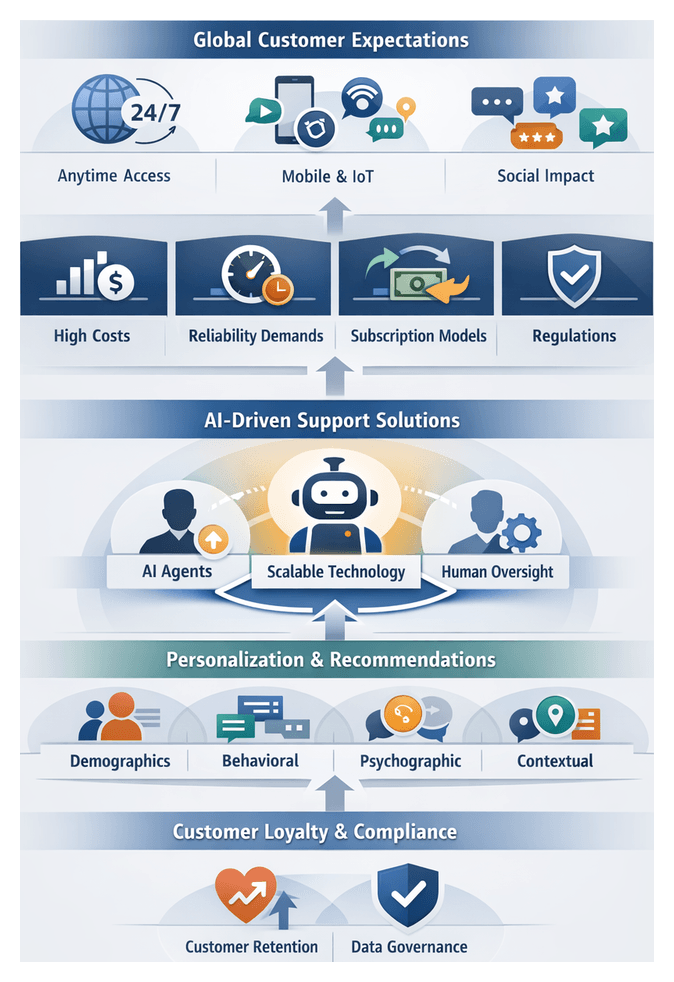
In today’s global, digital economy, continuous customer support has evolved from a competitive advantage to a basic expectation. Customers engage across time zones, devices and channels, demanding instant resolution and personalized experiences. Early call center models introduced shift-based staffing to extend service hours, but these solutions were constrained by high labor costs, inconsistent quality and rigid scheduling. As digital channels—email, chat and social media—emerged, brands extended coverage yet continued to struggle with the expense of round-the-clock human staffing.
Mobile ubiquity and on-demand consumer behavior have driven a dramatic shift in expectations. Research from Forrester indicates that over 70 percent of customers anticipate immediate assistance at any hour, and more than half will abandon a brand after just two poor service interactions. Subscription and service-based business models tie revenue directly to satisfaction and retention, placing further pressure on rapid issue resolution. In sectors such as e-commerce, telecommunications and finance, organizations routinely promote 24/7 support capabilities as central to their value propositions, fueling an arms race in response speed.
Social media and review platforms amplify the stakes of every support interaction. A single negative post can spread within minutes, undermining brand reputation, while a swift, public resolution can enhance perception and demonstrate customer-centric values. Regulatory requirements such as GDPR and CCPA add another dimension, mandating timely responses to data access requests and incident notifications. For example, a European telecommunications provider incurred a €35 million fine under GDPR for delayed breach reporting, illustrating that continuous support is essential for compliance as well as satisfaction.
Key Market Forces
- Global customer bases spanning multiple time zones and languages
- Ubiquity of mobile and connected devices, including IoT endpoints
- Expectation of real-time resolution and personalized interactions
- Subscription models linking support responsiveness to revenue retention
- Impact of social media and online reviews on brand trust
- Regulatory obligations for timely communication and data rights
Traditional staffing approaches face challenges in recruiting skilled agents for off-hours, sustaining quality across shifts and managing labor costs. Self-service portals and interactive voice response systems can deflect routine inquiries but often fail with complex or personalized issues. Accordingly, organizations are investing in intelligent automation to achieve scalable, consistent support. AI-powered chatbots and virtual assistants—such as IBM Watson Assistant and Microsoft Azure Bot Service—leverage natural language processing and machine learning to resolve routine cases around the clock and escalate complex queries to human experts.
Advances in cloud computing, microservices and serverless architectures enable elastic scaling of support platforms, while DevOps and continuous integration pipelines facilitate rapid iteration on AI models and content. Yet technology alone is insufficient without clear governance, cross-functional alignment and robust performance measurement. Governance structures must define AI oversight roles, data stewardship and escalation protocols. Metrics should include traditional KPIs—response time and resolution rates—as well as AI-specific measures like deflection rate, model accuracy and customer satisfaction with automated interactions.
Leading organizations adopt a hybrid model combining AI automation with human expertise. Intelligent routing allows AI agents to handle routine inquiries, freeing human agents to focus on complex or high-value interactions. For instance, one telecommunications provider implemented AgentLinkAI for first-level support, achieving a 70 percent deflection rate and reducing average resolution time by 15 percent while improving customer satisfaction. Over time, brands evolve toward unified AI orchestration platforms that integrate chatbots, voice assistants and back-end automation with CRM systems and analytics dashboards. Integrating solutions such as Zendesk with custom AI connectors ensures seamless handoffs and consistent context across automated and human channels.
Personalization and Recommendation Frameworks for AI Support Agents
User Profiling Dimensions
Personalization rests on comprehensive user profiles. Industry practitioners classify profiling into four dimensions:
- Demographic: Static attributes like age, gender, location and occupation provide baseline segmentation but lack depth.
- Behavioral: Activity patterns—page visits, support history and transactions—support adaptive models that evolve with user behavior.
- Psychographic: Preferences, values and motivations inferred via surveys and sentiment analysis enable richer personalization but require bias mitigation.
- Contextual: Situational factors such as device type, geolocation, time of day and channel inform tone, urgency and recommended actions.
Experts evaluate profiling on accuracy, timeliness and privacy compliance. Digital-native brands emphasize behavioral and contextual signals for real-time relevance, while regulated industries balance rich insights with strict data governance.
Recommendation Engine Selection
Translating profiles into actionable suggestions requires selecting the appropriate recommendation algorithm:
- Collaborative Filtering: Identifies user-item interaction patterns through user-based and item-based methods. Strengths include uncovering latent affinities; limitations include cold-start and popularity bias.
- Content-Based Filtering: Matches items to users based on semantic features and metadata. Mitigates new-user issues but can restrict discovery to similar content.
- Hybrid Models: Combine collaborative and content signals through ensemble strategies or context-driven switching for balanced accuracy and exploration.
- Knowledge-Based: Uses domain ontologies, rules or knowledge graphs. Integrated with platforms like Google Dialogflow, these engines suit compliance-sensitive environments.
- Deep Learning: Employs neural architectures—autoencoders, transformers—to capture complex relationships. Offers high precision at scale but requires extensive infrastructure and raises interpretability concerns.
Evaluating Recommendation Effectiveness
Performance is measured across multiple dimensions:
- Precision@K and Recall@K: Gauge relevance within top K recommendations for immediate satisfaction.
- NDCG (Normalized Discounted Cumulative Gain): Weighs relevance by rank position, rewarding higher-ranked items.
- Diversity and Serendipity: Assess the variety and unexpectedness of suggestions to mitigate echo chambers.
- Coverage and Novelty: Measure the algorithm’s capacity to recommend a broad range of items, critical in troubleshooting contexts.
- Fairness and Bias Indicators: Evaluate demographic parity and detect systemic biases, ensuring ethical treatment of user segments.
Real-time analytics dashboards—powered by services like Amazon Personalize and Google Recommendations AI—allow continuous monitoring of performance metrics, drift detection and rapid iteration via champion-challenger testing.
Contextual Nuances in Support Environments
Support use cases impose unique design requirements:
- Intent Sensitivity: Recommendations hinge on accurate intent recognition. Platforms such as Salesforce Einstein Bots integrate NLP-driven intent frameworks to surface relevant help articles or next-best actions.
- Sentiment Adaptation: Emotion signals guide response style, with empathetic suggestions prioritized for frustrated users.
- Session Continuity: Unified data pipelines preserve context across channel switches, ensuring coherent multi-touch journeys.
- Urgency and SLAs: Engines prioritize rapid, high-accuracy recommendations when interactions are flagged as urgent or subject to service-level agreements.
Fine-tuning algorithms to support objectives and incorporating domain-specific evaluation sets are essential to maintain trust and relevance.
Vendor Versus In-House Recommendation Solutions
Organizations choose between turnkey vendor services and custom engines based on cost, agility and control. Vendor platforms—such as Amazon Personalize and Google Recommendations AI—offer managed scalability, automated retraining and rapid time-to-value but can limit customization and data sovereignty. Proprietary in-house engines deliver full control over feature engineering and intellectual property but demand significant investment in data science talent, MLOps infrastructure and maintenance. Hybrid approaches combine vendor APIs for baseline capabilities with in-house extensions for niche use cases or proprietary data sources. A rigorous Total Cost of Ownership and Return on Investment analysis—factoring development costs, deployment timelines, vendor lock-in risks and compliance requirements—guides strategic decisions.
Impact of Tailored Support on Customer Loyalty
AI-driven personalization in support transforms interactions into dynamic dialogues that deepen emotional bonds and reinforce loyalty. By aligning assistance with individual profiles, AI agents can prompt incremental purchases, cross-sell relevant services and accelerate decision cycles. Retailers report a 25 percent uplift in average order value when support conversations reference recent browsing history or loyalty tier. Financial institutions leverage transaction history and risk profiles in tailored advisory messages, achieving higher conversion rates for account upgrades.
Churn reduction is a primary metric for personalization ROI. AI agents analyze sentiment trends, support frequency and frustration indicators to flag at-risk customers. Proactive interventions—clarifying billing issues or offering step-by-step tutorials—can reduce attrition by up to 30 percent. Subscription-based firms credit platforms like Dynamic Yield and Salesforce Einstein with significant gains in renewal rates and lifetime value through personalized retention campaigns.
Beyond economic benefits, tailored support fosters emotional resonance. When AI agents recall past issues, acknowledge milestones and adjust tone to match users’ mood, support becomes a meaningful brand touchpoint. Customers who feel understood demonstrate greater forgiveness of occasional errors and are more likely to advocate the brand. Executives apply analytical frameworks—RFM segmentation, NPS cross-tabulation, customer lifetime value modeling and composite engagement scoring—to isolate the contribution of personalized support to loyalty metrics and prioritize investment accordingly.
- RFM Analysis: Segments customers by Recency, Frequency and Monetary value to focus personalization on high-value cohorts.
- NPS Segmentation: Compares Net Promoter Score outcomes against personalization exposure to assess impact on promoters and detractors.
- Customer Lifetime Value: Projects revenue streams adjusted for uplift from personalized support and incremental sales.
- Engagement Scoring: Combines interaction depth, sentiment analysis and profile completeness to quantify loyalty drivers.
Industry case studies reinforce these outcomes. Telecommunications providers that reference device upgrade cycles and usage patterns in retention offers see 40 percent higher acceptance rates. Healthcare portals powered by IBM Watson Assistant deliver medication reminders and care plan updates, achieving 15 percent higher adherence and improved satisfaction. In B2B contexts, personalized onboarding sequences and industry-specific playbooks strengthen partnerships and accelerate time to value.
Psychological and economic theories such as social exchange and prospect theory explain loyalty dynamics. Tailored support reduces cognitive effort and emphasizes gains over losses in renewal dialogues, fostering positive reciprocity. However, personalization must balance privacy and transparency. GDPR and CCPA require clear data practices and consent. Privacy-by-design approaches—using anonymization, pseudonymization and granular opt-out mechanisms—ensure trust remains intact.
Qualitative analyses—social listening, sentiment mining and customer interviews—supplement quantitative metrics to capture emotional loyalty and advocacy. AI-powered analytics platforms enable continuous monitoring of social channels and support transcripts, correlating sentiment shifts with personalized interventions to validate long-term engagement benefits.
Data Privacy, Governance and Ethical AI in Personalization
Regulatory Compliance and Consent Management
Responsible personalization requires robust privacy frameworks aligned with GDPR, CCPA and emerging global regulations. Organizations conduct privacy impact assessments and map data categories used for profiling, leveraging guidelines from the International Association of Privacy Professionals and standards such as ISO/IEC 27701. Consent management platforms—like OneTrust and TrustArc—integrate with personalization engines including Adobe Experience Platform and Amazon Personalize to capture, store and honor user preferences. Clear, contextual consent flows that allow granular opt-ins signal respect for individual autonomy and strengthen trust.
Data Governance and Quality Assurance
High-quality data underpins effective personalization. Data governance frameworks—such as DAMA-DMBOK and COBIT—define stewardship roles, metadata standards and approval workflows. Cross-functional data councils, supported by tools like Collibra and Informatica Axon, maintain shared catalogs and trace data lineage. Continuous validation processes and statistical monitoring detect anomalies, duplicates and bias. During integration with engines like Google Recommendations AI, teams track input quality metrics—completeness, consistency and timeliness—and align them with business KPIs to preserve personalization integrity.
Ethical Considerations and Bias Mitigation
Hyper-personalization risks reinforcing biases and creating filter bubbles. Ethical AI frameworks—such as Microsoft’s Responsible AI principles and IBM’s Trustworthy AI guidelines—provide guardrails for fairness, accountability and transparency. Audit toolkits like Aequitas and IBM AI Fairness 360 measure disparity metrics, while interpretable models using LIME and SHAP enable scrutiny of recommendation logic. Embedding explainability modules within platforms like Salesforce Einstein and IBM Watson allows compliance teams to review decisions and uphold accountability.
Risk Management and Trust Building
Data protection impact assessments serve as strategic tools to evaluate privacy risks in personalization pipelines. Teams document data flows, identify high-risk processing activities and implement controls such as pseudonymization and purpose limitation. Privacy-by-design methodologies bake protective measures into every development phase, reducing regulatory exposure and strengthening customer trust. Transparent communication about data practices, combined with clear value propositions, increases user willingness to share information. Preference centers and granular opt-out mechanisms reinforce respect for user autonomy, transforming data governance from a compliance obligation into a competitive advantage.
By integrating continuous support dynamics, advanced personalization frameworks, loyalty measurement and responsible data practices, organizations can deliver consistent, empathetic and secure customer experiences at scale. This holistic approach positions brands to thrive in a future where AI-enabled support is indistinguishable from human attention and trust remains the ultimate currency.
Chapter 6: Integration with Omnichannel Platforms
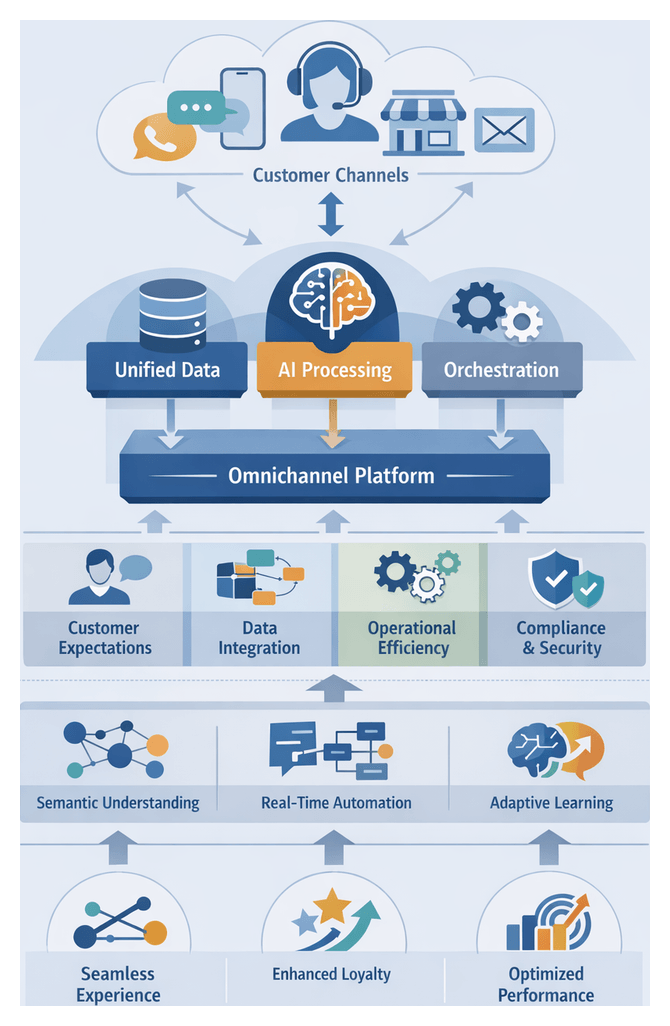
Context and the Imperative of Omnichannel AI Integration
In today’s hyperconnected marketplace, customers engage with brands across digital and physical touchpoints—from mobile apps and social messaging to voice assistants and in-store kiosks. They expect seamless, 24/7 support that preserves context and continuity regardless of channel. Traditional siloed support architectures, manual handoffs and fragmented data stores fail to meet these demands, leading to inefficient operations, duplicated effort and eroded customer loyalty.
Omnichannel AI integration addresses these challenges by unifying all channels under a single operational framework. A centralized backend aggregates interaction history, preferences and transaction data into a unified customer profile. An orchestration engine routes events and applies business rules, while an AI processing core delivers intent recognition, sentiment analysis and response generation. Specialized channel adapters connect chat widgets, email platforms, voice gateways and social messaging services, allowing AI agents to flow conversations seamlessly across modalities.
Leading organizations report that integrating AI agents across chat, email and voice reduces handling times, improves first-contact resolution and boosts customer satisfaction scores. For example, a global e-commerce retailer using AI to retrieve order history and proactively suggest expedited shipping saw significant increases in retention and revenue. By eliminating re-authentication and repetition, brands reinforce customer trust and position themselves for long-term growth.
Several factors drive the urgency for omnichannel AI integration:
- Elevated Customer Expectations: On-demand, personalized support is now a baseline requirement.
- Data Fragmentation Risks: Disparate records across channels hinder actionable insights and coherent engagement.
- Operational Efficiency Goals: Automation of context handoffs and routine inquiries frees agents to focus on complex cases.
- Regulatory and Compliance Pressures: Centralized governance simplifies adherence to GDPR, HIPAA and other mandates.
- Competitive Differentiation: Superior orchestration enables proactive outreach and predictive support.
Defining AI Agents and Evaluating Capabilities
AI agents are autonomous software entities that use machine learning and natural language processing to interpret queries, access dynamic knowledge repositories and generate contextually relevant responses. Unlike rule-based bots, they exhibit three core capabilities:
- Semantic Understanding: Parsing varied language inputs and mapping them to intents and entities.
- Real-Time Reasoning: Orchestrating workflows, enforcing policies and integrating with backend systems.
- Adaptive Learning: Incorporating feedback loops to refine performance over time.
Organizations assess AI agent solutions using analytical frameworks that decompose capabilities into comprehension, decision-making, execution and learning dimensions. Another model categorizes autonomy levels as assisted, guided and fully autonomous. Assisted agents suggest responses to human representatives; guided agents handle routine inquiries under oversight; autonomous agents manage end-to-end interactions.
Interpretive lenses enrich this evaluation by drawing on cognitive computing theories, agency theory and human-centered design. Cognitive architectures highlight modular separation between language understanding, decision logic and knowledge retrieval. Agency theory guides alignment of AI objectives with organizational goals, embedding metrics for efficiency and satisfaction into learning objectives. Human-centered design ensures that AI agents communicate with empathy, transparency and cultural sensitivity.
Strategic decision-makers employ conceptual models such as the AI Capability Maturity Model and the Customer Experience Value Chain. The maturity model outlines stages from exploratory experiments to optimized adaptive operations, while the value chain links agent functions to outcome drivers like ease of access, consistency, speed and personalization. Emerging tools like the AI Adoption Hexagon visualize readiness across technology, process, culture, data governance and regulatory alignment, providing a balanced roadmap for phased AI agent deployment.
Designing a Unified Backend Architecture
A scalable, resilient omnichannel framework comprises these foundational components:
- Unified Data Repository: Aggregates interaction history, preferences and transaction data into a canonical model.
- API-First Integration Layer: Exposes composable services for user identification, session management and knowledge retrieval.
- Orchestration Engine: Manages event-driven workflows, routing logic and escalation thresholds.
- AI Processing Core: Hosts machine learning modules for intent recognition, sentiment analysis and response generation.
- Channel Adapters: Connect front-end interfaces—chat widgets, email, SMS, voice gateways—to the orchestration layer.
Architectural principles for a robust backend include:
- Data Normalization: Reconcile disparate formats and ontologies through transformation middleware.
- Event-Driven Integration: Employ message buses such as Apache Kafka to propagate customer actions in real time.
- Persistent Context Management: Capture and store dialogue state for seamless channel switching and session resumption.
- Scalable Infrastructure: Leverage container orchestration, auto-scaling and serverless services on AWS, Azure or Google Cloud.
- Secure Data Access: Enforce least-privilege controls, encryption and audit logging across all services.
- Modular Service Design: Decompose functionality into microservices for authentication, analytics and knowledge retrieval.
- Continuous Monitoring and Analytics: Embed telemetry to track latency, usage patterns and AI outcomes.
Illustrative platforms demonstrating these patterns include AgentLinkAI, which unifies chat, email, SMS and voice routing through a single orchestration API, and customer service suites like Zendesk and Salesforce Service Cloud, which offer prebuilt connectors and extensibility for AI bot integration.
Orchestrating Unified Customer Journeys
Customers transition fluidly between channels—initiating contact on a messaging app, self-serving via a portal, escalating to voice support and receiving follow-up emails. AI-driven omnichannel integration transforms these discrete steps into a continuous narrative, preserving context and intent at every stage.
Seamless journeys enhance brand cohesion and customer confidence. For instance, interactions that begin with a LivePerson chatbot and continue with a human agent via ServiceNow maintain a consistent voice and understanding of customer needs. This continuity reduces repeated inquiries, reinforces reliability and strengthens equity.
Empirical studies link unified experiences to higher Net Promoter Scores, improved retention and increased lifetime value. AI agents that leverage persistent context deliver personalized recommendations and anticipate needs, driving first-contact resolution and lowering average handle times. Operationally, shared backends—enabled by platforms such as Zendesk and Salesforce Service Cloud—foster cross-functional collaboration, allowing marketing to draw on support insights and support teams to escalate product feedback seamlessly.
Central to journey continuity is a unified customer profile enriched by knowledge graphs and real-time analytics. When a user switches from WhatsApp to web chat, the AI agent retrieves the full interaction timeline, enabling proactive engagement such as issuing alerts for pending issues or suggesting mitigating actions.
Practitioners deploy journey mapping and experience analytics frameworks—drawing on tools like the Forrester Customer Experience Index and Gartner’s five-dimensional model—to identify pain points and friction zones. AI enhancements such as automated context retrieval and intelligent routing streamline workflows, directing low-priority inquiries to self-service and escalating complex, high-value cases to specialists.
- Retail: Access to purchase history across channels enables personalized upsells and support.
- Financial Services: Secure context sharing transitions sensitive inquiries from mobile to voice without reauthentication.
- Healthcare: Integrated portals, chatbots and call centers maintain treatment histories and triage urgency.
- Telecommunications: Unified threads for outage alerts, billing and technical support reduce diagnostic repetition.
Organizations must mitigate risks of data silos and governance gaps by implementing master data management, robust API governance and standards such as ISO 27001. Privacy regulations—GDPR, CCPA and HIPAA—require consent management, transparent data practices and audit trails. Ethical guidelines, including the IEEE Ethically Aligned Design principles, help balance personalization with respect for user autonomy.
Emerging innovations promise deeper journey continuity: conversational analytics for emotional intelligence, voice biometrics for frictionless authentication and augmented reality overlays for real-time guidance. Key metrics to measure integration success include first-contact resolution rate, channel handoff efficiency, Customer Effort Score, average resolution time and journey completion rate.
Achieving unified journeys demands organizational readiness: cross-channel collaboration, new roles such as an omnichannel experience manager, comprehensive training and executive leadership support. Practical examples illustrate impact: a global retailer combining Zendesk chat with Twilio Flex cut repeated information prompts by 40 percent and lifted satisfaction by 15 points. A financial institution using Salesforce Service Cloud unified mobile and call-center support to reduce false-positive fraud alerts by 30 percent and enhance trust in digital channels.
Addressing Integration Challenges and Ensuring Success
Integrating AI agents into an omnichannel support ecosystem entails navigating technical, organizational and governance obstacles. Key challenges include:
- Technical Interoperability: Diverse APIs and data schemas require bespoke connectors or adherence to open standards.
- Data Silos: Segregated stores for chat transcripts, tickets and CRM records hinder real-time context sharing.
- Latency and Synchronization: Subsecond message routing and state transfer are critical to customer perception.
- Security and Compliance: Multi-channel data flows must respect GDPR, HIPAA, PCI DSS and regional privacy laws.
- Organizational Barriers: Siloed teams with conflicting priorities slow integration and governance.
- Vendor Coordination: Managing roadmaps, API versions and SLAs across multiple providers demands proactive engagement.
- Scalability and Resilience: Elastic infrastructure, load balancing and failure testing ensure availability under variable demand.
- Change Management: Training human agents to collaborate with AI, interpret insights and manage handoffs is essential.
- Governance and Continuous Improvement: Cross-functional review boards, audits and A/B testing maintain system health and strategic alignment.
Successful organizations counter these challenges by embracing these success factors:
- Strategic Clarity and Roadmapping: Define phased milestones tied to customer experience objectives and KPIs.
- Modular, API-First Architecture: Enable independent evolution of channels, orchestration and AI services.
- Unified Customer Data Layer: Implement a canonical model with real-time ingestion and change data capture.
- Cross-Functional Governance: Establish bodies with IT, support, legal and data science representation to prioritize integrations and manage risk.
- Vendor Partnerships: Cultivate strategic relationships, share roadmaps and contribute to open-standards initiatives.
- Observability and Analytics: Instrument end-to-end telemetry for latency, error rates, handoff success and CSAT.
- Iterative Deployment: Launch pilots on select channels, gather feedback and refine through continuous learning loops.
- Executive Sponsorship: Secure leadership commitment to resource allocation, cultural change and performance incentives tied to omnichannel success.
By integrating modular architectures, unified data strategies, cross-functional governance and iterative learning, organizations can overcome integration hurdles and unlock the transformative potential of AI-powered omnichannel support. This strategic imperative enables consistent, context-rich experiences that delight customers, drive loyalty and amplify the impact of customer support operations.
Chapter 7: Measuring Performance and ROI of AI Agents
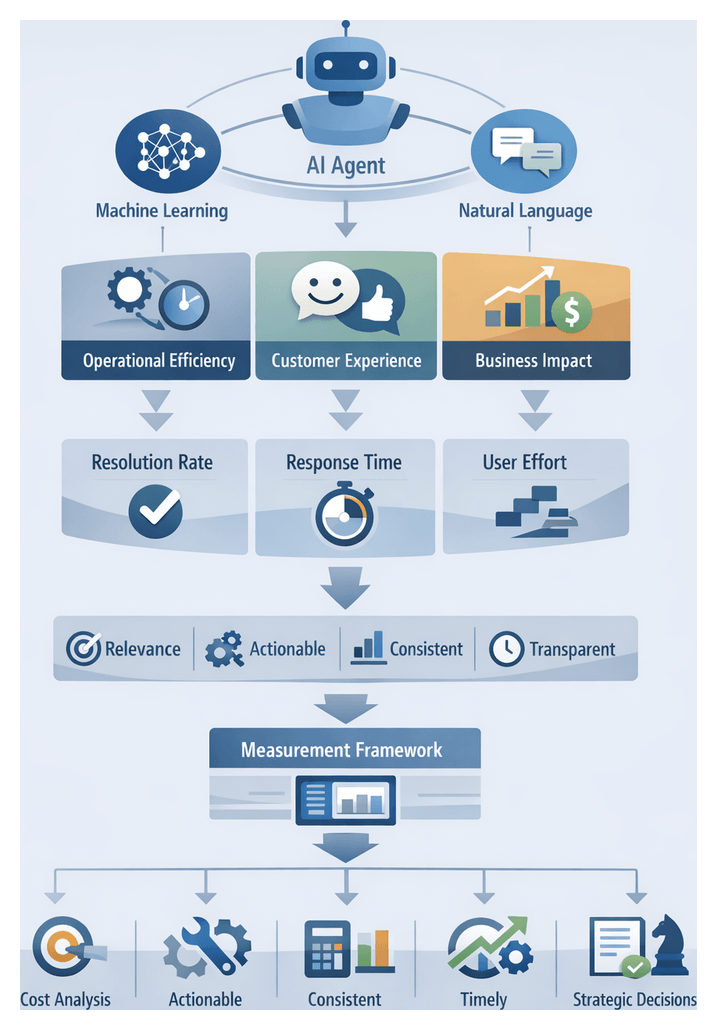
The Imperative of Measurement in AI-Driven Support
Organizations deploying AI agents for customer support must move beyond initial implementation to establish rigorous measurement frameworks. Clear performance metrics transform AI systems from opaque tools into strategic assets that drive customer satisfaction, operational efficiency, and business growth. By aligning machine learning capabilities, natural language understanding, and decision logic with tangible outcomes—such as reduced support costs, faster issue resolution, and increased revenue—leaders gain the insights needed to prioritize improvements, demonstrate return on investment, and ensure continuous alignment with organizational objectives.
Aligning Metrics with Strategic Objectives
Performance measurement must reflect each organization’s unique strategic priorities. Whether the focus is cost reduction, customer loyalty, or revenue growth, selecting metrics that map directly to goals prevents vanity metrics from distracting stakeholders. Key metric categories include:
- Operational Efficiency: Measures such as average response time, throughput (interactions per hour), and escalation rate quantify system performance and its impact on support operations.
- Customer Experience: Indicators like resolution rate, user effort score, customer satisfaction (CSAT), and Net Promoter Score (NPS) assess the quality and perceived value of interactions.
- Business Impact: Metrics such as cost per conversation, labor cost savings from deflection, and revenue uplift from cross-sell or upsell initiatives link agent performance to financial outcomes.
By prioritizing metrics that drive strategic initiatives, teams can monitor progress, diagnose issues, and optimize AI agent behavior in ways that matter most to the business.
Foundational Principles and Core Indicators
Effective measurement frameworks adhere to core principles that ensure data yields actionable insights:
- Relevance: Metrics must directly reflect targeted behaviors or outcomes.
- Actionability: Each measure should guide specific corrective or enhancement efforts.
- Consistency: Uniform definitions and collection methods across channels enable reliable trend analysis.
- Timeliness: Data should be available at cadences that support rapid iteration, from real-time dashboards to weekly leadership summaries.
- Transparency: Document calculation methods, data sources, and transformations to build stakeholder trust.
Three core indicators form the foundation of AI agent performance measurement:
Resolution Rate
The percentage of inquiries resolved by the AI agent without human intervention. High resolution rates indicate effective language understanding, decision logic, and knowledge retrieval, correlating with cost savings and customer satisfaction.
Response Time
The average interval between a user message and the AI agent’s reply. Rapid responses reinforce perceptions of availability and attentiveness, while delays can erode trust and increase user effort.
User Effort
The number of steps—messages exchanged, menu selections, or clarifying prompts—required to resolve an issue. Minimizing effort is critical: even accurate resolutions can frustrate users if the interaction is cumbersome.
Monitoring these metrics in concert helps identify trade-offs, such as whether faster responses compromise conversational quality or increase escalation rates.
Building a Measurement Roadmap
A structured roadmap ensures successful implementation of a metrics program:
- Define precise formulas for each metric, clarifying numerators, denominators, data sources, and inclusion criteria.
- Establish data pipelines to aggregate interaction logs, user feedback, and financial records into a centralized analytics platform.
- Develop dashboards and automated reports that present metrics in real-time and over configurable time windows.
- Set performance targets based on historical benchmarks, competitor analysis, and customer expectations.
- Implement governance processes for metric review, threshold alerts, and cross-functional accountability.
Embedding metrics into daily stand-ups, weekly reviews, and quarterly planning fosters a culture of continuous improvement and ensures AI agent performance remains aligned with evolving business needs.
Assessing ROI Through Analytical Frameworks
Quantifying the financial impact of AI agent deployments equips decision-makers to prioritize initiatives and justify investments. Leading ROI assessment models include:
Cost-Benefit Analysis
Identify and monetize all costs—labor savings, deflection cost avoidance, infrastructure and licensing fees (for platforms such as IBM Watson Assistant, Zendesk Answer Bot)—and contrast them with benefits like reduced handle times and revenue uplifts from cross-sell prompts.
Discounted Cash Flow and Net Present Value
Project year-over-year cash inflows from cost savings and revenue gains against outflows for implementation, maintenance, and retraining. Discounted at the organization’s weighted average cost of capital, this model delivers a risk-adjusted net present value.
Total Cost of Ownership
Extend cost analysis to include acquisition, deployment, ongoing support, training, governance, and depreciation, revealing hidden or recurring expenditures that affect long-term viability.
Value Driver Modeling
Link operational metrics—first-contact resolution, handle time reduction, CSAT uplift, self-service adoption, revenue per interaction—to financial multipliers derived from historical performance or industry benchmarks.
Balanced Scorecard
Evaluate AI impact across financial metrics, customer measures (NPS, effort scores), internal processes (queue lengths, backlog), and learning and growth indicators (AI literacy, knowledge base expansion).
Risk-Adjusted ROI and Sensitivity Analysis
Apply sensitivity testing—varying AI accuracy, adoption curves, integration complexity, regulatory impacts—and use Monte Carlo simulations or tornado diagrams to visualize potential ROI ranges and prioritize risk mitigation.
By integrating financial models with performance metrics and strategic imperatives, organizations create dynamic decision-support tools that evolve with real-world data.
Use Cases for Performance Data in Support Optimization
Performance data powers continuous optimization across support functions. Leading use cases include:
Identifying Operational Bottlenecks
Analyze resolution time distributions and escalation patterns to uncover workflow friction. In platforms like Zendesk Explore, overlay conversation analytics with volume metrics to pinpoint peak-hour stress points and reduce backlog.
Feedback Loops for Continuous Learning
Track satisfaction scores and sentiment trends to detect misunderstanding patterns. Tools such as Dashbot highlight low-confidence exchanges, guiding knowledge base updates and model retraining to boost first-contact resolution.
A/B Testing for Dialogue Optimization
Segment interactions to compare variations in greetings, messaging styles, and fallback strategies. Platforms like Salesforce Einstein Analytics integrate CRM data to deliver real-time performance comparisons and inform dialogue design.
Adaptive Learning for Model Refinement
Ingest performance metrics into machine learning pipelines to trigger automated retraining when accuracy declines. Genesys Predictive Engagement correlates conversation outcomes with customer journey data, recalibrating intent classifiers on the fly.
Benchmarking Across Channels and Teams
Normalize metrics like resolution rate and response time across chat, email, voice, and social channels. Analytics platforms such as Amplitude visualize support KPIs alongside product usage events to identify best practices and guide resource allocation.
Predictive Insights for Workforce Planning
Combine historical data with campaign schedules, release calendars, and seasonal trends to forecast support demand. Accurate predictions inform AI capacity thresholds, preemptive model retraining, and staffing decisions, ensuring consistent service levels during high-impact events.
Knowledge Base Optimization
Use analytics on frequently escalated intents and low-confidence answers to prioritize content updates. Integrations with Zendesk Guide or ServiceNow Knowledge Management enable systematic measurement of article effectiveness and self-service success.
Risk Mitigation through Real-Time Monitoring
Establish thresholds for error rates, negative sentiment spikes, or sudden fallback increases. Solutions like Botanalytics provide real-time alerts on anomalous patterns, enabling rapid intervention to prevent service disruptions.
Strategic Reporting for Executive Decision-Making
Tailor dashboards for C-suite stakeholders, emphasizing cost savings, NPS improvements, and ROI curves. Strategic reports articulate the business impact of AI-driven support, securing ongoing executive sponsorship and budget allocations.
Ensuring Data Integrity, Contextualization, and Ethical Oversight
Robust evaluation demands high-fidelity data, contextual attribution, and ethical measurement practices. Key considerations include:
- Data Quality: Enforce standards for schema definitions, annotation guidelines, and timestamp calibration. Use platforms like IBM Watson Assistant for built-in validation and implement custom ETL processes and reconciliation checks to maintain completeness and accuracy.
- Attribution and Context: Adapt multi-touch attribution models to support journeys, assigning fractional credit based on interaction position and efficacy. Segment metrics by query complexity, customer segment, and channel—for example, comparing FAQ handling by Amazon Lex against policy interpretation tasks.
- Balanced Quantitative and Qualitative Measures: Combine resolution rates and handle times with transcript analysis, user surveys, and sentiment-weighted scores. Hybrid metrics such as sentiment-adjusted NPS or intent clarity indices capture both efficiency and emotional nuance.
- Ethical Measurement: Conduct regular bias audits, anonymize or pseudonymize data to comply with GDPR and CCPA, and establish cross-functional ethics boards to review metric frameworks and ensure alignment with corporate values.
- Benchmarking: Use third-party benchmarks from Gartner Peer Insights or Forrester AI Score, adjusted for organizational context, and build internal baselines to track performance trends over time.
Governance, Scalability, and Technology Considerations
Effective measurement frameworks require clear governance, scalable architectures, and appropriate tooling:
- Governance and Accountability: Form centralized metrics councils to define ownership, approve dashboard changes, and manage escalation paths. Tools like Microsoft Azure Bot Service integrate with enterprise governance platforms to enforce access controls and audit trails.
- Feedback Loops and Continuous Improvement: Implement closed-loop frameworks that capture performance deviations, annotate failure modes, and integrate findings into model retraining and dialogue updates. Employ structured A/B testing protocols to validate enhancements and prevent regressions.
- Scalability and Adaptability: Adopt modular analytics architectures that accommodate multilingual interactions, varied channel latencies, and region-specific compliance. Design extensible data models to support emerging modalities like augmented reality or metaverse-based support.
- Technology and Tooling: Leverage hybrid approaches that combine turnkey AI analytics suites—such as Salesforce Einstein—with custom pipelines built on open-source frameworks like Apache Kafka and Apache Pinot. Adhere to interoperability standards such as OpenTelemetry and FHIR to reduce vendor lock-in and enable seamless data exchange.
By integrating measurement imperatives, analytical rigor, real-world use cases, data governance, ethical oversight, and scalable technology, organizations can construct evaluation frameworks that not only measure AI agent performance accurately but also drive strategic optimization. Such frameworks ensure AI-driven support delivers sustainable value, adapts to evolving demands, and secures competitive advantage in the 24/7 customer service landscape.
Chapter 8: Governance, Ethics, and Trust in AI-Driven Support
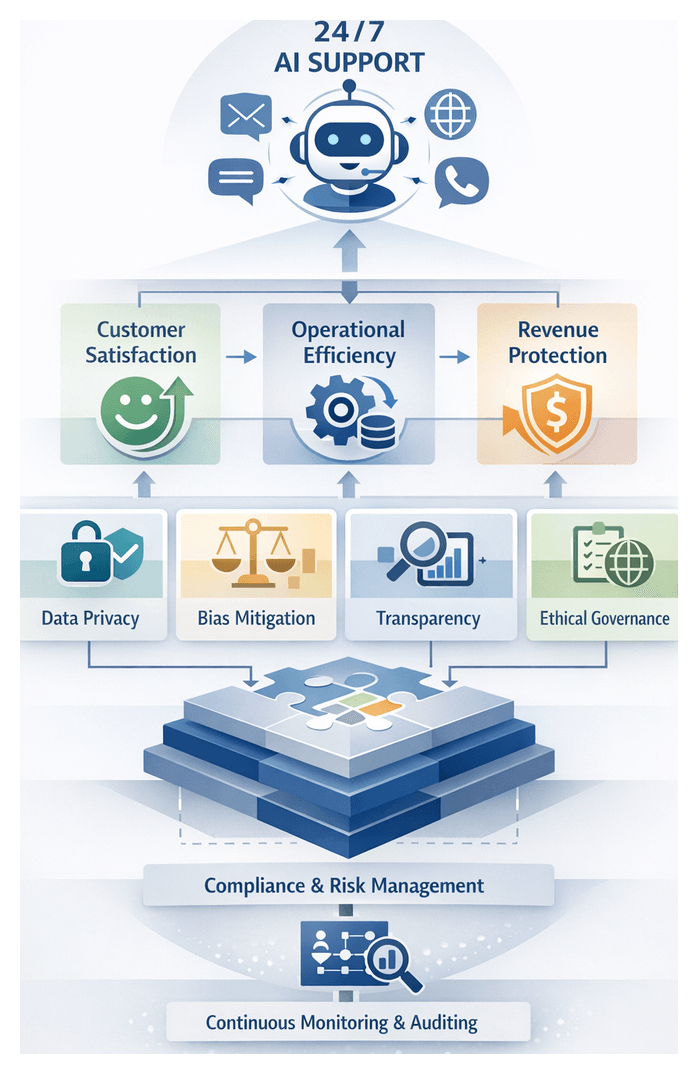
Establishing Continuous AI-Driven Support
In a landscape defined by digital ubiquity, globalization and an on-demand economy, customer expectations have shifted toward immediate, seamless service around the clock. Smartphones, tablets and high-speed internet place vast information at consumers’ fingertips, while brands compete across time zones, languages and regulatory regimes. Traditional extended hours or rotating shifts struggle to meet the demand, creating operational strain and service inconsistencies. AI-driven support models, by contrast, deliver scalable, context-aware assistance 24 hours a day, autonomously handling routine inquiries and preserving conversation history across channels.
By unifying interactions on email, live chat, social media, messaging apps and voice interfaces, AI agents maintain context and route complex issues to human specialists. This orchestration reduces agent burnout, accelerates response times and enhances customer satisfaction. The strategic benefits of continuous AI-driven support include:
- Enhanced Customer Satisfaction: Immediate responses reduce frustration, raise resolution rates and foster loyalty.
- Revenue Protection: Continuous support minimizes cart abandonment, accelerates renewals and prevents lost sales.
- Operational Efficiency: Automation of repetitive inquiries lowers support costs and boosts agent productivity.
- Brand Differentiation: A reputation for reliable, always-on service strengthens market position and justifies premium offerings.
Ensuring Privacy and Regulatory Compliance
Deploying AI agents in customer support requires navigating a complex regulatory landscape. In North America, the California Consumer Privacy Act (CCPA) mandates disclosure of data collection practices and grants opt-out rights. In Europe, the General Data Protection Regulation (GDPR) enshrines data minimization, purpose limitation and lawful processing. Asia-Pacific jurisdictions such as Singapore’s Personal Data Protection Act (PDPA) and Australia’s Privacy Act introduce similar requirements, each with unique nuances. A one-size-fits-all strategy falls short; leading organizations implement a cross-jurisdictional compliance matrix that maps internal data flows and AI touchpoints against each regulation. This dynamic framework identifies overlaps, conflicts and gaps, enabling prioritized controls where statutes converge and supporting real-time updates as laws evolve.
Privacy safeguards extend from traditional pseudonymization to advanced techniques that resist re-identification. Group-based methods such as k-anonymity ensure each record is indistinguishable from at least k-1 others on quasi-identifying attributes. l-diversity requires diversity of sensitive attributes within those groups, while t-closeness constrains distributional distance between group and population attributes. For mathematically provable guarantees, differential privacy—implementable via libraries such as Google’s open-source privacy library—adds calibrated noise to query results, obscuring any individual’s contribution. Platforms like IBM Watson OpenScale support differential privacy implementations and fairness monitoring, offering transparent trade-offs between privacy risk and analytical accuracy.
Balancing personalization with privacy presents an analytical dilemma. AI agents rely on profiling to tailor greetings, recommend solutions and predict needs. The Privacy-Utility Frontier model plots privacy risk against personalization value, highlighting diminishing returns as each additional attribute elevates exposure. Techniques such as feature hashing and federated learning shift computation to user devices, reducing centralized data storage. Transparency dashboards grant customers visibility into which data attributes drive personalization and allow opt-in or opt-out at granular levels. By defining a privacy budget and optimizing feature selection, organizations reconcile personalization objectives with compliance obligations.
Detecting and Mitigating Bias
Bias in AI-driven support can manifest as skewed outcomes or unequal success rates across demographic groups, eroding trust and inviting regulatory scrutiny. Formal fairness definitions—demographic parity, equalized odds and predictive equality—provide quantitative benchmarks. Demographic parity examines whether positive outcomes occur at equal rates across protected groups. Equalized odds aligns true positive and false positive rates, while predictive equality focuses on consistent error rates.
Organizations embed bias detection within an ongoing analytical pipeline:
- Data Assessment: Profile training data distributions to detect representation imbalances.
- Model Evaluation: Calculate fairness metrics on validation sets segmented by demographic attributes.
- Error Analysis: Isolate disparate error patterns indicating entrenched bias.
- Iterative Adjustment: Reweight samples or adjust decision thresholds to meet fairness targets.
Beyond numerical metrics, interpretive frameworks translate fairness scores into tangible risk profiles. The Stakeholder Impact Grid categorizes affected parties—customers, frontline agents, brand reputation, and regulators—against potential harm dimensions such as financial cost, emotional distress, and legal exposure. The Causal Bias Analysis visualizes correlations and causal chains between input features and outcome disparities, revealing root causes in data pipelines, business processes or user behavior. By combining quantitative measures with qualitative insights—supported by diverse human reviews—organizations detect subtle biases and design interventions that address underlying drivers rather than surface symptoms.
Advancing Transparency and Explainability
Transparency and explainability are pillars of trust in AI-driven support. Model interpretability, outcome justification and operational transparency enable stakeholders to understand how AI agents arrive at decisions. Tools such as Google Cloud Explainable AI and IBM Watson OpenScale generate feature importance scores, counterfactual examples and natural language summaries. Embedding these explanations into dashboards and support interfaces aligns with the Model Cards paradigm, standardizing documentation of AI capabilities and limitations.
Robust audit trails record data provenance, version control and decision metadata—confidence scores, fallback triggers and routing logic. Immutable logging solutions, often underpinned by platforms like Splunk or frameworks compliant with the W3C PROV standard, ensure tamper-proof records. These logs support forensic analysis of erroneous responses, bias incidents or compliance violations, enabling rapid remediation and satisfying audit requirements.
Regulatory frameworks such as GDPR and the proposed EU AI Act mandate explainability, user rights to information and opt-out mechanisms. Organizations adopt a layered transparency approach:
- High-Level Summaries: Publicly share model scope, training data categories and performance metrics.
- Restricted Details: Provide granular audit reports to authorized parties under non-disclosure agreements.
- Data Anonymization: Apply differential privacy to protect individual identities within explanation artifacts.
This strategy balances openness with confidentiality, fostering trust without exposing proprietary algorithms or sensitive user data. Internally, certifications such as Certified Ethical Emerging Technologist (CEET) frameworks validate transparency practices, emboldening governance committees and executive leadership to scale AI initiatives with confidence.
Strategic integration embeds transparency and compliance into every phase of the AI lifecycle. Governance charters define objectives, cross-functional teams from data science, legal and support co-create standards, and automated monitoring tools flag deviations in model behavior, data handling or audit completeness. Analytical lenses—trust-but-verify, transparency continuum and trust-reciprocity models—help leaders assess maturity and roadmap incremental enhancements without overwhelming stakeholders.
Embedding Ethical Governance and Accountability
Ethical AI governance extends beyond technical controls into organizational structures and risk management frameworks. Critical considerations include data consent and ownership, data minimization, human oversight and continuous auditing.
Granular Consent and Ownership: Consent must be freely given, specific, informed and unambiguous. Mechanisms should allow users to opt into discrete data categories—chat transcripts, behavioral analytics or profile enrichment. Data stewardship models assign custodianship roles across legal, compliance and technical teams, ensuring ongoing dialogue with customers and upholding rights under GDPR, CCPA and other statutes.
Data Minimization and Purpose Limitation: Collect only attributes strictly required for defined support functions. Purpose-limitation frameworks map each data element to a specific objective—intent detection, personalization or escalation prediction. Periodic data audits and automated deletion workflows reduce breach surface area, simplify consent dialogues and optimize performance.
Human Oversight and RACI Accountability: Even with high autonomy, AI agents require human-in-the-loop governance. A RACI (Responsible, Accountable, Consulted, Informed) matrix clarifies that data scientists monitor model drift and bias, privacy officers ensure compliance, legal teams advise on regulations and executives review risk assessments. Escalation pathways route ambiguous or high-risk cases—legal advice requests, self-harm signals—to designated human experts via real-time dashboards and risk scoring algorithms.
Continuous Monitoring and Auditing: Ethical AI demands ongoing technical and operational audits. Track privacy metrics—volume of personal data, unique subjects processed and incident frequency—and fairness metrics—resolution rate disparities, response time gaps and sentiment differences across cohorts. Automated monitoring tools detect anomalies and trigger investigative workflows. External third-party audits, aligned with ISO 42001 or AICPA Trust Services Criteria, reinforce credibility but must be complemented by an internal culture of ethical reflection.
Ethical Risk Assessment and Integration with ERM: Treat ethical failures as risk events with measurable likelihood and impact, mirroring quantitative risk modeling in finance. Cross-functional ethics committees evaluate assessments and prioritize mitigation. An AI ethics charter articulates guiding principles, escalation procedures and accountability mechanisms, aligning AI initiatives with corporate values, codes of conduct and sustainability objectives. Regular updates ensure alignment with evolving regulations and societal expectations.
Key Takeaways
- Continuous AI-driven support is a strategic imperative, delivering consistent, scalable service across channels and time zones.
- Cross-jurisdictional compliance matrices and advanced privacy techniques—k-anonymity, l-diversity, t-closeness, differential privacy—balance regulatory obligations with analytical utility.
- Bias detection pipelines and interpretive frameworks such as the Stakeholder Impact Grid and Causal Bias Analysis transform fairness metrics into actionable risk profiles.
- Explainability tools like Google Cloud Explainable AI and IBM Watson OpenScale, coupled with immutable audit trails via Splunk, underpin transparency and trust.
- Layered transparency strategies reconcile regulatory mandates with confidentiality, while CEET and similar certifications validate practices for internal stakeholders.
- Ethical governance requires granular consent mechanisms, data minimization, human-in-the-loop supervision, continuous audits and integration of ethical risk into enterprise risk management.
- Embedding ethics into an AI governance charter and maintaining cross-functional oversight ensures adaptive resilience as regulations and societal expectations evolve.
Chapter 9: Case Studies of Industry Adoption and Success Stories
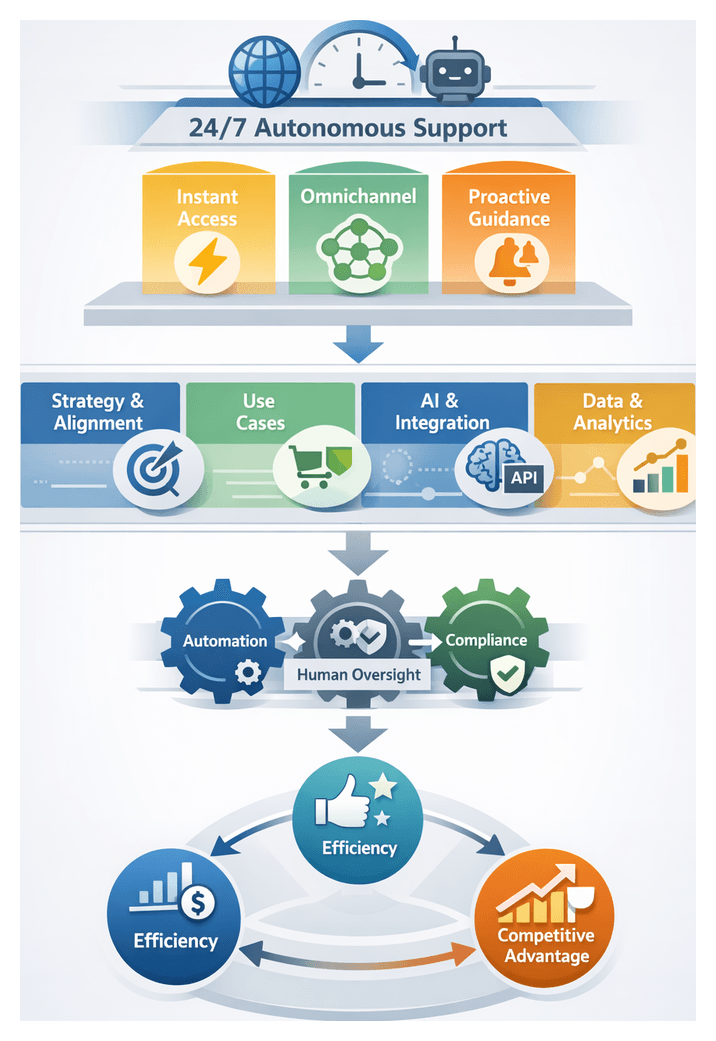
The Imperative for Continuous, Autonomous Support
In an era of nonstop connectivity and global markets, organizations must deliver customer support around the clock. The traditional nine-to-five model is no longer sufficient as digital natives demand instant resolutions, seamless transitions across channels, and proactive notifications regardless of time zone or device. Failing to meet these expectations risks revenue loss, reputational damage, and erosion of competitive advantage. Continuous support has become a baseline requirement for any enterprise seeking to maintain trust, loyalty, and market relevance.
Modern support paradigms must address three core customer expectations:
- Instantaneous Access: True resolution speed at any hour, beyond automated acknowledgments and static self-service.
- Omnichannel Consistency: Unified experiences across chat, email, voice, and social media without loss of context or escalation friction.
- Proactive Guidance: Preemptive notifications of issues and personalized recommendations to prevent future disruptions.
Globalization and digital disruption amplify competitive pressures. Pure-play digital challengers set high bars for speed and personalization, forcing incumbents across retail, financial services, healthcare, and telecommunications to evolve rapidly. Market leaders leverage continuous support as a differentiator—turning traditionally unattended queues into engagement and upsell opportunities—while laggards face churn and negative word-of-mouth.
Delivering 24/7 service poses operational challenges: shift scheduling drives up labor costs, high turnover undermines knowledge retention, and peak-demand spikes strain teams. Automation and intelligent assistance emerge as strategies to augment human capacity, deflect routine inquiries, and maintain consistent quality under variable workloads.
Advances in cloud computing, artificial intelligence, and API-first integration enable hybrid support ecosystems. Chatbot frameworks, knowledge management systems, machine learning models, and middleware architectures combine to automate tier-one interactions and preserve escalation paths for complex cases. By leveraging automation, organizations achieve scale, consistency, and cost containment in their continuous support operations.
Strategic Alignment and Use-Case Customization
Successful AI agent deployments are not isolated technical initiatives but integral components of broader customer engagement strategies. Executive sponsorship and a clear strategic vision ensure aligned resource allocation, governance, and cross-functional collaboration. Leaders articulate measurable objectives—such as reducing support costs by 20 percent or improving first-contact resolution—and embed AI use cases into core processes, from order management in retail to claims processing in insurance.
Contextual adaptation is essential. Detailed scoping of customer intents, escalation patterns, and desired outcomes guides conversation design. Industry-specific integrations drive impact:
- Retail: Order tracking, returns processing, and personalized recommendations integrated with recommendation engines like Adobe Sensei and Salesforce Einstein.
- Financial Services: Balance inquiries, fraud alerts, and loan pre-qualification linked to customer profiles and transaction histories in core banking systems.
- Healthcare: Appointment scheduling, symptom triage, and prescription refills with embedded HIPAA compliance and integration with electronic health records.
- Telecommunications: Proactive outage notifications and troubleshooting dialogs powered by real-time system status feeds.
Defining success criteria through frameworks such as Objectives and Key Results (OKRs), balanced scorecards, and total cost of ownership models helps prioritize AI agent capabilities that directly map to strategic outcomes.
AI Agent Technology and Integration
Platform maturity and integration capability are critical. Mature solutions such as IBM Watson Assistant, Google Dialogflow, and Amazon Lex offer enterprise-grade security, robust natural language understanding, and pre-built connectors for CRM and ticketing systems. Selection frameworks evaluate NLP accuracy, API maturity, and model training overhead against domain-specific requirements.
Architectural best practices leverage microservices and open APIs for seamless data flow. Integration middleware ensures bi-directional connectivity between AI agents, customer relationship management, order management, and knowledge repositories. Adequate upfront analysis of legacy system constraints prevents costly retrofits and siloed deployments.
High-quality data underpins AI performance. Rigorous governance frameworks embed privacy by design, data minimization, and access controls into agent workflows. Ethical considerations—bias detection, transparency, and explainability—are integrated through statistical audits, explainable AI techniques, and clear user notifications. Compliance with regulations such as GDPR, CCPA, and HIPAA requires de-identification processes, consent mechanisms, and audit trails throughout the AI lifecycle.
Data-Driven Design and Continuous Improvement
High-performing AI agent programs adopt a rigorous, data-centric approach. Interaction logs, customer feedback, and performance metrics inform iterative improvements. Analytical methodologies—cohort analysis, root-cause investigation, and multivariate testing—drive model refinement and dialog optimization.
Key components include:
- Intent Taxonomy Refinement: Regular review of misclassified utterances to update intent definitions and training datasets.
- Sentiment and Emotion Scoring: Incorporation of sentiment analysis from platforms like Google Dialogflow to detect frustration or satisfaction and trigger adaptive responses.
- Feedback Loops: Real-time surveys and qualitative comments feed back into continuous retraining pipelines.
- Advanced Learning Pipelines: Combining automated retraining with expert review to adapt to evolving language and customer behaviors.
Organizational Readiness and Change Management
Transformational AI initiatives require cultural readiness and structured change management. Cross-functional steering committees include representatives from IT, customer experience, legal, compliance, and operations to oversee policy definitions, exception workflows, and escalation protocols. Stakeholder alignment workshops and co-design sessions with frontline agents foster ownership and surface operational insights.
Rebranding roles—from call center agents to AI supervisors—improves morale and shifts focus toward oversight and optimization. Training programs in prompt engineering, data science fundamentals, and conversational UX equip teams to collaborate effectively with AI agents. Pilot rotations, stakeholder mapping, and continuous communication reduce resistance and accelerate adoption.
Performance Measurement and Governance
Robust measurement frameworks align metrics with strategic objectives and provide a holistic view of AI agent impact. Leading organizations track:
- Efficiency Metrics: Average handling time, interactions per agent, service cost per interaction.
- Effectiveness Metrics: First-contact resolution rate, containment rate, automation rate without human handover.
- Experience Metrics: Net promoter score, customer satisfaction, customer effort score.
Composite KPIs combining quantitative and qualitative measures, dashboarding tools, and statistical process control enable continuous benchmarking against peers and historical baselines. Predictive analytics forecast volume fluctuations, allowing proactive capacity adjustments.
Vendor Ecosystem and Risk Management
Building a curated vendor ecosystem balances best-of-breed AI capabilities with deep industry expertise. Strategic partnerships with system integrators, niche AI specialists, and academic institutions foster co-innovation and grant access to emerging algorithms. Joint advisory boards and co-innovation labs enable organizations to influence vendor roadmaps and accelerate feature adoption.
Effective risk management embeds stage-gate reviews, risk heat maps, and independent audits into the project lifecycle. Cross-disciplinary risk committees ensure adherence to compliance mandates and organizational risk appetites. Common pitfalls such as overreliance on out-of-the-box models, underestimating integration complexity, and neglecting human-AI collaboration are mitigated through thorough upfront analysis, clear escalation protocols, and continuous monitoring.
By integrating strategic alignment, technological readiness, robust data governance, cultural adaptation, rigorous performance measurement, ecosystem collaboration, and proactive risk management, organizations can design and scale autonomous, 24/7 support models that deliver efficiency, excellence, and lasting competitive advantage.
Chapter 10: Future Trends and Emerging Innovations in AI Support
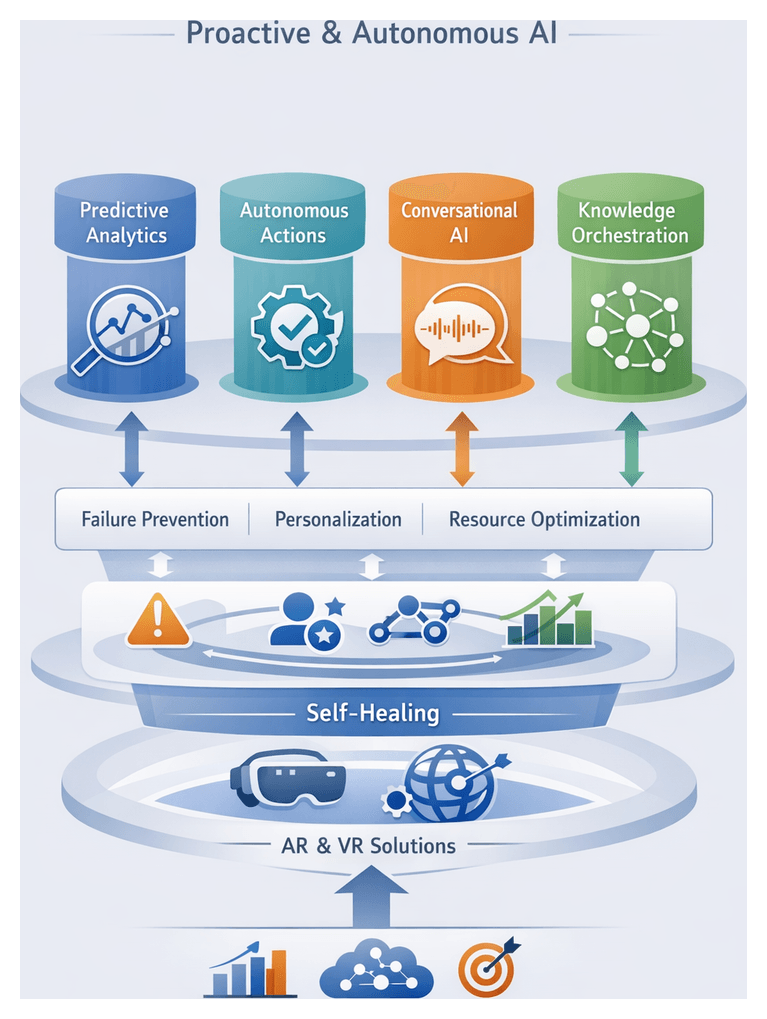
PROACTIVE AND AUTONOMOUS AI-DRIVEN SUPPORT
Predictive Analytics
Predictive analytics uses machine learning and statistical modeling to transform historical and real-time data—application performance logs, usage metrics, customer interactions—into foresight. By identifying subtle patterns and anomalies, support organizations can anticipate failures or spikes in demand.
- Failure Prevention: AI models monitor network performance and sensor data, issuing alerts when thresholds are breached. Automated remediation workflows or field technician dispatches can be initiated before customers experience service disruption.
- Personalized Outreach: E-commerce and financial platforms leverage predictions of order delays or payment issues to proactively notify customers, provide guidance, and deflect inbound inquiries.
- Resource Optimization: Forecasts of ticket volume by product, channel, or region enable dynamic workforce management, ensuring optimal staffing while minimizing idle time.
Solutions such as Salesforce Einstein embed predictive intelligence within CRM workflows, while Zendesk Explore offers deep support analytics. Together, these tools shift support from reactive firefighting to real-time anticipation of customer needs.
Autonomous Decision-Making and Self-Healing
Moving beyond forecast, autonomous agents execute decisions and remediate issues without human intervention. Reinforcement learning, policy engines, and self-healing architectures ensure optimal responses to incidents.
- Policy-Driven Automation: Agents enforce compliance and business rules by evaluating potential actions against predefined policies. For instance, a banking system may automatically freeze suspicious transactions based on fraud risk scores.
- Runbook Execution: Integration with platforms like IBM Watson AIOps allows detection of infrastructure faults, invocation of remediation scripts, and validation of service restoration.
- Adaptive Learning: Agents review outcomes—customer feedback, service health metrics—and refine decision policies. Successful interventions are reinforced while ineffective ones trigger policy adjustments.
Self-healing reduces mean time to resolution, frees experts for strategic work, and ensures consistent, error-free application of best practices during incidents.
Conversational AI 2.0
Emerging conversational AI extends beyond scripted text chat to deliver rich, multimodal interactions. By integrating voice, vision, and contextual understanding, agents offer seamless experiences across channels.
- Voice-First Assistants: Platforms such as Amazon Lex and Google Dialogflow power conversational agents capable of complex dialogues, sentiment analysis, and adaptive response strategies.
- Visual Guidance and AR Overlays: Agents analyze camera feeds to identify hardware components or defects, then render augmented reality instructions on user devices.
- Emotion-Adaptive Conversations: Advanced sentiment detection modulates tone and dialogue paths—escalating to human agents when frustration is detected or offering empathetic phrasing as needed.
By unifying chat, voice, and visual interfaces, conversational AI captures richer context and delivers personalized, context-aware assistance.
Intelligent Knowledge Orchestration
A centralized, accurate knowledge base underpins effective support. Modern solutions employ knowledge graphs and semantic search to structure unstructured content—technical manuals, community forums, support transcripts—into interconnected concepts.
- Dynamic Content Fusion: Real-time ingestion pipelines merge updates from product releases, policy changes, and user feedback into the knowledge repository.
- Contextual Ranking: Natural language queries are transformed into semantic embeddings and ranked by relevance to the user’s current session, historical interactions, and inferred intent.
- Automated Knowledge Generation: Generative AI models draft or revise documentation based on ticket resolutions and support transcripts, accelerating content creation and reducing manual maintenance.
With intelligent orchestration, AI agents deliver precise, contextually relevant answers, lowering resolution times and minimizing escalations.
Immersive Interfaces and Augmented Support
Augmented and Virtual Reality in Support
Augmented reality (AR) and virtual reality (VR) are redefining support engagement. By overlaying digital instructions on physical environments, AR transforms troubleshooting into an interactive, spatially anchored experience.
- Field Service Efficiency: Devices such as Microsoft HoloLens provide step-by-step overlays, reducing error rates and resolution times for on-site repairs.
- Retail and Spatial Computing: Platforms like Spatial.io enable virtual try-on and product demos, dissolving purchase uncertainty and lowering support volume.
- Multimodal Interaction: Gesture, gaze, and touch combine with voice recognition to interpret user intent. Frameworks such as Unity MARS integrate sensor data with AI reasoning.
Operational and Measurement Considerations
Deploying AR/VR support requires strategic partnerships with hardware vendors and network providers. Licensing arrangements with headset manufacturers like Meta Quest Pro and infrastructure planning for high-fidelity streaming are essential.
Traditional metrics—first response time, resolution rate, customer effort score—must be augmented with spatial engagement KPIs: overlay interaction duration, guidance marker usage, and user movement patterns. These insights inform continuous optimization of AR content and conversational flows.
Privacy, Security, and Standards
AR support captures visual data that may include sensitive or personally identifiable information. Compliance with regulations such as GDPR and HIPAA demands real-time anonymization or edge processing. Ethical governance policies should define data retention limits, consent mechanisms, and scope of visual analysis.
Participation in open standards consortia for spatial anchoring, sensor fusion, and AI interoperability prevents vendor lock-in and ensures future flexibility.
Forecasting the Evolution for 2026 and Beyond
Adoption Curves and Hype Cycle Insights
Technology adoption follows an S-curve: initial experimentation, rapid uptake, and eventual maturity. Market forecasts estimate the AI software market for customer service will exceed $15 billion in 2026, growing at a 23 percent CAGR. Gartner predicts over 70 percent of customer interactions will involve AI assistance by 2030.
The Gartner Hype Cycle places advanced natural language understanding and context-aware recommendations in the Trough of Disillusionment, while continuous learning frameworks—such as OpenAI Gym—advance toward the Slope of Enlightenment. By mid-2026, fully autonomous decision-making agents are poised to enter the Plateau of Productivity, achieving resolution rates above 90 percent and customer satisfaction scores exceeding 4.2 out of 5.
Key Drivers and Sector Forecasts
Several trends underpin the shift toward proactive, self-driving support:
- Data Maturity: Unified customer profiles consolidate siloed data—behavior patterns, transaction history, sentiment scores—enabling richer predictive models.
- Cloud and Edge Scalability: Serverless architectures and distributed inference—via platforms like Microsoft Azure Cognitive Services—reduce latency and hosting costs.
- Reinforcement Learning: Dialog optimization frameworks refine conversation strategies through reward-based feedback, driving continuous improvement.
- Regulatory and Ethical Guardrails: Privacy-preserving techniques such as federated learning and differential privacy balance personalization with compliance.
Industry-specific forecasts include:
- Retail and e-Commerce: Predictive replenishment alerts and autonomous returns processing will reduce average handling time by 40 percent.
- Financial Services: Autonomous loan adjudication and fraud detection will drive a 25 percent reduction in delinquency rates.
- Healthcare: Appointment reminders and symptom triage bots will manage 60 percent of routine inquiries, accelerating preauthorization workflows by up to 50 percent.
- Telecommunications: Proactive network health alerts and autonomous plan optimization will decrease customer churn by 30 percent.
Challenges and Risk Mitigation
Key hurdles include data quality and bias, model drift, regulatory variability, and optimal AI-human collaboration. Organizations can mitigate risk through:
- Technology Readiness Levels: Tracking maturity from prototype to operational deployment.
- Total Cost of Ownership: Comprehensive analysis of infrastructure, data pipelines, and maintenance.
- Risk-Adjusted Benefit Modeling: Balancing autonomy gains against compliance, bias, and reputational considerations.
- Resilience Planning: Implementing circuit breakers, canary deployments, and rollback controls to ensure service continuity.
Strategic Roadmap for Sustainable Adoption
Balancing Innovation and Stability
Structured pilots and proof-of-concepts are vital for uncovering high-value AI use cases. To avoid fragmentation and technical debt, organizations should adopt modular architectures that integrate seamlessly with existing support systems. Governance gates—defined by performance benchmarks, integration maturity, and cost assessments—ensure controlled, incremental rollouts and swift rollback if needed.
Organizational Culture and Skills
AI-driven support demands a culture of agile methods, data-driven decision-making, and lifelong learning. Workforce reskilling transforms agents into supervisors, curators, and trainers of AI models. Cross-functional collaboration among IT, customer service, data science, and compliance teams fosters shared ownership of goals and accountability for outcomes.
Ethical, Transparent, and Compliant AI
Embedding ethics and compliance from the outset requires governance frameworks that define acceptable use cases, data handling standards, and accountability mechanisms. Explainable AI modules, audit trails, and privacy impact assessments build customer trust and ensure rapid remediation when issues arise.
Investment Prioritization and Partnerships
Leaders should maintain a balanced portfolio of short-term pilots, mid-term deployments, and long-term research. Projects are ranked by expected value—cost reduction, revenue growth, customer satisfaction—and time to impact. Strategic partnerships with providers such as Google Cloud AI and Amazon Web Services AI, as well as systems integrators and niche innovators, accelerate maturity and mitigate vendor risk. Participation in industry consortiums shapes open protocols for data exchange and AI interoperability.
Data Foundation and Quality Management
Unified data platforms consolidate customer interactions, system logs, product information, and third-party enrichment sources. Master data management and governance policies ensure consistency across channels, while automated anomaly detection, schema validation, and agent feedback loops maintain data quality and detect drift over time.
Resilience and Change Management
Establish governance councils with representation from customer service, IT, compliance, data science, and finance to oversee adoption. Embed change champions within business units to drive grassroots support. Robust CI/CD pipelines, model version control, and automated testing safeguard predictive models and immersive modules against regressions. Real-time monitoring and alerting enable rapid remediation and continuous service reliability.
By marrying bold experimentation with disciplined governance, investing in people and data, and forming strategic partnerships, organizations can transform customer support into a proactive, autonomous, and immersive competitive advantage. This strategic roadmap ensures sustainable adoption of AI innovations that redefine service excellence for years to come.
Conclusion
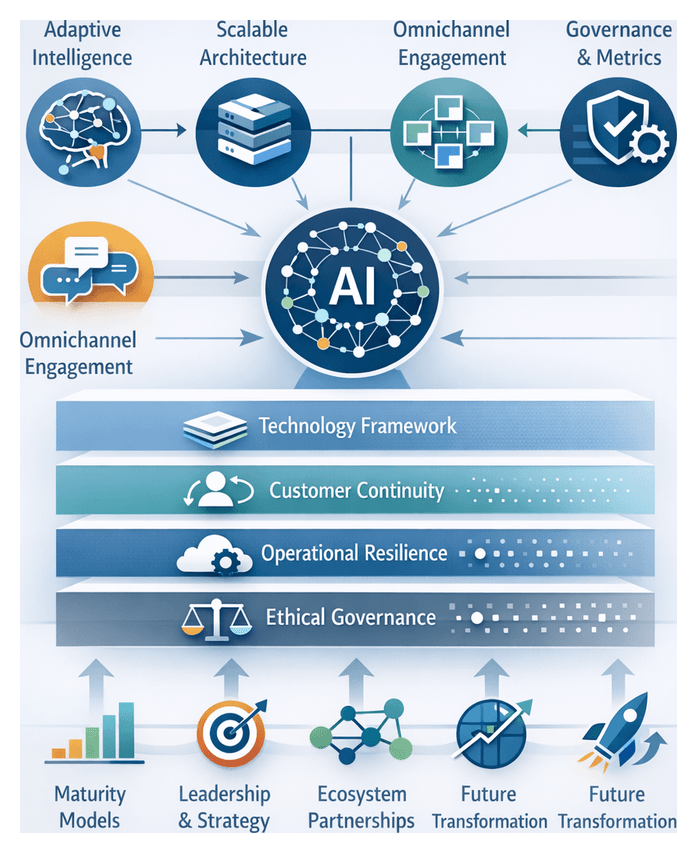
Pillars of Modern AI-Driven Customer Support
Building exceptional customer support with artificial intelligence rests on four interconnected pillars that drive efficiency, personalization, and strategic value. These foundational concepts unify adaptive intelligence, resilient architectures, seamless omnichannel engagement, and robust governance to meet the demands of a 24/7 global marketplace.
Adaptive Intelligence
AI agents leverage machine learning, natural language processing, and knowledge graph reasoning to move from reactive to proactive support. Supervised and unsupervised models classify inquiries and predict resolutions, while reinforcement learning refines decision strategies through reward signals. Advanced transformer-based NLP enables intent recognition, entity extraction, sentiment analysis, and context management across multi-turn dialogues. Knowledge graphs structure domain information into interconnected entities, empowering inference engines to navigate complex queries and deliver precise answers without extensive manual scripting.
Scalable Architecture
Continuous availability and elastic scalability derive from cloud-native and serverless paradigms. Containerization orchestrated by platforms like Kubernetes ensures rapid scaling under peak demand and fault tolerance. Microservices decouple core functions into independently deployable services, enabling incremental updates and targeted enhancements. Serverless functions handle intermittent workloads cost-efficiently, activating resources on demand and reducing operational overhead.
Personalized, Omnichannel Engagement
Personalization engines ingest user profiles, behavioral signals, and transaction histories to tailor interactions in real time. Dynamic dialogue scripts adapt tone and complexity to individual preferences, while recommendation systems suggest relevant resources or products. Omnichannel integration synchronizes context across web chat, mobile messaging, voice assistants, social media, and email. AI agents maintain conversation state during handoffs, ensuring that interactions initiated on one channel continue seamlessly on another.
Governance and Measurement
Robust governance frameworks and performance metrics anchor strategic decision-making. Traditional KPIs—first-contact resolution rate, average response time, customer satisfaction scores—offer operational insight. AI-specific metrics such as intent recognition accuracy, containment rate, and learning velocity reveal model performance. Ethical oversight, bias detection routines, explainability techniques, and privacy safeguards aligned with GDPR and CCPA build user trust and ensure regulatory compliance. Strategic ROI analysis translates operational gains into cost savings, revenue impact, and customer lifetime value enhancements.
Analytical Frameworks and Maturity Models
Interpreting AI agent capabilities requires coherent analytical frameworks and maturity models that integrate technology, operations, customer experience, and ethics. These lenses guide evaluation, investment, and continuous improvement.
- Technology Convergence Framework: Assesses the depth of machine learning pipelines, NLP sophistication, and knowledge graph coverage as complementary layers in a unified stack.
- Customer-Centric Continuity Model: Measures journey coherence across channels, focusing on persistent context, personalization consistency, and longitudinal satisfaction rather than isolated interactions.
- Operational Resilience Matrix: Compares architectural patterns—cloud-native microservices, serverless, edge deployments—against latency, throughput, fault tolerance, and cost elasticity requirements.
- Data-Driven Personalization Loop: Evaluates the velocity, variety, and veracity of data pipelines that feed profiling algorithms and recommendation engines under stringent governance policies.
- Ethical Governance Overlay: Scores compliance frameworks on data lineage tracking, bias detection routines, and explainable decision paths to maintain fairness and accountability.
To chart progress, organizations employ multidimensional maturity models grounded in four interpretive lenses:
- Technology Readiness Index: Rates solutions on a continuum from rule-based chatbots to advanced autonomous agents.
- Organizational Readiness Rubric: Measures change management maturity, stakeholder alignment, and skill-set availability across AI ethics, data engineering, and UX design.
- Customer Impact Continuum: Evaluates outcomes from resolution speed and personalization accuracy to overall loyalty, advocacy, and lifetime value.
- Governance and Compliance Dashboard: Tracks regulatory adherence, transparency mechanisms, data protection safeguards, and bias audit results.
By scoring current capabilities against these dimensions, leaders identify high-leverage investments, prioritize capability gaps, and establish clear maturity milestones linked to measurable outcomes.
Strategic Imperatives for Leadership and Integration
Successful AI agent initiatives transcend technology selection and require executive sponsorship, organizational readiness, and ecosystem orchestration. Leaders must align AI support projects with broader business objectives, embedding governance, talent development, and innovation processes from inception.
Leadership Vision and Commitment
Senior executives articulate a coherent narrative that positions AI agents as catalysts for customer engagement, operational resilience, and brand differentiation. Defining clear objectives—market expansion, cost efficiency, sustainability—mobilizes resources and aligns cross-functional teams in customer service, IT, marketing, and compliance.
Building Organizational Readiness
Deploying AI agents at scale demands robust data strategies and talent cultivation. Establish data stewardship councils, harmonize sources across CRM and ticketing systems, and codify data quality metrics. Create cross-disciplinary teams that blend AI expertise, domain knowledge, and customer experience design. Invest in structured learning pathways covering prompt engineering, model interpretability, and ethical AI oversight. Champion change through transparent communication, success storytelling, and recognition of early wins.
Ecosystem and Partnerships
Enterprises assemble best-of-breed ecosystems combining core AI platforms, specialized tools, and system integrators. Evaluate foundational services such as IBM Watson Assistant or Google Contact Center AI for multi-language support and enterprise-grade security. Augment capabilities with solutions like Amazon Lex for conversational interfaces and Microsoft Azure Bot Service for rapid prototyping and channel integration. Engage consultancies for AI service design, data engineering, and change management to bridge gaps between internal platforms.
Embedding Continuous Innovation and Learning
Adopt a learn-and-adapt framework that integrates performance analytics, user feedback, and operational metrics into unified dashboards. Follow an adaptive loop of hypothesize, experiment, measure, and iterate to refine conversational flows and retrain models on emerging queries. Establish centers of excellence or innovation cells to pilot novel use cases—predictive engagement, seamless human escalations, immersive interfaces—before enterprise-wide rollouts.
Risk Management and Ethical Oversight
Implement governance architectures that embed ethics and privacy checks throughout the AI lifecycle. Conduct systematic ethical impact assessments to identify potential biases and unintended consequences. Adopt explainable AI techniques that surface decision rationales, reinforcing customer trust and meeting regulatory expectations. Deploy real-time monitoring for anomaly detection and bias auditing, and define incident response protocols for system failures, privacy breaches, or reputational risks.
Metrics and Maturity Roadmap
Use a balanced scorecard combining operational KPIs—average handle time, first-contact resolution—with strategic indicators such as Net Promoter Score and customer lifetime value. Advance to predictive dashboards that forecast demand spikes, channel migration patterns, and model degradation timelines by fusing historical logs with external data sources. Periodically horizon-scan emerging technologies—augmented reality overlays, voice biometrics, multimodal interfaces—and apply Technology Readiness Level frameworks to prioritize pilots versus incubation.
Industry Transformation and Future Outlook
The integration of AI agents marks a strategic inflection point, reshaping market dynamics, business models, organizational design, and ecosystem partnerships. As AI-driven support evolves from a cost center to a strategic engagement channel, enterprises unlock new differentiation opportunities and competitive moats.
- Market Dynamics: Proactive assistance and predictive engagement redefine value propositions, shifting competition from cost and availability to personalization and relevance.
- Business Model Reinvention: Subscription and outcome-based pricing tie fees to performance metrics, while embedded support and product bundling enhance value and reduce churn. Service marketplaces enable rapid assembly of tailored AI support stacks.
- Operational Shifts: Contact center hierarchies give way to cross-functional squads, with new roles—AI support architect, conversation designer, data curator—overseeing continuous experimentation and model governance.
- Ecosystem Partnerships: Open APIs, federated learning agreements, and industry standards foster interoperability, accelerate model refinement, and establish credibility through certifications.
- Talent and Culture: Data fluency, human-AI collaboration frameworks, and change management forums embed evidence-based decision making and accountability for AI outcomes.
- Regulatory and Ethical Landscape: Privacy-by-design, bias mitigation routines, and robust security safeguards address evolving legislation and safeguard brand reputation.
- Emerging Technologies: Predictive analytics will surface latent issues before users seek help. Immersive interfaces—augmented and virtual reality—will enable remote troubleshooting and guided walkthroughs. Voice biometrics and multimodal interaction will streamline authentication and engagement.
Enterprises that align people, processes, technology, and governance frameworks will transform AI agents into continuously evolving assets. By embracing adaptive intelligence, scalable design, personalized experiences, ethical oversight, and strategic partnerships, organizations position themselves at the forefront of customer support innovation and sustained competitive advantage.
Appendix
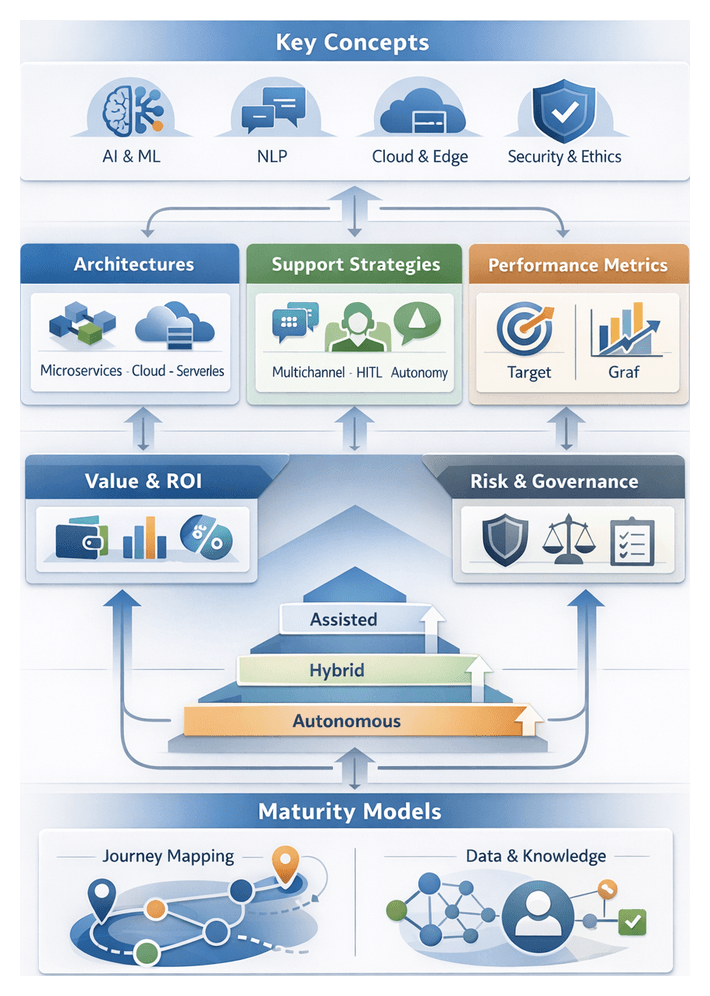
Key Terminology and Definitions Explained
To ensure a shared understanding of AI-driven support systems, this appendix groups essential terms by functional categories. Refer to these definitions when exploring design architectures, performance metrics and governance models.
- Core AI Concepts: Artificial Intelligence (AI) agents autonomously interpret and respond to user input via Machine Learning (ML) and Natural Language Processing (NLP). Reinforcement Learning enables agents to optimize actions by trial and error, while Federated Learning trains models across distributed data sources without centralizing sensitive information.
- Architectural Patterns: Microservices decompose applications into independent services, and Serverless Computing (e.g., Google Cloud Functions, AWS Lambda, Azure Functions) executes code on demand. Cloud-Native Architectures leverage containers (Docker) and orchestration (Kubernetes) for scalable, resilient deployments. Edge Computing brings inference closer to users, reducing latency for real-time interactions.
- Support Strategies: Omnichannel Support and Orchestration unify chat, email, voice and messaging, preserving context via session stores. Human-in-the-Loop (HITL) governance embeds human oversight for high-risk scenarios. Autonomy spans from scripted workflows to proactive, self-learning agents guided by an Autonomy Maturity Model and assessed by a Cognitive Capability Matrix.
- Performance Metrics: First Contact Resolution (FCR), Resolution Rate and Containment Rate measure effectiveness. Customer Effort Score (CES), Customer Satisfaction (CSAT) and Net Promoter Score (NPS) gauge experience. Operational metrics include Response Time and Throughput, while financial metrics cover Return on Investment (ROI), Total Cost of Ownership (TCO) and Service Level Agreements (SLAs).
- Governance and Ethics: Data Minimization limits collection to necessary fields. Bias Mitigation uses balanced sampling and fairness-aware algorithms. Explainability tools (e.g., SHAP, LIME) and Audit Trails document model decisions. Privacy frameworks (GDPR, CCPA) and standards like ISO/IEC 27701 guide lawful processing and consent management.
- Knowledge and Personalization: Knowledge Graphs structure domain entities and relationships. Intent Recognition and Sentiment Analysis drive contextual understanding. Profiling aggregates user data for dynamic Personalization via Recommendation Engines.
- Service Design and Resilience: Service Science frames AI agents as co-creators of value alongside customers and human agents. DevOps practices—Continuous Integration/Continuous Deployment (CI/CD) and Chaos Engineering—ensure reliability and rapid iteration.
Overview of Conceptual Frameworks
These frameworks guide maturity assessments, value evaluation, risk governance and strategic alignment for AI agent deployments.
Autonomy and Cognitive Capability Models
- Autonomy Maturity Model: Maps stages from human-assisted to fully autonomous agents, detailing governance controls and escalation protocols.
- Cognitive Capability Matrix: Rates agents on perception, reasoning and action across accuracy, speed and adaptability.
- Knowledge-Intelligence Continuum: Benchmarks systems from rule-based scripts to predictive, proactive assistants.
Value and ROI Assessment Frameworks
- Cost-Benefit Analysis: Compares implementation and operational costs with benefits like labor savings and ticket deflection.
- Discounted Cash Flow & Net Present Value: Forecasts efficiency-driven inflows, discounted by cost of capital for multi-year ROI.
- Balanced Scorecard: Aligns financial, customer, process and learning perspectives on a unified dashboard.
- Objectives and Key Results (OKRs): Sets qualitative objectives and quantifiable results (e.g., reduce handle time by X%).
Risk, Governance and Ethical Frameworks
- NIST AI Risk Management Framework: Evaluates data quality, transparency and resilience risks.
- GDPR & CCPA Compliance: Defines lawful processing, data minimization, consent and deletion requirements.
- Fairness and Bias Audit Frameworks: Utilizes toolkits like IBM AI Fairness 360 for statistical parity and mitigation techniques.
- Explainable AI & Model Cards: Documents model internals, limitations and local explanation methods (e.g., SHAP, LIME).
Adoption and Change Management Frameworks
- Technology Adoption S-Curve: Identifies adopter categories from innovators to laggards for rollout strategies.
- Gartner Hype Cycle: Tracks technology maturation to avoid inflated expectations and disillusionment.
- McKinsey Digital Quotient: Assesses readiness across strategy, culture and capabilities.
- Kotter’s 8-Step Change Model: Structures steps from urgency establishment to embedding new practices.
Customer Experience and Journey Mapping Frameworks
- Customer Journey Mapping: Visualizes cross-channel interactions to locate AI intervention points.
- Service Science Lens: Emphasizes co-creation of value within socio-technical ecosystems.
- Omnichannel Orchestration Models: Defines real-time data integration and API-driven workflows for seamless transitions.
Data Governance and Quality Management Frameworks
- DAMA-DMBOK & COBIT: Establish data stewardship, metadata management and quality processes.
- ISO/IEC 27701 Privacy Information Management: Specifies privacy controls extending ISO 27001.
- Master Data Management (MDM): Harmonizes customer profiles for unified context retrieval.
Interpretive Models for Strategic Decision Making
- Strategic Alignment Matrix: Maps AI use cases against objectives, impact and feasibility.
- Risk-Adjusted Value Framework: Produces risk-weighted ROI scores for comparative analysis.
- Capability Maturity Roadmap: Defines phased milestones for autonomy, integration and performance targets.
Frequently Asked Questions
How do AI agents differ from traditional rule-based chatbots?
AI agents leverage ML, NLP and knowledge graphs to interpret intent dynamically, maintain multi-turn context and learn from interactions. Traditional chatbots follow static scripts or decision trees, resetting context each turn and requiring manual updates. As a result, AI agents handle ambiguous queries, offer proactive suggestions and improve over time without explicit reprogramming.
What key metrics evaluate AI agent effectiveness?
Evaluate across operational efficiency (response time, throughput, fallback rate), customer experience (resolution rate, CES, CSAT, NPS) and business impact (cost per interaction, deflection savings, revenue uplifts). Align metrics with strategic goals—cost reduction or loyalty improvement—to drive meaningful performance improvements.
How can organizations ensure data quality and integrity?
Implement governance processes that define schema standards, annotation guidelines and automated validation pipelines. Use unified repositories or customer data platforms to consolidate multi-channel inputs. Conduct periodic audits and human-in-the-loop reviews to detect drift, anomalies and bias, ensuring training sets remain accurate and representative.
What governance structures support ethical deployment?
Form cross-functional councils including compliance, legal, IT, customer service and data science. Establish policies on privacy, consent, bias mitigation and transparency. Integrate audit trails for data lineage, explainability mechanisms to disclose model reasoning and HITL escalation for high-risk scenarios, embedding ethics throughout the AI lifecycle.
How should privacy and consent be managed?
Adopt privacy by design by collecting only necessary data and capturing explicit user consent using platforms like OneTrust. Map regional requirements (GDPR, CCPA) to data workflows, employ pseudonymization and differential privacy, and maintain audit-ready records to demonstrate compliance and maintain customer trust.
What strategies mitigate bias in AI interactions?
Begin with diverse, balanced training data. Monitor fairness metrics—demographic parity, equal opportunity—in production dashboards. Apply mitigation methods such as re-sampling, threshold adjustments and counterfactual fairness. Complement automated checks with qualitative audits by diverse panels to uncover subtle biases.
How can agents maintain context across omnichannel interactions?
Use a centralized session store that aggregates histories, profiles and state variables. Channel adapters for chat, email and voice sync with this store via event-driven messaging and canonical data models. Prioritize recent context in a sliding window and layer long-term profiles to enable personalized, seamless support journeys.
What are best practices for measuring ROI?
Combine cost-benefit analysis, discounted cash flow models and value driver mapping. Quantify benefits from inquiry deflection, reduced handling time and revenue from recommendations. Account for licensing, integration and governance costs. Perform sensitivity analyses on key assumptions to guide risk-adjusted decision-making.
How do organizations choose the right architecture for 24/7 support?
Balance latency, scalability, cost and complexity. Cloud-native microservices support predictable performance and autoscaling, while serverless functions optimize bursty loads. Hybrid models can mix containers for core engines with serverless for auxiliary tasks. Use weighted decision matrices and pilot benchmarks to validate architectural assumptions.
What change management approaches support adoption?
Engage stakeholders early, defining roles like AI supervisors and data stewards. Communicate vision, benefits and timelines. Offer training on AI collaboration and escalation processes. Launch pilots with hybrid workflows, collect frontline feedback and iterate. Highlight success stories and track joint human-AI performance metrics to sustain momentum.
How can organizations future-proof their AI investments?
Adopt modular, API-first platforms and open standards to support emerging technologies. Build unified data infrastructures and MLOps pipelines for continuous model updates. Leverage containerization, service meshes and cloud-agnostic deployments to avoid lock-in. Maintain vendor partnerships and roadmap exercises to integrate advancements like federated learning, edge inference and multimodal interfaces.
What common pitfalls should be avoided?
Avoid overreliance on generic models without domain customization, underestimate integration complexity, neglect data governance or underinvest in change management. Mitigate these by thorough use-case scoping, robust middleware for legacy systems, disciplined data stewardship and structured stakeholder engagement. Validate end-to-end performance through proof-of-concept pilots and enforce ethical guidelines via governance councils.
AI TOOLS AND RESOURCES
This curated list highlights leading platforms and services to accelerate AI agent development, deployment and governance.
Conversational AI Platforms
- Zendesk Answer Bot: ML-driven virtual assistant within Zendesk.
- IBM Watson Assistant: Cloud-based conversational service with intent recognition and dialog management.
- Google Dialogflow: NLU platform for chat, voice and messaging interfaces.
- Microsoft Azure Bot Service: Managed service for scalable, multi-channel bots.
- OpenAI GPT-4 and ChatGPT: Advanced LLMs for natural language understanding and generation.
- Vertex AI: Unified ML platform for NLP, vision and predictive analytics.
- Amazon Lex: Conversational interfaces with speech recognition and NLU.
- Salesforce Einstein Bots: Embedded AI chatbots within Service Cloud.
- Twilio Flex: Programmable contact center integrating voice, messaging and AI.
Personalization and Recommendation Services
- Dynamic Yield: ML-driven personalization platform for recommendations.
- Amazon Personalize: Real-time recommendation service.
- Google Recommendations AI: Managed service for personalized content suggestions.
Privacy, Compliance and Governance
- OneTrust: Consent management and privacy preference platform.
- TrustArc: Privacy compliance and assessment tools.
- Collibra and Informatica Axon: Data governance, stewardship workflows and policy enforcement.
Data, Analytics and Monitoring
- Splunk: Machine data analytics and anomaly detection.
- Botanalytics: Conversational analytics for usage insights and fallback analysis.
- Amplitude: Product analytics for user behavior tracking.
- IBM Watson OpenScale: Production monitoring for fairness, drift and explainability.
- OpenTelemetry: Tracing and metrics collection for distributed AI systems.
Augmented and Virtual Reality
- Microsoft HoloLens and Spatial.io: AR headsets and collaborative environments.
- Unity MARS: AR application development with real-world simulation.
- Meta Quest Pro: Standalone VR headset for immersive training and remote assistance.
Infrastructure and DevOps
- Kubernetes, Docker and Istio: Container orchestration and service mesh.
- Apache Kafka: Real-time event streaming platform.
- AWS Fargate and Amazon EKS: Serverless container compute and managed Kubernetes.
- HashiCorp Consul and NGINX: Service discovery, configuration and API gateway.
- Terraform and AWS CloudFormation: Infrastructure as code for reproducible provisioning.
- IBM Watson AIOps: AI-powered IT incident detection and resolution.
- OpenAI Gym: Toolkit for developing reinforcement learning strategies.
- Google Cloud AI Platform and AWS Machine Learning and Azure Cognitive Services: End-to-end managed ML services.
Standards for Integration
- FHIR: Healthcare data exchange standard for integrating AI agents with clinical systems.
The AugVation family of websites helps entrepreneurs, professionals, and teams apply AI in practical, real-world ways—through curated tools, proven workflows, and implementation-focused education. Explore the ecosystem below to find the right platform for your goals.
Ecosystem Directory
AugVation — The central hub for AI-enhanced digital products, guides, templates, and implementation toolkits.
Resource Link AI — A curated directory of AI tools, solution workflows, reviews, and practical learning resources.
Agent Link AI — AI agents and intelligent automation: orchestrated workflows, agent frameworks, and operational efficiency systems.
Business Link AI — AI for business strategy and operations: frameworks, use cases, and adoption guidance for leaders.
Content Link AI — AI-powered content creation and SEO: writing, publishing, multimedia, and scalable distribution workflows.
Design Link AI — AI for design and branding: creative tools, visual workflows, UX/UI acceleration, and design automation.
Developer Link AI — AI for builders: dev tools, APIs, frameworks, deployment strategies, and integration best practices.
Marketing Link AI — AI-driven marketing: automation, personalization, analytics, ad optimization, and performance growth.
Productivity Link AI — AI productivity systems: task efficiency, collaboration, knowledge workflows, and smarter daily execution.
Sales Link AI — AI for sales: lead generation, sales intelligence, conversation insights, CRM enhancement, and revenue optimization.
Want the fastest path? Start at AugVation to access the latest resources, then explore the rest of the ecosystem from there.